Source Single Drum Beer Yeast Dryer for Chemicals, Food, Plastics
Compare 30 listings for the Single Drum Beer Yeast Dryer to find equipment suitable for chemicals, food, and plastics processing. Buyers can review specifications like capacity, material status, and drying medium options to select the right solution.
Key considerations
Products List


Single-Drum Brewers Spent Yeast Drum Dryer, Yeast Drum Scraping Dryer
$12800.00 - $35800.00
MOQ: 1 Sets


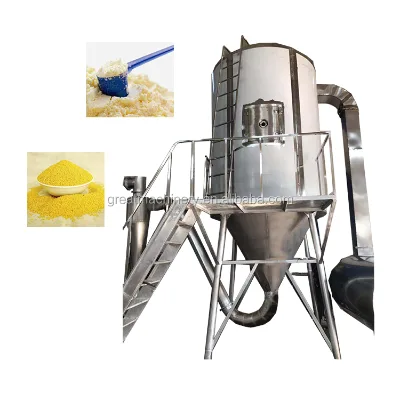

Beer Yeast Drum Dryer for Food Processing Drum Scraper Drum Drying Equipment
$3500.00 - $3800.00
MOQ: 1 Pieces


Energy Saving Scraper Dryer Beer Yeast Steam Double Drum Dryer for Yeast Liquid
$2000.00 - $4200.00
MOQ: 1 Pieces


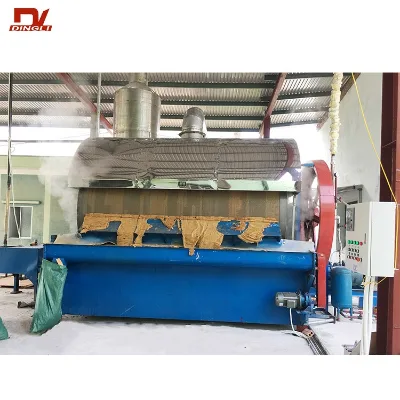


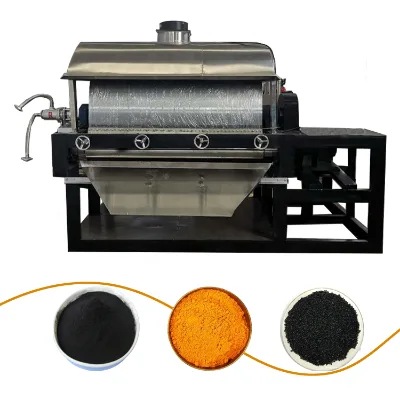
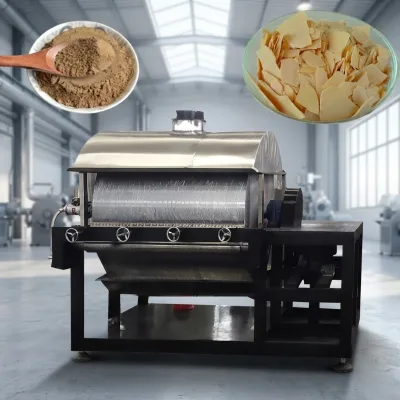
Comprehensive Sourcing Guide
Strategic Sourcing Guide for Single Drum Beer Yeast Dryers
Understanding the Technical Architecture of Drum Drying Systems
When sourcing a Single Drum Beer Yeast Dryer, buyers must first distinguish between the specific mechanical configurations available in the current market. The core keyword "single drum" implies a specific drying mechanism where a liquid feed, such as beer yeast slurry, is applied to a heated rotating cylinder. Based on observed market data, these systems are categorized by their feeding method and movement style. The supply chain currently features units classified as "Top-Feed Type" where the material is introduced from above the drum surface, as well as "Spray Type" configurations which utilize rotary atomization to distribute the feed.
The movement of the material within the drying chamber is a critical technical differentiator. Some units operate on a "Combined" movement way, suggesting a hybrid mechanical action, while others rely on "Agitation" to ensure uniform heat transfer. The heating mode is predominantly "Transmission," where heat is conducted directly through the drum wall to the product layer. The drying medium varies significantly across listings; some units utilize standard "Air," while others are designed for "Effluent Gas," "Superheated Steam," or "Inactive Gas" to prevent oxidation or handle specific volatile compounds.
Capacity is a primary variable in the technical specification. Observed data indicates a range of output capabilities, with specific models listed at 15-17 kg/H and others scaling up to 15-80 kg/H. This variance suggests that buyers must align their production volume requirements with the specific drum dimensions. The physical footprint is defined by drum sizes such as φ1000×1500 mm, which directly correlates to the surface area available for evaporation. The rotation rate for these drums typically falls between 4-8 rpm, a speed that must be optimized to ensure the product film thickness is correct for the specific viscosity of beer yeast.
| Feature Category | Observed Specification Range | Operational Implication |
|---|---|---|
| Feeding Method | Top-Feed Type, Spray Type | Determines initial distribution uniformity on the drum surface. |
| Movement Way | Combined, Agitation | Affects the residence time and mechanical stress on the yeast product. |
| Drying Medium | Air, Effluent Gas, Superheated Steam | Influences the thermal efficiency and potential for product contamination. |
| Capacity Output | 15-17 kg/H to 15-80 kg/H | Dictates the scale of production and the required drum surface area. |
| Drum Dimensions | φ1000×1500 mm | Defines the physical size and the specific drying surface area available. |
| Rotation Rate | 4-8 rpm | Critical for controlling the thickness of the liquid film on the drum. |
Compliance, Certification, and Operational Standards
In the B2B procurement of industrial drying equipment, compliance with international safety and quality standards is non-negotiable. The market data indicates that reputable suppliers for these units often provide certifications such as CE and ISO. These certifications are essential for verifying that the machinery meets European safety directives and international quality management systems, respectively. Buyers should verify that the specific unit being purchased includes a valid machinery test report, which serves as evidence of performance validation prior to shipment.
The operational pressure of these dryers is typically listed as "Atmospheric Pressure," meaning the drying process occurs at ambient pressure levels rather than in a vacuum. This simplifies the system design but requires careful management of the drying medium to prevent product degradation. The steam working pressure, a critical input parameter, is observed in the range of 0.15-0.3 MPa. This range is vital for maintaining the drum surface temperature required to evaporate moisture from the beer yeast without scorching the protein-rich material.
Material contact surfaces are another area where compliance and quality intersect. The supplied data highlights the use of "304 stainless steel" for belts and general "stainless steel" construction for the machinery body. This material choice is standard for food and chemical processing to ensure hygiene and corrosion resistance. However, buyers must explicitly confirm that the specific model they are sourcing utilizes food-grade stainless steel for all parts that come into direct contact with the yeast. The "Condition" of the equipment is listed as "New," which implies that the buyer should expect a machine with no prior operational history, reducing the risk of hidden wear or fatigue in critical components like bearings and gears.
Cost Drivers and Pricing Dynamics
The pricing for single drum beer yeast dryers is not uniform and is heavily influenced by the specific configuration and capacity of the unit. The observed listed price range in the market spans from $2,000 to $59,000 USD. This wide disparity suggests that the base price is driven by factors such as the complexity of the atomization system, the size of the drum, and the inclusion of advanced control systems. A unit priced at the lower end of the spectrum likely represents a smaller capacity model with standard components, while the higher end reflects larger capacity units with enhanced features like superheated steam capabilities or custom dimensions.
Material costs are a significant driver of the final price. The use of stainless steel, particularly 304 grade, adds substantial weight and cost to the manufacturing process. The weight of the machinery varies, with observations ranging from 1,000 kg to 3.2 tons. Heavier units generally indicate more robust construction and larger drum sizes, which directly correlates to higher material and shipping costs. Additionally, the power consumption is a factor in the overall cost of ownership. While some units are listed with a power rating of 4 kW, others are specified at 15 kW. The higher power rating typically supports larger motors for the drum rotation and the atomization system, which impacts both the initial purchase price and the long-term operational energy costs.
The packaging and delivery logistics also contribute to the total cost. The standard packaging is described as a "Standard Package" or "Standard Export Package," designed to protect the machinery during transit. However, the dimensions of the unit, such as 7.5m x 1.38m x 3.75m, can significantly affect freight charges. Buyers should consider that the "Delivery Time" is typically within 15 days after payment, but this lead time can be extended if the unit requires customization or if the supplier is located in a region with logistical challenges. The "Single item" selling unit structure implies that the price quoted is for the complete machine, but buyers must verify if installation, commissioning, or spare parts are included in the base price or if they are line items that add to the total cost.
Typical Applications and Process Suitability
The versatility of single drum dryers makes them suitable for a broad range of industries beyond just beer yeast processing. The observed data lists applications in "Chemicals Processing," "Plastics Processing," and "Food Processing." For beer yeast specifically, the "Solution" material status is critical. Beer yeast is typically processed as a liquid slurry before drying, and the dryer must be capable of handling this consistency without clogging or uneven drying. The "Continuous" operational method is preferred for industrial-scale production, ensuring a steady flow of dried product.
The drying medium selection is particularly important for preserving the quality of the yeast. While "Air" is a common medium, the use of "Effluent Gas" or "Superheated Steam" can offer better thermal efficiency or specific drying characteristics. For food-grade applications like beer yeast, the use of "Inactive Gas" might be necessary to prevent oxidation and preserve the nutritional value of the product. The "Key Selling Points" of these machines often include "Multifunctional" capabilities, suggesting that the same unit can be adapted for different types of slurries or powders, providing flexibility for manufacturers who may process multiple products.
The "Color" of the machine is listed as "Customized," which allows buyers to match the equipment to their facility's branding or safety color codes. However, the internal components, such as the "Bearing, Gear, Engine," are the core elements that determine the machine's reliability. These components are essential for the continuous operation of the drum and the atomization system. Buyers should ensure that the core components are sourced from reputable manufacturers to minimize the risk of downtime. The "Warranty" period of one year is a standard offering, but buyers should evaluate the terms of the warranty to understand what specific components are covered and what the response time for repairs entails.
Supplier Evaluation and Quality Assurance
Evaluating suppliers for single drum beer yeast dryers requires a rigorous approach to verifying their capabilities and reputation. The "Place of Origin" for these machines is predominantly "China," with specific mentions of "Henan, China" as a manufacturing hub. Buyers should verify the supplier's location and assess their logistics capabilities to ensure timely delivery. The "Brand Name" "GRT" is observed in the market, but buyers should not limit their search to a single brand. Instead, they should evaluate multiple suppliers based on their technical documentation, certification validity, and customer references.
Quality control is paramount in the selection of drying equipment. The "Machinery Test Report" is a crucial document that buyers must request and review. This report should detail the performance of the machine under load, including the drying rate, energy consumption, and product quality. Buyers should also verify the "Condition" of the machine to ensure it is genuinely new and not refurbished. The "Standard Package" should be inspected to ensure it meets international shipping standards, protecting the machine from damage during transit.
The "Customization" availability is a significant factor in supplier evaluation. Many suppliers offer "Customized" sizes and colors, which allows buyers to tailor the machine to their specific facility constraints. However, customization can extend the lead time and increase the cost. Buyers should clearly define their requirements before engaging with a supplier to avoid misunderstandings. The "Production Model" codes, such as "DD" or "DD1015," serve as identifiers for specific configurations. Buyers should ensure that the model code matches their technical requirements, particularly regarding capacity and drum dimensions.
Long-Term Procurement and Maintenance Considerations
Long-term procurement considerations for single drum beer yeast dryers extend beyond the initial purchase price. The "Warranty" period of one year is a baseline, but buyers should consider the availability of spare parts and the technical support provided by the supplier. The "Core Components" such as bearings, gears, and engines are subject to wear and tear and will require periodic replacement. Buyers should verify the availability of these parts and the cost of maintenance over the life of the machine.
The "Power" consumption of the machine, ranging from 4 kW to 15 kW, is a significant operational cost. Buyers should calculate the energy efficiency of the machine based on their specific production volume and the cost of electricity in their region. The "Steam Working Pressure" of 0.15-0.3 MPa is another operational parameter that affects the cost of steam generation. Buyers should ensure that their facility has the necessary infrastructure to support these pressure levels efficiently.
The "Delivery Time" of within 15 days after payment is a standard expectation, but buyers should account for potential delays due to customization or logistical issues. The "Lead Time" should be factored into the production planning to ensure that the machine is installed and commissioned in time for the production schedule. The "Standard Export Package" should be inspected upon arrival to ensure that the machine has not been damaged during transit. Any discrepancies should be reported immediately to the supplier to initiate the warranty claim process.
In conclusion, sourcing a Single Drum Beer Yeast Dryer requires a comprehensive understanding of the technical specifications, compliance requirements, cost drivers, and supplier capabilities. By carefully evaluating these factors, buyers can select a machine that meets their production needs and ensures long-term operational efficiency. The market offers a wide range of options, from basic models to highly customized units, allowing buyers to find the perfect fit for their specific application.
FAQs
What is the capacity range for single drum beer yeast dryers?
Capacity ranges from 15 to 80 kg per hour depending on the specific model configuration. Some units are rated at 15-17 kg/H while others scale up to 15-80 kg/H to match production volume requirements.
Which certifications are typically available for this equipment?
Reputable units often carry CE and ISO certifications to verify safety and quality standards. Buyers should also request a machinery test report to confirm performance validation before finalizing the purchase.
Can the drum size and rotation rate be customized?
Yes, drum dimensions like φ1000×1500 mm and rotation rates between 4-8 rpm are available. The product size and color can also be customized to fit specific facility constraints and branding needs.
What is the standard delivery time after payment?
The delivery time is typically within 15 days after your payment is received. This lead time applies to standard configurations, though customization may extend the schedule slightly.
How much does a Single Drum Beer Yeast Dryer cost?
The listed price range spans from 2000 to 59000 USD based on capacity and features. Lower prices usually correspond to smaller capacity models while higher prices reflect larger units with advanced specifications.
What material is used for the dryer construction?
The machinery is constructed from stainless steel, with belts often made of 304 stainless steel. This material ensures hygiene and corrosion resistance suitable for food and chemical processing applications.