Source Single Use Medical Infusion Bag for Hospital, Clinic, and Home Care
Find and compare 30 Single Use Medical Infusion Bag options from verified manufacturers. Evaluate specifications such as PVC or TPU materials, sterilization methods, and capacity sizes to select the right supply for clinical or home care settings.
Key considerations
Products List

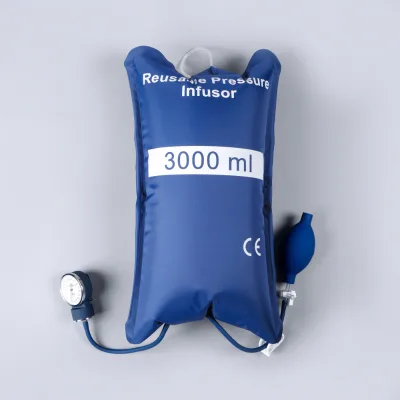
Single Patient Resuable Use Medical Health Care 3000ml Blood Pressure Infusion Bag
$10.00 - $20.00
MOQ: 300 Pieces


Pressure Infusion Bag Pressure Infusion First Aid Bag for Medical Tools of Infusion
$10.00 - $15.00
MOQ: 5000 Pieces




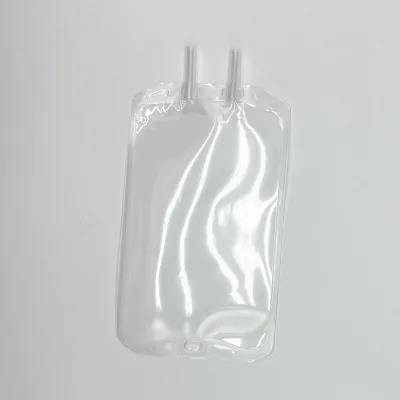
High-Quality Disposable Intravenous Nutrition Infusion Bag for Hospitals
$1.80 - $2.00
MOQ: 1000 Pieces


Comprehensive Sourcing Guide
Single Use Medical Infusion Bag Sourcing Guide
Procuring single use medical infusion bags for hospital and clinical resale requires balancing technical accuracy against commercial practicality. These products occupy a regulated category where material composition, sterilization method, and volume configuration directly affect patient safety and institutional acceptance. Buyers sourcing from Chinese manufacturers—a common origin for this category—encounter listings that mix pressure infusion bags, standard IV infusion bags, and accessory components under similar keywords, making careful specification review essential before any quotation request.
This guide organizes the sourcing decision into verifiable stages: understanding what listings actually represent, confirming technical fit, validating compliance documentation, negotiating commercial terms, qualifying suppliers, and planning for repeat procurement. Each stage draws only on signals observable in current product listings and established category knowledge, so buyers can apply the same verification logic regardless of which supplier they evaluate. Treat every listed attribute as a starting claim to confirm, not a guaranteed product characteristic.
Product Scope and Observed Listing Signals
Current listings in this category span several distinct product types that share the "infusion bag" label. Pressure infusion bags for accelerating fluid delivery appear alongside standard IV infusion bags, with models such as RIB-1000MM, RIB-500P-S, TJPIB05, TJPIB01, TSIB-01, and TSMPIB01 representing different configurations. Observed attributes differentiate these products clearly: pressure infusion variants list TPU bladders, PVC bulbs, and cloth cuffs, while standard infusion sets are described as plastic construction in black, green, or white colors. Volume capacities cluster around 500ml, 1000ml, and 3000ml, with some suppliers offering 250ml through 2000ml ranges and OEM sizing. Buyers should first determine whether they need a pressure infusion system for accelerated delivery in hospital settings or a standard gravity-fed bag, because these products serve different clinical workflows and attract different user groups—some listings specify nurses, others doctors or nurses.
Listing signals also reveal meaningful commercial patterns worth noting during initial screening. MOQs in this category range widely, from 500 pieces to 200,000 pieces depending on the listing, so buyers must match their order volume to the right supplier tier. Price observations span from nominal cents to twenty dollars per unit, reflecting the difference between simple bag components and complete pressure infusion assemblies. Several listings advertise customization availability and customized logo acceptance, while others are marked for logo printing or explicitly without it. Packaging is typically one piece per PE bag, with pouch packing and shipment by sea or air mentioned. Quality guarantee periods vary between one year and two years, which buyers should compare when evaluating total value rather than unit price alone.
Technical Specifications to Verify
Material specification is the first technical checkpoint, because observed listings use different material standards for different products. Some infusion bags are built to PVC standard, others to nylon plus TPU, and pressure infusion assemblies combine TPU bladders with PVC bulbs and cloth cuffs. These materials behave differently in clinical use: TPU is commonly selected for pressure applications where the bladder must withstand repeated inflation, while PVC construction suits standard fluid containment. Buyers should request written material declarations matching the listed standard for each model, confirm which components are single-use versus reusable in any given assembly, and verify that the stated material matches what the certificate of analysis describes. Do not accept "plastic" as sufficient detail for a medical device purchase.
Volume and dimensional specifications require equal scrutiny. Listed sizes include 500ml, 1000ml, and 3000ml as common configurations, with extended ranges of 250ml through 2000ml appearing on other models. Confirm that the volume marking on the finished bag matches the nominal capacity within the tolerance the supplier commits to, and request sample units to verify graduations, fill accuracy, and port compatibility with the infusion sets your end users already employ. Sterilization status is another critical specification: observed listings split between products with ethylene oxide sterilization and products explicitly without it. This distinction changes how the receiving facility handles the product on arrival, so buyers must match the sterilization claim to their market's requirements and confirm the sterilization method in writing before ordering.
Compliance and Safety Documentation
Certification claims in observed listings include CE marking and, on some products, CE combined with ISO 13458—an apparent reference to ISO 13485, the medical device quality management standard. Buyers should obtain copies of the actual certificates rather than relying on listing text, verify certificate numbers against issuing body databases where possible, and confirm that the certificate scope covers infusion bags of the specific models and volumes being purchased. A certificate covering one product family does not automatically extend to every item in a supplier's catalog, so scope verification prevents costly assumptions. For shipments into regulated markets, ask the supplier to state which regulatory classification the product falls under in the destination country and what documentation supports that classification.
Safety documentation extends beyond certificates to sterilization records and material safety data. Where ethylene oxide sterilization is claimed, request batch sterilization records and residual level confirmation, because EO residuals are a standard inspection point for receiving hospitals. Where products are supplied without sterilization, clarify in writing that sterilization is the purchaser's responsibility and that the product is intended for sterilization before clinical use. Also request the quality guarantee period in contractual terms—observed listings state either one year or two years—and confirm how the guarantee applies to storage conditions, since shelf-life claims typically depend on specified storage environments. These written commitments form the documentation baseline your quality team will audit against.
Cost Drivers and Commercial Terms
Unit cost in this category is driven primarily by material construction, capacity, and assembly complexity. A TPU-bladder pressure infusion bag with cloth cuff and PVC bulb commands a different price point than a simple PVC fluid bag, which explains the wide observed price range. Capacity tiers—500ml versus 1000ml versus 3000ml—affect both material consumption and freight volume, and buyers should request quotes per capacity tier rather than assuming proportional pricing. Customization adds cost as well: customized logo printing, OEM sizing, and special packaging arrangements typically carry setup fees or minimum order requirements, so confirm whether customization affects the quoted unit price and MOQ before committing to branded product.
Commercial terms observed across listings include T/T payment, delivery times of 15–20 days on some products and 20–30 days on others, and shipment by sea or air in pouch packing. Buyers should negotiate payment structures that balance risk—commonly a deposit with balance against shipping documents—and confirm in writing which delivery window applies to their specific model and order quantity, since lead times differ across listings even within one supplier's range. MOQ flexibility deserves direct negotiation: observed MOQs range from 500 pieces to very high volumes, and buyers with smaller trial orders should ask whether mixed-model orders or first-article purchases are accepted at reduced quantities. One listing advertises "competitive price" and "excellent quality" as attributes; treat such language as marketing and anchor negotiations on comparable specifications instead.
Supplier Qualification and Quality Control
Qualifying a supplier for single use medical infusion bags starts with documentation review and moves to physical verification. Request the CE certificate and any ISO 13485-aligned quality management evidence, review the stated quality guarantee period, and ask for the material standards documentation supporting PVC, nylon-plus-TPU, or component-level construction claims. Then order samples of each model under consideration and inspect them for seal integrity, graduation accuracy, port fit, and—in pressure infusion assemblies—bladder and cuff construction quality. Suppliers advertising hospital use and nurse or doctor as end users should be able to describe how their product integrates with standard infusion workflows; an inability to discuss the clinical context is a qualification warning sign.
Incoming quality control should be defined before the first production order, not after. Establish an inspection protocol covering packaging condition (one PE bag per piece is the observed standard), labeling and logo accuracy for customized orders, sterilization indicator status where applicable, and dimensional and volume checks against agreed specifications. Agree on an acceptable quality limit and a corrective action process in the purchase contract, and request pre-shipment inspection reports or arrange third-party inspection for initial orders. For pressure infusion products specifically, include functional testing of the bladder, bulb, and cuff assembly in the inspection plan, since these components experience mechanical stress that a static visual inspection will not reveal. Document every inspection result to build a quality history that informs future order decisions.
Long-Term Procurement Checks
Sustained procurement of infusion bags depends on supply continuity and change control. Confirm whether each model—whether RIB-series, TJP-series, or TS-series designations—remains in active production and whether the supplier commits to advance notice of material or design changes, because even a minor change in bladder material or bag film can affect compatibility with downstream infusion equipment. Re-verify certificates annually or when renewal dates approach, and maintain a file linking each purchased batch to its sterilization records and guarantee period so receiving facilities can confirm fitness for use. Suppliers offering two-year guarantee periods provide more shelf-life flexibility for staged deliveries than one-year offerings, which matters when holding safety stock.
Long-term relationships also benefit from structured commercial review. Revisit pricing against volume as order quantities grow—suppliers who quoted at 500-piece MOQs for trial orders often improve terms at sustained volume—and confirm that customization agreements, including logo artwork ownership, remain documented as personnel change. Track delivery performance against the stated 15–20 or 20–30 day windows to identify which suppliers consistently meet commitments, and periodically reassess whether OEM sizing or capacity expansions (such as adding 3000ml configurations to a 500ml and 1000ml range) justify consolidating volume with a single qualified source. Finally, keep at least one alternate qualified supplier with current samples and documentation on file, so that any disruption in quality, certification, or capacity does not interrupt supply to the hospitals your organization serves.
FAQs
What materials are used for single use medical infusion bags?
These bags are typically constructed from PVC or Nylon combined with TPU for durability. The bladder often uses TPU while the bulb may be PVC. Some variants include a cloth cuff for secure attachment. These material choices ensure flexibility and chemical resistance during medical procedures.
Can I customize the logo on these infusion bags?
Yes, customization is available for most orders. You can request a customized logo to be printed on the packaging or the bag itself. This service allows healthcare providers and distributors to brand their supplies effectively. Please confirm specific logo requirements with the supplier during the quotation process.
What certifications do these medical infusion bags hold?
The products generally carry CE certification to meet European safety standards. Some listings also mention ISO13458 compliance. These certifications indicate that the manufacturing processes adhere to specific quality and regulatory requirements for medical devices. Always verify the latest certificate documents with the supplier before purchasing.
What are the standard sizes for these infusion bags?
Standard capacities include 500ml, 1000ml, and 3000ml options. Some manufacturers also offer 250ml, 1500ml, and 2000ml sizes. The specific model numbers like RIB-1000MM or TJPIB05 correspond to these volumes. Select the size that best fits your clinical or distribution needs.
How long is the delivery time for these orders?
Delivery times typically range from 15 to 30 days depending on the order volume. Standard lead times are often cited as 15-20 days or 20-30 days. Shipping methods include sea or air freight. Early communication with the supplier ensures accurate scheduling based on current production capacity.
What is the minimum order quantity for these bags?
MOQs vary significantly, ranging from 500 pieces to 200,000 pieces. Common thresholds include 500 PCS or 1000 PCS for standard orders. Larger quantities may be required for custom packaging or specific model runs. Check the specific product listing for the exact MOQ applicable to your chosen configuration.