Source Sintered Turbo Cup Wheel for Concrete Stone Cutting
Find 30 sintered turbo cup wheels designed for grinding concrete, marble, and granite. Buyers can compare specifications like diameter, segment height, and arbor sizes from verified Chinese manufacturers to select the right tool for stone carving and abrasive applications.
Key considerations
Products List




Comprehensive Sourcing Guide
Sintered Turbo Cup Wheel Sourcing Guide
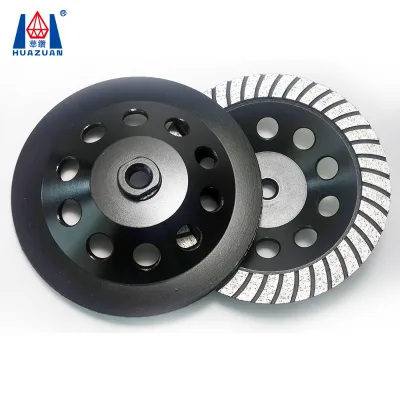
Sourcing sintered turbo cup wheels requires a precise understanding of the manufacturing process, as the sintering method fundamentally dictates the wheel’s bond strength, wear rate, and suitability for specific stone materials. Unlike brazed or welded alternatives, sintered wheels are produced by fusing diamond segments to the steel core under high heat and pressure, creating a robust bond that is particularly effective for grinding hard, abrasive materials like granite and marble. Buyers must recognize that this process allows for a controlled release of diamond grit, ensuring consistent performance over the tool’s lifespan, but it also demands rigorous quality control to prevent segment detachment during high-speed operation. The "turbo" design, characterized by a specific segment shape often featuring a single or double row of diamonds with cooling channels, enhances dust extraction and reduces heat buildup, making these wheels ideal for aggressive stock removal on concrete and stone surfaces.
When evaluating suppliers, procurement teams should focus on the specific model codes and standard ranges provided in listings, such as SGWT, CGWX, and CGWL, which often correlate with distinct segment geometries and bond hardnesses. The observed market data indicates a wide variance in specifications, with diameters ranging from 100mm to 450mm and segment heights varying between 5.0mm and 10mm. This diversity means that a single supplier may offer multiple product lines tailored to different arbor sizes, including 7/8", 5/8"-11, M14, and 22.23mm (1-inch) interfaces. Buyers must align their existing equipment’s arbor requirements with the supplier’s available configurations, as mismatched interfaces can lead to unsafe operating conditions or the need for costly adapters. Furthermore, the customization options available in the market allow for tailored segment heights and bonding agents, whether metal or rubber, to optimize performance for specific stone types or concrete grinding applications.
Product Scope and Observed Listing Signals
The current market landscape for sintered turbo cup wheels is characterized by a broad spectrum of product models and physical dimensions, reflecting the diverse needs of industrial stone processing and concrete grinding. Listings frequently highlight models such as 15DN0312 and various standard ranges like 105-180mm, 100-125mm, and 100-350mm, indicating that suppliers cater to both specialized niche applications and general-purpose heavy-duty grinding. The presence of cup-shaped designs with segment heights of 5.5mm, 6.0mm, or even 10mm suggests that buyers can select wheels based on the desired depth of cut and surface finish quality. Higher segment heights generally offer longer tool life and more aggressive material removal, which is critical for initial leveling of concrete slabs, while lower profiles may be preferred for finer finishing work on marble or granite surfaces.
Observations from product listings also reveal significant variation in packaging and transportation methods, which are critical for logistics planning and cost estimation. Products are commonly packed in cartons, pallets, or individual white boxes, with some listings specifying inner packaging such as PE/PVC bags or blister packs to protect the delicate diamond segments during transit. The origin of these products is predominantly China, with specific mentions of Danyang City, Jiangsu Province, as a manufacturing hub, which is known for its concentration of abrasive tool manufacturers. Buyers should note that while the core keyword focuses on sintered wheels, some listings may include brazing or welding processes, so careful verification of the manufacturing technology is essential to ensure the purchased product matches the intended application requirements.
Technical Specifications to Verify
Verifying the technical specifications of sintered turbo cup wheels is paramount to ensuring compatibility with existing machinery and achieving the desired grinding performance. The arbor hole size is a critical dimension that must match the grinder’s spindle exactly; common sizes observed include 16mm, 22.23mm, and M14 threads, with some suppliers offering 7/8" or 5/8"-11 options. Buyers must confirm the exact arbor specification before placing an order, as using an incorrect arbor can lead to catastrophic failure of the wheel during operation. Additionally, the diameter of the wheel, which typically ranges from 100mm to 230mm for saw blades and up to 450mm for larger cup wheels, must be compatible with the grinder’s maximum rated diameter to ensure safe operation.
The segment type and hardness are equally important technical factors that influence the wheel’s cutting speed and longevity. Sintered turbo wheels often feature single-row, double-row, or turbo-type segments, each designed to optimize cooling and dust extraction. The bond hardness, which can be hard, medium, or soft, should be selected based on the material being ground; harder bonds are suitable for softer materials like concrete, while softer bonds are better for hard stones like granite to allow for the continuous exposure of fresh diamond grit. Buyers should also verify the tooth thickness, which may vary between 2/3mm, and the segment height, which impacts the wheel’s capacity for stock removal. Confirming these details with the supplier ensures that the wheel will perform efficiently and safely in the intended application.
Compliance and Safety Documentation
Safety compliance is non-negotiable when sourcing high-speed rotating tools like sintered turbo cup wheels, as these tools operate at significant RPMs and pose serious risks if they fail. Buyers must ensure that suppliers provide documentation confirming that the wheels meet relevant international safety standards for abrasive tools, such as ISO or EN standards for grinding wheels. Although specific standard numbers may vary by region, the presence of a CE mark or other regional certifications is a strong indicator of compliance with basic safety requirements. Procurement teams should request test reports or certificates of conformity from suppliers to verify that the wheels have undergone rigorous testing for burst strength and balance, which are critical for preventing wheel shattering during use.
In addition to safety certifications, buyers should verify that the product labeling includes all necessary information, such as maximum operating speed, arbor size, and directional arrows indicating the correct rotation. Proper labeling is not only a regulatory requirement but also a practical safety measure that helps operators install and use the wheel correctly. Buyers should also inquire about the bonding agent used in the sintering process, whether metal or rubber, as this can affect the wheel’s performance and safety characteristics. Understanding the material composition and manufacturing process helps buyers assess the wheel’s durability and suitability for their specific application, ensuring that they are not only compliant but also getting a product that will perform reliably in the field.
Cost Drivers and Commercial Terms
The cost of sintered turbo cup wheels is influenced by several factors, including the diameter, segment height, and the amount of diamond content used in the segments. Larger diameters and higher segment heights generally command higher prices due to the increased material and manufacturing complexity. Buyers should also consider the brand reputation and the specific model code, as premium brands or specialized models may carry a price premium. The observed price range of 0-65 USD suggests a wide variance in quality and specifications, so buyers should not rely solely on price as an indicator of value but should instead evaluate the total cost of ownership, including tool life and performance efficiency.
Commercial terms such as minimum order quantity (MOQ) and lead times are also significant considerations in the procurement process. MOQs can range from 1 to 300 units, depending on the supplier and the level of customization required. Buyers should negotiate MOQs that align with their inventory management strategies and production schedules, avoiding excessive stockpiling while ensuring sufficient supply to meet demand. Lead times can vary based on the manufacturing process and the availability of raw materials, so it is advisable to establish clear communication with suppliers regarding production schedules and delivery expectations. Additionally, buyers should clarify the packaging options and transportation methods, as these can impact the overall cost and the condition of the products upon arrival.
Supplier Qualification and Quality Control
Qualifying suppliers of sintered turbo cup wheels requires a thorough assessment of their manufacturing capabilities, quality control processes, and track record. Buyers should prioritize suppliers who have a proven history of producing sintered wheels, as this specific manufacturing process requires specialized equipment and expertise. Verification of the supplier’s production technology, such as sintering or high-frequency welding, is essential to ensure that the products meet the required specifications. Buyers should also request samples for testing to evaluate the wheel’s performance, including its cutting speed, wear rate, and balance, before committing to large orders.
Quality control measures implemented by the supplier are another critical factor in ensuring product consistency and reliability. Buyers should inquire about the supplier’s inspection processes, including in-process checks and final product testing, to verify that each wheel meets the specified dimensions and performance criteria. Suppliers who adhere to strict quality management systems, such as ISO 9001, are more likely to deliver consistent product quality. Additionally, buyers should assess the supplier’s ability to provide customization options, such as specific segment heights or arbor sizes, as this flexibility can be valuable for meeting unique application requirements. Establishing a strong relationship with a qualified supplier ensures a steady supply of high-quality sintered turbo cup wheels.
Long-Term Procurement Checks
Long-term procurement of sintered turbo cup wheels involves ongoing monitoring of supplier performance, product quality, and market trends to ensure continued value and reliability. Buyers should establish key performance indicators (KPIs) to track supplier delivery times, product defect rates, and customer satisfaction, using this data to drive continuous improvement and supplier development. Regular audits of the supplier’s manufacturing facilities and quality control processes can help identify potential issues before they impact production, ensuring that the supply chain remains robust and resilient. Buyers should also stay informed about advancements in sintering technology and diamond tool design, as these innovations can offer improvements in performance and efficiency.
Furthermore, buyers should maintain a diversified supplier base to mitigate risks associated with single-source dependency, especially given the global nature of the abrasive tool market. Building relationships with multiple suppliers in different regions, such as China, can provide flexibility in sourcing and help manage supply chain disruptions. Buyers should also consider the environmental and social impact of their procurement decisions, evaluating suppliers based on their sustainability practices and labor standards. By adopting a strategic and proactive approach to long-term procurement, buyers can ensure a steady supply of high-quality sintered turbo cup wheels that meet their operational needs and support their business objectives.
FAQs
What manufacturing processes are used for sintered turbo cup wheels?
Sintered turbo cup wheels are produced using sintering technology, though some variants may utilize brazing or welding processes. The specific method depends on the bond agent and segment type selected for the application. Buyers should verify the exact process for their required hardness and usage conditions.
Which arbor sizes are available for these diamond grinding wheels?
Available arbor sizes include 7/8 inch, 5/8-11, M14, 22.23mm, and 16mm options. These dimensions accommodate various machine interfaces for stone cutting and concrete grinding. Select the correct size based on your equipment specifications to ensure safe and efficient operation.
Can I order customized sintered turbo cup wheels with specific dimensions?
Yes, customization is available for these diamond wheels to meet specific project needs. Standard diameters range from 100mm to 450mm, with segment heights varying between 5.0mm and 10mm. Buyers can request tailored specifications for diameter, shape, and bonding agents to suit their grinding requirements.
What materials are these wheels suitable for grinding?
These wheels are designed for grinding granite, marble, and other stone materials. They are also effective for concrete grinding applications. The diamond abrasive and specific bond hardness ensure optimal performance across different stone types and industrial carving tasks.
How are these sintered turbo cup wheels packaged for shipping?
Packaging options include cartons, pallets, inner boxes with PE or PVC bags, and blister or color boxes. The specific packing method depends on the order quantity and shipping requirements. Buyers can choose between standard carton or palletized shipping for ocean, land, air, or express transport.
What is the origin of these diamond grinding wheels?
The products originate from China, specifically from Danyang City in Jiangsu Province. This location is a known hub for manufacturing stone cutting and grinding tools. Buyers should consider this origin when calculating lead times and logistics costs for international orders.
Which segment types are available for turbo cup wheels?
Segment types include single row, double row, turbo type, and other custom shapes. The choice affects the grinding speed and surface finish quality. Buyers should select the segment configuration that best matches their specific material hardness and desired cutting efficiency.