Source Sintered Tungsten Copper Round Rod for Industrial, Electronics, Aviation
Find 30 listings for Sintered Tungsten Copper Round Rod with customization options. Compare specifications including diameter, surface finish, and alloy composition from suppliers in China to meet industrial, electronics, and aviation needs.
Key considerations
Products List


Comprehensive Sourcing Guide
Strategic Sourcing Guide for Sintered Tungsten Copper Round Rods
The global industrial landscape increasingly demands materials that can withstand extreme thermal and electrical stresses while maintaining structural integrity. For procurement professionals, the Sintered Tungsten Copper Round Rod represents a critical component in high-performance applications ranging from electrical switching to aerospace thermal management. This guide provides a disciplined approach to sourcing these specialized alloys, focusing on verified attributes, compliance verification, and risk mitigation strategies based on current market data.
Understanding Material Composition and Technical Specifications
The foundation of a successful procurement strategy lies in a precise understanding of the material composition. The core product category identified in current market listings is the "Tungsten Copper Rod," often specified by its alloy composition. Buyers must recognize that these products are frequently categorized under "Alloy" or "Non-alloy" depending on the specific manufacturing process and intended purity, though the functional definition relies on the composite nature of tungsten and copper.
A critical technical parameter is the copper percentage, which dictates the balance between electrical conductivity and thermal resistance. Market observations indicate specific grade designations such as Cuw50 through Cuw90, representing the copper content within the alloy. This variance is not merely nominal; it directly influences the material's density, which has been observed in listings at approximately 15.15g/cm³. When sourcing, buyers should verify the exact percentage required for their application, as the material properties shift significantly between the lower copper content (higher tungsten) and higher copper content variants.
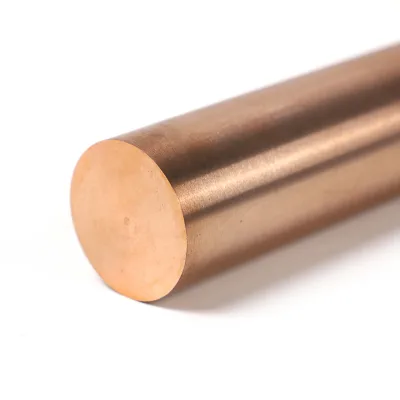
The physical form of the product is consistently described as "Round" with specific diameter requirements. Specifications often cite a minimum diameter of 2mm, with broader ranges extending up to 800mm in general copper rod categories, though tungsten copper variants may have tighter tolerances. The surface finish is another vital specification, with "Ground" and "Polished" being the standard surface treatments observed. These finishes are essential for applications requiring low friction or precise electrical contact. The product model identifiers found in the market, such as "SHIBO-WCu rod" or generic "tungsten copper alloy rod," serve as reference points but should not be treated as exclusive brand standards. Instead, they indicate the availability of sintered forms that meet the general dimensional and compositional criteria.
Compliance Standards and Certification Verification
In the realm of industrial procurement, compliance is not optional; it is a prerequisite for operational safety and supply chain continuity. The supplied data highlights a mix of international and national standards that buyers must verify. Prominent standards mentioned include ASTM and GB (Guobiao), which are critical for ensuring the material meets specific mechanical and chemical requirements. Additionally, ISO9001:2000 is cited as a quality management standard, indicating that suppliers may operate under established quality control frameworks.
However, buyers must exercise caution regarding certification claims. While "SGS," "TUV," and "BV" are listed as quality control entities, these represent third-party inspection agencies rather than inherent material certifications. A supplier may claim to have products inspected by these bodies, but this does not guarantee that every batch automatically possesses a specific certification status. The standard "as per customer's request" is also frequently observed, suggesting that many suppliers operate on a custom-order basis where the buyer defines the specific compliance requirements.
When evaluating a potential supplier, procurement teams should request specific test reports that align with ASTM or GB standards relevant to tungsten copper alloys. Relying solely on the presence of a "Quality Control" label is insufficient. The buyer must verify that the inspection covers the specific alloy composition (e.g., verifying the Cuw50 percentage) and physical dimensions (e.g., confirming the roundness and diameter tolerance). The absence of a specific standard in a listing does not imply non-compliance, but rather a need for the buyer to define the standard explicitly in the purchase order.
Cost Drivers and Pricing Dynamics
The pricing structure for sintered tungsten copper round rods is influenced by several volatile factors, primarily the raw material costs of tungsten and copper. The observed price range in the market spans from 5 to 300 USD, a wide variance that reflects differences in alloy composition, dimensional specifications, and surface finishing requirements. A rod with a high copper content (e.g., Cuw90) will generally command a different price point than a high-tungsten variant due to the differing market values of the base metals.
MOQ (Minimum Order Quantity) is another significant cost driver. The data indicates an MOQ range from 1 unit to 500kg. For smaller projects or prototyping, suppliers offering low MOQs are essential, though they may carry a higher unit cost. Conversely, large-scale industrial procurement can leverage economies of scale, but the 500kg threshold suggests that bulk purchasing is often required to access the most competitive pricing tiers.
Payment terms also play a role in the total cost of ownership. Common terms observed include L/C (Letter of Credit), T/T (Telegraphic Transfer), and Western Union, alongside various Incoterms like CIF, CFR, FOB, FCA, and Ex-Work. The choice of Incoterm affects the logistics cost and risk allocation. For instance, an Ex-Work price excludes all shipping and insurance costs, whereas CIF includes them up to the destination port. Buyers must calculate the total landed cost, not just the unit price, to make an informed decision.
Typical Applications and Performance Requirements
The versatility of sintered tungsten copper round rods is evident in their diverse application sectors. The primary use cases identified are Industrial, Electronics, and Aviation. In the industrial sector, these rods are utilized for high-voltage switches and electrical contacts where high conductivity and resistance to arc erosion are paramount. The "Electronics" application often involves heat sinks and thermal management components in high-power devices, leveraging the material's ability to dissipate heat rapidly.
The "Aviation" sector represents a high-stakes application area where weight-to-strength ratios and thermal stability are critical. The specific mention of "Air Condition or Refrigerator" and "Water Heater" applications suggests that the material is also adapted for thermal management in HVAC systems, where durability under thermal cycling is required.
To ensure the material meets these application needs, buyers must verify the specific performance characteristics. For electrical applications, the conductivity relative to the copper percentage must be confirmed. For thermal applications, the thermal expansion coefficient and thermal conductivity are key metrics. The "Low Carbon" attribute noted in some listings is particularly relevant for applications requiring high purity and resistance to oxidation at elevated temperatures.
Supplier Evaluation and Geographic Considerations
Geographic origin is a significant factor in supplier evaluation. The majority of the observed product data points to China as the origin, with specific mentions of Henan and Tianjin as production hubs. This concentration suggests a mature supply chain with established logistics networks. However, buyers should not assume uniformity across all suppliers from this region. The "Brand No" listings, such as "W80%, Cu20%," indicate that some suppliers may have proprietary formulations or specific branding strategies.
When evaluating suppliers, the focus should be on their capability to meet the specific customization needs. The "Customization: Available" attribute is a strong indicator of a flexible supply chain. Buyers should assess whether a supplier can accommodate specific requests for diameter, length (ranging from 1m to 6m), and surface finish. The "Wooden Case" and "Wooden Box Wrapped Plastic Foam" packaging options suggest that suppliers are aware of the need for secure transport, which is crucial for heavy, dense materials like tungsten copper.
The "Standard Seaworthy Packing" is another common requirement, indicating that suppliers are equipped for international shipping. Buyers should verify that the packaging is robust enough to prevent damage during transit, especially given the high density of the material.
Quality Control and Long-Term Procurement Strategy
Quality control is the linchpin of a successful long-term procurement relationship. The presence of "SGS TUV BV" in the data highlights the importance of third-party verification. Buyers should insist on pre-shipment inspections that cover chemical composition, mechanical properties, and dimensional accuracy. The "Quality Control" attribute should be treated as a process requirement rather than a static guarantee.
For long-term procurement, consistency is key. Buyers should establish a clear specification sheet that defines the acceptable range for copper percentage, density, and surface finish. The "as per customer's request" standard implies that the supplier is willing to adapt, but the buyer must provide clear, written specifications to avoid ambiguity.
Furthermore, the "Payment Term" flexibility offered by suppliers, such as L/C and T/T, can be leveraged to build trust and manage cash flow. Establishing a relationship with a supplier who offers these terms indicates a mature business operation. Buyers should also consider the lead time implications of customization. While specific lead times are not provided in the data, the need for sintering and machining suggests that custom orders will require more time than standard stock items.
In conclusion, sourcing sintered tungsten copper round rods requires a meticulous approach that balances technical specifications, compliance verification, and cost management. By focusing on the verified attributes of alloy composition, surface finish, and packaging, and by rigorously checking supplier capabilities against the identified standards, buyers can secure high-quality materials that meet the demanding requirements of industrial, electronic, and aviation applications. The market offers a wide range of options, but success lies in the ability to navigate these options with a clear, evidence-based strategy.
FAQs
What is the typical density of sintered tungsten copper round rods?
The observed density for these rods is approximately 15.15g/cm³. This value depends on the specific copper percentage, which ranges from Cuw50 to Cuw90 in available listings.
Which standards apply to tungsten copper alloy rods?
Products commonly adhere to ASTM and GB standards. Some listings also reference ISO9001:2000 for quality management, while others specify standards as per customer requests.
Can I find customized sintered tungsten copper round rods?
Yes, customization is available for these products. Buyers can request specific dimensions, surface finishes like ground or polished, and packaging options such as wooden cases wrapped in plastic foam.
What are the minimum order quantities for these rods?
The minimum order quantity ranges from 1 unit to 500kg depending on the supplier. Some vendors require bulk purchases of 500kg, while others accommodate smaller prototyping orders.
Where are these tungsten copper rods typically manufactured?
The majority of products originate from China, specifically from regions like Henan and Tianjin. These locations serve as primary hubs for the production and export of these industrial materials.
What surface finishes are available for tungsten copper bars?
Standard surface treatments include ground and polished finishes. These options are essential for applications requiring precise electrical contact or low friction in industrial and aviation settings.
Which industries use sintered tungsten copper round rods?
These rods are used in industrial, electronics, and aviation sectors. They are also applied in air conditioning, refrigeration, and water heating systems for their thermal management capabilities.