Source Spindle Box Positioner for Welding, Assembly, and Machining
Compare 26 Spindle Box Positioner units from verified Chinese suppliers. Buyers can evaluate adjustable welding turning rolls, flexible tilters, and automatic visual positioning machines with varying loading capacities and motor powers; compare the available evidence and request quotations based on your requirements.
Key considerations
Products List


Multi-Angle Adjustable Speed Rotating Table Positioner for Precision
$1400.00 - $4500.00
MOQ: 1 Pieces

Multi-Angle Adjustable Turning Table Positioner for Precision Rotating
$1500.00 - $4500.00
MOQ: 1 Pieces


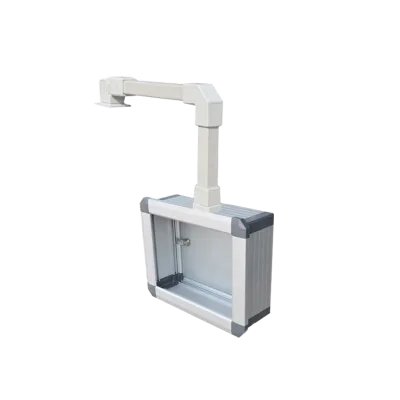


CNC Machine Numerical System Control Box
$1.00 - $550.00
MOQ: 10 Pieces
Qingyun Weijie CNC Machine Tool Accessories Manufacturing Co., Ltd.


Cardboard Box Machine. Storage Function for The Positioning Part, Easy to Adjustment
$150000.00 - $155000.00
MOQ: 1 Pieces


$15000.00 - $220000.00
MOQ: 1 Sets


Comprehensive Sourcing Guide
Spindle Box Positioner Sourcing Guide
The Spindle Box Positioner serves as a critical automation component for aligning heavy workpieces during welding and assembly operations. Buyers must distinguish between general welding positioners and specialized cantilever control units, as the supplied data indicates a range of models including the AUT-SWP-Z and TRS2200. These units often feature adjustable turning rolls and flexible combination tilting mechanisms to accommodate diverse industrial geometries. Understanding the specific structural requirements, such as platform versus cantilever designs, is essential before initiating a procurement request.
Procurement teams should verify whether the requested unit supports custom colors, logos, or specific dimensional modifications. The market offers products with varying motor powers, such as 400W or 500W options, which directly influence the torque and stability of the positioning system. Buyers need to confirm if the supplier can provide a fully automatic visual positioning machine or a standard mechanical unit based on their production line's complexity. This distinction ensures the selected equipment matches the operational speed and precision demands of the facility.
Product Scope and Observed Listing Signals
Current market listings reveal a significant variance in product dimensions and loading capacities, ranging from compact units to heavy-duty industrial systems. Some observed models support a maximum loading capacity of 2200 kg, while others are designed for lighter vertical loads of 250 kg or horizontal loads of 500 kg. This disparity highlights the necessity for buyers to clearly define their maximum workpiece diameter, which can range from 101 mm to 1524 mm, to ensure the selected positioner does not exceed its structural limits.
Packaging standards also vary significantly across different product models, with options including wooden cases, plywood cases, or standard cartons. The physical footprint of the equipment, such as the 1200mm640mm1050mm dimension for certain positioners, impacts shipping logistics and factory floor layout planning. Buyers must cross-reference the listed net weight, which can be approximately 200 kg or up to 245 kg, with their internal handling capabilities to prevent logistical bottlenecks during delivery and installation.
Technical Specifications to Verify
Technical due diligence requires a precise verification of the gyration center height and table dimensions to ensure compatibility with existing jigs and fixtures. Specific models list a gyration center height of 830 mm or a table height of 660 mm, which dictates the ergonomic working zone for operators. The tilting angle capability, observed in some units as 0-135°, is another critical parameter that determines the range of motion available for complex welding sequences without requiring manual repositioning of the workpiece.
Motor specifications and control signal inputs must be validated against the facility's power infrastructure and automation protocols. While some units utilize a 400W rotation motor, others may feature a 500W power rating, influencing the overall energy consumption and thermal management requirements. Additionally, buyers should confirm if the control system accepts standard input signals like 4~20mA DC, as this ensures seamless integration with existing programmable logic controllers and automated assembly lines.
Compliance and Safety Documentation
Safety compliance is paramount when sourcing industrial machinery, and buyers must request explicit documentation regarding electrical and mechanical safety standards. The supplied data references certifications such as CE, EMC, and UL, alongside ISO9001:2008 quality management standards, which indicate a baseline level of regulatory adherence. However, buyers should not assume all listed products possess these certifications without requesting specific test reports or certificates of conformity for the exact model number being purchased.
Documentation regarding the equipment's structural integrity and material composition is equally important for long-term operational safety. Some units are constructed from aluminum, while others may utilize steel frames, affecting both weight and corrosion resistance. Buyers must verify that the packaging standards, such as the 790029002500mm wooden case or 82 x 73 x 82 cm carton, meet international shipping regulations to prevent damage during transit and ensure the equipment arrives in a condition ready for immediate deployment.
Cost Drivers and Commercial Terms
The final cost of a Spindle Box Positioner is heavily influenced by customization requirements, motor power ratings, and the complexity of the control system. Units offering fully automatic visual positioning or adjustable turning rolls typically command a higher price point compared to basic mechanical models. Buyers should anticipate that the observed price range of 0.5 to 220,000 USD reflects these significant variations in functionality, with higher costs associated with advanced automation features and larger loading capacities.
Commercial terms regarding shipping and minimum order quantities (MOQ) must be clarified early in the negotiation process to avoid unexpected expenses. The observed MOQ range of 1 to 100 units suggests flexibility for both single-unit purchases and bulk procurement, but specific lead times and shipping terms like DHL, FedEx, or EMS need to be confirmed. Buyers should also account for the weight of the packaging, which can add 25 kg to the total shipment weight, potentially affecting freight charges and customs duties.
Supplier Qualification and Quality Control
Supplier qualification should focus on their ability to provide support for customized specifications, including logos, colors, and unique dimensional requirements. The availability of support for customized colors and specifications indicates a manufacturer capable of adapting standard designs to meet specific client needs. Buyers must verify the supplier's track record in delivering products with consistent quality, particularly regarding the precision of the tilting angle and the stability of the rotation motor under load.
Quality control processes must be validated through requests for factory audit reports or third-party inspection results. While some listings mention ISO9001:2008, buyers should ensure that the specific production batch adheres to these standards through documented quality assurance protocols. It is crucial to confirm that the supplier provides a clear warranty and after-sales support structure, ensuring that any technical issues with the control box or mechanical components can be resolved promptly to minimize production downtime.
Long-Term Procurement Checks
Establishing a long-term procurement strategy requires regular performance monitoring of the installed positioners to ensure they continue to meet operational specifications. Buyers should implement a schedule for inspecting the motor power output and the structural integrity of the platform to detect early signs of wear or fatigue. Regular maintenance checks on the tilting angle mechanism and the rotation motor are essential to maintain the precision required for high-quality welding and assembly operations.
Future-proofing the procurement process involves maintaining open communication channels with the supplier for potential upgrades or spare parts availability. As technology evolves, the ability to retrofit existing units with updated control signals or higher capacity motors can extend the useful life of the equipment. Buyers should also review the supplier's inventory of spare parts, such as control boxes or motor components, to ensure that maintenance can be performed quickly without relying on external vendors for critical replacements.
FAQs
What customization options are available for welding positioners?
Customization is available for colors, specifications, and logos on these welding positioners. Buyers can request specific adjustments to meet unique production needs while maintaining the standard new condition and platform structure provided by the manufacturer in China.
How much weight can the welding turning rolls support?
The equipment supports a maximum loading capacity of 2200 kilograms per set. This high capacity allows the adjustable welding turning rolls to handle heavy workpieces effectively while ensuring stability during the welding process for various industrial applications.
What is the motor power for the welding positioner model?
The rotation motor power is 400 watts for the specific model listed. Another variant features a 500-watt motor, ensuring sufficient power for different operational requirements while maintaining the adjustable height of gyration center at 830 millimeters.
Can the tilting angle be adjusted on the welding tilter?
Yes, the tilting angle can be adjusted from 0 to 135 degrees on the flexible combination welding tilter. This range allows operators to position workpieces at various angles for optimal welding access and precision during the manufacturing process.
What is the net weight of the welding positioner unit?
The equipment net weight is approximately 200 kilograms for the standard unit. The shipping weight is listed as 220 kilograms net and 245 kilograms gross, packed securely in a wooden case for safe international transport from China.
Which certifications apply to the Spindle Box Positioner components?
Certifications include CE, EMC, Safety, UL, and ISO9001:2008 standards for the control box components. These ensure the aluminum material and regulated type adjusted form meet international safety and quality requirements for industrial automation applications.
What is the maximum loading capacity for vertical applications?
The vertical loading capacity is 250 kilograms for the specific positioner model. This limit ensures safe operation when lifting workpieces vertically, complementing the 500-kilogram horizontal capacity for diverse industrial welding and positioning tasks.