Find Sprue and Finished Product Robot for Automotive, Logistics, and Pharmaceutical
Source 30 Sprue and Finished Product Robot models with varying load capacities, arm spans, and control modes. Buyers can compare specifications for arc welding, friction welding, and pick-and-place applications across multiple industries.
Key considerations
Products List


Tefude Automatic Multifunction Machinery Robot for Pick and Place Products
$25000.00 - $40000.00
MOQ: 1 Pieces
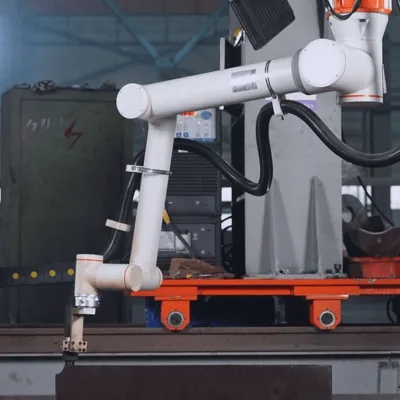


Robots with 4-Axis Load of 180kg Are Used for Barreled Product Handling
$15000.00 - $70000.00
MOQ: 1 Sets

The Six-Axis Robot Is Used for Stacking Finished Products in Food Factories
$21000.00 - $70000.00
MOQ: 1 Sets


Advanced Collaborative Robot for Efficient Assembly and Packaging Solutions
$3500.00 - $50000.00
MOQ: 1 Pieces

Factory Direct Long Lifespan Low Noise Electronic Products Collaborative Robot
$7500.00 - $8000.00
MOQ: 1 Pieces


Horizontal 2900mm Stroke Robot/Imm Robot Arm/Sprue Picker/Product Robot Picker
$19800.00 - $21800.00
MOQ: 1 Sets

Plastic Light Injection Robot/Manipulator/Product Picker/Sprue Picker/Robotic Arm
$19800.00 - $21800.00
MOQ: 1 Sets


Comprehensive Sourcing Guide
Sprue and Finished Product Robot Sourcing Guide
The procurement of industrial robotics for sprue handling and finished product management requires a precise alignment between the machine's kinematic capabilities and the specific demands of the production line. Buyers must distinguish between robots designed for high-speed pick-and-place operations and those engineered for heavy-load welding or palletizing tasks, as the operational parameters vary significantly across these categories. The observed market data indicates a diverse range of models, from compact units with a 1560mm arm span to heavy-duty systems capable of a 3200mm working radius, necessitating a clear definition of the required reach and payload before initiating supplier engagement.
A critical decision point involves selecting the appropriate control mode and axis configuration to match the complexity of the application. While some units offer continuous path control suitable for complex welding trajectories, others utilize point-to-point control optimized for repetitive loading and unloading cycles. The selection process must account for the specific degrees of freedom required, with 4-axis and 6-axis configurations being the primary options observed in the current listings, each offering distinct advantages in terms of flexibility and precision for handling sprues or finished goods.
Product Scope and Observed Listing Signals
The product landscape for sprue and finished product robots encompasses a wide spectrum of payload capacities, ranging from lightweight units handling less than 2kg to heavy-duty models supporting loads up to 180kg. This variance dictates the suitability of the equipment for different stages of the manufacturing process, where delicate components may require the precision of a 5kg or 6kg capacity robot, while palletizing finished goods often demands the robustness of a 20kg or 150kg class machine. Buyers should carefully map their maximum expected load requirements against the observed loading abilities to ensure the selected unit will not be underutilized or overstressed during operation.
Listing signals also reveal significant differences in physical dimensions and operational speeds that directly impact production throughput. The maximum arm span observed ranges from 940mm to 3200mm, and welding speeds vary between 0.5 m/min and 1 m/min depending on the specific model and application type. Additionally, pick-and-place speeds are noted to range from 50 to 200 times per cycle, a metric that is crucial for high-volume environments. Procurement teams must verify that the listed specifications align with the actual spatial constraints of the facility and the required cycle times for their specific production goals.
Technical Specifications to Verify
Verification of the robot's accuracy and repeatability is paramount for ensuring consistent product quality, particularly in applications requiring tight tolerances. The observed data highlights repeated positioning accuracies as low as 0.05mm and general accuracy ratings of ±0.1mm or ±1mm, depending on the model class. Buyers must confirm which accuracy metric applies to their specific use case, as a ±1mm tolerance may be acceptable for general palletizing but insufficient for precision assembly or delicate sprue removal tasks.
The drive mode and condition of the equipment are also critical technical factors that influence long-term reliability and maintenance costs. All observed units in the current dataset are listed as new and utilize electric drive modes, which generally offer cleaner operation and easier integration with modern control systems compared to hydraulic alternatives. However, the specific application type, whether arc welding, friction welding, or general handling, must be matched to the robot's design, as a unit optimized for welding may not be ideal for high-speed logistics operations.
Compliance and Safety Documentation
Ensuring that the robotic system meets international safety and quality standards is a non-negotiable aspect of the procurement process. The available listings indicate that many units carry CE certification, and some models are further compliant with ISO standards, which are essential for operating in regulated markets. Buyers must request and verify the specific certification documents for the exact model number being purchased, as compliance status can vary between different product lines and manufacturing batches.
Documentation regarding the warranty and after-sales service provisions is equally vital for mitigating operational risks. The observed market offers warranty periods ranging from 12 months to 1 year, with some suppliers providing lifelong service support alongside the standard warranty. Procurement teams should explicitly clarify the scope of the "1 Year Warranty" or "Lifelong Service" claims, ensuring that the agreement covers critical components and includes clear protocols for technical support and spare parts availability in the event of a system failure.
Cost Drivers and Commercial Terms
The pricing for industrial robots in this category exhibits a wide range, with observed values spanning from approximately $820 to $98,550, reflecting the vast differences in payload, reach, and technological complexity. The minimum order quantity (MOQ) is typically low, ranging from 1 to 2 units, which allows for flexible procurement strategies for small to medium-sized enterprises. However, the final cost is heavily influenced by the specific configuration, such as the inclusion of specialized end-effectors or custom control software, which can significantly elevate the base price of the unit.
Commercial terms regarding packaging and logistics must be clearly defined to prevent unexpected costs and delays. The observed packaging standards vary from normal export packaging to wood crates, with some units specified for logistics handling. Buyers should verify the exact packing dimensions and weight, as these factors directly impact shipping costs and the feasibility of installation within the facility. Additionally, the origin of the product, consistently noted as China in the current data, should be factored into the total landed cost calculation, including any applicable tariffs or import duties.
Supplier Qualification and Quality Control
Supplier qualification should focus on the manufacturer's ability to provide consistent product attributes and reliable after-sales support. The data indicates that customization is available for many models, suggesting that suppliers possess the engineering capacity to adapt standard units to specific production needs. Buyers should assess the supplier's track record in delivering customized solutions, particularly regarding the integration of the robot into existing production lines for applications in the automotive, pharmaceutical, and food and beverage sectors.
Quality control measures must extend beyond the initial inspection of the product to include verification of the manufacturing standards and testing protocols. While specific test results are not provided in the general listings, the presence of certifications like CE and ISO implies a baseline adherence to quality management systems. Procurement teams should request detailed quality assurance reports and inspection certificates for the specific batch of robots being ordered to ensure that the delivered units meet the advertised specifications for loading ability, arm span, and accuracy.
Long-Term Procurement Checks
Establishing a framework for long-term procurement requires a focus on the durability and maintainability of the robotic systems. The condition of the units is listed as new, but the long-term viability depends on the availability of spare parts and the robustness of the warranty terms. Buyers should negotiate service level agreements that guarantee the availability of critical components and technical expertise for at least the duration of the warranty period, ensuring minimal downtime during the operational lifecycle of the equipment.
Finally, the integration of the robot into the broader production ecosystem must be planned with an eye toward future scalability and adaptability. The observed applications span from automotive industry tasks to pharmaceutical handling, indicating that these robots are versatile but require specific programming and configuration for each use case. Procurement strategies should include provisions for software updates and potential hardware upgrades, ensuring that the investment remains relevant as production requirements evolve and new technologies are introduced to the manufacturing floor.
FAQs
What is the maximum arm span for these robots?
The maximum arm span varies by model, reaching up to 3200mm for the KW1180M-3200 and 1800mm for the BRTR09TDS5P0. This reach allows for extensive coverage in assembly lines. Buyers should select the span that matches their specific workspace layout and operational requirements to ensure efficient material handling.
Can these robots handle heavy loads?
Yes, certain models support significant payloads, with the TFD-R1100 handling up to 180kg for palletizing tasks. Other variants like the BRTIRUS1820A are designed for lighter loads of 6kg. The loading ability depends on the specific application, ranging from automotive welding to pharmaceutical logistics, ensuring suitability for diverse industrial needs.
What certifications do these robots have?
These robots typically hold CE certification, ensuring compliance with European safety standards. Some models also feature ISO certification for quality management. These credentials verify that the equipment meets rigorous industrial safety and performance benchmarks, providing buyers with confidence in the reliability and regulatory adherence of the machinery for global deployment.
How accurate is the repeated positioning?
The repeated positioning accuracy is highly precise, with some models achieving 0.05mm. Other variants offer accuracy within ±0.1 mm or ±1 mm depending on the specific type. This precision is critical for applications like arc welding and friction welding, where consistent placement and quality control are essential for manufacturing excellence.
Are customization options available?
Customization is available for these robots to meet specific operational requirements. Buyers can tailor features such as control modes, including continuous path or point-to-point control, to suit their production lines. This flexibility allows for integration into complex workflows, ensuring the robot adapts to unique manufacturing processes and enhances overall operational efficiency.
What is the warranty period?
The warranty period is typically 1 year or 12 months for these robots. Additionally, after-sales service often includes lifelong support to assist with maintenance and troubleshooting. This comprehensive service package ensures long-term reliability and minimizes downtime, providing buyers with peace of mind and sustained operational support throughout the equipment's lifecycle.