Source Square Head Machine Bolt for Machinery Building Chemical
Find and compare Square Head Machine Bolt options from verified suppliers. Browse 30 listings with varying grades, finishes, and sizes to match your industrial needs.
Key considerations
Products List
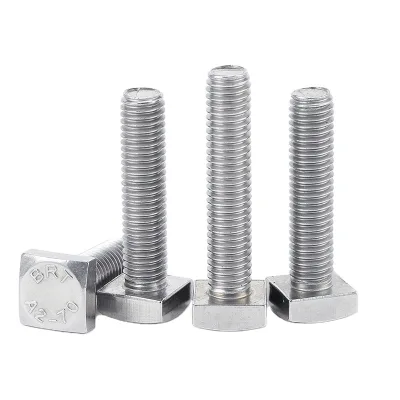
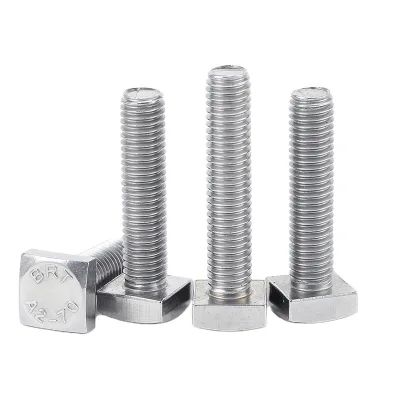


Flat Head Threaded Screws Machined Stainless Steel Straight Head Screws
$0.36 - $0.54
MOQ: 5000 Pieces


High Quality Hex Socket Extra Low Head Cap Screws Flat Head Machine Screw
$0.90 - $1.50
MOQ: 100 Pieces


Comprehensive Sourcing Guide
Strategic Sourcing Guide for Square Head Machine Bolts
The procurement of square head machine bolts requires a nuanced understanding of the intersection between mechanical fastening standards, material science, and supply chain logistics. Unlike the ubiquitous hexagonal head bolts, square head variants offer distinct advantages in specific industrial applications, particularly where torque application is limited or where the bolt head must be recessed into a surface. For buyers operating in the machinery, chemical, and construction sectors, selecting the correct square head bolt involves rigorous verification of thread specifications, material grades, and surface treatments. This guide synthesizes available market data to provide a disciplined framework for sourcing these components without relying on unverified supplier claims or speculative market figures.
Technical Specifications and Dimensional Verification
The foundation of any successful procurement strategy for square head machine bolts lies in the precise definition of technical specifications. The market data indicates a diverse range of available attributes, necessitating a clear distinction between metric and imperial threading systems. Buyers must explicitly verify whether the required fasteners adhere to UNF (Unified National Fine) threads or Metric standards, as the supplied product listings reveal both "Metric or Inch" options and specific "UNF" designations. The thread size is a critical variable; while some listings specify "M8" as a standard offering, others indicate a broad range from "M6 to M16" or even "1/4"--2" for larger industrial applications.
Head geometry is another primary differentiator. The core keyword "square head" is supported by specific product attributes listing "Square Head" as a distinct type, yet buyers must remain vigilant against product listings that conflate this with "Round Head" or "Hex Head" variants. The presence of "Square Head Bolts" as a specific category confirms the existence of this fastener type, but the "Hex Head Curved Bolts" listing serves as a reminder that similar-looking fasteners exist in the same catalog. When evaluating a potential supplier, the buyer must confirm the head style is strictly square to ensure compatibility with square-drive tools and recessed mounting holes.
Length and diameter specifications are equally critical. Observed data points to specific lengths such as "70 mm" for certain models, while other entries suggest a general size range of "6mm-48mm." This discrepancy highlights the importance of defining the exact bolt length (L) and shank diameter (d) required for the application. The model numbers provided in the market, such as "SL048," "LNK-22015," and "LNK22005," serve as internal identifiers but do not replace the need for a detailed engineering drawing or a standardized specification sheet. Buyers should demand that the supplier's product data sheet explicitly maps the model number to the specific dimensions of head width across flats, thread pitch, and overall length.
Material Composition and Mechanical Grades
Material selection dictates the structural integrity and environmental resistance of the Square Head Machine Bolt. The supply chain data presents a complex picture of material availability, ranging from "Carbon Steel" to "Stainless Steel." This variation implies that buyers cannot assume a single material composition for all square head bolts; rather, the material must be selected based on the operating environment. Carbon steel is frequently cited with various grade designations, including a generic "Diy" grade and a high-strength "10.9" grade. The "10.9" designation refers to a specific property class in the ISO 898-1 standard, indicating a tensile strength of 1000 MPa and a yield strength of 900 MPa. This is a critical parameter for high-load applications in machinery and structural building.
Conversely, the presence of "Stainless Steel" in the product attributes suggests options for corrosion-resistant applications, particularly in the chemical industry or environmental sectors. However, the specific stainless steel grade (e.g., 304, 316) is not explicitly detailed in the provided facts. Therefore, buyers must verify the exact alloy composition to ensure it meets the corrosion resistance requirements of the intended application. The listing of "Grade: 8" alongside "Material: Carbon Steel" further complicates the material landscape, suggesting that different suppliers may use different grading nomenclatures. It is imperative for the procurement team to request a Mill Test Certificate (MTC) or a material composition report to confirm that the physical properties match the claimed grade, whether it is 10.9, 8, or a generic carbon steel equivalent.
Surface Finishes and Corrosion Protection
The longevity of a Square Head Machine Bolt is heavily influenced by its surface finish. The observed data lists "Zinc Plated" and "Hot Galvanizing" as the primary finishing processes available in the market. Zinc plating is a standard electrochemical process that provides a thin layer of protection against rust, suitable for indoor applications or environments with low humidity. In contrast, Hot Galvanizing involves dipping the fastener in molten zinc, creating a thicker, more durable coating that is essential for outdoor construction, heavy machinery, and exposure to harsh chemical environments.
Buyers must align the finish specification with the environmental conditions of the end-use application. A "Zinc Plated" bolt may be insufficient for an outdoor building project in a coastal region, whereas a "Hot Galvanized" bolt might be overkill and cost-prohibitive for an indoor machinery assembly. The product listings also mention "Customer request" as a standard for some entries, indicating that custom finishes may be available. However, without specific data on the thickness of the plating or the salt spray test hours for the provided finishes, buyers should not assume a specific level of corrosion resistance. Verification through third-party testing or adherence to specific finish standards (such as ASTM B633 for zinc plating) is necessary to validate the protective capabilities of the selected fastener.
Compliance, Standards, and Certification Landscape
Navigating the regulatory and standards landscape is a critical component of sourcing square head machine bolts. The market data reveals a wide array of international standards, including "DIN," "GB," "ANSI," "BSW," "JIS," "GOST," and "ASTM." The presence of "DIN" (Deutsches Institut für Normung) standards suggests that many suppliers are aligned with European specifications, which are often the default for high-precision machinery. However, the listing of "GB" (Guobiao) indicates compliance with Chinese national standards, which may differ slightly in tolerance or thread pitch from their DIN counterparts.
Certification requirements vary by industry and region. The provided facts mention certifications such as "ISOGS," "RoHS," and "CE." While "CE" marking indicates conformity with health, safety, and environmental protection standards for products sold within the European Economic Area, and "RoHS" restricts the use of specific hazardous materials, the validity of these certifications depends on the specific product batch and the issuing authority. Buyers should not rely solely on the presence of these keywords in a product listing. Instead, they must request valid, up-to-date certificates of conformity and verify that the certification covers the specific model and material grade being purchased. The "ISO" mention in "ISOGS" likely refers to ISO 9001 quality management, but the exact scope of the certification must be confirmed.
Cost Drivers and Procurement Parameters
Understanding the cost structure of square head machine bolts requires an analysis of the variables that influence pricing. The observed price range in the market spans from 0 to 8000 USD, a wide disparity that likely reflects differences in order volume, material grade, and customization levels. The Minimum Order Quantity (MOQ) ranges from 1 to 100,000 units, indicating that suppliers cater to both small-scale prototyping and large-scale industrial production. For buyers seeking small quantities, the "Selling Units: Single item" attribute suggests that sample orders are feasible, while the "Free Samples" attribute offers a low-risk method for quality verification.
The cost of square head bolts is driven by several factors. First, the material grade is a primary cost driver; a 10.9 grade carbon steel bolt will be more expensive than a generic "Diy" grade due to the stricter manufacturing controls and higher raw material quality. Second, the surface finish adds significant cost; hot galvanizing is more expensive than zinc plating due to the energy-intensive process and thicker material usage. Third, customization is a major factor. The "Customization: Available" and "Customized All Details" attributes indicate that non-standard dimensions or special finishes will incur additional tooling and setup costs. Buyers should also consider the "prod_packing" options, such as "Carton+Pallet" versus "Bulk Packing," as packaging can impact shipping costs and inventory handling efficiency.
Supplier Evaluation and Quality Assurance
Evaluating suppliers for square head machine bolts requires a multi-faceted approach that goes beyond price comparison. The geographic origin of the products is a key indicator of supply chain dynamics. The data lists origins in "Hebei, China," "Wenzhou, China (Mainland)," and "Ningbo," all of which are major manufacturing hubs in China. While these locations suggest a robust supply base, buyers should verify the specific factory capabilities and audit the production facilities to ensure consistent quality. The "Develop Ability: Independent Mold Development" attribute is a strong positive signal, indicating that the supplier has the engineering capacity to produce custom molds and adapt to unique design requirements without relying on third-party tooling.
Quality control is paramount, especially given the "High Quality" claim found in the product attributes. Buyers must implement a rigorous inspection protocol that includes visual checks for surface defects, dimensional verification using calibrated gauges, and mechanical testing for tensile strength and hardness. The "Condition: New" attribute is a basic requirement but does not guarantee performance. For critical applications, buyers should request test reports for the specific batch, including proof of the "10.9" grade or equivalent tensile strength. The "Sample: Contact Us" option suggests that some suppliers may require a formal inquiry for samples, while others offer them freely; this should be factored into the supplier selection timeline.
Long-Term Procurement and Application Suitability
The long-term viability of sourcing square head machine bolts depends on their suitability for the intended application and the stability of the supply chain. The listed applications include "Machinery," "Chemical Industry," "Environmental," and "Building," which cover a broad spectrum of industrial needs. However, the specific suitability of a square head bolt for these applications depends on the load requirements and environmental exposure. For instance, in "Metal Casting Machinery" or "Metal Forging Machinery," the high vibration and heavy loads may necessitate the use of high-grade (10.9) bolts with robust locking mechanisms, which square heads can provide if designed correctly.
Buyers should also consider the "Connection: Common Bolt" attribute, which implies that these fasteners are intended for standard assembly rather than specialized, proprietary connections. This simplifies the procurement process but requires careful attention to the "Standard" requirements. If the end product is exported, the bolt must meet the specific standards of the destination market (e.g., ANSI for the US, DIN for Europe). The "Standard: Customer request" option provides flexibility, but it places the burden on the buyer to define the exact standard clearly to avoid non-compliance issues. Finally, the "Lead time" and "MOQ" constraints must be integrated into the production schedule. With MOQs reaching 100,000 units, buyers planning large-scale projects must ensure they have the storage capacity and cash flow to manage bulk orders, while those with smaller needs must negotiate effectively with suppliers who offer lower MOQs or flexible sample policies.
In conclusion, sourcing square head machine bolts is a complex task that demands a thorough understanding of technical specifications, material properties, and supplier capabilities. By adhering to the verified facts regarding thread types, material grades, and standards, buyers can mitigate the risks associated with unverified claims and ensure the procurement of high-quality fasteners that meet the rigorous demands of modern industrial applications. The key to success lies in detailed specification definition, rigorous supplier vetting, and a commitment to quality assurance throughout the procurement lifecycle.
FAQs
What materials are available for square head machine bolts?
Square head machine bolts are available in carbon steel and stainless steel. Buyers must verify the specific grade, such as 10.9 or generic DIY, to ensure the material meets the required tensile strength and corrosion resistance for their specific application environment.
Which thread standards are supported for these bolts?
These bolts support both UNF and metric thread standards, with options ranging from M6 to M16 or 1/4 inch to 2 inches. Suppliers also adhere to international standards like DIN, GB, ANSI, and JIS, so buyers must specify the exact thread type required for compatibility.
Can I request custom finishes for square head bolts?
Custom finishes are available, including zinc plating and hot galvanizing, based on customer requests. The choice between these processes depends on the operating environment, as hot galvanizing offers superior protection for outdoor or harsh chemical applications compared to standard zinc plating.
What certifications do the manufacturers hold?
Manufacturers often hold certifications such as ISO, RoHS, and CE to ensure compliance with safety and environmental standards. Buyers should verify that these certificates apply to the specific batch and material grade being purchased to guarantee regulatory adherence for their project.
How does the minimum order quantity vary?
The minimum order quantity ranges from a single item to 100,000 units depending on the supplier. Small buyers can often order single items or request free samples, while large industrial projects may require bulk orders to optimize pricing and shipping logistics effectively.
Where are these bolts manufactured?
These bolts are manufactured in major Chinese hubs including Hebei, Wenzhou, and Ningbo. Buyers should consider the specific origin when evaluating lead times and logistics, as different regions may have varying production capacities and shipping efficiencies for international orders.