Source Stackable Ghost Chair for Hotels, Homes, and Banquets
Explore 30 listings of stackable ghost chairs suitable for hotels, homes, and banquet events. Buyers can compare models like CRCHPCGY01 and CRCHPCYW01, checking features such as armrest options, dimensions, and delivery times from Chinese manufacturers.
Key considerations
Products List


Wholesales Plastic Acrylic Ghost Chair for Events Stackable Resin Chair
$20.00 - $30.00
MOQ: 50 Pieces


Stackable Event Clear Sophia Ghost Chair for Events Wedding Restaurant
$14.00 - $17.00
MOQ: 100 Pieces

Round Back Stackable PP Plastic Royal Resin Sophia Ghost Chair for Events
$17.00 - $23.00
MOQ: 100 Pieces

Modern Design Plastic Round Back Clear Yellow Stackable Wedding Event Ghost Chair
$14.00 - $17.00
MOQ: 100 Pieces
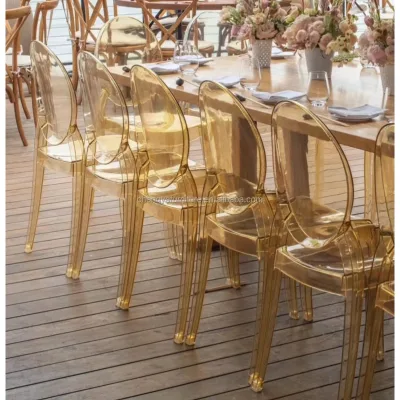


Hot Selling Stackable Outdoor Wedding Plastic Folding Ghost Chair (ZG50-025)
$14.00 - $18.00
MOQ: 100 Pieces

Manufacturer Stackable Clear Acrylic Banquet Wedding Ghost Chiavair Chairs
$2.00 - $17.00
MOQ: 100 Pieces


New Special Design Fashion Style Sliver Stacking Plastic Ghost Chairs for Events
$68.00 - $71.00
MOQ: 200 pieces



Comprehensive Sourcing Guide
Strategic Sourcing Guide for Stackable Ghost Chairs
Understanding the Product Category and Core Specifications
The Stackable Ghost Chair represents a distinct segment within the global furniture market, characterized by its transparent aesthetic and functional versatility. These chairs are primarily constructed from polycarbonate, a durable thermoplastic that offers high impact resistance and clarity. The defining visual characteristic is the "ghost" appearance, achieved through the material's transparency, which allows the chair to blend seamlessly into various interior and exterior environments. When sourcing this specific item, buyers must distinguish between the two primary design variations observed in the market: the square-seater configuration and the round-seater configuration.
Technical specifications are critical when evaluating these units. The standard dimensions for the square variant typically measure approximately W39cm, D53cm, and H84cm, with a seat height of H47cm. In contrast, the round variant often presents larger overall dimensions, such as W57cm, D54cm, and H92cm. The seat thickness is a crucial structural parameter, with observed data indicating a thickness of 2.0mm. This dimension directly influences the rigidity and comfort of the chair. Furthermore, the back height is classified as medium back, providing adequate lumbar support without the bulk of a high-back design. The chairs are designed to be unfolded and are stackable, a feature essential for storage efficiency in banquet and event settings. The structural integrity is further supported by a hold capacity of up to 300kgs, ensuring safety for adult users.
Design Variations and Customization Options
Buyers must navigate the nuances of customization when placing orders. The market offers both non-customized and customized options, allowing for flexibility based on project requirements. While the base product is often sold as a standard item, the attribute of customization is available, permitting buyers to request specific modifications. Color is a significant variable in this category; for instance, yellow is a documented color option, though the transparent nature of the polycarbonate material often remains the primary aesthetic choice.
The design style is predominantly modern, aligning with contemporary interior design trends that favor clean lines and minimalism. The chairs are available with or without armrests, a feature that significantly alters the footprint and utility of the unit. The "without armrest" version is typically preferred for high-density seating arrangements, while the "with armrest" variant offers enhanced comfort for longer-duration events. Additionally, the chairs are suitable for both indoor and outdoor use, making them versatile for hotel lobbies, home dining areas, and outdoor banquet spaces. The folded state is generally not applicable as these are rigid plastic chairs, but the stackable nature allows for compact vertical storage.
Compliance, Certification, and Quality Standards
Ensuring compliance with international standards is a non-negotiable aspect of sourcing high-quality plastic furniture. The supply chain for these chairs often references specific certifications such as CE and ISO, which indicate adherence to safety and management system requirements. SGS certification is also observed in the market, providing an additional layer of third-party verification regarding product quality and safety. Buyers should verify that the specific batch of chairs they are purchasing carries these certifications, as they are critical for liability protection and market entry in regulated regions.
Product standards vary by manufacturer and region. Some listings reference internal grading systems such as Grade A, Grade B, and Grade C, which likely denote variations in material purity, clarity, and structural integrity. Other specifications may cite dimensional standards like 505090cm or 46x52x95cm, which serve as benchmarks for the physical footprint of the chair. It is imperative for buyers to confirm which standard applies to their specific order, as these can influence the fit within event spaces and the compatibility with existing table settings. The origin of the product is predominantly China, with specific manufacturing hubs like Qingdao noted as points of origin. This geographical context is relevant for understanding logistics and potential supply chain disruptions.
Cost Drivers and Procurement Economics
The pricing of stackable ghost chairs is influenced by several dynamic factors, including material costs, order volume, and customization requirements. The observed price range in the market spans from $2 to $71 USD, a wide variance that reflects differences in quality, brand, and order quantity. The minimum order quantity (MOQ) is a significant cost driver, with observed ranges extending from 0 to 300 units. Specific listings indicate an MOQ of 50 pieces for certain models, while others require a commitment of 200 pieces. These thresholds directly impact the unit cost; smaller orders typically incur a higher per-unit price due to fixed production and setup costs.
Lead times are another critical economic factor. Production and delivery timelines can vary significantly, with observed ranges from 5 days to 30 days depending on the order size and complexity. For instance, a standard order of 500 chairs may have a lead time of 5 days, whereas customized or larger orders might require 30 days. Buyers must account for these timelines in their project planning to avoid delays. Packaging is also a cost component, with options ranging from standard carton boxes to double-wall corrugated strong cartons. The latter offers superior protection during transit but may add to the overall shipping weight and cost. Understanding these variables allows buyers to negotiate effectively and budget accurately for their procurement needs.
Typical Applications and Usage Scenarios
The versatility of stackable ghost chairs makes them suitable for a wide array of applications. The primary usage categories include hotels, homes, and banquet venues. In the hospitality sector, these chairs are frequently utilized for wedding receptions, corporate events, and restaurant dining areas where a modern aesthetic is desired. The ability to stack the chairs allows event planners to manage large volumes of seating efficiently, storing them compactly when not in use.
The "Ghost Chair" and "Royal Chair" designations often refer to specific styling cues within this category. The ghost chair is favored for its transparency, which creates an illusion of space and lightness, making it ideal for small venues or outdoor gardens. The royal chair variant, often featuring armrests and a more substantial build, is suited for formal settings where comfort and a sense of grandeur are prioritized. The chairs are specifically designed for adult use, with dimensions and load capacities tailored to this demographic. Their suitability for both indoor and outdoor environments means they can be used for patio dining, poolside events, and covered terraces, provided the polycarbonate material is rated for UV exposure in the specific climate.
Supplier Evaluation and Quality Control Protocols
When evaluating potential suppliers, buyers should focus on a comprehensive set of criteria beyond just price. The availability of OEM (Original Equipment Manufacturer) services is a key indicator of a supplier's flexibility and capability to meet specific branding or design requirements. Suppliers who accept OEM orders can often provide custom packaging, branding, or slight design modifications. The warranty period is another critical metric; a standard warranty of 2 years suggests a manufacturer's confidence in the durability of their product.
Quality control should be a central part of the procurement process. Buyers must verify the condition of the product, ensuring it is new and free from defects. The material composition, specifically polycarbonate, should be consistent across the batch to prevent variations in clarity or strength. Inspecting the packing method is essential; double-wall corrugated cartons are preferred for long-distance shipping to prevent crushing or scratching. Buyers should also request sample units to verify the seat thickness, stackability, and overall finish before committing to a large order. The presence of certifications like CE, ISO, and SGS should be validated with current documentation. Finally, the supplier's ability to meet the specified lead times and their communication responsiveness are vital indicators of reliability in the B2B supply chain.
Long-Term Procurement and Sustainability Considerations
Sourcing stackable ghost chairs involves long-term considerations regarding inventory management and product lifecycle. The stackable nature of the chairs is a significant advantage for storage, reducing the warehouse footprint required for event furniture. However, buyers should consider the environmental impact of polycarbonate materials. While durable and long-lasting, the end-of-life disposal of plastic furniture requires careful management. Selecting suppliers who adhere to strict environmental standards can mitigate some of these concerns.
The durability of the chairs, often highlighted as a key feature, ensures a longer replacement cycle compared to cheaper alternatives. This reduces the total cost of ownership over time. Buyers should also consider the modularity of the design; the ability to mix and match square and round variants can provide design flexibility for future events. As the market evolves, keeping abreast of new standards and material innovations will ensure that procurement strategies remain competitive. Establishing a long-term relationship with a reliable supplier can provide stability in pricing and lead times, which is crucial for businesses with recurring event needs. By focusing on quality, compliance, and supplier reliability, buyers can secure a steady supply of high-performance stackable ghost chairs that meet the demands of modern hospitality and event management.
FAQs
What materials are used to make stackable ghost chairs?
Stackable ghost chairs are primarily constructed from polycarbonate plastic. This durable thermoplastic offers high impact resistance and clarity, allowing the chair to blend seamlessly into various interior and exterior environments while maintaining structural integrity.
Can these chairs be used for both indoor and outdoor events?
Yes, these chairs are designed for use in both indoor and outdoor settings. They are suitable for hotels, homes, and banquet venues, making them versatile for wedding receptions, corporate events, and patio dining areas.
What is the minimum order quantity for purchasing these chairs?
The minimum order quantity varies by model, with observed ranges starting from 50 pieces up to 200 pieces. Specific listings indicate an MOQ of 50 pieces for certain models and 200 pieces for others, directly impacting unit costs.
How long does it take to receive an order of these chairs?
Delivery times typically range from 5 to 30 days depending on order size and customization. A standard order of 500 chairs may have a lead time of 5 days, while customized orders might require up to 30 days.
Which certifications are available for these plastic furniture products?
Available certifications include CE, ISO, and SGS, indicating adherence to safety and quality standards. Buyers should verify that the specific batch carries these certifications to ensure liability protection and market entry compliance.
What is the weight capacity for these stackable chairs?
The structural integrity supports a hold capacity of up to 300 kilograms. This ensures safety for adult users and provides confidence in the rigidity and comfort of the chair during use in banquet or home settings.
Are customization options available for the color and design?
Customization is available, allowing buyers to request specific modifications such as color options like yellow. While the base product is often transparent, the attribute of customization permits flexibility based on project requirements and branding needs.