Source Stackable HDPE Water Bottle Rack for Storage
Find and compare 30 Stackable HDPE Water Bottle Rack options for industrial water storage, warehouse organization, and bulk distribution. Evaluate specifications like load capacity, material durability, and customization features to select the right solution for your facility.
Key considerations
Products List

Wholesale HDPE Stackable Water Bottle Storage Rack 3 Pocket Bottled Water Storage Racks
$260.00 - $280.00
MOQ: 10 Pieces

Heavy Duty 16 12 Bottles Blue Stackable HDPE Plastic 5 Gallon Water Bottle Rack for Water Storage
$260.00 - $280.00
MOQ: 10 Pieces

Heavy Duty 20 Bottles Blue Stackable HDPE Plastic 19 Liters Water Bottle Rack for Water Storage
$260.00 - $280.00
MOQ: 10 Pieces

Wholesale HDPE 5 Gallon 20 LTR Water Bottle Rack Durable Water Bottle Rack
$260.00 - $280.00
MOQ: 10 Pieces

4-Tier Stackable Blue20 Liter Holder HDPE Plastic Water Bottle Rack for 5-Gallon Bottle Storage
$260.00 - $280.00
MOQ: 10 Pieces


Blue Stackable HDPE Plastic 5 Gallon Water Bottle Rack for Water Storage
$220.00 - $280.00
MOQ: 50 Pieces

Stackable HDPE 5 Gallon Plastic Bottled Blue 19 Liter Water Rack for Water Bottle Storage
$220.00 - $280.00
MOQ: 50 Pieces

Manufacturer Customized HDPE 19 Liter Durable Stackable Bottled 5 Gallon Water Rack for Water Bottle
$220.00 - $280.00
MOQ: 50 Pieces


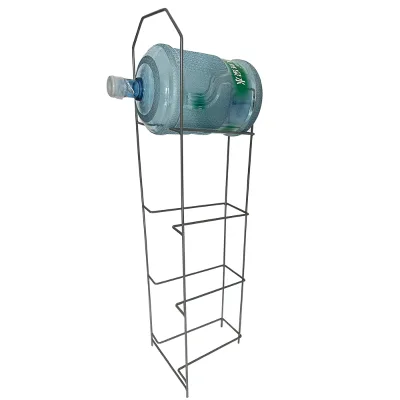


Comprehensive Sourcing Guide
Stackable HDPE Water Bottle Rack Sourcing Guide
The market for stackable HDPE water bottle racks presents a diverse range of solutions tailored for both industrial and commercial water storage needs. Based on observed listings, these units are frequently categorized as L-stands or floor-type storage holders designed specifically for 5-gallon water bottles and large vat storage. Buyers should note that while the core material is often high-density polyethylene (HDPE), the observed product data also includes metal and stainless steel variants, indicating a need to verify material composition carefully against specific application requirements. The primary function across these listings is the secure storage and organization of heavy water containers, with some models explicitly designed for single-face or multi-way entry configurations to optimize warehouse aisle space.
Procurement decisions must account for significant variations in physical dimensions and load capacities observed in current listings. While some units are compact with dimensions around 8 inches by 4.5 inches, others are substantial floor-standing structures measuring up to 1080mm by 810mm by 170mm. The load capacity data reveals a wide spectrum, ranging from static loads of 240kg to dynamic loads of 720kg, and even heavy-duty models rated for 2 tons. This variance suggests that a single "standard" specification does not exist; instead, buyers must match the rack's structural integrity and footprint to the specific weight of their water bottles and the frequency of forklift or pallet jack usage in their facility.
Product Scope and Observed Listing Signals
When evaluating product scope, buyers must distinguish between simple bottle holders and heavy-duty pallet-style racks. The observed data indicates that products range from lightweight plastic units weighing approximately 12kg to 13kg to robust metal structures weighing up to 103kg. This weight difference often correlates with the intended usage environment; lighter units may be suitable for manual handling in retail or small office settings, whereas the heavier, high-capacity models are engineered for industrial warehousing where forklift interaction and high stacking loads are common. The "folded" attribute is listed as "unfolded" for most items, suggesting these are rigid, permanent fixtures rather than collapsible storage solutions, which impacts shipping volume and on-site assembly requirements.
Customization and branding options are a significant signal of supplier flexibility in this category. Many listings highlight the availability of free silk printing or embossed logos, allowing businesses to brand their storage infrastructure for internal identification or marketing purposes. Additionally, the "American Village Style" and "Single Face" designations point to aesthetic and functional variations that may influence the choice of rack for specific retail displays versus back-of-house storage. Buyers should verify if the "bulk storage" or "carton" packing methods align with their logistics strategy, as the packing method directly influences the cost of freight and the condition of goods upon arrival.
Technical Specifications to Verify
Dimensional accuracy is the first critical technical parameter to verify, as the observed listings show conflicting standard sizes. Some products adhere to a standard of 1000mm by 600mm by 300mm, while others are specified as 1080mm by 810mm by 170mm, and smaller units are listed at 8 inches by 4.5 inches by 4.1 inches. A buyer must confirm which standard fits their specific water bottle dimensions and the available floor space in their facility. Relying on a generic "5 Gallon" label is insufficient; the physical footprint and internal clearance must be measured against the actual bottles to ensure a secure fit that prevents tipping or instability during stacking.
Load-bearing capabilities and material composition require rigorous verification to ensure safety and longevity. The data presents a mix of plastic, metal, and stainless steel materials, each offering different resistance to environmental factors. For instance, while some units feature anti-static properties, others are explicitly marked as waterproof, which is crucial for environments where water spills or high humidity are common. Buyers must cross-reference the stated static load (e.g., 240kg) and dynamic load (e.g., 720kg) with their actual operational needs, ensuring the rack can support the weight of the water bottles plus the weight of any additional stacking layers without structural failure.
Compliance and Safety Documentation
Safety compliance in the storage rack industry often hinges on the manufacturer's ability to provide third-party verification of load ratings and material safety. While some listings mention ISO and SGS certifications, these are not universal across all suppliers in the category. Buyers should request specific test reports that validate the dynamic and static load claims, particularly for high-capacity models rated for 2 tons. Without documented proof of these ratings, the risk of rack collapse under heavy water loads increases significantly, potentially leading to product damage, facility downtime, or personnel injury.
Material safety and chemical compatibility are essential considerations, especially when storing potable water containers. The observed "waterproof" and "anti-static" features suggest that these racks are designed to withstand wet environments and prevent static buildup, which can be a hazard in certain industrial settings. However, buyers must verify that the plastic or metal materials used are food-grade or non-toxic if the racks are in close proximity to drinking water supplies. Documentation should confirm that the materials do not leach harmful substances and that the surface treatments, such as the free silk print or embossed logos, are durable and non-flaking under normal use conditions.
Cost Drivers and Commercial Terms
The cost of stackable HDPE water bottle racks is heavily influenced by the material type and the complexity of the manufacturing process. Metal and stainless steel models, which often carry higher weight ratings and durability claims, generally command a higher price point compared to standard plastic units. The observed price range of $1.09 to $400 reflects this disparity, with the lower end likely representing simple, lightweight plastic holders and the higher end corresponding to heavy-duty, industrial-grade metal structures. Buyers should analyze the total cost of ownership, considering that a cheaper plastic rack may need replacement sooner than a more expensive metal alternative in a high-traffic warehouse.
Minimum Order Quantities (MOQ) and supply ability are critical commercial terms that affect procurement planning. The observed MOQ ranges from 10 to 10,000 units, indicating that suppliers cater to both small businesses and large-scale distributors. A supplier with a supply ability of 300 pieces per day may be suitable for steady, ongoing replenishment, but buyers must confirm if this capacity can scale up during peak demand periods. Additionally, the "bulk storage" versus "carton" packing options will impact shipping costs; bulk packing is typically more cost-effective for large orders but requires more on-site handling, while carton packing offers better protection for smaller shipments but increases freight volume.
Supplier Qualification and Quality Control
Supplier qualification should begin with a verification of their manufacturing origin and production consistency. The majority of observed listings indicate a origin in China (Mainland), which is a common hub for this type of manufacturing. Buyers should assess the supplier's track record in producing consistent quality across different batches, as variations in molding or welding can lead to structural weaknesses. Requesting samples of the specific model, such as the K3723 or other plastic rack models, allows for a physical inspection of the finish, weight, and fit before committing to a larger order.
Quality control processes must be explicitly defined to ensure the delivered products meet the required specifications. Buyers should inquire about the supplier's internal testing protocols for load capacity and material integrity, ensuring that the "2T" load capacity or "720kg" dynamic load claims are backed by rigorous testing. It is also important to verify the consistency of customization options, such as the free logo printing, to ensure that branding is applied correctly and does not compromise the structural integrity of the rack. A supplier with a robust quality control system will provide clear documentation of these checks and be willing to address any discrepancies immediately.
Long-Term Procurement Checks
Long-term procurement success depends on the durability and maintainability of the storage racks in a real-world environment. Buyers should evaluate the resistance of the materials to wear and tear, particularly in high-traffic areas where forklifts or pallet jacks frequently interact with the racks. The "waterproof" and "anti-static" features are valuable for longevity, but buyers must verify how these properties hold up over time under continuous exposure to water and cleaning chemicals. Regular inspections of the racks for cracks, warping, or loose components should be part of the facility's maintenance schedule to prevent unexpected failures.
Scalability and future-proofing are also key considerations when establishing a long-term supply relationship. As a business grows, the need for additional storage capacity will increase, and the ability to source matching racks from the same supplier ensures uniformity in the storage system. Buyers should confirm that the supplier can maintain consistent product specifications and availability over time, avoiding the need to retrofit facilities with mixed rack types. Additionally, the availability of replacement parts or the ability to customize future orders with updated branding or dimensions will ensure that the procurement strategy remains flexible and aligned with evolving business needs.
FAQs
What is the load capacity of this water bottle rack?
The rack supports a static load of 240kg and a dynamic load of 720kg. It is designed to hold up to 12 drums or barrels securely. This capacity ensures stability during storage and transport operations without structural failure.
Can the rack be customized with a logo?
Yes, customization is available with free silk printing or embossed logos. Buyers can choose from blue, green, or other color options. This allows for brand visibility while maintaining the functional integrity of the storage holder.
What materials are used to construct the rack?
The product is primarily made from plastic, specifically HDPE, with some metal stainless steel variants available. The plastic construction provides anti-static properties and waterproof durability. This ensures long-term resistance to corrosion and environmental wear.
How many water bottles can the rack hold?
The rack is designed for 5-gallon water bottle storage and can hold up to 12 drums. It features a 4-way entry design for easy forklift access. This configuration optimizes space utilization in warehouse or vat water storage settings.
What are the standard dimensions of the rack?
The standard size is 1080x810x170mm, fitting five-gallon bottles effectively. Another common standard dimension is 1000x600x300mm for pallet compatibility. These dimensions ensure the rack fits standard warehouse aisles and storage systems efficiently.
Is the rack suitable for outdoor or wet environments?
Yes, the rack features waterproof construction to withstand wet conditions. It is designed for vat water storage and bottle handling in various environments. The material resists moisture damage, making it suitable for both indoor and covered outdoor use.