Source Stainless Steel Automatic Mechanical Watch for Retail, Gifts, and Events
Explore 30 listings for the Stainless Steel Automatic Mechanical Watch featuring round cases, sapphire surfaces, and day/date functions. Buyers can compare movement types, waterproof ratings, and customization options from suppliers in Shenzhen.
Key considerations
Products List

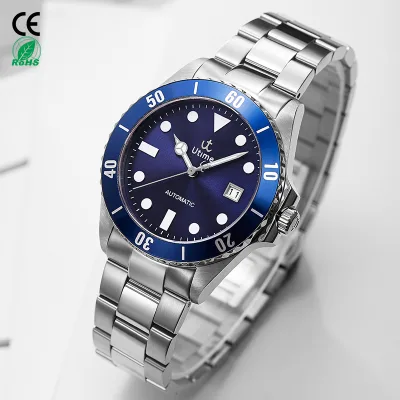
Men Watches Stainless Steel Automatic Mechanical Watch Mechanical Wristwatch
$120.00 - $140.00
MOQ: 1 Pieces


Comprehensive Sourcing Guide
Stainless Steel Automatic Mechanical Watch Sourcing Guide
Sourcing stainless steel automatic mechanical watches requires a nuanced understanding of both the mechanical complexity inherent in these timepieces and the specific supply chain dynamics of the watch manufacturing industry. Unlike quartz or digital alternatives, automatic mechanical watches rely on a mainspring and gear train that harnesses kinetic energy from the wearer’s movement, offering a distinct value proposition for buyers targeting the mid-to-high-end consumer market. The procurement process involves balancing aesthetic customization with rigorous mechanical reliability, ensuring that the final product meets both brand identity requirements and functional performance standards. Buyers must navigate a landscape where material quality, movement origin, and finishing techniques directly influence the perceived value and longevity of the product.
This guide provides a structured approach to evaluating suppliers and products within this category, focusing on observable listing signals, technical verification, and commercial risk management. By leveraging observed data from current market listings, such as the prevalence of Shenzhen-based manufacturing and specific model identifiers, buyers can establish a baseline for due diligence. The following sections detail the critical steps for validating product specifications, ensuring compliance, managing costs, and maintaining long-term supplier relationships, all while adhering to evidence-based procurement practices.
Product Scope and Observed Listing Signals
The current market landscape for stainless steel automatic watches reveals a diverse range of product configurations, with observed listings indicating a strong emphasis on customization and varied design aesthetics. Data from active listings shows that customization is widely available, allowing buyers to tailor aspects such as logos, dial colors, and even unique design elements like fruit-themed accents or specific model codes such as "43" or "L". The observed price range spans from $6 to $599 USD, reflecting a broad spectrum of quality tiers, from entry-level fashion pieces to more sophisticated mechanical instruments. This variance suggests that buyers must carefully distinguish between basic mechanical movements and higher-grade automatic calibers, as the price differential often correlates with movement precision, material thickness, and finishing quality.
Further analysis of listing attributes highlights significant variation in target demographics and functional features. While some products are explicitly marketed toward men with black dials and day/date complications, others are positioned as unisex with white dials or sport-oriented styles. The presence of features such as chronographs, power reserves, and luminous hands indicates a demand for multifunctional timepieces that serve both practical and decorative purposes. Additionally, the observation of specific packing methods, ranging from paper boxes to polybags, provides insight into the supplier’s operational maturity and cost structure. Buyers should interpret these signals as indicators of the supplier’s flexibility and capacity to meet diverse order requirements, rather than as universal standards for all products in this category.
Technical Specifications to Verify
Verifying the technical specifications of stainless steel automatic watches is paramount to ensuring product quality and customer satisfaction. The core of any automatic watch is its movement, which must be confirmed as truly mechanical rather than quartz or electronic. Buyers should request detailed movement specifications, including the number of jewels, frequency, and power reserve duration, to assess the reliability and accuracy of the timekeeping mechanism. Additionally, the material composition of the case and band should be verified, with a focus on the grade of stainless steel used, such as 316L, which offers superior corrosion resistance and durability compared to lower-grade alternatives. The surface material, whether sapphire crystal or tempered glass, also plays a critical role in scratch resistance and overall longevity, requiring clear confirmation from the supplier.
Water resistance and clasp mechanisms are other critical technical aspects that must be rigorously tested and documented. Observed listings indicate water resistance ratings of 50 meters and 100 meters, which correspond to different levels of protection against splashes and immersion. Buyers must ensure that these ratings are validated through appropriate testing protocols, as false claims can lead to product failures and reputational damage. Furthermore, the type of clasp, whether a leather deployment buckle, standard buckle, or bracelet clasp, should be evaluated for ease of use and security. The dial color, display method, and additional features like day/date windows or chronograph functions must also be cross-referenced with physical samples to ensure consistency between marketing materials and the final product.
Compliance and Safety Documentation
Compliance and safety documentation are essential components of the procurement process, ensuring that imported watches meet the regulatory requirements of the destination market. Buyers must verify that suppliers provide necessary certificates of conformity, which may include standards related to material safety, such as restrictions on heavy metals like lead and nickel in contact with skin. While specific standards like ISO 6425 are mentioned in background contexts, buyers should confirm the exact compliance requirements for their target region, whether it be the European Union’s REACH regulation, the United States’ Consumer Product Safety Improvement Act, or other local mandates. This verification process helps mitigate legal risks and ensures that the products can be legally sold and distributed without interruption.
In addition to material safety, buyers should request documentation related to the manufacturing process and quality control procedures. This may include factory audit reports, production line certifications, and internal quality assurance protocols. Suppliers who maintain transparent and rigorous quality control systems are more likely to deliver consistent product quality and fewer defects. Buyers should also inquire about the supplier’s approach to environmental compliance, particularly regarding waste management and chemical usage in the plating and finishing processes. By prioritizing suppliers with robust compliance frameworks, buyers can enhance their brand’s reputation for ethical and responsible sourcing.
Cost Drivers and Commercial Terms
Understanding the cost drivers in the stainless steel automatic watch market is crucial for effective budgeting and negotiation. Key factors influencing price include the complexity of the movement, the quality of materials used in the case and band, the intricacy of the dial design, and the level of customization required. Observed listings show a wide MOQ range from 1 to 500 units, indicating that some suppliers offer low minimums for testing or small batches, while others require larger volumes for production efficiency. Buyers should analyze the cost structure in relation to these variables, recognizing that higher customization and lower MOQs typically result in higher per-unit costs.
Commercial terms, including payment methods, shipping arrangements, and lead times, also significantly impact the total cost of ownership. Buyers should negotiate clear terms regarding sample costs, tooling fees for custom designs, and bulk order discounts. It is essential to clarify who bears the responsibility for shipping and insurance, as well as the expected lead times for production and delivery. Observed data suggests that suppliers are located in regions like Shenzhen and China, which may influence logistics costs and transit times. By establishing transparent commercial terms and understanding the underlying cost drivers, buyers can optimize their procurement strategy and maximize profitability.
Supplier Qualification and Quality Control
Supplier qualification is a critical step in mitigating procurement risks and ensuring a reliable supply chain. Buyers should conduct thorough due diligence on potential suppliers, verifying their business licenses, manufacturing capabilities, and financial stability. This process may involve on-site audits or third-party inspections to assess the supplier’s production facilities, quality control systems, and workforce expertise. Observing the supplier’s ability to handle customization requests, such as logo placement and design variations, can also provide insights into their operational flexibility and customer service orientation.
Quality control measures must be implemented throughout the production process to ensure product consistency and reliability. Buyers should establish clear quality standards and inspection criteria, including visual checks, functional tests, and durability assessments. Regular quality audits and random sampling during production can help identify and address defects early in the process. Additionally, buyers should require suppliers to provide pre-shipment inspection reports and certificates of quality. By maintaining rigorous quality control protocols and fostering a collaborative relationship with suppliers, buyers can ensure that the final products meet their expectations and satisfy end consumers.
Long-Term Procurement Checks
Long-term procurement success depends on continuous monitoring and evaluation of supplier performance and market trends. Buyers should establish key performance indicators (KPIs) to track supplier reliability, product quality, and delivery timeliness. Regular reviews of these metrics can help identify areas for improvement and facilitate proactive problem-solving. Additionally, staying informed about industry developments, such as new movement technologies or emerging design trends, can help buyers remain competitive and responsive to market demands.
Building a resilient supply chain involves diversifying suppliers and maintaining open communication channels. Buyers should cultivate relationships with multiple suppliers to mitigate the risk of disruptions and ensure continuity of supply. Regular feedback loops with suppliers can foster continuous improvement and innovation. By adopting a strategic and proactive approach to long-term procurement, buyers can secure a stable supply of high-quality stainless steel automatic watches and drive sustainable business growth.
FAQs
What movement types are available for these watches?
Both mechanical and quartz movements are available for these watches. Some models feature day/date functions, while others include chronograph, power reserve, and luminous features depending on the specific design selected.
Can I customize the logo and packaging for orders?
Yes, customization is available for both the logo and the packaging. Buyers can choose from options like paper boxes, express boxes, or polybags, and the logo can be customized to meet specific branding requirements.
What is the water resistance rating for these timepieces?
Water resistance ratings vary between 50 meters and 100 meters depending on the specific model. Buyers should verify the exact rating for the selected watch to ensure it meets their intended usage needs.
Which clasp types are offered for the watch bands?
Several clasp types are offered, including leather deployment buckles, standard buckles, and bracelet clasps. The specific type depends on the watch model and the band material selected by the buyer.
What are the minimum order quantities for these watches?
Minimum order quantities range from 1 to 500 units depending on the supplier and product configuration. Some specific models may require a higher MOQ of 500 units, while others allow for smaller trial orders.
Where are these watches manufactured and what is the origin?
These watches are manufactured in Shenzhen, China. The production origin is consistently listed as China, ensuring that all units meet the specified regional manufacturing standards and quality controls.
What dial colors and case shapes are available?
Available dial colors include black and white, while the case shape is typically round. Buyers can select from these standard options to match their preferred aesthetic and style requirements.