Source Stainless Steel Angle-Type Needle Valve for gas, water, oil
Find 30 listings for Stainless Steel Angle-Type Needle Valve with options in forged or CNC manufacturing. Buyers can compare connection modes, pressure ratings, and sealing forms from Wenzhou suppliers.
Key considerations
Products List




Comprehensive Sourcing Guide
Strategic Sourcing Guide for Stainless Steel Angle Type Needle Valves
Procuring stainless steel angle type needle valves requires a rigorous approach that balances precise technical specifications with supply chain reliability. These components are critical in applications demanding fine flow control, high pressure integrity, and resistance to corrosive media. The market offers a diverse array of configurations, ranging from manual operation to specialized sealing forms. Buyers must navigate a landscape where product attributes vary significantly between listings, necessitating a disciplined verification process to ensure the selected valve meets the specific operational demands of the system. This guide outlines the essential factors for sourcing these components effectively, grounded in observed market data and standard industry practices.
Technical Specifications and Configuration Analysis
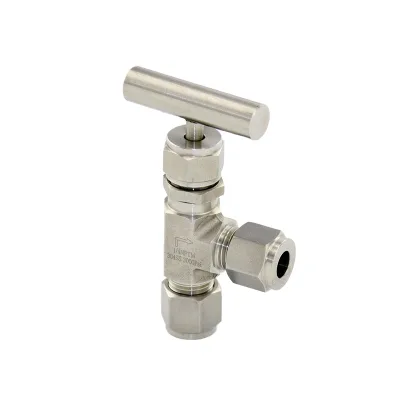
The core of any successful procurement strategy lies in understanding the technical architecture of the valve. Stainless steel angle type needle valves are distinct from standard globe valves due to their specific flow path geometry, which changes the direction of flow by 90 degrees. This design is particularly advantageous for compact installations where space is limited. The observed product data indicates a strong prevalence of the "Through Way" and "Angle Type" structures, confirming that the angle configuration is a primary variant in this category.
Material composition is the first critical specification to verify. The supplied facts consistently identify "Stainless Steel" as the primary material, ensuring durability against corrosion and high-temperature environments. However, buyers must confirm the specific grade of stainless steel (e.g., 304, 316) as this is not explicitly detailed in the general attribute lists but is vital for chemical compatibility. The connection modes observed include "Internal Thread," "Welding," and "Threaded" options, with specific thread standards listed as "BSPP," "BSPT," and "NPT." This variety requires precise alignment with existing piping systems.
Pressure ratings are another defining characteristic. The data highlights "High Pressure" as a standard attribute for these valves, suggesting they are engineered for demanding industrial applications rather than low-pressure domestic use. The sealing form is equally critical; while "Hard Sealing" is noted as a common feature, other listings mention "Gland Packings" and "Bellows" sealing forms. The choice between these depends on the media being handled. For instance, "Gas" and "Water" are the specific media types observed, but the valve's ability to handle "High Temperature" versus "Normal Temperature" must be explicitly confirmed for each unit. The manufacturing process, identified as "Forging and CNC," implies a robust construction method that enhances structural integrity compared to casting, a key differentiator for high-pressure applications.
Compliance, Certification, and Standard Verification
Navigating the regulatory landscape is essential for international procurement. The observed product data lists several recognized standards, including "ANSI," "GB," "Jb," "DIN," and "JIS." These acronyms represent different regional and international norms that dictate dimensions, pressure ratings, and testing procedures. A buyer must ensure that the valve conforms to the specific standard required by the project's engineering specifications. For example, a project in North America might strictly require ANSI standards, while a facility in Europe might mandate DIN compliance.
Certification status is a frequent point of inquiry. The data confirms the presence of "CE" and "ISO" certifications among the available products. While "CE" indicates conformity with health, safety, and environmental protection standards for products sold within the European Economic Area, and "ISO" suggests adherence to international management system standards, buyers should not assume every listed product holds these certifications. The presence of these tags in a general attribute list suggests they are available options rather than universal guarantees. Verification of specific certification documents for the ordered batch is mandatory.
Furthermore, the "Standard" attribute is listed as "Standard" in some contexts, which is a generic descriptor. Buyers must look for specific product standards such as "1/4"--1"" or "1/4"-2"" which define the size range and pressure class. The "prod_standard" field often lists specific size ranges like "3/8"" or "1/4"--2"", indicating that the standard size is not a single fixed value but a range dependent on the model. This variability underscores the need for buyers to cross-reference the model number with the specific standard documentation provided by the manufacturer to ensure dimensional compatibility.
Cost Drivers and Pricing Dynamics
Understanding the cost structure of stainless steel needle valves helps in budgeting and supplier negotiation. The observed price range in the market spans from $6 to $200 USD. This wide disparity is driven by several factors, including material grade, pressure rating, size, and the complexity of the sealing mechanism. A valve priced at the lower end of the spectrum likely represents a smaller size, standard stainless steel grade, and a simpler sealing form like gland packing. Conversely, valves at the higher end may feature bellows sealing, higher pressure ratings, or specialized stainless steel alloys.
The Minimum Order Quantity (MOQ) is another significant cost driver. The observed MOQ range is extensive, from 1 unit to 500 units. For small-scale projects or prototype development, suppliers offering an MOQ of 1 are essential, though the unit price may be higher. For large-scale industrial deployments, negotiating an MOQ closer to 500 units can significantly reduce the per-unit cost. Buyers should also consider the packaging costs; while "Carton" is a common packing method, "Wooden Case" is also observed, which may be necessary for heavy-duty shipping or export requirements but adds to the overall logistics cost.
Manufacturing processes also influence cost. The "Forging and CNC" method mentioned in the data suggests a higher level of precision and material density compared to casting, which typically commands a premium. Additionally, the "Customization" attribute being available indicates that buyers can request tailored specifications, such as specific thread types or unique pressure ratings. Customization invariably increases the unit cost and may extend lead times, so buyers must weigh the benefits of a tailored solution against the budget constraints.
Typical Applications and Operational Context
Stainless steel angle type needle valves are designed for specific operational environments where precise control and reliability are paramount. The observed data points to applications involving "Gas" and "Water" media. In gas systems, the high-pressure capability and hard sealing or bellows sealing forms are crucial to prevent leaks and ensure safety. The angle type structure is particularly useful in gas piping where space constraints prevent the use of straight-through valves.
The "Needle Type" designation implies that these valves are used for fine flow regulation rather than simple on/off control. This makes them ideal for instrumentation lines, sampling systems, and pressure gauge connections where small adjustments in flow rate are necessary. The "Stem Thread Position" varies between "Outside Screw Stem" and "Inside Screw Stem," each offering different advantages. Outside screw stems are often preferred in corrosive environments as the stem threads are protected from the media, while inside screw stems offer a more compact design.
The temperature range is another critical application factor. While some valves are rated for "Normal Temperature," others are specified for "High Temperature." This distinction determines the suitability of the valve for processes involving steam, hot water, or heated gases. The "Warranty" period of "1 Year" observed in the data suggests a standard expectation for product longevity, but buyers should verify if this covers specific wear parts like seals or stems. The "Manual" power attribute confirms that these valves are operated by hand, which is typical for needle valves used in monitoring and control loops where automated actuation is not required or is added separately.
Supplier Evaluation and Origin Considerations
Evaluating suppliers requires a focus on their location, manufacturing capabilities, and track record. The data consistently identifies "Wenzhou" in "Zhejiang Province, China" as the primary place of origin. Wenzhou is a well-known industrial hub for valve manufacturing, offering a concentration of suppliers with specialized expertise in stainless steel components. However, buyers should not rely solely on the city name; they must verify the specific factory capabilities.
The "Manufacturing" attribute listing "Forging and CNC" is a strong indicator of a supplier's technical capability. Suppliers who perform their own forging and CNC machining are more likely to maintain strict quality control over the material properties and dimensional accuracy of the valves. Buyers should inquire about the supplier's in-house testing facilities to ensure that pressure tests and leak tests are conducted according to the relevant standards.
When evaluating suppliers, the "Standard" and "Norms" compliance is paramount. A reputable supplier should be able to provide documentation proving that their products meet the specific "ANSI/GB/Jb/DIN" standards required by the buyer. The availability of "CE" and "ISO" certifications should be verified through official certificates, not just claimed in product descriptions. Additionally, the "Customization" capability should be assessed; a supplier that can accommodate specific thread types or pressure ratings demonstrates flexibility and a deeper understanding of client needs.
Quality Control and Long-Term Procurement
Ensuring long-term reliability requires a robust quality control (QC) framework. The "Hard Sealing" and "Bellows" sealing forms observed in the data represent different approaches to leak prevention. Buyers must specify which sealing form is required for their application, as each has different maintenance requirements and lifespans. The "Gland Packings" option, while common, may require periodic tightening or replacement, whereas bellows seals offer a more permanent solution for hazardous media.
The "prod_packing" options of "Carton" and "Wooden Case" are not merely logistical details but indicators of how the supplier protects the product during transit. For high-pressure valves, proper packaging is essential to prevent damage to the precision-machined threads and sealing surfaces. Buyers should ensure that the packaging is suitable for the intended shipping route and storage conditions.
Long-term procurement considerations include the availability of spare parts and the consistency of the supply chain. The "1 Year" warranty is a baseline, but buyers should negotiate terms that cover the critical components like the needle and seat. The "Standard" attribute of "1/4"--2"" and "1/4"--1"" indicates that the valves come in specific size ranges. Buyers should plan for future expansion by ensuring that the supplier can consistently provide valves in the required sizes and that the thread standards (BSPP, BSPT, NPT) remain consistent across batches.
In conclusion, sourcing stainless steel angle type needle valves demands a meticulous approach to technical verification, compliance checking, and supplier evaluation. By focusing on the specific attributes observed in the market—such as the "Forging and CNC" manufacturing process, the variety of sealing forms, and the specific pressure and temperature ratings—buyers can make informed decisions that ensure system safety and operational efficiency. The wide range of prices and MOQs offers flexibility, but it also requires careful budgeting and specification alignment to avoid costly mismatches. Ultimately, the success of the procurement lies in the ability to match the precise technical needs of the application with a supplier capable of delivering consistent, certified, and high-quality products.
FAQs
What materials are used for stainless steel angle type needle valves?
Stainless steel is the primary material used for these valves to ensure corrosion resistance. The manufacturing process involves forging and CNC machining to enhance structural integrity for high-pressure applications.
Which connection modes are available for these valves?
Available connection modes include internal thread, welding, and threaded options. Specific thread standards observed are BSPP, BSPT, and NPT to align with various piping systems.
Can these valves handle high temperature media?
Yes, some models are rated for high temperature media while others are for normal temperature. Buyers must verify the specific temperature rating for their application to ensure safety.
What certifications are available for these products?
Certifications such as CE and ISO are available for these products. Buyers should verify specific certification documents for the ordered batch as these are not universal guarantees for every unit.
How is the minimum order quantity determined?
The minimum order quantity ranges from 1 to 500 units depending on the supplier. Smaller projects may find suppliers with an MOQ of 1, while larger deployments can negotiate lower unit costs.
Where are these valves typically manufactured?
These valves are typically manufactured in Wenzhou, Zhejiang Province, China. This region is a known industrial hub for valve manufacturing with specialized expertise in stainless steel components.
What sealing forms are used in these valves?
Common sealing forms include hard sealing, gland packings, and bellows. The choice depends on the media being handled, with bellows offering a more permanent solution for hazardous media.