Source Stainless Steel Blender Glass Jar for Home, Commercial, and Kitchen Use
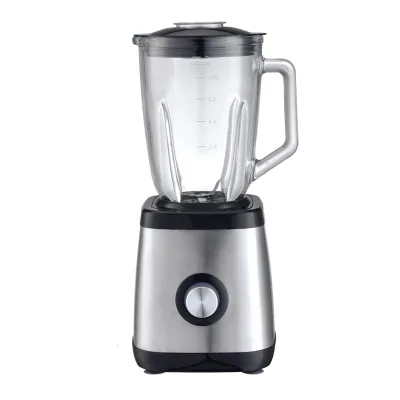
Explore 30 listings for the Stainless Steel Blender Glass Jar, comparing capacities from 1L to 2L, materials like high borosilicate glass, and certifications such as CE and RoHS for various home and commercial applications.
Key considerations
Products List


Safe Non-Toxic Glass Blender Jar for Healthy Food Preparation & Blending
$1.12 - $1.25
MOQ: 2000 Pieces


1700ml Ribbed Blender Replacement Glass Jar with Handle Blender Spare Part
$1.09 - $1.16
MOQ: 2000 Pieces


High Speed Fruit Blender Glass Jar Juicer Blender Table Blender Countertop Blender
$14.49 - $15.95
MOQ: 1000 Pieces


0.8L Plastic vacuum Storage Jar 800W 1.5L with Indicator Light Blender
$20.00 - $50.00
MOQ: 1000 Pieces


Good Quality Glass Jar 4 Speed with Pulse Blender Mixer Nutri 1.5L Blender
$16.72 - $18.24
MOQ: 500 Pieces

Hot Selling 1.5L Glass Jar Powerful 500W Smoothie Blender with Variable Speed
$23.50 - $25.00
MOQ: 1000 Pieces


Comprehensive Sourcing Guide
Strategic Sourcing Guide for Stainless Steel Blender Glass Jars
Understanding Core Technical Specifications and Material Integrity
When sourcing a Stainless Steel Blender Glass Jar, the primary objective is to identify components that balance thermal shock resistance with mechanical durability. The core material specification for the jar itself is high borosilicate glass, a choice driven by its superior ability to withstand rapid temperature changes without cracking. This material property is critical for blenders used in commercial settings or home environments where hot liquids are processed. The structural integrity of the jar is further reinforced by the blade assembly, which is explicitly constructed from stainless steel. This combination ensures that the cutting mechanism remains corrosion-resistant while the container maintains clarity and chemical inertness.
Buyers must scrutinize the dimensional specifications to ensure compatibility with existing blender bases. The physical footprint of the jar is defined by precise measurements, including a top diameter of 108mm and a bottom outer diameter, including the thread, of 87.8mm. The bottom inner diameter measures 69mm, a dimension that dictates the flow dynamics of the liquid during mixing. The overall height of the unit is recorded at 198mm, and the total weight is approximately 1125g. These specific metrics are not merely descriptive; they are functional requirements. A deviation in the thread diameter or height can prevent the jar from locking securely onto the motor base, leading to operational failure or safety hazards.
The capacity of the jar is another pivotal specification. Market observations indicate a range of capacities, with specific models offering 1.8L, 1.5L, and 1L volumes. The 1.8L capacity is often associated with household small blenders, while 1.5L and 1L variants may serve different application needs, including commercial high-power blenders. The "Applicable Number" or model designation, such as "4-Capacity:2L" or specific model codes like "A11-1" and "MI006," serves as a unique identifier for the production line. Procurement teams must match these model codes to the specific blender base they intend to service, as the threading and mounting mechanisms are rarely universal across different manufacturers.
Compliance Verification and Certification Standards
In the B2B procurement of kitchen appliances and their components, regulatory compliance is non-negotiable. The supplied data indicates that products in this category frequently carry CE and RoHS certifications. The CE mark signifies conformity with health, safety, and environmental protection standards for products sold within the European Economic Area. RoHS (Restriction of Hazardous Substances) compliance ensures that the manufacturing process limits the use of specific hazardous materials, such as lead and mercury, which is essential for consumer safety. Additionally, some listings reference CB certification, which relates to the IEC system for mutual acceptance of test reports, further validating the electrical safety of the components.
However, buyers must exercise caution regarding the scope of these certifications. While the data lists CE and RoHS as available attributes, it does not guarantee that every unit in a shipment possesses valid, current certification documents. The presence of a certification label on a product listing is an observation, not a binding claim for the entire inventory. Procurement teams should request valid test reports from the supplier that correspond to the specific batch being ordered. The standard for packaging and shipping is also a compliance factor, with dimensions such as 524222cm and 484830cm noted for carton standards. These dimensions impact logistics costs and storage efficiency, and they must align with the buyer's supply chain requirements.
Furthermore, the origin of the product is a critical compliance variable. The data specifies the production origin as Guangdong, China. While this is a major manufacturing hub, buyers should verify that the specific factory adheres to local and international labor and environmental regulations. The "prod_standard" field often contains packing dimensions rather than product performance standards, so buyers should not assume that a standard listed as "1.2L Round Jar" refers to a formal industry standard like ISO or ASTM. Instead, this likely refers to the product's internal naming convention or capacity specification. Verification of actual industry standards requires direct inquiry with the supplier to confirm if the product meets specific food-grade safety standards or mechanical performance benchmarks.
Cost Drivers and Pricing Dynamics in the Market
The pricing structure for stainless steel blender glass jars is influenced by a complex interplay of material costs, production volume, and customization requirements. The observed price range in the market spans from $0.10 to $50.00 USD. This wide variance suggests that the final price is heavily dependent on the specific model, capacity, and order quantity. The lower end of the spectrum likely corresponds to basic, high-volume orders of standard models, while the upper end may reflect specialized designs, larger capacities, or orders with custom branding.
The Minimum Order Quantity (MOQ) is a significant driver of unit cost. The data indicates an MOQ range of 100 to 3000 units. A specific observation notes an MOQ of 3000 for a 1.8L household blender jar, while another model requires an MOQ of 2000. These thresholds are set by suppliers to ensure production efficiency. Buyers ordering below these thresholds may face significantly higher per-unit costs or may be unable to secure the product at all. The "Customization" attribute is listed as available, which implies that adding custom logos, colors, or specific packaging can increase the MOQ and the unit price. For instance, a standard transparent jar may have a lower MOQ than a black-colored variant, which requires different pigment mixing and quality control processes.
Packaging also plays a role in cost. The data mentions "Carton" and "Inner Box+Outer Carton" as packing methods. The choice between bulk carton packing and individual inner boxing affects the unit price and the protection level during transit. The standard packing dimensions, such as 524222cm, suggest that the jars are packed in a way that maximizes container space, but the inclusion of inner boxes adds material and labor costs. Buyers should negotiate based on the total landed cost, considering that a lower unit price might be offset by higher shipping costs if the packaging is inefficient. Additionally, the warranty period, observed as "1 Year" for some models, adds value to the procurement deal, potentially justifying a slightly higher initial investment.
Typical Applications and Functional Versatility
The functional versatility of stainless steel blender glass jars allows them to serve a diverse range of applications, from domestic kitchens to commercial food processing facilities. The "Type" attribute identifies these jars as suitable for "Household Small Blender" and "Commercial High-power Blender" applications. This duality is crucial for buyers who may be sourcing for different market segments. In a home setting, the jar is used for mixing, blending smoothies, and grinding small quantities of ingredients. The "Function" is explicitly listed as "Mixing," and the "Usage" is designated as "Home Use," though the commercial variants extend this to professional environments.
The control mechanisms associated with these jars vary, with "Button" controls being a common feature. Some models are described as "Traditional / Work Top," indicating a design that integrates seamlessly with standard kitchen countertops. The "Product Name" variations, such as "Button Grinder Glass Bowl" or "Vegetable Juicer Grinder Electric Mixer Blender," highlight the specific culinary tasks these jars are optimized for. The capacity differences further define their application; a 1.8L jar is ideal for family-sized batches, while a 1L jar might be preferred for single-serve or commercial prep stations where space is limited.
The "Applicable Number" and "Applicable Model" fields provide clues about the intended ecosystem. For example, a jar labeled with "Applicable Model: 750" or "MI006" is designed to fit specific blender bases. This specificity means that the jar is not a universal replacement but a targeted component. Buyers must ensure that the "Controls Type" and "Speeds" (noted as "1 Speed" in some listings) match the operational requirements of their target market. A single-speed jar may be sufficient for basic mixing, but commercial applications often require variable speeds, which may necessitate a different model or a more complex control interface. The "Color" attribute, ranging from "Transparent" to "Black," also influences the aesthetic appeal and suitability for different branding strategies.
Supplier Evaluation and Production Capabilities
Evaluating a supplier for stainless steel blender glass jars requires a deep dive into their production capabilities and quality assurance processes. The data indicates that the "prod_origin" is Guangdong, China, a region known for its robust manufacturing infrastructure. However, the presence of a location does not guarantee quality. Buyers should verify the supplier's capacity to meet the observed MOQs of 2000 to 3000 units without compromising on the "High Borosilicate Glass" quality. The "Customization" attribute suggests that the supplier has the flexibility to alter designs, but this capability must be validated through sample requests and factory audits.
The "Certification" status is a key indicator of a supplier's reliability. While CE and RoHS are listed, buyers should confirm that the supplier maintains valid certificates and can provide them upon request. The "Warranty" of "1 Year" for certain models indicates a level of confidence in the product's durability, but this warranty should be clearly defined in the contract, covering defects in materials and workmanship. The "Item Number" and "Code" fields, such as "A04" or "A11-1," serve as internal tracking mechanisms for the supplier. Buyers should request a detailed bill of materials (BOM) to understand the exact composition of the stainless steel blades and the glass quality.
Lead times and production schedules are also critical factors. Although specific lead times are not provided in the data, the MOQs suggest that production runs are substantial. Buyers should inquire about the supplier's ability to handle rush orders and their policy on partial shipments. The "prod_packing" method, whether "Carton" or "Inner Box+Outer Carton," reflects the supplier's attention to detail in protecting the product during transit. A supplier that invests in robust packaging is more likely to maintain high quality standards throughout the production process. Additionally, the "Standard" dimensions provided for the product and packaging should be cross-referenced with the supplier's actual capabilities to ensure consistency.
Quality Control Protocols and Long-Term Procurement Strategy
Implementing a rigorous quality control (QC) protocol is essential for mitigating risks associated with sourcing blender glass jars. The primary focus of QC should be on the structural integrity of the high borosilicate glass and the sharpness and durability of the stainless steel blades. Buyers should request pre-shipment inspections that include drop tests, thermal shock tests, and dimensional verification against the specified top diameter of 108mm and bottom outer diameter of 87.8mm. The weight of 1125g is a critical benchmark; significant deviations may indicate material defects or manufacturing inconsistencies.
Long-term procurement strategies should prioritize building a relationship with a supplier who demonstrates consistency in quality and compliance. The "Customization" option allows for brand differentiation, but it requires a stable supply chain to ensure that custom features do not introduce variability. Buyers should establish a clear specification sheet that includes all critical dimensions, material grades, and certification requirements. Regular audits of the supplier's production line can help identify potential issues before they impact the supply chain.
The "Warranty" term of "1 Year" provides a safety net, but it should be complemented by a robust after-sales support agreement. This agreement should outline the process for handling defective units, including replacement policies and cost-sharing arrangements. The "Product Name" variations and "Applicable Model" codes should be clearly documented to prevent confusion in future orders. By maintaining a detailed record of product specifications and supplier performance, buyers can optimize their procurement process and ensure a steady supply of high-quality stainless steel blender glass jars.
Comparative Analysis of Key Product Attributes
To facilitate informed decision-making, the following table summarizes the key attributes observed in the market for stainless steel blender glass jars. This comparison highlights the variations in capacity, model, and specifications that buyers must consider.
| Attribute | Observation 1 | Observation 2 | Observation 3 | Observation 4 |
|---|---|---|---|---|
| Material | High Borosilicate Glass | Glass | Glass | Glass |
| Blade Material | Stainless Steel | Stainless Steel | Stainless Steel | Stainless Steel |
| Capacity | 1.8L | 1.5L | 1L | 1L Plastic/Glass |
| Model Code | 750 | MI006 | A11-1 | A11-3 |
| MOQ | 3000 | 2000 | 3000 | 2000 |
| Certification | CE, RoHS | RoHS, CB | CE, RoHS | CE, RoHS |
| Color | Transparent | Black | Transparent | Transparent |
| Height | 198mm | 198mm | 198mm | 198mm |
| Weight | 1125g | 1125g | 1125g | 1125g |
| Top Diameter | 108mm | 108mm | 108mm | 108mm |
| Bottom Outer Dia | 87.8mm | 87.8mm | 87.8mm | 87.8mm |
| Controls Type | Button | Button | Button | Button |
| Speeds | 1 Speed | 1 Speed | 1 Speed | 1 Speed |
| Warranty | 1 Year | 1 Year | 1 Year | 1 Year |
This table underscores the consistency in dimensions and materials across different models, while highlighting the variability in capacity and MOQ. Buyers should use this data to align their specific needs with the available product options, ensuring that the selected jar meets both functional and logistical requirements.
FAQs
What material is used for the blender jar?
The jar is constructed from high borosilicate glass to ensure thermal shock resistance. This material provides durability and clarity while the blade assembly uses stainless steel for corrosion resistance during mixing tasks.
Which certifications are available for these jars?
Products frequently carry CE, RoHS, and CB certifications to meet safety standards. Buyers should verify valid test reports for specific batches as certification presence on listings is an observation rather than a binding claim for all inventory.
How much is the minimum order quantity?
The minimum order quantity ranges from 100 to 3000 units depending on the model. Specific observations show an MOQ of 3000 for 1.8L household jars and 2000 for other variants, affecting unit cost significantly.
Can I customize the color or packaging?
Customization is available for colors like transparent or black and for packaging types. Adding custom branding or specific packaging like inner boxes may increase the minimum order quantity and the unit price compared to standard options.
What are the key dimensions of the jar?
The jar features a top diameter of 108mm and a height of 198mm. The bottom outer diameter including the thread is 87.8mm, ensuring compatibility with specific blender bases while maintaining structural integrity.
Where are these products manufactured?
The production origin is listed as Guangdong, China, a major manufacturing hub. Buyers should verify that the specific factory adheres to local and international labor and environmental regulations despite the regional concentration.