Source Stainless Steel Choker Necklace for engagement, party, and wedding
Compare 30 Stainless Steel Choker Necklace options from verified suppliers in China. Buyers can review customization, plating, and MOQ details for decoration and religious uses.
Key considerations
Products List


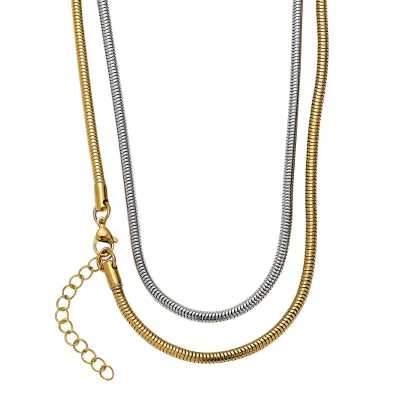


Secure Timely Delivery Stainless Steel Classic Choker Charm Chain Necklace
$2.00 - $9.00
MOQ: 50 Pieces


Long-Lasting Comfortable Fashion Stainless Steel Gold Plated Charm Necklace
$2.00 - $9.00
MOQ: 50 Pieces

Edgy Secure Fashion Stainless Steel Necklace Pendant Gold Plated Necklace
$2.00 - $9.00
MOQ: 50 Pieces


Comprehensive Sourcing Guide
Strategic Sourcing Guide for Stainless Steel Choker Necklaces
The global market for stainless steel choker necklaces has evolved into a robust sector within the fashion jewelry industry, driven by the material's inherent durability, hypoallergenic properties, and cost-effectiveness compared to precious metals. For B2B buyers, navigating this category requires a disciplined approach that balances aesthetic versatility with rigorous supply chain verification. The core keyword "Stainless Steel Choker Necklace" encompasses a wide range of products, from minimalist daily wear to statement pieces featuring intricate plating and custom logos. This guide provides a structured framework for evaluating suppliers, verifying technical specifications, and ensuring compliance with international standards without relying on unverified claims.
Technical Specifications and Material Integrity
The foundation of any successful procurement strategy for stainless steel jewelry lies in the precise definition of material specifications. Stainless steel is not a monolithic material; it is an alloy family, and the grade determines the final product's resistance to corrosion, tarnish, and physical deformation. In the context of choker necklaces, the material must be capable of maintaining its structural integrity under the tension required for a close-fitting design.
Buyers must verify that the supplier utilizes high-grade stainless steel, typically 316L or 304, which offers superior resistance to salt water and perspiration. The supplied data indicates that specific products in this category are marketed as "Lead Free, Nickel Free, and Cadmium Free." This is a critical technical specification for chokers, as they sit in direct, prolonged contact with the skin. A failure in this specification can lead to severe allergic reactions, resulting in product returns and reputational damage.
Furthermore, the physical dimensions of the choker are paramount. The supplied context lists specific length standards such as "45cm+5cm" and "50cm+6cm," suggesting that adjustable lengths are a common feature in this category. The "5cm+6cm" extension likely refers to an adjustable chain mechanism, allowing the buyer to cater to diverse neck sizes. When evaluating technical specifications, buyers should request detailed drawings that confirm the chain width, clasp type, and pendant dimensions. For instance, observed pendant shapes include "Circle," "Flower," "Heart," "Cross," and "Round," each requiring different manufacturing tolerances. The weight of the product is another critical metric; observed weights range from 10g to 32g. A choker that is too heavy may cause discomfort or chain breakage, while one that is too light may appear cheap. The "Simple" and "Fashion" styles noted in the data suggest a market preference for clean lines, but the weight must be sufficient to ensure the necklace hangs correctly without twisting.
Compliance, Certification, and Safety Standards
In the B2B jewelry sector, compliance is not merely a regulatory hurdle but a competitive advantage. The European and North American markets, identified as main markets for these products, enforce strict regulations regarding heavy metals and chemical content. Buyers must ensure that their suppliers can provide valid, up-to-date certification documents. The available data references certifications from "SGS, BV, Intertek," which are globally recognized third-party testing agencies. These certifications validate claims regarding the "Lead Free, Nickel Free, and Cadmium Free" status of the stainless steel.
It is essential to distinguish between the material certification and the plating certification. While the base material is stainless steel, the aesthetic finish often involves plating. The data lists "Gold," "Silver," "Platinum," and "Rhodium" as plating options. Each of these plating processes has its own set of environmental and safety standards. For example, gold plating must meet specific thickness requirements to ensure longevity, and the underlying electrolytic process must not introduce harmful chemicals. The "BSCI" (Business Social Compliance Initiative) certification mentioned in the data is also crucial, as it verifies that the manufacturing facility adheres to ethical labor practices, a requirement for many major retailers in Europe and North America.
Buyers should not accept generic statements of compliance. Instead, they must request specific test reports that match the product model numbers, such as "BXG06291016XL" or "BXG06291023XL." These reports should detail the results of heavy metal migration tests and nickel release tests. The "Us Standard" quality standard mentioned in the data provides a benchmark, but buyers should verify if the supplier's internal quality control processes align with this standard or if they adhere to specific international norms like REACH in the EU. Without these documents, the risk of non-compliance at customs or in the marketplace is significant.
Cost Drivers and Pricing Dynamics
Understanding the cost structure of stainless steel choker necklaces is vital for negotiating favorable terms. The price range observed in the market spans from $0.18 to $9.00 USD, a wide variance that reflects differences in material quality, plating thickness, design complexity, and order volume. The primary cost driver is the plating process. A simple stainless steel choker with a basic polish will be at the lower end of the price spectrum, while a piece featuring multi-layer plating, such as "Gold, Rhodium, Silver," or intricate custom logos will command a higher price.
The Minimum Order Quantity (MOQ) is another significant factor influencing unit cost. The data indicates an MOQ range of 10 to 200 units, with specific listings showing "50PS" (pieces) or "50sets." Suppliers often offer tiered pricing, where the unit cost decreases as the order volume increases. Buyers should be aware that customizations, such as "Customized Logo" or "OEM&ODM" services, typically incur additional setup fees or higher per-unit costs. The "Sample Fee" policy, where fees are returned upon placing a formal order, is a common industry practice that can help mitigate initial risks.
Additionally, the packaging method affects the final landed cost. The data mentions packaging options ranging from "OPP Bag" to "PE Polybag / Paper Card / Gift Box." Upgrading from a simple polybag to a gift box increases the material and labor costs but adds value for the end consumer. Buyers must calculate the total cost of ownership, including shipping, duties, and packaging, rather than focusing solely on the FOB price. The "Place of Origin" being primarily "Guangdong, China" and "Zhejiang, China" suggests a mature supply chain with competitive labor costs, but logistics costs from these regions to Europe or North America must be factored into the budget.
Typical Applications and Market Positioning
Stainless steel choker necklaces serve a diverse array of applications, making them a versatile product for various retail channels. The data highlights usage categories including "Decoration," "Religious," "Engagement," "Gift," "Party," "Wedding," and "Halloween." This breadth of application allows buyers to target multiple market segments with a single product line. For instance, the "Religious" usage suggests that cross or heart-shaped pendants are suitable for faith-based retailers, while "Wedding" and "Engagement" applications require higher quality finishes and potentially more durable packaging.
The "Simple" and "Fashion" styles indicate that these products are positioned as accessible fashion accessories rather than luxury heirlooms. This positioning aligns with the "High Quality" feature noted in the data, suggesting that buyers can offer premium-looking items at mid-range price points. The "Suitable for: Female" attribute confirms the primary demographic, but the versatility of the designs allows for unisex marketing in certain contexts. The "Main Market" data points to Europe, North America, and Russia, regions with high purchasing power and a strong demand for trend-driven jewelry.
Buyers should consider the seasonal nature of these applications. Products suitable for "Halloween" or "Party" may have a short sales cycle, requiring agile supply chains. Conversely, "Wedding" and "Engagement" items may have a longer sales window but require higher reliability in delivery times. The "Customization" availability allows suppliers to create exclusive designs for specific retailers, enhancing brand loyalty and reducing direct competition.
Supplier Evaluation and Quality Control
Selecting the right supplier is the most critical step in the procurement process. Buyers should evaluate suppliers based on their ability to meet the technical and compliance requirements outlined earlier. The presence of "OEM&ODM: Accept" indicates that the supplier has the manufacturing flexibility to produce custom designs, which is essential for differentiation. However, buyers must verify the supplier's capacity to handle these customizations without compromising quality.
Quality control (QC) should be integrated into the procurement workflow from the design phase to the final shipment. The "Feature: High Quality" claim must be substantiated through a robust QC plan. This includes in-process inspections to check for plating defects, such as uneven color or peeling, and final inspections to verify dimensions and weight. The "prod_packing" specifications, such as "Each One with OPP Bag," should be strictly adhered to to prevent damage during transit.
Buyers should also assess the supplier's logistics capabilities. The data lists "DHL, UPS, TNT" as shipment options, indicating that the supplier has experience with international courier services. However, buyers should confirm lead times and reliability, as delays can disrupt inventory planning. The "Sample Fee" policy is a good indicator of supplier confidence; a supplier willing to refund the sample fee upon order placement is generally more reliable than one who charges non-refundable fees.
Long-Term Procurement Considerations
Sourcing stainless steel choker necklaces is not a one-time transaction but a long-term partnership that requires strategic planning. Buyers should focus on building relationships with suppliers who demonstrate consistency in quality and communication. The "Customization: Available" and "Logo: Customized Logo" features suggest that long-term contracts often involve ongoing design iterations and branding updates.
Sustainability is becoming an increasingly important factor in the jewelry industry. The "Eco-Friendly" attributes, such as being "Lead Free, Nickel Free, and Cadmium Free," align with growing consumer demand for sustainable products. Buyers should inquire about the supplier's waste management practices and the sourcing of raw materials to ensure the entire supply chain aligns with their corporate social responsibility goals.
Finally, buyers must remain vigilant about market trends. The "New Fashion Earings" (likely a typo for necklaces in this context) and "Fashion" style tags indicate a fast-paced market. Suppliers who can quickly adapt to changing trends and offer new designs, such as the various "Pendant Shape" options observed, will be more valuable partners. Establishing a clear communication channel for feedback and continuous improvement will ensure that the procurement strategy remains effective and responsive to market demands.
FAQs
What certifications verify the safety of stainless steel choker necklaces?
Valid certifications from SGS, BV, and Intertek verify safety standards. These documents confirm the products are lead-free, nickel-free, and cadmium-free, ensuring compliance with international regulations for skin contact jewelry.
Which plating options are available for stainless steel choker necklaces?
Available plating options include gold, silver, platinum, and rhodium. These finishes are applied to the stainless steel base to provide durability and aesthetic variety while maintaining the hypoallergenic properties of the core material.
Can buyers customize logos and designs on these necklaces?
Yes, customization is available for logos and specific designs. Suppliers accept OEM and ODM requests, allowing buyers to add customized logos or select from various pendant shapes like hearts, crosses, or flowers.
What are the typical minimum order quantities for these products?
Minimum order quantities typically range from 50 pieces or 50 sets per design. Some listings may accept orders as low as 10 units, but standard bulk pricing usually applies once the 50-unit threshold is met.
How long are the chains for adjustable stainless steel chokers?
Chain lengths commonly include 45cm with a 5cm extension or 50cm with a 6cm extension. These adjustable features allow the necklace to fit various neck sizes comfortably while maintaining the intended choker style.
Which markets primarily import these stainless steel jewelry items?
The main export markets include Europe, North America, and Russia. These regions have high demand for fashion jewelry that meets strict safety standards and offers versatile styles for decoration, religious use, and special occasions.