Source Adjustable Copper Zircon Ring for Gifts, Decor, Collection
Compare 30 Adjustable Copper Zircon Ring options from verified suppliers. Buyers can evaluate customization, plating, and delivery times for decoration, gifts, and collection purposes. These rings feature copper material with cubic zirconia accents, offering unique 3D designs and various plating choices like rhodium or rose gold. Suppliers provide OEM services and support custom designs for jewelry applications.
Key considerations
Products List


Newly Launched Popular European Style Elegant and Exquisite Zirconia Ring
$1.40 - $2.00
MOQ: 200 Pieces


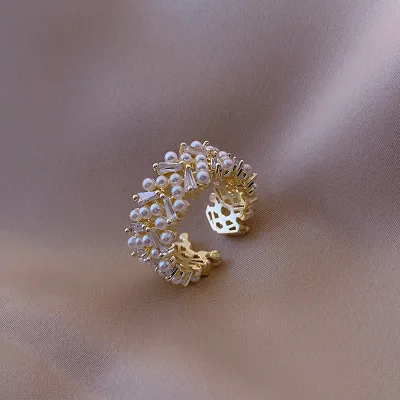


Hot Selling Round Zircon Ring Niche Simple Finger Fashionable Versatile Ring
$1.05 - $1.18
MOQ: 900 Pieces


Comprehensive Sourcing Guide
Adjustable Copper Zircon Ring Sourcing Guide
Adjustable copper zircon rings occupy a practical middle ground in fashion jewelry: copper bases keep unit costs accessible, while cubic zirconia stones deliver a bright, diamond-like appearance suitable for gifting, decoration, and collection use. Listings observed under this keyword consistently describe copper construction with cubic zirconia accessories, casting or gem-mounting fabrication, and electroplated finishes in rhodium, rose gold, yellow gold, or black. Because adjustability is implied by the keyword rather than always stated, buyers should confirm whether the band is genuinely flexible or offered in fixed ring sizes.
This guide is written for B2B buyers — importers, wholesalers, and private-label brands — who need to convert scattered marketplace listings into a disciplined sourcing process. The evidence base here comes strictly from product-page observations: published attributes such as material, plating options, sizing standards, packing methods, payment channels, and delivery windows. Where an attribute is not listed, this guide directs you to request it from suppliers rather than assume it. Treat every listing claim as a starting point for verification, since marketplace attributes vary widely in completeness and accuracy across sellers.
Product Scope and Observed Listing Signals
Observed listings under this keyword cluster around several recognizable product types: prime rings, inlaid rings, and heart- or round-shaped designs targeted primarily at female and universal audiences. Usage descriptions include wedding, decoration, gifts, and collection, and some listings extend into jewelry design, handcraft DIY, bag accessories, and promotion. Styles range from simple to fashion-oriented, with at least one listing highlighting a unique 3D design. Observed MOQ values span from single-piece samples to thousands of units, and listed prices range from roughly $0.10 to $181, indicating a spectrum from loose components or blanks to finished, stone-set pieces.
Buyers should read these signals as segmentation clues rather than guarantees. A $0.10 listing is unlikely to describe a finished, plated, stone-set ring; it more plausibly represents a base component for DIY jewelry work. Conversely, high-priced listings may reflect heavier weights — observed standards include 2.3g and 10g pieces — or more complex gem mounting. Confirm with each supplier which category their listing belongs to, and ask for physical or digital samples that match the exact model number, since observed models such as 571811635034, 618203744237, and 670376022322 each carry different specifications.
Technical Specifications to Verify
Start with material and plating chemistry. Listings confirm copper as the base material and cubic zirconia as the accessory material, with electroplating as the finishing process and plating options spanning rhodium, rose gold, yellow gold, and black. Ask suppliers to specify plating thickness, base-layer composition (for example, whether an anti-tarnish barrier layer is applied), and the purity standard in use — one observed listing cites 92.5% purity, which buyers should reconcile against the stated copper base to understand exactly which component carries that figure. Also confirm how the zircon stones are set, since observed processes include both casting and gem mounting.
Sizing and construction details come next. One listing publishes a ring standard of 6#, 7#, 8#, 9#, and 10#, while another lists size 7# specifically; if your market requires half sizes or a different national size system, request a conversion and confirm adjustable-band tolerance. Size customization is listed as available, and customization generally is offered, so clarify which attributes — size, shape, color, logo, packaging — can actually be modified. Request dimensional drawings, weight tolerances, and stone specifications (cut, clarity grade equivalent, and setting method) before committing to a purchase order.
Compliance and Safety Documentation
Compliance risk in copper-based, plated fashion jewelry concentrates on nickel release, lead and cadmium content, and plating adhesion, since these determine whether the product can legally be sold in your destination market. Listings under this keyword mention CE, ISO9001, and CNAS certification, but certification claims on marketplace pages should never be accepted at face value. Request the actual certificates, verify their scope covers jewelry products, check issuing-body validity, and confirm which laboratory performed the testing and against which limit values.
Because many adjustable rings contact skin directly and are marketed to female consumers, ask specifically for test reports covering nickel release under wear conditions and restricted-substance screening for the plating bath as well as the base alloy. If you sell into markets with jewelry-specific regulations, identify which standard applies to your channel and request evidence against it — do not rely on generic factory certificates. Document these requirements in your purchase agreement with a warranty clause, and consider pre-shipment third-party testing for new suppliers or new plating colors, since rhodium, rose gold, yellow gold, and black finishes each use different chemistries.
Cost Drivers and Commercial Terms
Price variation in observed listings is extreme, so understanding cost drivers protects you from comparing unlike items. The main levers are copper weight (observed standards of 2.3g and 10g imply very different material costs), stone quality and quantity, setting method (gem mounting costs more than casting-in-place), plating color and thickness, and degree of customization. Order quantity matters equally: observed MOQs range from 1 to 1,800 pieces, and lower MOQs typically carry higher per-unit prices. Always request quotes on identical specifications before comparing suppliers.
Observed commercial terms give you a workable baseline for negotiation. Delivery times of 20–35 days after deposit are published, sample time is stated as within 15 working days, and payment channels include T/T, Western Union, PayPal, and Money Gram. Shipping is offered via DHL, FedEx, TNT, UPS, and EMS, plus professional forwarding lines. Negotiate deposit proportions, balance-payment timing, and who bears freight and insurance risk. Confirm in writing whether quoted prices include packaging (observed as individual OPP bags plus cartons or client-requested packing) and whether custom packaging changes the price or lead time.
Supplier Qualification and Quality Control
Qualify suppliers before any volume order. Several observed listings advertise OEM and ODM service, custom design manufacture, and a main business spanning rings, pendants, cufflinks, bracelets, necklaces, and earrings — a broader product line suggests an established factory rather than a single-item trader. Verify business registration, production location (Guangzhou, China is an observed origin), and whether the supplier manufactures or trades. Ask for photos or video of casting, electroplating, and gem-mounting lines, since these in-house capabilities directly determine consistency and responsiveness.
Structure quality control around the attributes that fail most often in plated copper jewelry. Define an inspection checklist covering plating color match across the batch, plating adhesion, stone security after setting, band adjustment function, size accuracy against the agreed standard, and surface defects. Agree on an acceptable quality limit, inspection stage (pre-shipment, in-line, or both), and remedy for failed lots — rework, replacement, or discount — before the deposit is paid. For first orders, commission a third-party inspection at the supplier's expense or your own, and use the sample (produced within the stated 15-working-day window) as the signed reference standard for production.
Long-Term Procurement Checks
Long-term value comes from monitoring consistency, not just initial price. Track batch-to-batch variation in plating color and thickness, stone retention rates reported by your customers, size accuracy drift, and on-time delivery performance against the published 20–35 day window. Re-test restricted substances periodically even for approved suppliers, because plating-bath chemistry changes quietly and a passing certificate from onboarding does not guarantee compliance two years later. Review certificates annually and record expiry dates so renewals do not lapse between order cycles.
Build relationship mechanisms that reduce friction over time. If you use customization, lock down design files, tooling ownership, and mold retention terms so you can switch suppliers without losing your tooling. Consolidate payment and shipment channels as trust develops — observed options include T/T for volume and express carriers for samples — to lower transaction costs. Renegotiate pricing bands annually against copper market movement and order history, and maintain at least one qualified alternate supplier for each core SKU. Document all specifications, inspection results, and correspondence in a single product file per model number so institutional knowledge survives staff changes.
FAQs
What materials are used for the Adjustable Copper Zircon Ring?
The ring is crafted from copper with cubic zirconia accessories. It features a 92.5% purity level and is available in silver color. The design includes unique 3D elements suitable for decoration and gifts.
Can I request custom sizes for the Adjustable Copper Zircon Ring?
Yes, customization is available for the Adjustable Copper Zircon Ring. The product offers customized sizes and shapes like heart or round. Clients can also request specific packaging or design modifications through OEM services.
How long does it take to receive samples of the ring?
Samples of the Adjustable Copper Zircon Ring are ready within 15 work days. This timeline applies to the initial sample production phase before bulk manufacturing begins for your specific order requirements.
What certifications do the Adjustable Copper Zircon Ring manufacturers hold?
Manufacturers hold CE, ISO9001, and CNAS certifications for the Adjustable Copper Zircon Ring. These standards ensure quality control during the casting and electroplating processes used to create the final jewelry pieces.
Which shipping methods are available for the Adjustable Copper Zircon Ring?
Shipping is available via DHL, FedEx, TNT, UPS, and EMS for the Adjustable Copper Zircon Ring. Delivery typically occurs within 30 to 35 days after the deposit is received, depending on the selected carrier.
What is the minimum order quantity for the Adjustable Copper Zircon Ring?
The minimum order quantity for the Adjustable Copper Zircon Ring is 30 pieces. This MOQ applies to standard orders, though specific customization requests may have different requirements based on the design complexity.
Where are the adjustable copper zircon rings manufactured?
The adjustable copper zircon rings are manufactured in Guangzhou, China. This location serves as the primary origin for the copper and cubic zirconia materials used in the production of these jewelry items.