Source Stainless Steel PCB Spring Contacts for Automotive, Industrial, and Furniture
Explore 30 listings for Stainless Steel PCB Spring Contacts from verified Chinese manufacturers. Buyers can compare custom sizes, plating finishes, and tolerances for PCB level shielding in industrial and automotive applications.
Key considerations
Products List


Custom Stainless Steel Micro Electrical Metal Stamping Spring Contacts
$0.20 - $1.20
MOQ: 10000 Pieces


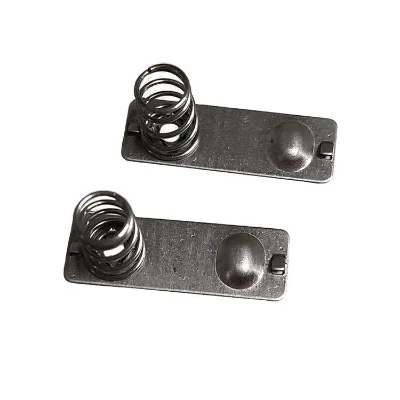
OEM Electrical Spring Loaded Charging AAA Battery Contacts Plate Spring
$0.10 - $0.24
MOQ: 1000 Pieces

Customized Stainless Steel Electrical Spring Contacts Composite Welding Contact
$0.10 - $1.00
MOQ: 1000 Pieces

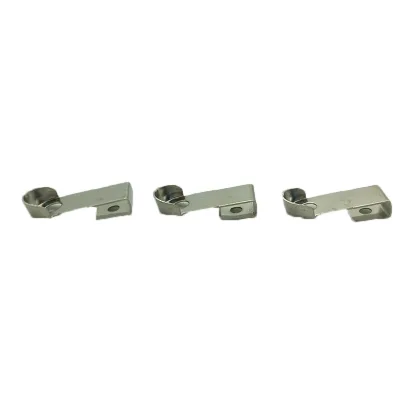
Electrical Spring Contacts Bending Spring Minus Contact for Electrical Device
$0.10 - $1.00
MOQ: 1000 Pieces



Comprehensive Sourcing Guide
Strategic Sourcing Guide for Stainless Steel PCB Spring Contacts
The procurement of Stainless Steel PCB Spring Contacts represents a critical intersection of material science, precision manufacturing, and electronic reliability. For buyers navigating the global supply chain, understanding the specific attributes of these components is essential for ensuring long-term performance in high-frequency and high-temperature environments. This guide synthesizes available product data to provide a structured approach for sourcing, evaluating, and integrating these specialized metal stamping parts into industrial, automotive, and consumer electronics applications.
Technical Specifications and Material Composition
The foundation of a successful procurement strategy lies in a precise understanding of the technical specifications and material properties. The core material for these components is explicitly identified as Stainless Steel, with specific availability in 304 and 316 grades. These grades are selected for their superior corrosion resistance and mechanical strength, which are vital for maintaining contact integrity in harsh environments. However, the sourcing landscape also offers alternative material options, including Aluminum, Nickel, Nickel Silver, and Copper Alloy. Buyers must verify which specific alloy meets the electrical and mechanical requirements of their design, as conductivity varies significantly between these materials.
Electrical performance is a primary driver for selection. The observed product data indicates "Excellent Electrical Conductivity," a critical attribute for PCB-level and module-level shielding applications. The frequency range for these contacts spans from MHz to GHz, suggesting suitability for high-speed data transmission and RF applications. To support these high-frequency requirements, the manufacturing process often involves chemical etching, which produces a "Burr-Free" edge condition. This precision is necessary to prevent signal interference and ensure reliable mating with mating connectors.
Dimensional tolerances are equally critical. The observed data presents a range of tolerance capabilities, from 0.02mm to 0.1mm, with some high-precision listings noting tolerances as tight as +/-0.001mm or +/-0.01mm. The thickness of the material typically ranges from 0.3mm to 1.2mm, though this is subject to specific customer requirements. The mounting methods available include SMT (Surface Mount Technology) soldering, through-hole mounting, and clip-on mechanisms. Buyers must align these mounting specifications with their assembly line capabilities and PCB design constraints.
Manufacturing Processes and Customization Capabilities
The production of stainless steel spring contacts relies on a diverse set of manufacturing techniques, primarily centered around metal stamping and forming processes. The supply base utilizes "Multistep Progressive Dies" for high-volume efficiency, as well as "Simple Single Process Dies" for lower volume or complex geometries. The specific processes observed include chemical etching, stamping, and forming processes. Chemical etching is particularly notable for its ability to create intricate shapes with burr-free edges, which is superior to traditional punching for certain fine-feature applications.
Surface finishing is another crucial variable. The data indicates a variety of plating options, including Nickel Plating, Tin Plating, and Zinc Plating, alongside custom finishes. These coatings serve to enhance conductivity, prevent oxidation, and improve solderability. The choice of finish depends heavily on the operating environment; for instance, applications requiring high-temperature resistance may necessitate specific plating combinations. The operating temperature range for these components is observed to be between -40°C and 300°C, depending on the selected material and finish.
Customization is a defining feature of this category. The production type is explicitly listed as "OEM Custom Manufacturing," with customization available for size, thickness, and model specifications. The product models range from generic "Metal Stamping" parts to specific applications like "Spring Clip," "Spring Contact," "Pcb Spring Contacts," and "Antenna Shrapnel." Buyers should note that while "Any Quantity Is Ok" is a stated capability, the actual Minimum Order Quantity (MOQ) can vary significantly, with observed ranges from 1 piece for samples up to 50,000 pieces for mass production. This flexibility allows for rapid prototyping and agile supply chain responses.
Compliance, Standards, and Quality Verification
When sourcing industrial components, verifying compliance with industry standards is non-negotiable. The observed product data references specific material standards, namely 304 and 316 Stainless Steel. These are widely recognized international standards for corrosion-resistant alloys. However, buyers must not assume that all listed products automatically meet these standards without verification. The procurement process should include a request for material certification or mill test reports to confirm the chemical composition and mechanical properties of the supplied steel.
Quality control extends beyond material verification to dimensional accuracy and surface integrity. The tolerance levels observed vary, and buyers must establish a clear Acceptable Quality Limit (AQL) based on their specific application needs. For high-frequency applications, even minor deviations in thickness or edge condition can impact performance. The "Burr-Free" claim associated with the etching process should be validated through physical inspection or microscopy during the supplier qualification phase.
Packaging standards are also part of the compliance and quality assurance framework. The data lists "Anti-Static Bag + Foam Protection + Export Carton" as a common packaging method, which is essential for protecting sensitive electronic components from electrostatic discharge (ESD) during transit. Other packaging options include OPP bags and boxes. Buyers should ensure that the packaging method aligns with their internal ESD protection protocols and storage requirements. Additionally, the origin of the products is noted as China, with specific mentions of Dongguan as a production hub. While this provides geographical context, buyers should conduct their own due diligence regarding the specific factory's quality management systems and export compliance records.
Cost Drivers and Procurement Economics
The cost of Stainless Steel PCB Spring Contacts is influenced by a complex interplay of factors, including material selection, manufacturing complexity, and order volume. The observed price range in the market spans from $0.01 to $300 per unit, a wide variance that reflects differences in material costs, tooling requirements, and order quantities. The use of precious metals or specialized alloys like Nickel Silver will naturally drive costs higher compared to standard 304 or 316 stainless steel.
Tooling is a significant cost driver. The use of "Multistep Progressive Dies" requires a higher initial investment but reduces the per-unit cost at high volumes. Conversely, "Simple Single Process Dies" or chemical etching processes may have lower tooling costs but higher per-unit processing times. Buyers must balance the upfront tooling expense against the projected production volume. The "MOQ" flexibility observed, ranging from 1 piece to 50,000, allows buyers to manage cash flow by ordering smaller batches for prototyping before committing to large-scale production runs.
Lead times and logistics also impact the total cost of ownership. While specific lead times are not provided in the source data, the complexity of the finishing processes (e.g., multiple plating steps) and the origin location (China) suggest that buyers should factor in shipping duration and potential customs delays. The "Production Type" being OEM Custom Manufacturing implies that lead times will be longer than for off-the-shelf standard parts. Buyers should negotiate clear delivery schedules and include penalties for delays in their contracts to mitigate supply chain risks.
Supplier Evaluation and Selection Criteria
Selecting the right supplier requires a rigorous evaluation process that goes beyond price comparison. Buyers should prioritize suppliers who demonstrate a robust capability in "OEM Custom Manufacturing" and possess the necessary equipment, such as "Punching Machines" and advanced etching facilities. The presence of specific molds, such as "Multistep Progressive Dies," indicates a supplier's capacity for high-volume, high-precision production.
The supplier's experience in the "Metal Stamping Parts" industry is a key indicator of reliability. Buyers should request case studies or references from similar applications, particularly in the "Industrial, Furniture, Automobile, Motorcycle" sectors mentioned in the data. The ability to handle "Customized" designs and provide "Customized Size" options is essential for unique product requirements. Furthermore, the supplier's quality control infrastructure must be transparent. Buyers should ask for documentation regarding their tolerance verification processes, surface finish inspection methods, and material traceability.
Geographical location plays a role in logistics and communication. While the data points to Dongguan, China, as a production origin, buyers should evaluate the supplier's communication channels and time zone compatibility. A supplier with a strong track record in "Export Carton" packaging and "Anti-Static" handling demonstrates an understanding of the delicate nature of electronic components.
Long-Term Procurement and Application Integration
The long-term success of sourcing Stainless Steel PCB Spring Contacts depends on the supplier's ability to scale and maintain consistency. As product designs evolve, the supplier must be capable of adapting their tooling and processes to accommodate new specifications. The "Customized" nature of these parts means that design changes are common, and the supplier's agility in handling these changes is a critical asset.
Application integration requires a deep understanding of the component's role in the final product. Whether used for "PCB Level / Module Level Shielding" or as a "Spring Contact" for compression loads, the component must perform reliably over the product's lifecycle. The "Operating Temperature" range of -40°C to 300°C suggests suitability for demanding environments, but buyers must validate this performance under their specific load conditions. The "Load Type" is specified as "Compression," and the supplier should provide data on the spring rate and fatigue life to ensure the component will not fail under repeated cycling.
Sustainability and supply chain resilience are also becoming paramount. Buyers should inquire about the supplier's environmental policies, particularly regarding the disposal of chemical etching byproducts and the sourcing of raw materials. Establishing a long-term partnership with a supplier who can guarantee consistent quality and supply continuity will reduce the risk of production stoppages and ensure the reliability of the end product.
Conclusion
Sourcing Stainless Steel PCB Spring Contacts requires a meticulous approach that balances technical specifications, manufacturing capabilities, and economic factors. By leveraging the observed data on materials, processes, and tolerances, buyers can make informed decisions that align with their specific application needs. The flexibility of the market, offering everything from single-piece samples to mass production runs, provides opportunities for innovation and cost optimization. However, the complexity of the custom manufacturing process necessitates a thorough supplier evaluation and a robust quality control strategy. Ultimately, the goal is to secure a supply chain that delivers high-performance, reliable components capable of withstanding the rigorous demands of modern electronic systems.
FAQs
What materials are available for Stainless Steel PCB Spring Contacts?
The core material is Stainless Steel, specifically grades 304 and 316. Alternative options include Aluminum, Nickel, Nickel Silver, and Copper Alloy depending on the required conductivity and environmental resistance.
How are these contacts mounted on the PCB assembly?
Mounting methods include SMT soldering, through-hole mounting, and clip-on mechanisms. The specific method must align with your PCB design constraints and assembly line capabilities.
What is the operating temperature range for these components?
The operating temperature ranges from -40°C to 300°C depending on the selected material and finish. This range supports high-temperature environments while maintaining structural integrity.
Can I order samples with a low minimum order quantity?
Yes, suppliers accept 1 piece for samples and state that any quantity is okay. However, observed MOQ ranges extend up to 50,000 pieces for mass production runs.
What manufacturing processes are used to create these parts?
Production involves metal stamping, chemical etching, and forming processes using multistep progressive dies or simple single process dies. Chemical etching ensures burr-free edges for high-frequency applications.
What surface finishes are available for corrosion protection?
Available finishes include Nickel Plating, Tin Plating, Zinc Plating, and custom options. These coatings enhance conductivity, prevent oxidation, and improve solderability for various industrial environments.
What are the typical dimensional tolerances for these contacts?
Tolerances vary from 0.02mm to 0.1mm, with high-precision options reaching +/-0.001mm or +/-0.01mm. Thickness typically ranges from 0.3mm to 1.2mm based on customer requirements.
How are these products packaged for safe shipping?
Standard packaging includes Anti-Static Bags, Foam Protection, and Export Cartons to prevent electrostatic discharge. Alternative options like OPP bags and boxes are also available for specific needs.