Source Stainless Steel Pillow Block Bearing for Motors, Pumps, and Conveyors
Compare 30 listings for Stainless Steel Pillow Block Bearing options featuring various materials, precision ratings, and sealing types. Buyers can evaluate specifications like bore size, housing material, and certifications from multiple manufacturers in China.
Key considerations
Products List


Stainless Steel Pillow Block Bearing with Stainless Steel Housing (SUCP207)
$17.00 - $19.00
MOQ: 100 Pieces

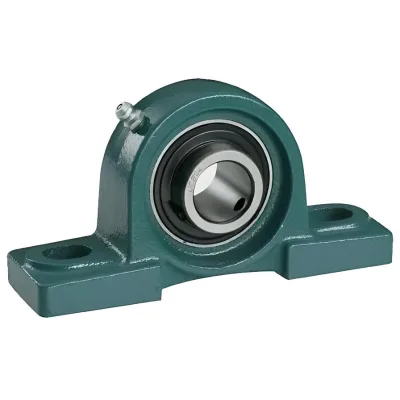
Comprehensive Sourcing Guide
Strategic Sourcing Guide for Stainless Steel Pillow Block Bearings
The global industrial landscape relies heavily on robust motion control components, with stainless steel pillow block bearings serving as a critical element in environments where corrosion resistance and hygiene are paramount. For procurement professionals, navigating the market for these specific units requires a disciplined approach that distinguishes between generic bearing types and the specialized attributes of stainless steel variants. This guide synthesizes available market data to provide a structured framework for evaluating suppliers, verifying technical specifications, and ensuring long-term operational reliability without relying on unverified claims.
Technical Specifications and Material Composition
Understanding the fundamental construction of a Stainless Steel Pillow Block Bearing is the first step in any sourcing strategy. Unlike standard carbon steel bearings, these units are engineered to withstand harsh chemical environments, moisture, and food processing conditions. The core material specification often cited in high-quality listings is Stainless Steel, which provides the necessary baseline for corrosion resistance. However, buyers must verify the specific grade of stainless steel used, as this directly impacts the bearing's lifespan in aggressive environments.
The internal rolling elements are equally critical. Data indicates that these bearings frequently utilize G10 or G16 grade steel balls, which denote the precision and size uniformity of the rolling elements. The raceway configuration can vary significantly between models; some units feature a Deep Groove Raceway designed for radial loads, while others may incorporate a Spherical Raceway to accommodate misalignment. This distinction is vital because spherical raceways allow the bearing to self-align, compensating for shaft deflection or mounting errors, a feature often associated with aligning bearings.
The housing material forms the external structure of the pillow block. Common specifications include Cast Grey Iron or Cast Ductile Iron, though stainless steel housings are also available for extreme corrosion scenarios. The surface treatment process, such as Dacromat Coating, is frequently applied to iron housings to enhance durability and prevent rust. When evaluating a specific product, procurement teams should look for explicit confirmation of the housing material and the specific coating process to ensure compatibility with the intended operating environment.
Precision Ratings and Performance Characteristics
Precision is a non-negotiable factor in bearing selection, particularly for high-speed or high-precision machinery. The market offers a range of precision ratings, including the ABEC series (ABEC-1, ABEC-3, ABEC-5, ABEC-7) and the ISO P-series (P0, P6, P5, P4). A lower number in the ABEC scale generally indicates higher precision, while the P-series follows a similar logic where P4 represents a tighter tolerance than P0. Buyers must align the precision rating with the application requirements; for instance, high-speed spindles may require ABEC-5 or higher, whereas general industrial conveyors might function adequately with ABEC-1 or P0 ratings.
Beyond precision, the operational features of the bearing dictate its suitability for specific tasks. Stainless steel pillow block bearings are often marketed with features such as High Speed, High Temperature resistance, and Low Temperature capability. These attributes suggest the bearing's ability to maintain structural integrity under thermal stress. Additionally, some units are designed to be Magnetically compatible or suitable for Vacuum environments, which is essential for specialized industries like semiconductor manufacturing or medical equipment.
The load direction is another technical parameter that requires careful verification. While many pillow block bearings are designed for radial loads, some specifications indicate Axial Bearing capabilities. Understanding the primary load vector in the application ensures that the selected bearing will not fail prematurely due to improper load distribution. The vibration characteristics, often categorized as V1, V2, V3, or V4, also provide insight into the smoothness of operation, with lower vibration levels indicating higher quality manufacturing and better dynamic performance.
Compliance, Certification, and Quality Standards
In the B2B procurement of industrial components, compliance with international standards is a primary risk mitigation strategy. Reputable suppliers typically hold certifications such as ISO9001:2008 for quality management and ISO14001:2004 for environmental management. Some listings may reference Is09000-2008, which serves as a baseline for quality assurance systems. However, buyers should not assume that a listed certification applies to every unit in a supplier's catalog; verification of the specific certificate's validity and scope is necessary.
The "standard" of the product is another area where ambiguity can arise. While some sources describe products as "high-quality" or adhering to "g6, h6" fit standards, these terms can be vague without context. The g6 and h6 designations refer to specific tolerance classes for shaft and housing fits, respectively. Procurement teams must ensure that the supplier explicitly confirms these fit standards in the technical datasheet to guarantee proper assembly and performance.
Quality is often self-declared in product descriptions as "High Quality," but this should be substantiated by the manufacturer's quality control processes. The presence of OEM service support is a strong indicator of a supplier's flexibility and commitment to meeting specific client requirements. When evaluating a potential partner, buyers should request documentation that proves the supplier's adherence to the claimed standards, rather than relying solely on marketing assertions.
Cost Drivers and Procurement Parameters
The cost of stainless steel pillow block bearings is influenced by several variables, including material grade, precision rating, and customization requirements. The observed price range in the market spans from 0.01 to 145 USD, a wide spectrum that reflects the diversity of product sizes, materials, and specifications. A unit priced at the lower end of this range may be a standard, non-stainless variant or a smaller size, while the higher end likely represents specialized, high-precision, or large-diameter stainless steel models.
Minimum Order Quantity (MOQ) is a significant logistical factor. Market data shows an MOQ range from 1 to 5000 units, with some suppliers offering a specific MOQ of 10 pieces. This flexibility allows small businesses to test products without massive capital outlay, while larger enterprises can negotiate bulk pricing for high-volume orders. The lead time for delivery is another critical cost driver; a standard delivery time of 25 days is observed, but this can vary based on stock availability and customization needs.
Packaging is also a consideration that affects total landed cost. Options range from Single Box and Plastic Barrel to more robust solutions like Carton, Tray, and Palletized shipments (Single Box + Carton + Pallet). For international shipping, the choice of packaging can impact protection against damage and customs clearance efficiency. Buyers should factor in the cost of specialized packaging if the application requires strict hygiene or protection against corrosion during transit.
Supplier Evaluation and Manufacturing Capabilities
When selecting a supplier for stainless steel pillow block bearings, the distinction between a trader and a manufacturer is crucial. The market data confirms that "Manufacturer: Yes" is a valid attribute for some suppliers, indicating direct production capabilities. This distinction often translates to better control over quality, lead times, and pricing. Suppliers located in regions known for bearing manufacturing, such as Shandong, China, often have established supply chains and expertise in this specific domain.
The ability to customize is a key differentiator. The availability of customization options allows buyers to tailor bearing specifications to unique application needs, such as specific bore sizes, seal types, or housing materials. Common seal types observed include Four Star, F Seal, and L3 Seal, each offering different levels of protection against contaminants. The option to select between Separated and Unseparated bearing configurations further highlights the need for suppliers who can provide a variety of product states to match the assembly requirements of the end-user.
Evaluating a supplier also involves assessing their product range. A comprehensive supplier will offer models like UCFC208, Ucf, UCP, and Ucft, covering a wide spectrum of sizes and types. The bore size range of 20 to 90 mm suggests a versatile inventory, but buyers should verify if the specific size required for their application is within this range or if a custom order is necessary. The presence of multiple product models and specifications indicates a mature manufacturing capability capable of meeting diverse industrial demands.
Quality Control and Long-Term Procurement Strategy
Implementing a robust quality control process is essential for mitigating the risks associated with bearing failure. Buyers should verify the weight specifications, as variations in weight (Heavy and Light Weight) can indicate differences in material density or housing thickness. A specific weight observation of 1.8kg for a unit with a 40mm inside diameter provides a benchmark for verifying the integrity of the product upon receipt.
Long-term procurement success depends on the reliability of the supply chain and the consistency of product quality. The availability of OEM service support ensures that buyers can maintain their operations even if specific parts need to be replaced or modified. Furthermore, the color options (Blue, Green, Black) may be used for identification or coding purposes within a facility, adding a layer of operational utility to the product.
To ensure sustained performance, buyers should establish clear acceptance criteria based on the observed specifications. This includes verifying the bearing block model (P or T), confirming the material composition (Bearing Steel or Gcr15 Steel for specific variants), and checking the precision rating against the application's tolerance requirements. By maintaining a rigorous standard of verification and leveraging the flexibility of suppliers who offer customization, procurement teams can secure a reliable supply of stainless steel pillow block bearings that meet the demanding needs of modern industrial applications.
Comparative Analysis of Bearing Attributes
The following table summarizes key attributes observed in the market to assist buyers in comparing potential product options. This comparison highlights the variability in specifications and the importance of matching the right product to the specific application requirements.
| Attribute Category | Observed Variations | Sourcing Consideration |
|---|---|---|
| Bearing Type | Pillow Block, Aligning, Deep Groove, Spherical | Verify if self-aligning capability is needed for shaft misalignment. |
| Material | Stainless Steel, Bearing Steel, Gcr15 Steel | Confirm stainless grade for corrosion resistance; Gcr15 for standard high-load. |
| Precision | ABEC-1 to ABEC-7, P0 to P4 | Match precision to speed and load requirements; higher precision for high-speed. |
| Housing Material | Cast Grey Iron, Cast Ductile Iron, Stainless Steel | Select based on environmental exposure and load capacity. |
| Seal Type | Four Star, F Seal, L3 Seal | Choose seal based on contamination levels (dust, water, chemicals). |
| Customization | Available (Bore, Seal, Housing) | Leverage customization for unique fitment or environmental needs. |
| Certification | ISO9001:2008, ISO14001:2004 | Verify active status of certificates for quality assurance. |
| Origin | China, Shandong | Consider logistics and lead times associated with the origin location. |
By systematically evaluating these attributes against the specific demands of the application, procurement professionals can make informed decisions that balance cost, performance, and reliability. The diversity of options available in the market underscores the necessity of a detailed specification sheet and clear communication with suppliers to ensure the final product meets all operational criteria.
FAQs
What materials are used for stainless steel pillow block bearings?
These bearings typically use Stainless Steel for the main body and Gcr15 Steel for rolling elements. Some variants feature Cast Grey Iron or Cast Ductile Iron housings with Dacromat Coating for enhanced corrosion resistance in harsh environments.
Which precision ratings are available for these bearings?
Available precision ratings include the ABEC series ranging from ABEC-1 to ABEC-7 and the ISO P-series from P0 to P4. Buyers should select ABEC-5 or higher for high-speed applications requiring tight tolerances.
Can these bearings be customized for specific needs?
Yes, customization is available for various specifications including bore sizes, seal types, and housing materials. Suppliers support OEM services to tailor products like UCFC208 or UCP models to unique operational requirements.
What certifications do reputable manufacturers hold?
Reputable manufacturers often hold ISO9001:2008 for quality management and ISO14001:2004 for environmental management. Some listings may reference Is09000-2008, but verification of specific certificate validity is essential for compliance.
How long is the standard delivery time for orders?
The standard delivery time observed is 25 days from order confirmation. This lead time may vary based on stock availability, customization requirements, and the specific shipping destination for the purchased units.
What is the minimum order quantity for these bearings?
The minimum order quantity ranges from 1 to 5000 units depending on the supplier. Some vendors offer a specific MOQ of 10 pieces, allowing small businesses to test products without large capital outlay.
Which seal types are commonly used in these bearings?
Common seal types include Four Star, F Seal, and L3 Seal, each offering different levels of protection against contaminants. Buyers should select seals based on the specific environmental conditions and load directions of their application.