Source Stainless Steel Rail Rope Joint for Subway Light Rail Bus
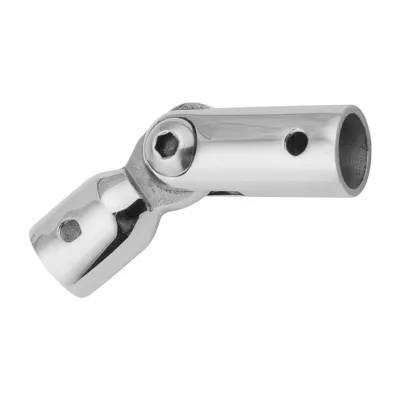
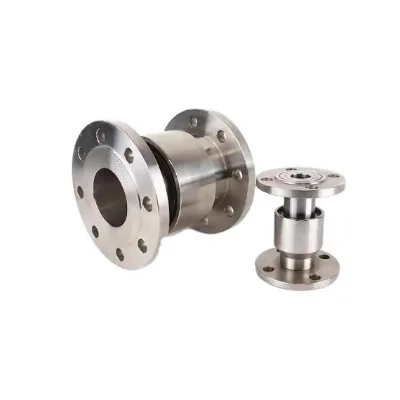
Find 30 Stainless Steel Rail Rope Joint options from Ningbo, Qingdao, and Zhejiang factories. Compare specifications including AISI304 and AISI316 materials, sizes like 32mm and 35mm, and customization services for subway, light rail, and bus applications.
Key considerations
Products List






Comprehensive Sourcing Guide
Strategic Sourcing Guide for Stainless Steel Rail Rope Joints
Understanding Product Specifications and Material Grades
When sourcing stainless steel rail rope joints, the primary focus must be on the precise material composition and dimensional tolerances that ensure structural integrity under dynamic loads. The supplied product data indicates that the core material for these components is consistently identified as Stainless Steel, with specific mentions of AISI304 and AISI316 grades. These grades are critical differentiators in the procurement process. AISI304 offers a robust balance of corrosion resistance and mechanical strength suitable for general applications, while AISI316 provides enhanced resistance to chlorides and harsher environmental conditions, making it preferable for coastal or high-moisture transit environments.
The dimensional specifications for these joints vary significantly depending on the intended application. Observed data reveals a wide range of product models, including specific identifiers like "RC100," "ABL," and "001," alongside custom designations. The physical dimensions are equally diverse, with tube sizes ranging from 33.7x2.0 mm to 48.3x2.6 mm. Furthermore, standard product models list sizes such as 32mm and 35mm, while other entries reference port sizes from 1/8" to 1/2" and diameters associated with temperature measurement thermometers. Buyers must verify that the specific joint geometry matches the rail rope diameter and the load-bearing requirements of the installation. The cross-section shape is noted as "Equal," and connection types are described as "Convex," which influences how the joint interfaces with the rail system.
Surface finishing is another critical specification. The processing capabilities include polishing, which is essential for reducing friction and preventing debris accumulation in moving rail systems. The head codes for these components are observed as either "Round" or "Hexagon," indicating different installation methods or aesthetic requirements. The angle of the joint is frequently specified as 90 degrees, a standard configuration for many rail transitions, though custom angles may be available through the "Customization: Available" attribute.
Compliance Standards and Technical Verification
Ensuring that the stainless steel rail rope joints meet international and industry-specific standards is a non-negotiable aspect of the procurement process. The product data lists several standards that buyers should verify against their project requirements. These include ASTM, GB, and DIN standards, which cover material properties, manufacturing tolerances, and testing protocols. Additionally, specific product entries reference "TUV" certification, suggesting that certain batches or models may undergo third-party technical inspection.
While general background information often cites CE or ISO 9001, these should be treated as potential attributes rather than guaranteed facts for every listing. Buyers must explicitly request documentation proving that the specific batch of rail rope joints complies with the relevant standard for their region and application. For instance, if the project is in Europe, compliance with EN standards is mandatory, whereas projects in China or Asia may prioritize GB standards. The "prod_standard" field in the data shows entries ranging from "custom" to specific numerical values like "1mm" or "1/8"-4", highlighting the need for precise standard alignment.
The temperature classification is another vital compliance factor. The data identifies these components as suitable for "Medium Temperature Piping" and "Ultra High Pressure Piping" environments. This suggests that the joints are engineered to withstand significant thermal expansion and pressure fluctuations. Buyers must confirm that the material grade (AISI304 vs. AISI316) is appropriate for the maximum operating temperature and pressure of their specific rail system. The "Test Report: Material Report" attribute indicates that suppliers should provide traceable documentation linking the physical product to its raw material certification.
Cost Drivers and Pricing Dynamics
The pricing structure for stainless steel rail rope joints is influenced by a complex interplay of material costs, customization levels, and order volume. The observed price range in the market spans from $0.01 to $133.30 USD. This wide variance is not indicative of quality differences alone but rather reflects the diversity of product types, from simple connectors to complex, custom-engineered assemblies. The lower end of the price spectrum likely corresponds to standard, off-the-shelf items with minimal processing, while the higher end reflects custom-machined components with specialized surface treatments or unique dimensional requirements.
Material costs are a primary driver. The price difference between AISI304 and AISI316 stainless steel is significant, with 316 commanding a premium due to its nickel and molybdenum content. Buyers should expect a proportional increase in unit cost when specifying 316 for marine or high-corrosion applications. Additionally, the "Processing & Customization: Yes" attribute implies that any deviation from standard models will incur additional tooling and labor costs.
Order volume plays a crucial role in unit pricing. The observed Minimum Order Quantity (MOQ) ranges from 1 to 5,000 units. While some suppliers offer low MOQs starting at 10 pieces, larger orders often unlock tiered pricing structures. The "MOQ: 10PCS" entry suggests that small-batch procurement is feasible for prototyping or small-scale repairs, but economies of scale become apparent at higher volumes. Buyers should calculate the total landed cost, including shipping and duties, rather than focusing solely on the unit price, as the FOB trade term indicates that freight costs are separate.
Typical Applications and Usage Scenarios
Stainless steel rail rope joints are versatile components designed for a variety of transportation and architectural applications. The data explicitly states that these products are used in "Subway / Light Rail/Bus" systems, indicating their critical role in public transportation infrastructure. In these environments, the joints must withstand constant vibration, high traffic loads, and exposure to the elements. The "Decoration, Religious" usage category suggests that these components also serve aesthetic purposes in architectural settings, where the "Fashion" style and polished surface finish are as important as their mechanical function.
The specific application dictates the required specifications. For subway and light rail systems, the "Ultra High Pressure Piping" and "Medium Temperature Piping" classifications imply that the joints are part of a larger hydraulic or pneumatic system, or perhaps structural tensioning systems for overhead catenaries. The "Convex" connection type and "Equal" cross-section shape are likely optimized for smooth load transfer in these high-stress environments. In architectural applications, the "Round" or "Hexagon" head codes and "Polished" surface finish contribute to the visual appeal, while the "Depends" color attribute suggests that powder coating or anodizing may be available to match specific design palettes.
Supplier Evaluation and Business Model Analysis
Evaluating potential suppliers requires a thorough understanding of their business model and operational capabilities. The data identifies the business type as "Factory Manufacture," which is a strong indicator of direct pricing and control over the production process. This contrasts with trading companies that may add markups and lack direct oversight of quality control. The "Place of Origin" is consistently listed as China, with specific locations including Ningbo, Zhejiang, and Qingdao. These regions are known for their robust manufacturing ecosystems, particularly in metalworking and hardware production.
When assessing suppliers, buyers should verify their customization capabilities. The "Processing & Customization: Yes" and "Customization: Available" attributes confirm that these manufacturers can adapt standard designs to meet specific project needs. However, buyers must inquire about the lead times associated with custom orders, as these can vary significantly based on the complexity of the modification. The "Trade Term: Fob" (Free on Board) is a standard term in the data, meaning the buyer is responsible for freight and insurance from the port of origin. Buyers should also confirm the payment terms, with "T/T" (Telegraphic Transfer) being the observed standard, and negotiate terms that balance risk for both parties.
Quality Control and Packaging Protocols
Quality assurance is paramount when sourcing components for rail systems. The data indicates that suppliers provide a "Material Report" as a test report, which serves as the primary evidence of material compliance. Buyers should request this report for every batch to ensure the stainless steel grade matches the specification (AISI304 or AISI316). Additionally, the "Surface: Polish" attribute suggests that visual and tactile inspection for surface defects is a standard part of the quality control process.
Packaging is another critical aspect of the procurement process, as it protects the components during transit. The observed packaging methods include "Cardboard Box," "Pallet," "Carton," "Blister," "White Box," "PP Bags in Carton Box," "Bubble Bag + Box + Carton + Pallet," and "Woodencase." The variety in packaging suggests that suppliers tailor their methods to the order size and destination. For international shipments, the use of wooden cases or robust palletization is essential to prevent damage. Buyers should specify their packaging requirements in the purchase order to ensure that the components arrive in pristine condition, ready for installation.
Long-Term Procurement Considerations
Sourcing stainless steel rail rope joints is not merely a transactional event but a strategic decision that impacts long-term operational efficiency. The "Customization: Available" attribute offers the flexibility to adapt to future design changes or system upgrades, reducing the need for complete component replacements. However, buyers must consider the standardization of parts across their fleet or facility to simplify maintenance and inventory management.
The "Bussiness Type: Factory Manufacture" status suggests a potential for long-term partnership, where the supplier can scale production to meet growing demand. Buyers should establish clear communication channels regarding quality feedback and warranty claims. The "Payment: T/T" term requires careful financial planning, as it typically involves upfront payments or significant deposits. Establishing a relationship with a factory that offers consistent quality and reliable lead times will mitigate the risks associated with supply chain disruptions. Finally, buyers should monitor the market for changes in raw material costs, as fluctuations in the price of nickel and chromium can impact the long-term pricing of stainless steel components.
FAQs
What material grades are used for stainless steel rail rope joints?
The primary material grades are AISI304 and AISI316 stainless steel. AISI304 offers general corrosion resistance, while AISI316 provides enhanced protection for harsh environments like coastal areas.
Which customization options are available for these rail rope joints?
Customization is available for processing, surface finishing, and specific dimensions. Buyers can request polished surfaces, custom angles, and tailored packaging to meet unique project requirements.
How are stainless steel rail rope joints packaged for shipping?
Packaging options include cardboard boxes, cartons, blister packs, and wooden cases. Items may be wrapped in PP bags or bubble bags before being placed on pallets for international transport.
Can I find suppliers with a low minimum order quantity?
Yes, some suppliers offer a minimum order quantity as low as 10 pieces. However, other listings may require up to 5000 units, so buyers should verify specific MOQs before ordering.
What standards do these stainless steel rail rope joints comply with?
Products comply with ASTM, GB, and DIN standards. Some specific batches may also carry TUV certification, and buyers should request material reports to verify compliance for their specific project.
Where are the factories manufacturing these rail rope joints located?
Manufacturing facilities are located in China, specifically in Ningbo, Zhejiang, and Qingdao. These regions are known for their robust metalworking ecosystems and direct factory manufacturing capabilities.