Source Stainless Steel Power Steering Rack for Jeep, Toyota, Mercedes
Find 30 listings for Stainless Steel Power Steering Rack compatible with Jeep, Toyota Hilux, and Mercedes Sprinter. Buyers can compare models, materials, and prices to select the right replacement part.
Key considerations
Products List


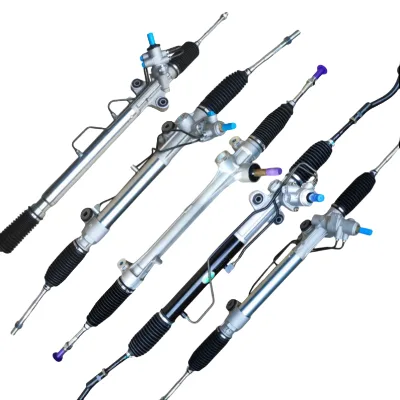


Hot Sale Spare Parts Left Hand Power Steering Rack 44250-42080 44250-42040
$61.40 - $88.70
MOQ: 20 Pieces

Right Hand Power Steering Rack Used for Cr-V (53601-S9A-023) (53601S9A023)
$127.80 - $184.60
MOQ: 20 Pieces


Hot Sale Steering Rack 44250-42100 44250-42060 44250-42020 44250-42021 44250-42022 44250-42080
$30.00 - $80.00
MOQ: 1 Pieces
Comprehensive Sourcing Guide
Strategic Sourcing Guide for Stainless Steel Power Steering Racks
Understanding Technical Specifications and Material Composition
When sourcing a Stainless Steel Power Steering Rack, the primary focus must be on the precise material composition and mechanical specifications that define the component's durability and performance. The core keyword "stainless steel" indicates a specific material class chosen for its resistance to corrosion and high tensile strength, which is critical for components exposed to road salts, moisture, and mechanical stress. In the current market, observed listings confirm that steering gears and shafts are available in various material grades, including steel, aluminum, and stainless steel. Buyers must distinguish between these materials, as the selection directly impacts the vehicle's handling characteristics and the longevity of the steering system.
The technical profile of a power steering rack involves several key parameters. The guide drive mechanism is a critical specification, with options typically available for both right-hand and left-hand configurations. This distinction is vital for ensuring compatibility with specific vehicle models and regional driving standards. Furthermore, the power source type varies significantly across the market, encompassing hydraulic power, electrical power, and mechanical power systems. A stainless steel rack designed for a hydraulic system will have different internal valving and piston configurations compared to an electric or mechanical unit. Buyers should verify that the product model number aligns with the specific power source requirements of their target vehicle.
Product models found in current listings include specific identifiers such as 44200-35090, 45500-5202C, and 48500-77500, which often correspond to specific OE (Original Equipment) numbers. These model numbers serve as the primary reference for cross-referencing parts compatibility. The application of these racks is equally specific; for instance, certain models are explicitly designated for Jeep steering gears, while others are engineered for Toyota Hilux Vigo 4WD vehicles or Mercedes Sprinter models. The "Specification" field often describes the component as a "car power steering gear rack," indicating its general function, but the exact fitment requires matching the OE number, such as 5154516AC or 44200-0K040.
Compliance, Certification, and Quality Standards
Navigating the compliance landscape for automotive steering components requires a rigorous verification of certifications and adherence to international standards. While the market offers products with "Standard" designations, the presence of specific certifications like ISO is a strong indicator of a supplier's commitment to quality management systems. In the observed data, ISO certification is explicitly listed for certain steering gear products, suggesting that the manufacturing process meets recognized international benchmarks for consistency and safety. However, buyers must not assume that all stainless steel racks carry this certification; it must be verified on a per-supplier basis.
The standardization of these components is another critical area. Listings indicate that products may adhere to "Standard" sizes or be manufactured "as Requested." This distinction is crucial for custom procurement projects where off-the-shelf solutions may not fit specific vehicle modifications or specialized fleet requirements. The "Standard Size" designation implies a level of interchangeability with existing market parts, whereas "as Requested" suggests a custom manufacturing process that may involve longer lead times and higher costs. Buyers should explicitly request documentation proving that the stainless steel material meets the relevant ASTM or ISO standards for automotive applications, particularly regarding tensile strength and corrosion resistance.
It is important to note that while some background information mentions CE certification, this should not be treated as a guaranteed attribute for all stainless steel steering racks. The presence of CE marking depends on the specific regulatory jurisdiction and the nature of the export. Therefore, procurement teams must request current, valid certification documents directly from the supplier rather than relying on general market assumptions. The warranty period is another compliance-related metric; observed data shows a "1 year" warranty as a common offering, which serves as a baseline for the supplier's confidence in the product's durability. Buyers should negotiate warranty terms that reflect the critical safety nature of steering components, potentially seeking extended coverage for stainless steel variants that promise superior longevity.
Cost Drivers and Pricing Structures
The pricing of stainless steel power steering racks is influenced by a complex interplay of material costs, manufacturing complexity, and supply chain logistics. The observed price range in the market spans from $0.99 to $184.60, a wide variance that reflects differences in product quality, brand reputation, and specific vehicle application. The lower end of this spectrum often corresponds to generic or less specialized components, while the higher end typically represents OEM-equivalent parts or those with advanced features like specific power source integration (hydraulic, electrical, or mechanical).
Material cost is a primary driver, as stainless steel is generally more expensive than standard carbon steel or aluminum. The grade of stainless steel used, such as 304 or 316, significantly affects the final price, though specific grades are not always explicitly listed in general product summaries. Buyers must understand that a lower price point may indicate the use of lower-grade stainless steel or alternative materials that mimic the appearance of stainless steel without the same corrosion resistance. The "Regular Packaging" or "Strong Carton" options also contribute to the final cost, as robust packaging is essential to prevent damage during international shipping, especially for heavy metal components.
Minimum Order Quantity (MOQ) is another significant factor in the total cost of ownership. The observed MOQ range is from 1 to 100 units, with some listings explicitly stating an MOQ of 1 PC. This flexibility allows small buyers or those testing a new supplier to procure samples without a large financial commitment. However, bulk purchasing often yields better unit economics. The "Selling Units" are typically listed as "Single item," which facilitates sample ordering but may result in higher per-unit costs for larger orders if volume discounts are not negotiated. Buyers should calculate the total landed cost, including shipping and potential tariffs, rather than focusing solely on the unit price, as stainless steel components are heavy and shipping costs can be substantial.
Typical Applications and Vehicle Compatibility
The application of stainless steel power steering racks is highly specific, with compatibility varying widely across different vehicle makes and models. The market data highlights several distinct use cases, ranging from heavy-duty commercial vehicles to passenger cars. For example, specific models are identified for use in Jeep steering gears, indicating a demand for robust components capable of handling off-road conditions and high torque loads. Similarly, the Toyota Hilux Vigo 4WD is a noted application, suggesting that stainless steel racks are often preferred for vehicles operating in harsh environments where corrosion resistance is paramount.
Commercial vehicles also represent a significant segment of the market. The Mercedes Sprinter is explicitly mentioned as a vehicle compatible with certain steering gear models, underscoring the importance of stainless steel in the commercial transport sector where uptime and reliability are critical. The "Purpose" of these components is consistently listed as "for replace/repair," indicating that the primary market is the aftermarket replacement sector rather than original equipment manufacturing. This distinction is important for buyers, as aftermarket parts must meet or exceed the performance standards of the original equipment to ensure vehicle safety.
The power source type further dictates the application. Hydraulic power systems are common in heavier vehicles, while electrical power systems are increasingly found in modern passenger cars. Mechanical power steering, though less common in new vehicles, remains relevant for older models or specific utility vehicles. Buyers must match the power source type of the rack to the vehicle's existing system. Mismatching the power source can lead to system failure or the need for extensive vehicle modifications. The "Guide Drive" specification (Left Hand or Right Hand) must also align with the vehicle's steering geometry to ensure proper function.
Supplier Evaluation and Sourcing Strategy
Evaluating suppliers for stainless steel power steering racks requires a multi-faceted approach that goes beyond simple price comparison. The geographic origin of the product is a key indicator of supply chain stability. Observed data shows products originating from Chongqing, China, Zhejiang, China, and generally "China." These regions are known for their manufacturing capabilities, but buyers should verify the specific factory's capacity and history. The "Brand" name, such as "Nayo," provides a point of reference for brand reputation, though buyers should be cautious of generic branding that may lack a clear track record.
Supplier reliability is often gauged by their delivery time and sample availability. The observed delivery time ranges from 2 to 7 days, which is relatively fast for international shipping, suggesting efficient logistics or local warehousing. The availability of samples is another critical factor; listings confirm that samples are "Available," allowing buyers to physically inspect the quality of the stainless steel, the finish, and the machining tolerances before committing to a large order. This "Sample" capability is a strong indicator of a supplier's confidence in their product and their willingness to engage in a transparent procurement process.
Customization is another area where supplier evaluation is essential. The market data indicates that "Customization" is available, which is a significant advantage for buyers with unique requirements. However, customization often implies longer lead times and higher costs. Buyers should assess the supplier's ability to handle custom requests, such as specific OE numbers or unique guide drive configurations, without compromising quality. The "Standard" designation for packing and the "Regular Packaging" options suggest that suppliers have established processes for handling standard orders, but custom orders may require additional coordination.
Quality Control and Long-Term Procurement Considerations
Ensuring the quality of stainless steel power steering racks requires a robust quality control (QC) strategy that addresses both material integrity and mechanical performance. The "Warranty" of 1 year is a baseline metric, but buyers should implement their own QC protocols, such as third-party inspection or on-site audits, to verify that the stainless steel meets the required corrosion resistance and strength standards. The "Condition" of the products is consistently listed as "New," which is a basic requirement, but buyers must ensure that "New" implies factory-fresh, not refurbished or remanufactured units, unless explicitly stated.
Long-term procurement considerations involve building a sustainable relationship with suppliers who can guarantee consistent quality and supply. The "Standard" designation for the product suggests a baseline level of quality, but buyers should seek suppliers who can provide detailed test results and material certificates. The "Automatic" attribute, ranging from "Semi-Automatic" to "Automatic," may refer to the manufacturing process or the steering system itself, and understanding this distinction is important for future maintenance and compatibility.
The "Color" of the component, typically "Black," is a cosmetic attribute but can also indicate the type of coating or treatment applied to the stainless steel. Buyers should verify that the coating does not interfere with the corrosion resistance of the underlying material. The "OE NO." and "OE No." fields provide a critical link to original equipment specifications, ensuring that the replacement part fits the vehicle's mounting points and interfaces correctly. By maintaining a focus on these technical details and verifying them against the supplier's documentation, buyers can mitigate the risks associated with aftermarket steering component procurement and ensure the safety and reliability of their vehicles over the long term.
Comparative Analysis of Product Attributes
To facilitate a clearer understanding of the market landscape, the following table summarizes the key attributes observed in the current product listings. This comparison highlights the variability in specifications that buyers must navigate when sourcing stainless steel power steering racks.
| Attribute Category | Observed Variations | Key Verification Points |
|---|---|---|
| Material | Steel, Aluminum, Stainless Steel | Confirm specific grade of stainless steel; verify corrosion resistance claims. |
| Product Model | 23622566, B3401100, 44250-06270, 44200-35090, 45500-5202C, 48500-77500, 46-46, 45510-48040, AEL-5511, AEL-8038 | Cross-reference with vehicle OE numbers (e.g., 5154516AC, 44200-0K040). |
| Application | Jeep, Toyota Hilux Vigo 4WD, Mercedes Sprinter, General Car | Match application to specific vehicle make, model, and year. |
| Power Source | Hydraulic, Electrical, Mechanical | Ensure compatibility with vehicle's existing steering system type. |
| Guide Drive | Right Hand, Left Hand | Verify steering geometry matches vehicle configuration. |
| Certification | ISO (observed), CE (background only) | Request valid ISO certificates; do not assume CE without proof. |
| Packing | Regular Packaging, Strong Carton, Standard | Assess packaging for damage prevention during transit. |
| Delivery Time | 2 to 7 Days | Confirm lead time accuracy for project planning. |
| Warranty | 1 year (observed) | Negotiate terms based on component criticality. |
This table serves as a reference for buyers to systematically evaluate potential suppliers and products. By focusing on these specific attributes, procurement teams can make informed decisions that align with their technical requirements and quality standards. The diversity of models and applications underscores the need for a detailed, evidence-based approach to sourcing, ensuring that the selected Stainless Steel Power Steering Rack delivers the performance and reliability required for safe vehicle operation.
FAQs
What material grades are available for steering gears?
Steering gears are available in steel, aluminum, and stainless steel. Buyers must verify the specific material grade for their application, as stainless steel offers superior corrosion resistance compared to standard steel or aluminum options found in the market.
Which certifications do these steering gear products hold?
Some listed products carry ISO certification, indicating adherence to international quality management standards. Buyers should verify this certification on a per-supplier basis rather than assuming it applies to all stainless steel racks or generic listings.
How long is the delivery time for these parts?
The observed delivery time ranges from 2 to 7 days for available items. This lead time applies to standard orders, while customized requests may require additional processing time depending on the supplier's capacity and specific requirements.
Can I order a single unit as a sample?
Yes, samples are available with a minimum order quantity of 1 PC. This allows buyers to inspect the product quality and specifications before committing to larger orders, though bulk purchasing may offer better unit economics.
Which vehicle models are compatible with these racks?
Specific models are designed for Jeep, Toyota Hilux Vigo 4WD, and Mercedes Sprinter vehicles. Compatibility depends on matching the OE number and power source type, such as hydraulic or electrical, to the vehicle's existing steering system.
What is the warranty period for these steering components?
A 1-year warranty is commonly offered for these steering gear products. This baseline coverage reflects supplier confidence in durability, but buyers should negotiate terms that account for the critical safety nature of steering components.
How does the guide drive configuration affect selection?
Guide drive configurations are available for both right-hand and left-hand applications. Selecting the correct configuration is vital to ensure compatibility with the vehicle's steering geometry and regional driving standards.