Source Standing Floor Washdown Bathroom Urinals for Hotels, Offices, and Schools
Find 30 Standing Floor Washdown Bathroom Urinals available for comparison. Buyers can review options including wall-mounted and floor-standing models with induction or hand-press flushing controls, ceramic or stainless steel materials, and customized sizes for commercial projects.
Key considerations
Products List


Foshan Ceramic Urinals Supplier Lavatory Bathroom Urinals Outhouse Toilets for Sale
$13.00 - $16.00
MOQ: 100 Pieces


Two Piece Water Closet Bathroom Ceramic Floor Mounted Washdown Two Piece Toilet
$41.00 - $45.00
MOQ: 100 Pieces

Ceramic Washdown Flushing Roughing-in Two Piece Toilet with Soft Close Toilet Seat
$41.00 - $45.00
MOQ: 100 Pieces

Wash Down One Piece Toilet Clean Ceramic Toilet Slim Seat Toilet for Sale
$81.00 - $83.00
MOQ: 10 Pieces



Comprehensive Sourcing Guide
Strategic Sourcing Guide for Standing Floor Washdown Bathroom Urinals
Understanding the Product Category and Technical Specifications
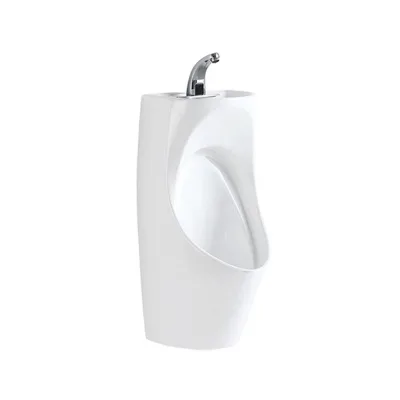
When sourcing Standing Floor Washdown Bathroom Urinals, buyers must first distinguish between the specific mechanical configurations and material compositions that define the product category. The market offers distinct variations, primarily categorized by their installation method and flushing mechanisms. The core keyword "standing floor" indicates a unit designed to rest directly on the bathroom floor, as opposed to wall-mounted alternatives, though some listings in the broader market may present hybrid configurations. The "washdown" designation refers to a specific flushing technology where water is directed to clean the bowl surface, differing from siphonic or vacuum-assisted systems.
Technical evaluation begins with the material composition. High-quality units in this category are frequently constructed from ceramic, a material chosen for its durability, non-porous surface, and resistance to staining. However, the supply chain also includes metal components, specifically stainless steel, which are often utilized for internal mechanisms, mounting hardware, or specific industrial-grade variants. The surface finish is a critical technical attribute; observed data indicates that polishing and satin finishes are common processing types, which influence both the aesthetic appeal and the ease of cleaning. Buyers should verify that the surface treatment aligns with the intended hygiene standards of the facility.
The flushing control method is another pivotal specification. The market presents a dichotomy between manual and automated systems. Some units utilize a hand-press type flushing control, offering a mechanical, direct interaction. Others are equipped with induction sensors, providing a touchless experience that enhances hygiene and water efficiency. The presence or absence of a sensor is a definitive differentiator that impacts both the initial procurement cost and the long-term maintenance requirements. Additionally, the spud location, often identified as the top spud in specific models, dictates the internal plumbing geometry and the compatibility with existing drainage infrastructure.
Compliance, Certification, and Industry Standards
Navigating the compliance landscape for bathroom fixtures requires a rigorous verification process, as the supply chain for these products often spans multiple jurisdictions. While general industry knowledge suggests that manufacturers may adhere to standards such as ISO 9001 for quality management or hold CE certification for European market access, these should be treated as verification points rather than guaranteed attributes for every listed product. Buyers must explicitly request current certification documents from the supplier before finalizing a contract.
The physical dimensions of the urinal are governed by specific standards that vary by region. Observed product data lists specific dimensional standards, such as 604060 mm or 350370680 mm, which likely correspond to specific model numbers or packaging requirements. However, these figures should not be assumed to be universal. Buyers must confirm that the product's standard dimensions align with local building codes and accessibility regulations, such as ADA requirements in the United States or EN standards in Europe. The "European" style mentioned in some product attributes suggests a design lineage that may influence dimensions, but local regulatory compliance takes precedence over stylistic classification.
Furthermore, the "Project Solution" capability of a supplier often implies adherence to broader industry standards for total project delivery. This includes the ability to provide documentation for water consumption ratings and drainage compatibility. The "Washdown" drainage type must be verified against the facility's plumbing system to ensure proper flow and prevent clogging. Buyers should not rely on generic claims of compliance but rather demand specific test reports or certification copies that validate the product against the relevant national or international standards for the destination market.
Cost Drivers and Pricing Structures
The pricing structure for standing floor washdown urinals is influenced by a complex interplay of material costs, customization levels, and manufacturing processes. The observed price range in the market spans from $5 to $300 USD, a wide variance that reflects differences in material quality, brand positioning, and feature sets. A unit priced at the lower end of this spectrum may be a basic ceramic model with manual flushing, while a unit at the higher end likely incorporates advanced sensor technology, custom finishes, or specialized stainless steel components.
Material composition is a primary cost driver. Ceramic units are generally cost-effective for standard applications, whereas stainless steel variants, often associated with industrial or high-traffic environments, command a premium due to the cost of raw materials and the complexity of the forming process, such as deep drawing and fine blanking. The surface processing, including polishing to a satin finish, adds labor and time to the production cycle, thereby increasing the unit cost.
Customization is another significant factor affecting price. The availability of OEM (Original Equipment Manufacturer) and ODM (Original Design Manufacturer) services allows buyers to tailor products to specific branding or functional needs. However, this customization comes with a cost. While some suppliers offer a Minimum Order Quantity (MOQ) as low as 1 piece, enabling small-scale testing or replacement, larger orders typically benefit from economies of scale. The "Simple Single Process Dies" mentioned in product attributes suggest that certain models may have lower tooling costs, but complex custom molds will increase the per-unit price. Buyers must balance the desire for customization against the budget constraints, understanding that bespoke features will invariably push the price toward the higher end of the observed range.
Typical Applications and Usage Scenarios
Standing floor washdown urinals are versatile fixtures designed for a wide array of commercial and institutional settings. The primary application is in adult restrooms within high-traffic public facilities, including office buildings, shopping malls, airports, and educational institutions. The "standing floor" design is particularly advantageous in facilities where wall mounting is structurally impractical or where a more robust, floor-standing unit is preferred for durability and ease of maintenance.
The specific application dictates the required features. For instance, in high-traffic areas where hygiene is paramount, the induction-type flushing control with a sensor is the preferred choice. This touchless operation reduces the spread of germs and ensures consistent water usage. Conversely, in settings where power supply for sensors is unreliable or where budget constraints are tight, the hand-press type flushing control offers a reliable, mechanical alternative. The "European" and "Modern" design styles observed in the market make these units suitable for contemporary architectural projects that prioritize aesthetic integration alongside functionality.
The "Project Solution" capability of suppliers indicates that these products are often sourced for large-scale developments. In such scenarios, the ability to provide a total solution, including installation support and after-sales technical assistance, is crucial. The "Online Technical Support" attribute suggests that suppliers are equipped to assist with installation challenges or troubleshooting, which is vital for complex projects involving multiple units. Whether for a single restroom renovation or a multi-building campus, the standing floor washdown urinal serves as a critical component in maintaining facility hygiene and operational efficiency.
Supplier Evaluation and Manufacturing Capabilities
Selecting the right supplier requires a deep dive into their manufacturing capabilities and operational transparency. The supply chain for these fixtures often originates from specific manufacturing hubs, with "Zhejiang, China" identified as a key location of origin. This region is known for its robust ceramic and metal processing industries, offering a concentration of suppliers with varying levels of expertise. Buyers should verify the "Place of Origin" and ensure that the supplier has a proven track record in producing the specific type of urinal required.
Manufacturing processes play a significant role in product quality. The presence of "Deep Drawing" and "Forming Process" capabilities indicates that the supplier can produce complex metal components with high precision. The "Tolerances" of 0.1mm suggest a commitment to quality control, ensuring that parts fit together correctly and function smoothly. However, buyers must confirm that these tolerances apply to the specific product being purchased, as not all listed attributes may apply to every item in a supplier's catalog.
The customization capabilities, including "Customized Color" and "Customized Size," are essential for buyers seeking to align the product with their brand identity or specific architectural requirements. The availability of "OEM" and "ODM" services allows for branding integration, but it requires a clear communication of specifications. Suppliers should demonstrate the ability to handle "Simple Single Process Dies" for standard runs while also possessing the flexibility for more complex custom orders. Evaluating the supplier's "After-Sale Service" offerings, such as online technical support, is also critical for ensuring long-term reliability and support.
Quality Control and Long-Term Procurement Considerations
Ensuring the long-term success of a procurement project involves rigorous quality control measures and a focus on sustainability. The packaging of these units, typically described as "Plastic Bag+Foam+Carton" or "Carton with Bathx Logo," is a critical aspect of quality control during transit. Proper packaging prevents damage to the ceramic or metal surfaces, which are susceptible to chipping or scratching. Buyers should inspect the packaging standards to ensure that the product arrives in pristine condition, minimizing the risk of returns and replacements.
Long-term procurement considerations extend beyond the initial purchase price. The "Delivery Time" of "Within 30 Days" is a standard expectation, but buyers must confirm this lead time for their specific order volume and customization requirements. Delays in delivery can disrupt project timelines, making it essential to have a clear agreement on production schedules. The "Water Consumption" attribute, noted as "Ordinary Type" in some listings, should be evaluated against local water conservation regulations. Buyers may need to specify higher efficiency models if the project targets sustainability certifications.
Maintenance is another long-term factor. The choice between sensor-based and manual flushing systems impacts the frequency of maintenance. Sensor units require battery replacements or power supply maintenance, while manual units require mechanical checks. The "Washdown" drainage system must be compatible with the facility's plumbing to prevent blockages and ensure efficient operation. Buyers should request detailed maintenance manuals and spare part availability from the supplier to ensure that the facility can maintain the fixtures effectively over their lifespan. By focusing on these quality and long-term factors, buyers can secure a reliable supply of Standing Floor Washdown Bathroom Urinals that meet both immediate and future operational needs.
FAQs
What materials are used for Standing Floor Washdown Bathroom Urinals?
These units are primarily constructed from ceramic or stainless steel. Ceramic offers durability and a non-porous surface, while stainless steel variants are often used for industrial-grade applications or specific metal components.
Can I find Standing Floor Washdown Bathroom Urinals with sensors?
Yes, models are available with induction sensors for touchless operation. Some units come with sensors for enhanced hygiene, while others utilize a hand-press type flushing control without sensors for mechanical reliability.
How long is the delivery time for these urinals?
The standard delivery time is within 30 days. This lead time applies to the production and shipping process, though specific timelines may vary based on order volume and customization requirements.
What is the minimum order quantity for these products?
The minimum order quantity can be as low as 1 piece. This low MOQ allows for small-scale testing or replacement orders, making it accessible for various procurement needs.
Are customized sizes and colors available for these urinals?
Yes, customized sizes and colors are available for these units. Buyers can request specific dimensions and finishes to align with their brand identity or architectural requirements through OEM services.
What flushing methods are used for standing floor washdown urinals?
These urinals typically use gravity flushing or washdown drainage methods. The flushing control can be either induction type with a sensor or hand press type, depending on the specific model selected.
Where are these urinals manufactured and shipped from?
These products originate from manufacturing hubs in Zhejiang, China. The place of origin is confirmed as China, and the standard packaging includes plastic bags, foam, and cartons for safe transit.