Source Standard Twin-Rod Cylinder for Automation, Agriculture, and Machinery
Compare 30 standard twin-rod cylinder options featuring piston structures, double-acting designs, and customizable bore sizes. Buyers can evaluate specifications like stroke length, pressure ratings, and material composition for automation, agricultural machinery, and industrial control applications.
Key considerations
Products List


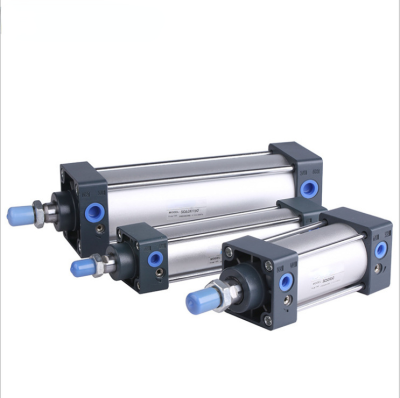


Experienced Cylinder OEM Service Supplier Cxs Series Twin-Rods Cylinder
$10.00 - $125.00
MOQ: 10 Pieces


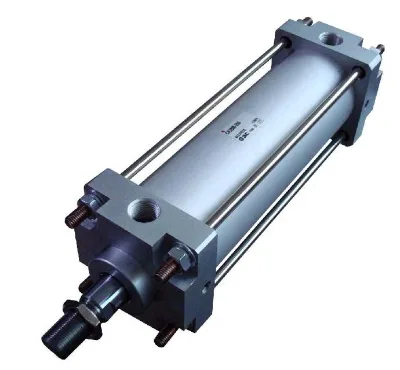


Comprehensive Sourcing Guide
Strategic Sourcing Guide for Standard Twin-Rod Cylinders
Understanding Technical Specifications and Variability
When sourcing a standard twin-rod cylinder, buyers must navigate a landscape where "standard" often coexists with extensive customization options. The provided product data reveals a significant divergence in technical attributes, indicating that the market offers both generic pneumatic units and highly specialized hydraulic components. A critical observation from the available data is the variation in pressure ratings. Some listed units operate at a maximum pressure of 1 MPa, suitable for light-duty automation, while others are rated for working pressures ranging from 2500 psi (21 MPa) up to 4000 psi (28 MPa). This disparity suggests that a buyer cannot assume a single pressure rating applies to all "standard" twin-rod cylinders without explicit verification.
The bore and stroke dimensions further illustrate the need for precise specification. Data indicates bore sizes typically range from 10mm to 50mm, with customization available beyond these limits. Stroke lengths are similarly variable, spanning from 10mm to 500mm, though specific listings also reference a fixed stroke of 10 inches. This inconsistency highlights that "standard" may refer to the mounting interface or the general piston structure rather than fixed dimensional constraints. Buyers should verify if the twin-rod configuration is a standard offering or a custom modification, as the data lists "Standard" and "Nonstandard" as distinct categories for the same product type.
Material composition is another pivotal factor. The observed inventory includes cylinders constructed from aluminum, carbon steel, and specific grades such as 20# or 45# steel. The choice of material directly impacts the cylinder's weight, corrosion resistance, and maximum load capacity. Aluminum variants are likely suited for applications where weight reduction is paramount, whereas steel constructions are necessary for high-pressure environments exceeding 1 MPa. Additionally, the operating temperature range is a critical constraint; units are listed with a range of -20 to 70 Celsius, while others are described as suitable for "normal temperature." This distinction is vital for operations in extreme climates or high-heat industrial settings.
Compliance and Certification Verification
In the industrial procurement of pneumatic and hydraulic components, certification serves as a proxy for manufacturing consistency and quality assurance. The data presents a mix of certification statuses, including ISO9001:2008 and references to "ISOCE" or generic "ISOMaterial" designations. While ISO9001:2008 is a recognized quality management standard, buyers must be cautious not to assume that every listed supplier holds this specific certification without direct validation. The presence of "Non-Standard Component" in the standard attributes further complicates the compliance picture, suggesting that many units may fall outside the scope of strict ISO standardization, requiring a more rigorous audit of the supplier's internal quality processes.
Buyers should also scrutinize the specific standards referenced in the background knowledge, such as ISO 6020 and ISO 6022, which relate to hydraulic fluid power systems. Although these are listed as low-confidence background facts, they represent the industry benchmarks for cylinder dimensions and mounting. If a supplier claims compliance with these standards, the buyer must request documentation proving that the specific twin-rod model adheres to the dimensional tolerances and thread specifications defined therein. The absence of explicit certification for a specific unit does not necessarily indicate non-compliance, but it does shift the burden of verification to the buyer.
Furthermore, the data mentions "Parker Hallite" and "Hallite/Nov/Parker" as seal kits. While these are reputable brands in the sealing industry, the presence of these names in a product listing does not guarantee that every unit in a batch contains genuine seals from these manufacturers. Procurement teams should include clauses in their purchase orders requiring proof of seal origin or batch testing to ensure that the sealing materials meet the required chemical and pressure resistance standards for the intended application.
Cost Drivers and Pricing Structures
The pricing landscape for twin-rod cylinders is highly volatile, with observed ranges extending from $1 to $70,000 USD. This extreme variance is not indicative of a single product category but rather reflects the diversity of configurations, materials, and pressure ratings available. The lower end of the spectrum likely corresponds to small-bore, low-pressure pneumatic cylinders made of aluminum with standard strokes. Conversely, the upper end of the price range likely encompasses large-bore, high-pressure hydraulic units constructed from high-grade steel, featuring custom strokes, specialized seals, and complex mounting arrangements.
Several factors drive these costs. Material selection is a primary driver; steel cylinders, particularly those using 20# or 45# steel, are more expensive to manufacture than aluminum counterparts due to material costs and machining time. Customization is another significant cost multiplier. The data confirms that customization is available for bore size, stroke, and even rod diameter. Customizing these parameters often requires dedicated tooling, unique machining setups, and extended lead times, all of which increase the unit price. Additionally, the inclusion of premium sealing systems like Parker or Hallite can add to the cost, as these components are engineered for higher durability and leak resistance.
The Minimum Order Quantity (MOQ) also influences the effective cost per unit. The observed MOQ range is 1 to 100 units. For buyers requiring a single unit or a small batch, the unit price will be significantly higher due to the lack of economies of scale. Conversely, orders meeting the higher MOQ thresholds may benefit from reduced per-unit pricing. Buyers must balance the need for immediate inventory against the cost benefits of bulk purchasing. It is also important to note that "Customized" and "Standard" units may have different pricing structures, with custom orders often carrying a premium regardless of the order quantity.
Typical Applications and Industry Fit
The versatility of twin-rod cylinders is evident in the diverse applications listed in the product data. These units are explicitly mentioned for use in "Automation and Control," "Agricultural Machinery," and general industrial settings. The "Straight Trip" working method and "Double Acting" nature make them suitable for applications requiring precise control in both extension and retraction phases. In automation, the ability to handle medium to high pressures (up to 28 MPa in some cases) allows these cylinders to drive heavy loads in assembly lines, packaging machinery, and robotic arms.
Agricultural machinery represents another key application area. The robust construction of steel cylinders, combined with the ability to withstand varying operating temperatures, makes them ideal for farm equipment where reliability is critical. The "Pressurized Cylinder" attribute suggests suitability for systems requiring sustained pressure, which is common in hydraulic lifts and steering mechanisms in heavy machinery. However, the "Medium Pressure" classification for some units indicates they may not be suitable for ultra-high-pressure hydraulic systems without careful engineering validation.
The "Regulated Type" and "Switching Type" adjusted forms suggest specific use cases in systems requiring flow control or directional switching. These features are essential in applications where the speed of the cylinder must be precisely managed to prevent damage to the load or the machine structure. Buyers should match the cylinder's pressure direction and acting way to the specific mechanical requirements of their application. For instance, a twin-rod cylinder with a "Double-Acting" configuration is preferred for applications where force is required in both directions, whereas a single-acting variant would be insufficient.
Supplier Evaluation and Sourcing Strategy
Evaluating suppliers for twin-rod cylinders requires a focus on their ability to handle both standard and non-standard requirements. The data indicates that suppliers offer "OEM Services Provided" and "Support OEM," suggesting flexibility in manufacturing to meet specific buyer needs. However, the presence of "Non-Standard Component" as a standard attribute implies that many suppliers specialize in custom solutions rather than mass-produced standard items. Buyers should assess a supplier's capacity to handle custom orders, including their lead times and ability to maintain consistency across batches.
Geographic origin is another factor to consider, with "China" listed as the product origin. While this provides access to a vast manufacturing base, it also necessitates careful vetting of logistics, communication, and quality control processes. Buyers should verify the supplier's experience with international shipping, particularly regarding the "Plywood Case," "Carton," and "Wooden Crate" packing options mentioned in the data. Proper packaging is essential to prevent damage during transit, especially for precision-machined cylinders.
When evaluating suppliers, buyers should request detailed technical drawings and material certificates. The data mentions specific seal kits and steel grades, but these should be verified against the actual product specifications. A supplier's willingness to provide samples or conduct pre-shipment inspections can be a strong indicator of their commitment to quality. Additionally, the "1 Year" warranty mentioned in the data should be clearly defined in the contract, including coverage for manufacturing defects and the process for handling claims.
Quality Control and Long-Term Procurement
Ensuring the quality of twin-rod cylinders involves a multi-layered approach, starting from the raw materials to the final assembly. The use of specific seal kits like Parker Hallite or Hallite/Nov/Parker indicates a focus on sealing integrity, which is critical for preventing leaks and maintaining pressure. Buyers should implement incoming quality control (IQC) checks to verify that the seals and materials match the agreed specifications. Pressure testing is another essential step; given the wide range of pressure ratings from 1 MPa to 28 MPa, each cylinder should be tested at its rated pressure to ensure it meets safety and performance standards.
Long-term procurement considerations include the availability of spare parts and the supplier's ability to support the product lifecycle. The "1 Year" warranty provides a baseline for support, but buyers should also inquire about the availability of replacement seals, rods, and other wear components. The "Customized" nature of many units means that spare parts may not be off-the-shelf items, requiring a reliable supply chain from the original manufacturer.
Furthermore, the "Working Temperature" range of -20 to 70 Celsius suggests that environmental factors play a significant role in the cylinder's lifespan. Buyers should consider the operating environment of their machinery and select cylinders that can withstand the specific temperature extremes they will face. Regular maintenance schedules should be established to monitor the condition of the seals and the rod surface, ensuring that the cylinder continues to perform optimally over time. By focusing on these quality control measures and long-term support capabilities, buyers can mitigate risks and ensure the reliable operation of their twin-rod cylinder systems.
Summary of Key Procurement Considerations
In conclusion, sourcing a standard twin-rod cylinder requires a nuanced understanding of the diverse specifications available in the market. Buyers must carefully evaluate technical parameters such as pressure ratings, material composition, and dimensional tolerances to ensure the selected cylinder meets their specific application needs. The wide range of prices and MOQs underscores the importance of defining clear requirements before engaging with suppliers. Compliance with relevant standards and certifications, while often variable, should be a priority to ensure quality and safety. By conducting thorough supplier evaluations and implementing robust quality control measures, buyers can secure reliable twin-rod cylinders that enhance the performance and longevity of their industrial systems.
FAQs
What is the maximum pressure rating for standard twin-rod cylinders?
Maximum pressure ratings vary significantly, ranging from 1 MPa for light-duty pneumatic units up to 28 MPa for heavy-duty hydraulic models. Buyers must verify the specific working pressure, as some units operate at 2500 psi while others reach 4000 psi depending on the material and design.
Which materials are commonly used for standard twin-rod cylinder construction?
Cylinders are typically constructed from aluminum, carbon steel, or specific grades like 20# and 45# steel. Aluminum variants are suited for weight-sensitive applications, whereas steel constructions are necessary for high-pressure environments exceeding 1 MPa to ensure structural integrity.
Can standard twin-rod cylinders be customized for specific bore sizes?
Yes, customization is available for bore sizes ranging from 10mm to 50mm and strokes from 10mm to 500mm. Buyers can request specific dimensions beyond these standard ranges, though custom orders may involve different pricing structures and extended lead times compared to stock items.
What certifications are typically associated with standard twin-rod cylinder suppliers?
Many suppliers provide ISO9001:2008 certification, though some listings may reference generic ISO designations or non-standard components. Buyers should request specific documentation to verify quality management systems, as the presence of non-standard attributes often requires a more rigorous audit of internal processes.
How does the minimum order quantity affect the cost of standard twin-rod cylinders?
Minimum order quantities range from 1 unit to 100 units, significantly impacting the effective cost per unit. Single-unit orders often carry a higher price due to a lack of economies of scale, while bulk purchases meeting higher MOQ thresholds may benefit from reduced per-unit pricing.
What is the typical operating temperature range for these cylinders?
Standard units generally operate within a temperature range of -20 to 70 degrees Celsius, while others are rated for normal temperatures only. This distinction is critical for operations in extreme climates or high-heat industrial settings where standard temperature ratings may be insufficient.