Source Steel Fixed Radio Shuttle Rack for Warehouse, Industrial, and Food
Compare 30 listings for the Steel Fixed Radio Shuttle Rack designed for warehouse, industrial, and food storage. These systems feature adjustable mobility, powder-coated surfaces, and customizable dimensions to suit specific pallet sizes and warehouse layouts.
Key considerations
Products List




Comprehensive Sourcing Guide
Strategic Sourcing Guide for Steel Fixed Radio Shuttle Racking Systems
Understanding the Core Technology and Structural Configuration
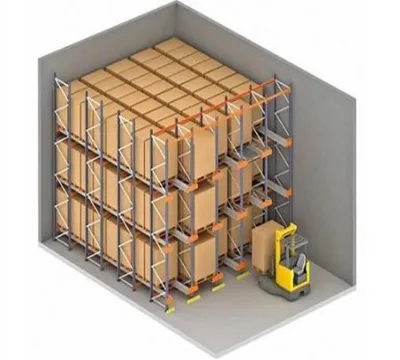
The procurement of steel fixed radio shuttle racking systems requires a precise understanding of the underlying technology and structural integrity. Unlike traditional drive-in or selective racking, this system utilizes automated shuttle vehicles to move pallets within the rack lanes. The core material for these systems is consistently identified as steel, specifically utilizing Q235 steel as a raw material component. This choice of material provides the necessary tensile strength and durability required for high-density storage environments. The structural design is primarily categorized as a rack system, though variations exist including layer frames and shelf configurations depending on the specific manufacturer's engineering approach.
A critical distinction in this category is the mobility of the system itself. While the shuttle vehicles within the lanes are mobile, the rack structure is classified as "Fixed." This means the upright frames and beams are permanently installed and do not move laterally or vertically like mobile racking systems. The height of these systems is a significant variable, with observed specifications ranging from 5 to 15 meters, and some advanced configurations capable of reaching a maximum height of 12,000mm. The depth of the lanes can also be substantial, with some models supporting a maximum depth of 8,000mm, allowing for deep storage lanes that maximize cubic volume.
The surface treatment of the steel is a vital factor for longevity. The standard process observed involves powder coating, with specific mentions of epoxy powder coating for corrosion prevention. This finish is essential for warehouse environments that may experience humidity or temperature fluctuations. The color of the rack is generally customizable, allowing facilities to align with corporate branding or safety color-coding standards. The system is designed to be compatible with standard forklifts for loading and unloading at the entry points, while the internal movement is handled by the radio-controlled shuttle units.
Technical Specifications and Operational Parameters
When evaluating a Steel Fixed Radio Shuttle Rack, buyers must scrutinize the specific technical parameters that define the system's capacity and compatibility. The pallet dimensions are a primary constraint. The system typically accommodates pallet widths ranging from 1,150mm to 1,550mm and pallet lengths between 800mm and 1,200mm. Standard pallet sizes of 1,000mm by 1,200mm are commonly supported, though customized dimensions are available upon request. The load capacity per pallet is a critical metric, with observed maximum capacities reaching 1.5 tons per pallet. This capacity must be carefully matched against the actual weight of the goods to be stored to prevent structural failure.
The control mechanism for the shuttle vehicles is another defining technical specification. These systems operate via remote controllers, allowing for precise management of pallet movement within the lanes. The shuttle net weight is a significant factor for installation and maintenance; observed data indicates a net weight of approximately 360kg per shuttle unit. This weight influences the power requirements of the drive motors and the structural load on the rack beams. The system is designed to function in both existing warehouses and new builds, offering flexibility for retrofitting projects or greenfield developments.
The following table outlines the key technical specifications observed in the current market for this product category:
| Parameter | Observed Range / Specification | Notes |
|---|---|---|
| Material | Q235 Steel | High-grade structural steel |
| System Type | Radio Shuttle Racking System | Fixed structure, automated shuttle |
| Max Height | 5m - 15m (Up to 12,000mm) | Depends on warehouse ceiling |
| Max Depth | Up to 8,000mm | Deep lane storage capability |
| Pallet Width | 1,150mm - 1,550mm | Adjustable for various pallets |
| Pallet Length | 800mm - 1,200mm | Standard and custom sizes |
| Load Capacity | Max 1.5 Tons per Pallet | Static load limit |
| Shuttle Weight | Approx. 360kg | Net weight of the vehicle |
| Control Method | Remote Controller | Automated operation |
| Surface Finish | Powder Coated / Epoxy | Corrosion prevention |
Compliance, Certification, and Safety Standards
In the B2B procurement of industrial racking systems, compliance with international standards is non-negotiable. Buyers must verify that suppliers provide products that meet rigorous safety and quality benchmarks. The most frequently cited certifications for these steel racks include ISO9001, which indicates a quality management system, and CE marking, which signifies conformity with health, safety, and environmental protection standards for products sold within the European Economic Area. Additional verification often includes SGS testing reports, which provide third-party validation of the product's physical properties and safety.
It is important to note that while "customizable" standards are often mentioned, the baseline for safety and structural integrity should not be compromised. The production origin is primarily located in China, with specific manufacturing hubs in Qingdao and Jiangsu. Buyers should ensure that the "Made in China" designation is accompanied by the specific certifications mentioned above. The absence of these certifications should be treated as a red flag, as racking systems are subject to significant dynamic and static loads.
The standardization of the product is another area of focus. While the product standard is listed as "customizable," this refers to the ability to tailor dimensions and configurations to the client's needs, not a reduction in safety standards. The assembly and installation process often includes an available installation service, which is crucial for ensuring that the rack is erected according to the manufacturer's specifications and local building codes. Buyers should request proof of these certifications and testing results before finalizing a purchase, as the liability for structural failure often rests with the purchaser if the equipment does not meet recognized standards.
Cost Drivers and Pricing Variables
The pricing of steel fixed radio shuttle racking systems is highly variable, influenced by a complex matrix of factors. The observed price range in the market is extensive, spanning from approximately $0.80 to $200,000 USD. This wide disparity is not indicative of quality differences alone but reflects the scale of the project, the total quantity of pallet positions, and the level of customization required. A single small-scale unit will naturally fall at the lower end of this spectrum, while a full warehouse automation solution will command a price at the higher end.
Several specific cost drivers must be analyzed during the procurement process. First, the height of the system is a primary determinant. Systems reaching heights of 15 meters or utilizing the maximum depth of 8,000mm require more steel, more robust foundations, and potentially more complex installation procedures, all of which increase the cost. Second, the number of shuttle units required directly impacts the price. Each shuttle unit adds to the material cost and the complexity of the control system. Third, the surface treatment and color customization can influence the final price. While powder coating is standard, specialized epoxy coatings or specific color requirements may incur additional charges.
The minimum order quantity (MOQ) is another critical factor affecting the unit cost. The observed MOQ range spans from 1 to 5,000 units. Purchasing a larger quantity often allows for economies of scale, potentially lowering the per-unit cost. However, the total investment must be weighed against the warehouse's actual storage needs. Buyers should also consider the packaging costs, as the products are shipped using export-standard packaging, steel belts, wrapping film, and wooden pallet legs to ensure safe transit. The origin of the product, specifically from Qingdao or Jiangsu, may also influence logistics costs depending on the buyer's location.
Typical Applications and Industry Use Cases
Steel fixed radio shuttle racking systems are engineered for high-density storage in specific industrial environments. The primary usage categories include warehouse racks, industrial facilities, food processing plants, beverage distribution centers, and supermarkets. The system's ability to store goods in deep lanes makes it particularly suitable for industries with high SKU counts but lower turnover rates for individual items, such as cold storage facilities or bulk beverage storage.
The versatility of the system allows it to be deployed in both existing warehouses and new builds. In existing facilities, the system can be integrated to maximize vertical space without requiring a complete structural overhaul. In new builds, the system can be designed from the ground up to optimize the facility's layout. The material handling equipment compatibility is a key feature; the system is designed to work seamlessly with standard forklifts for the initial loading of pallets into the rack lanes. Once loaded, the radio shuttle vehicles take over the movement of pallets to the back of the lane or to the picking face.
The "Common Use" classification suggests that these systems are suitable for general industrial applications rather than highly specialized or hazardous environments, unless specific modifications are made. The usage also extends to clothing and tool storage, indicating that the system can handle a variety of product types and packaging formats. The ability to customize the color and design, including free drawings, allows facilities to tailor the system to their specific operational workflows and aesthetic requirements.
Supplier Evaluation and Quality Assurance
Selecting a reliable supplier for steel fixed radio shuttle racking systems requires a rigorous evaluation process. Buyers should prioritize suppliers who demonstrate a clear track record in the "Conventional" and "New Type" development categories, indicating a balance of proven technology and innovation. The brand name "LEADER" is observed in the market, but buyers should not limit their search to a single entity. Instead, the focus should be on the supplier's ability to provide free drawings and customized design services.
Quality assurance is paramount. Buyers must verify the "Surface Treatment" process, ensuring that the powder coating or epoxy finish is applied consistently to prevent corrosion. The "Product Packing" method is also a proxy for quality; suppliers using steel belts, wrapping film, and wooden pallet legs demonstrate a commitment to protecting the product during transit. The availability of an "Installation Service" is a significant value-add, as it ensures that the system is assembled correctly, which is critical for safety and performance.
When evaluating suppliers, buyers should request detailed specifications regarding the "Raw Material" used. Confirmation that Q235 steel is used is a baseline requirement. Additionally, the "Controlling Methods" should be thoroughly tested. The remote controller system must be reliable, with clear protocols for maintenance and troubleshooting. The "Shuttle Net Weight" and "Capacity" specifications should be verified against the supplier's engineering data to ensure they meet the buyer's operational needs. Finally, the "Certification" status, including ISO9001 and CE, should be validated through official documentation rather than relying on marketing claims.
Long-Term Procurement and Maintenance Considerations
Procuring a Steel Fixed Radio Shuttle Rack is a long-term investment that requires careful consideration of future maintenance and scalability. The "Customization" available in these systems allows for future expansion or modification, but buyers must ensure that the initial design accommodates potential growth. The "Development" stage of the product, whether "Conventional" or "New Type," can impact the availability of spare parts and technical support in the long run.
Maintenance of the radio shuttle vehicles is a recurring cost. The "Mobility" of the system, while fixed in structure, relies on the mechanical and electrical components of the shuttles. Buyers should inquire about the warranty period for the shuttle units and the availability of replacement parts. The "Surface Painting" and "Surface Treatment" should be inspected regularly to ensure the corrosion prevention measures remain effective, especially in environments with high humidity or temperature variations.
The "Product Standard" being customizable means that the system can be adapted to changing operational needs, but this flexibility must be managed carefully. Buyers should establish a clear relationship with the supplier for ongoing support, including software updates for the remote controllers and structural inspections. The "Assemble & Installation" service should include a handover protocol that details the maintenance schedule and safety checks. By focusing on these long-term factors, buyers can ensure that their investment in steel fixed radio shuttle racking systems remains productive and safe for years to come.
FAQs
What material is used for steel fixed radio shuttle racks?
These racks are constructed from Q235 steel to ensure high tensile strength and durability. The structure is powder coated or epoxy coated for corrosion prevention, making it suitable for various industrial environments.
Can the system be customized for specific warehouse dimensions?
Yes, customization is available for height, depth, and pallet sizes to fit your facility. You can request free drawings to tailor the design, with heights reaching up to 15 meters and depths up to 8 meters.
How much weight can each pallet position support?
The system supports a maximum capacity of 1.5 tons per pallet. This load limit must be strictly observed to ensure structural integrity during operation with standard forklifts and automated shuttle units.
What certifications do these racking systems typically hold?
Products commonly hold ISO9001, CE, and SGS testing certifications. These standards verify quality management and safety compliance, ensuring the racks meet international requirements for industrial storage applications.
How are the shuttle units controlled during operation?
The shuttle vehicles operate via remote controllers for precise pallet movement within the lanes. This method allows for efficient automated storage and retrieval without manual intervention inside the rack structure.
Is installation service available for these rack systems?
Installation services are available to assist with the assembly and setup of the racking system. This ensures proper erection according to manufacturer specifications and local building codes for both new and existing warehouses.