Source Sun Readable TFT Display Panel for Industrial, Outdoor, and Medical Use
Compare 30 available Sun Readable TFT Display Panel options featuring IPS viewing angles, various response times, and customization capabilities. Buyers can evaluate specifications like size, touch screen types, and temperature ranges for industrial, outdoor, and medical applications.
Key considerations
Products List


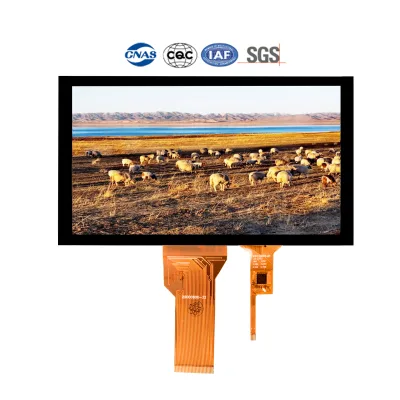
Premium 6.86-Inch TFT Display Panel with 480X1280 Resolution LCD Display
$10.50 - $11.20
MOQ: 1000 Pieces



Comprehensive Sourcing Guide
Strategic Sourcing Guide for Sun-Readable TFT Display Panels
Understanding the Technical Landscape of TFT Modules
When sourcing sun-readable TFT display panels, buyers must first navigate the complex intersection of display technologies and environmental adaptability. The core keyword "sun-readable" implies a requirement for high brightness and contrast ratios capable of overcoming direct sunlight, yet the underlying hardware often varies significantly between suppliers. Based on available product data, the market offers a diverse range of Display Technologies, including TFT, STN, and TN variants. While TFT is generally preferred for its superior color reproduction and viewing angles, specific applications may utilize FSTN or CSTN technologies for cost-sensitive or monochrome requirements.
A critical technical attribute for sun readability is the viewing angle. The supplied data indicates that IPS (In-Plane Switching) technology is a prevalent option, offering wide viewing angles that are essential for outdoor visibility where the user's position relative to the screen changes frequently. However, buyers must verify if the specific module they are evaluating supports IPS or if it relies on standard TN (Twisted Nematic) panels, which often suffer from color shift and contrast loss at oblique angles. Furthermore, the response time is a vital performance metric. Observed response times in the current market range from 1ms to 10ms, with 2ms and 3ms being common specifications for high-performance modules. A faster response time reduces motion blur, which is crucial for dynamic outdoor interfaces, but it must be balanced against the brightness requirements.
The physical dimensions of the module also play a significant role in system integration. The data shows size specifications ranging from small form factors like 35.640.64.0 mm to larger screens up to 10.1 inches. The "Screen Size" attribute spans from 0.96 inches to 10.1 inches, indicating a vast array of options for different device classes. Buyers must ensure that the chosen size aligns with the optical requirements for sunlight readability; larger screens often require significantly higher nits (brightness) to remain legible in direct sun compared to smaller, high-density displays.
Compliance, Certification, and Environmental Standards
In the procurement of industrial and outdoor electronics, compliance is not merely a formality but a prerequisite for market access and operational safety. The supplied product facts highlight several key standards, including CE, FCC, and ROHS. These certifications indicate that the modules meet specific electromagnetic compatibility, safety, and environmental restrictions regarding hazardous substances. When evaluating a potential supplier, buyers should explicitly request documentation proving that the specific TFT module model holds these certifications, as they are not universal across all product lines from a single manufacturer.
Beyond the standard certifications, the environmental robustness of the display is paramount for sun-readable applications. The data references a temperature range of -40°C to +85°C, which is a critical specification for outdoor equipment operating in extreme climates. A display panel that functions perfectly in a climate-controlled office may fail catastrophically when exposed to direct sunlight, which can raise internal temperatures significantly. Buyers must verify that the LCD module's operating temperature range covers the specific environmental conditions of the intended deployment site.
Additionally, the "IP Rating" and "Waterproof" attributes suggest that some modules are designed to withstand moisture and dust ingress. While the specific IP rating (e.g., IP65, IP67) is not explicitly detailed in the provided text, the presence of "Waterproof" as an attribute indicates that the supply chain includes options with protective sealing. For outdoor applications, verifying the exact IP rating and the testing methodology used to achieve it is essential. The "LED Backlight for LCD Display" and "LED Light Source" attributes further suggest that backlighting technology is a key differentiator. High-brightness backlights, potentially utilizing Small Straw Hat LEDs or Semileds chips, are often required to achieve the luminance necessary for sun readability. Buyers should inquire about the specific LED driver capabilities and the maximum luminance output in nits, as this is the primary metric for sunlight legibility.
Cost Drivers and Pricing Dynamics
The cost of sourcing a sun-readable TFT display panel is influenced by a complex matrix of technical specifications, customization levels, and order volumes. The observed price range in the market spans from $0.10 to $280.00 USD, reflecting the vast disparity between basic monochrome modules and high-end, custom-engineered TFT solutions. This wide range underscores the importance of defining precise requirements before engaging with suppliers. A basic 0.96-inch module with a standard response time will naturally fall at the lower end of the spectrum, while a 10.1-inch IPS panel with a 2ms response time, high brightness, and custom touch integration will command a premium price.
One of the primary cost drivers is the level of customization. The data indicates that "Customization" is available, yet some products are listed as "Non-Customized." Customized modules, which may include specific driver ICs, unique form factors, or tailored touch screen interfaces (such as Surface Acoustic Wave or Resistive types), incur higher engineering and setup costs. These costs are often amortized over the order quantity. The Minimum Order Quantity (MOQ) ranges from 1 to 1000 units, providing flexibility for prototyping but potentially increasing the unit cost for small batches. Buyers seeking sun-readable panels for mass production should aim to negotiate MOQs that balance inventory risk with unit pricing, as larger volumes typically yield better economies of scale.
Packing and logistics also contribute to the total cost of ownership. The data mentions packing options such as "500" units per pack or "Box" packaging. The choice of packaging affects shipping efficiency and protection during transit, particularly for fragile glass-based LCD modules. Furthermore, the origin of the product, identified as China with a specific city of Shenzhen, influences logistics costs and lead times. Shenzhen is a major hub for electronics manufacturing, offering a dense supply chain, but buyers must account for international shipping variables and potential tariffs when calculating the landed cost.
Typical Applications and Usage Scenarios
The versatility of TFT display panels allows them to serve a wide array of applications, from consumer electronics to heavy industrial machinery. The "Usage" attribute in the data points to "Small-sized LCM" and "Monitor LCM," suggesting that these modules are integral to portable devices, handheld instruments, and embedded monitoring systems. For sun-readable applications, the primary use cases often include outdoor kiosks, automotive infotainment systems, medical devices used in field operations, and industrial control panels.
The "Digital LCD Module Type" being identified as a "Counting Module" and the "DOT-Matrix Graphic LCD Module Type" being "Row/Column-Driven Control Type" indicates that these panels are suitable for applications requiring clear text and graphical data presentation. In outdoor environments, the ability to display high-contrast graphics is essential for user interfaces that must be read quickly and accurately under varying light conditions. The "Touch Screen Type" varies from Surface Acoustic Wave to Resistive and Capacitive, each offering different benefits for outdoor use. Resistive touchscreens are often preferred in industrial settings due to their ability to function with gloves or styluses, while Capacitive screens offer superior clarity and multi-touch capabilities but may require specific calibration for outdoor use.
The "LED Backlight" and "LED Light Source" attributes highlight the importance of illumination in these applications. Whether the application is a small handheld device or a large monitor, the backlight must be robust enough to compete with ambient sunlight. The "Temperature Range" of -40°C to +85°C further confirms that these modules are designed for harsh environments, making them suitable for outdoor advertising displays, transportation systems, and ruggedized handheld computers.
Supplier Evaluation and Quality Assurance
Selecting the right supplier for sun-readable TFT panels requires a rigorous evaluation process that goes beyond price comparisons. Buyers should prioritize suppliers who demonstrate a deep understanding of the specific technical challenges associated with outdoor displays. The presence of "Customization: Available" and "Customized: Customized" options suggests that a capable supplier should be willing to collaborate on engineering solutions, such as optimizing the backlight for higher brightness or adjusting the drive mode for better contrast in sunlight.
Quality control is another critical factor. The data lists "prod_standard" values such as "8001024pixel" and "320480pixel," which represent resolution standards. Buyers must verify that the supplier has a robust quality assurance process to ensure that every unit meets these resolution and performance specifications. The "Response Time" variations (1ms, 2ms, 3ms, 10ms) indicate that performance can vary between batches or models. A reliable supplier will provide test data and consistency reports to confirm that the modules delivered match the claimed specifications.
The "prod_packing" and "prod_origin" details also offer insights into the supplier's operational maturity. A supplier based in Shenzhen with established packing standards (e.g., "Box" or specific unit counts) is likely to have a streamlined logistics process. However, buyers should still request samples to verify the physical quality of the packaging and the protection it offers against shock and vibration. Additionally, the "LED Chips:Semileds" attribute suggests that the quality of the backlight components is a key differentiator. Buyers should inquire about the source and quality of the LED chips used, as inferior components can lead to premature failure or inconsistent brightness.
Long-Term Procurement and Supply Chain Stability
Sourcing sun-readable TFT panels is not a one-time transaction but a long-term partnership that requires careful planning for supply chain stability. The "prod_model" numbers, such as "BBI2021392685" and "1356," indicate that specific models are tracked and managed. Buyers should ensure that the selected model has a long lifecycle and that the supplier is committed to maintaining production for the duration of the product's market life. Sudden discontinuations can force costly redesigns and delays.
The "MOQ" range of 1 to 1000 units suggests that suppliers are flexible, but buyers should consider the implications of scaling. As production volumes increase, the ability to maintain consistent quality and pricing becomes more critical. Buyers should negotiate long-term agreements that lock in pricing and ensure priority production slots. Furthermore, the "Lead Time" and "Location" factors, while not explicitly quantified in the data, are crucial for planning. A supplier in Shenzhen may offer faster turnaround times for domestic orders but longer lead times for international shipments. Buyers should factor in these logistics variables when planning their inventory and production schedules.
Finally, the "Standard" attributes like "CE FCC ROHS" should be monitored for updates. Regulatory requirements evolve, and a supplier who is proactive about maintaining compliance will save buyers from potential legal and market access issues. By focusing on suppliers with a track record of quality, customization capability, and supply chain reliability, buyers can secure a stable source for sun-readable TFT display panels that meets their technical and operational needs for years to come.
Comparative Analysis of Key Specifications
To assist buyers in making informed decisions, the following table summarizes the key technical attributes observed in the market, highlighting the variability that must be considered during the sourcing process.
| Attribute | Observed Range/Options | Sourcing Consideration |
|---|---|---|
| Display Technology | TFT, STN, TN, FSTN, CSTN | Verify IPS for wide viewing angles; TFT for color. |
| Response Time | 1ms, 2ms, 3ms, 10ms | Lower is better for video/motion; 2-3ms is typical for high-end. |
| Touch Screen Type | Surface Acoustic Wave, Resistive, Capacitive | Resistive for gloves; Capacitive for clarity; SAW for durability. |
| Size | 0.96" to 10.1" (e.g., 35.640.64.0mm) | Match screen size to optical requirements and enclosure. |
| Temperature Range | -40°C to +85°C | Essential for outdoor; verify if specific model covers this. |
| Certifications | CE, FCC, ROHS | Mandatory for market access; request test reports. |
| Customization | Available / Non-Customized | Customization adds cost but improves fit for purpose. |
| LED Backlight | Small Straw Hat, Semileds | High brightness required for sun readability. |
| Resolution | 320480, 8001024 pixels | Higher resolution increases cost and power consumption. |
This comparison underscores that no single specification defines a "sun-readable" panel. Instead, it is the combination of high brightness, wide viewing angles, robust environmental ratings, and appropriate touch technology that defines the product's suitability. Buyers must carefully weigh these factors against their specific application requirements and budget constraints to select the optimal solution.
FAQs
What display technologies are available for sun-readable panels?
TFT, STN, and TN technologies are available, with TFT preferred for superior color and viewing angles. Some modules also support FSTN or CSTN for cost-sensitive applications, while IPS viewing angles ensure wide visibility in direct sunlight.
Which response times are common for these LCD modules?
Response times range from 1ms to 10ms, with 2ms and 3ms being common for high-performance modules. Faster response times reduce motion blur, which is crucial for dynamic outdoor interfaces, but must be balanced against brightness requirements.
Can these modules operate in extreme temperature environments?
Yes, many modules support a temperature range of -40°C to +85°C, suitable for harsh outdoor conditions. This robustness ensures functionality when exposed to direct sunlight that raises internal temperatures significantly beyond standard office environments.
What certifications do these display panels typically hold?
Modules often carry CE, FCC, and ROHS certifications indicating compliance with safety and environmental standards. Buyers must verify that specific models hold these certifications, as they are not universal across all product lines from a single manufacturer.
How does customization affect the pricing of these panels?
Customized modules with specific drivers or touch interfaces command higher prices due to engineering costs. The price range spans from $0.10 to $280.00, reflecting the disparity between basic modules and high-end custom-engineered TFT solutions.
Which touch screen types are supported for outdoor use?
Supported types include Surface Acoustic Wave, Resistive, and Capacitive touch screens. Resistive options are often preferred in industrial settings for glove operation, while Capacitive screens offer superior clarity but may require specific calibration for outdoor use.
What are the typical screen sizes available for these displays?
Screen sizes range from 0.96 inches to 10.1 inches, covering various device classes. Larger screens often require significantly higher brightness to remain legible in direct sun compared to smaller, high-density displays like the 35.6*40.6*4.0 mm modules.