Source Tear Resistant Agricultural Geomembrane for Pond, Mine, and Canal
Find 30 Tear Resistant Agricultural Geomembrane options from verified Chinese manufacturers. Compare specifications like thickness, width, and material types including HDPE and PVC for environmental and hydraulic projects.
Key considerations
Products List

Waterproof Membrane Roll HDPE Reinforced Pond Agriculture Liner Geomembrane
$0.40 - $0.60
MOQ: 10 Square Meters

Geomembrane Composite Geomembrane HDPE Factory Price Agricultural Geomembrane
$0.40 - $0.60
MOQ: 50 Square Meters

Hot Selling and Cheap Geomembrane for Agricultural Plastic Black Film Geomembrane
$0.40 - $0.60
MOQ: 1000 Square Meters


Versatile Geomembranes for Sustainable Agriculture and Aquaculture Use
$0.32 - $1.60
MOQ: 500 Square Meters
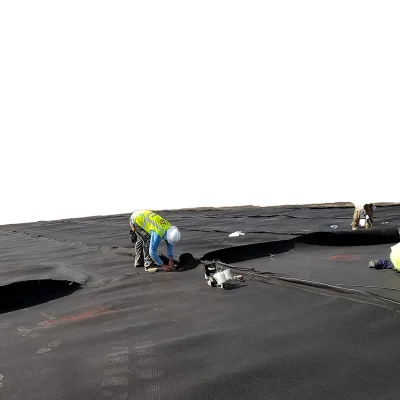

Tear-Resistant Geomembrane for Slope Protection in Civil Engineering
$0.68 - $3.68
MOQ: 3000 Square Meters

Combating Droughts and Floods: Geomembranes Safeguarding Agricultural Irrigation
$0.50 - $1.32
MOQ: 3000 Square Meters

Anti Seepage Film Custom Width Smooth HDPE Geomembrane for Agriculture Irrigation Pond
$0.70 - $1.00
MOQ: 5000 Square Meters


Geomembrane Sheet for Aquaculture Mining Landfill Waterproof Applications
$0.35 - $0.65
MOQ: 1000 Square Meters


$0.22 - $3.25
MOQ: 1000 Square Meters


Black White Blue Green (Customized) Tear Resistance Agriculture Geomembrane Price
$0.20 - $3.50
MOQ: 1000 Square Meters


Custom Length Durable Waterproof Geomembrane for Agriculture Solutions
$0.38 - $3.58
MOQ: 1000 Square Meters


Durable 0.75mm Geomembrane for Reservoirs and Agriculture Projects
$0.30 - $3.50
MOQ: 1000 Square Meters


1mm/1.5mm Custom Length Waterproof Geomembrane for Agricultural Projects
$0.38 - $3.58
MOQ: 1000 Square Meters


Geomembrane for Hydroponic Farm Water Management Leak-Proof & Durable
$0.32 - $1.68
MOQ: 1000 Square Meters
Comprehensive Sourcing Guide
Strategic Sourcing Guide for Tear Resistant Agricultural Geomembranes
Understanding Core Material Specifications and Performance Attributes
When sourcing a tear-resistant agricultural geomembrane, the primary objective is to identify a product capable of withstanding the mechanical stresses inherent in farming environments, such as heavy equipment movement, soil settlement, and irrigation system installation. The supplied product data indicates that the core material composition is a critical differentiator, with observed listings featuring High-Density Polyethylene (HDPE) as a primary option, alongside other polymers like PVC, LDPE, LLDPE, EPDM, and EVA. For applications demanding high tear resistance, HDPE is frequently cited as the material of choice due to its robust molecular structure.
The physical specifications of these geomembranes vary significantly across suppliers, necessitating a careful review of the technical data sheets provided by potential vendors. The observed thickness ranges for these products span from 0.2mm to 3.0mm, with specific listings noting ranges such as 0.25-2.5mm or 0.3-3.0mm. In agricultural contexts, selecting the appropriate thickness is a balance between cost efficiency and the required mechanical strength. Thicker membranes generally offer superior puncture and tear resistance but come at a higher material cost.
Surface texture is another vital specification. The data highlights both "Smooth Side" and "Smooth" surface finishes. A smooth surface is typically preferred for agricultural containment to facilitate the flow of water and reduce friction during installation. However, the specific application might dictate the need for textured surfaces for slope stability, though the provided facts emphasize smooth variants. The width of the geomembrane is another adjustable parameter, with observed ranges extending from 1 meter to 8 meters. Wider rolls reduce the number of seams required on-site, which is a significant factor in minimizing potential leak paths in large-scale agricultural projects.
| Specification Parameter | Observed Range / Options | Sourcing Consideration |
|---|---|---|
| Primary Material | HDPE, PVC, LDPE, LLDPE, EPDM, EVA | HDPE is highlighted for high tear resistance; verify compatibility with specific agricultural chemicals. |
| Thickness | 0.2mm – 3.0mm (e.g., 0.25-2.5mm, 0.3-3.0mm) | Thicker gauges (e.g., >1.0mm) generally offer better puncture and tear resistance for heavy machinery. |
| Width | 1m – 8m | Wider widths (up to 8m) reduce seam count, enhancing overall system integrity. |
| Length | 50m – 100m (Customizable) | Custom lengths allow for optimized roll management and reduced waste on-site. |
| Surface Finish | Smooth | Smooth surfaces aid in water flow and reduce installation friction. |
Compliance Verification and Certification Standards
In the realm of agricultural engineering, compliance with international standards and certifications is not merely a formality but a prerequisite for ensuring the longevity and safety of the containment system. The supplied product information explicitly lists ISO and CE certifications as available attributes for these geomembranes. The presence of a CE mark indicates that the product meets the health, safety, and environmental protection standards for products sold within the European Economic Area, which often correlates with high manufacturing quality.
Buyers must verify the specific certification documents provided by the supplier. While the data confirms the availability of ISO and CE, it does not specify the exact ISO standard number (e.g., ISO 9001 for quality management or specific material standards). Similarly, while ASTM standards such as D5199, D4833, and D1004 are mentioned in the background context, they are flagged as low-confidence for concrete claims. Therefore, a prudent sourcing strategy involves requesting the specific test reports that demonstrate compliance with relevant ASTM or ISO standards for the specific material grade being purchased.
For agricultural applications, the "Eco Friendly" characteristic is a notable feature observed in the product data. This suggests that the material should not leach harmful substances into the soil or water sources, a critical requirement for food safety and environmental stewardship. Buyers should explicitly ask suppliers for documentation regarding the material's inertness and its compliance with local agricultural environmental regulations. The "Anti-UV" and "Anti-Aging" features listed are essential for outdoor agricultural use, where prolonged exposure to sunlight can degrade standard polymers. Verification of UV stabilization additives is necessary to ensure the product maintains its tear resistance over the intended lifespan.
Cost Drivers and Economic Factors in Procurement
The pricing of tear-resistant agricultural geomembranes is influenced by a complex interplay of material costs, manufacturing processes, and logistical factors. The observed price range in the market spans from $0.20 to $20.00 USD, a variance that reflects differences in material quality, thickness, and order volume. The primary cost driver is the raw material price, which fluctuates based on global oil markets since polymers like HDPE and PVC are petrochemical derivatives.
Order volume plays a decisive role in the final unit price. The Minimum Order Quantity (MOQ) observed ranges from as low as 1 unit to as high as 5,000 units, with specific listings citing an MOQ of 2,000 square meters. Buyers with smaller project needs may face higher per-unit costs if they cannot meet the MOQ, or they may need to negotiate with suppliers who offer flexible ordering options. Conversely, large-scale agricultural projects can leverage economies of scale to secure lower prices.
Customization is a significant factor that can increase costs. The data indicates that customization is available for length, width, thickness, and standard specifications. While this flexibility allows for a perfect fit for specific farm layouts, it often incurs additional setup fees or higher per-unit costs compared to standard stock items. The packaging method also impacts the total landed cost. Products are shipped in PP bags or woven fabric, with some options including a "2 Layer PP Woven Bag with Lifting Belt." Specialized packaging designed to prevent damage during transit adds to the cost but is essential for maintaining the integrity of the geomembrane before installation.
Typical Applications and Functional Requirements
The versatility of tear-resistant geomembranes makes them suitable for a wide array of agricultural and environmental applications. The product data explicitly lists "Environmental Project" and "Water Conservancy Engineering" as key application areas. In an agricultural context, this translates to several critical uses:
- Pond and Reservoir Lining: Creating impermeable barriers for irrigation ponds, livestock watering tanks, and stormwater retention basins. The "Anti-Infiltration" and "Waterproof" features are paramount here to prevent water loss.
- Landfill and Waste Containment: Lining agricultural waste lagoons or composting areas to prevent leachate from contaminating the surrounding soil and groundwater. The "Anti-Corrosion" and "Anti-Seepage" properties are vital for this application.
- Canal and Ditch Lining: Protecting irrigation channels from seepage and erosion. The "Tear Resistance" and "Puncture Resistance" ensure the liner survives the installation process and the flow of water.
- Geotechnical and Transportation Projects: While broader than pure agriculture, these applications often intersect with farm infrastructure, such as lining access roads or stabilizing slopes on agricultural land.
The functional requirements for these applications are rigorous. The material must provide "Isolation" to separate the contained substance from the underlying soil. The "Anti-Corrosion" capability ensures that the liner does not degrade when exposed to agricultural fertilizers, pesticides, or animal waste. Furthermore, the "Eco Friendly" attribute ensures that the material does not introduce toxins into the food chain or the local ecosystem.
Supplier Evaluation and Origin Considerations
Evaluating potential suppliers requires a focus on their manufacturing capabilities, geographic location, and track record. The supplied data indicates that products originate from specific regions in China, including Hebei and Shandong provinces. These regions are known for their manufacturing clusters in the plastics and geomembrane industry. Buyers should verify the specific factory location to assess logistics costs and lead times.
Key evaluation criteria for suppliers include:
- Customization Capability: The data confirms that "Customization" is available. Suppliers should demonstrate the ability to tailor thickness, width, and length to specific project requirements.
- Sample Availability: The provision of free samples is a positive indicator of supplier confidence and allows buyers to physically test the tear resistance and material quality before committing to a large order.
- Product Range: A supplier offering a variety of materials (HDPE, PVC, LLDPE, etc.) and models (e.g., GM1.0, LB1, Factory Direct Geomembrane) suggests a robust manufacturing line capable of meeting diverse needs.
- Brand Reputation: While specific brand names like "Aohong" are mentioned, buyers should focus on the brand's history of delivering consistent quality rather than relying solely on the name.
It is crucial to avoid suppliers who cannot provide clear documentation regarding their production standards or who are vague about their origin. The "Factory Direct" designation in some product models suggests a direct relationship with the manufacturer, which can reduce intermediary costs and improve communication regarding technical specifications.
Quality Control and Long-Term Procurement Strategy
Ensuring the quality of the geomembrane is a continuous process that extends beyond the initial purchase. The observed features such as "Tear Resistance," "Impact Resistance," and "Puncture Resistance" must be validated through third-party testing. Buyers should request test reports that specifically address these mechanical properties under conditions relevant to agricultural use.
Long-term procurement considerations involve the durability of the product. The "Anti-UV" and "Anti-Aging" characteristics are critical for outdoor applications where the geomembrane is exposed to the elements. Buyers should inquire about the UV stabilization process used by the manufacturer to ensure the material does not become brittle over time. The "Smooth Side" and "Smooth" surface finishes should be inspected for uniformity to ensure there are no weak points that could lead to premature failure.
Packaging integrity is another aspect of quality control. The use of "Woven Fabric" or "2 Layer PP Woven Bag with Lifting Belt" indicates an effort to protect the product during shipping. Buyers should inspect the packaging upon receipt to ensure the geomembrane has not been damaged or exposed to contaminants.
Finally, the procurement strategy should include a plan for maintenance and monitoring. Even the most durable geomembrane can suffer damage during installation or from external factors like rodent activity or sharp rocks. Establishing a relationship with a supplier who offers technical support and can provide replacement materials for future repairs is a wise long-term investment. By focusing on verified specifications, robust certifications, and reliable supplier practices, buyers can secure a tear-resistant agricultural geomembrane that ensures the efficiency and sustainability of their agricultural operations.
FAQs
What materials are available for tear resistant agricultural geomembranes?
High-Density Polyethylene (HDPE) is the primary material offering high tear resistance, though PVC, LDPE, LLDPE, EPDM, and EVA are also available. Buyers should verify material compatibility with specific agricultural chemicals before selecting a polymer type for their project.
Which certifications are available for these geomembrane products?
ISO and CE certifications are available for these products, ensuring compliance with safety and environmental standards. Buyers must request specific test reports to verify the exact certification documents and ensure the material meets local agricultural regulations.
How thick can these geomembranes be for heavy machinery use?
Thickness ranges from 0.2mm to 3.0mm, with specific options like 0.25-2.5mm or 0.3-3.0mm available. Thicker gauges generally provide superior puncture and tear resistance required for heavy equipment movement in agricultural environments.
Can I customize the length and width of the geomembrane?
Yes, customization is available for length, width, and thickness to fit specific project requirements. Lengths can be 50-100m or customized, while widths range from 1m to 8m to reduce seam counts on-site.
What is the minimum order quantity for these geomembranes?
The minimum order quantity varies, with observed ranges from 1 unit up to 5000 units and specific listings requiring 2000 square meters. Buyers with smaller needs may face higher per-unit costs if they cannot meet the standard MOQ.
Where are these geomembrane products manufactured?
Products originate from manufacturing clusters in Hebei and Shandong, China. Buyers should verify the specific factory location to assess logistics costs and lead times for their specific sourcing needs.
Are free samples available for testing tear resistance?
Free samples are available for buyers to physically test the material quality and tear resistance before committing to a large order. This allows verification of features like Anti-UV and Anti-Aging capabilities prior to bulk procurement.