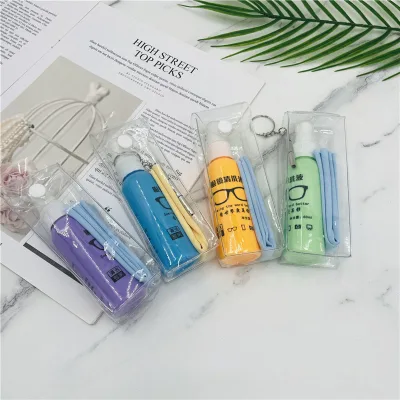
Source Eyeglasses Cleaning Fluid Set with Microfiber Cloth for car, bath, and kitchen
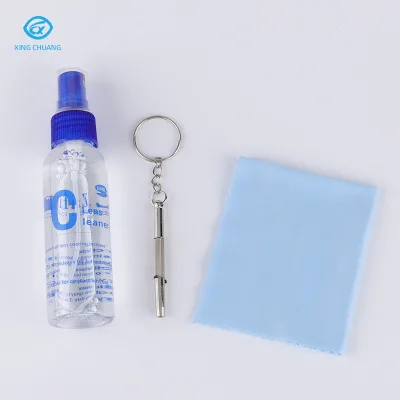
Explore 30 listings for Eyeglasses Cleaning Fluid Set with Microfiber Cloth suitable for car, bath, and kitchen use. Buyers can compare material types like polyester and microfiber, customization options, and shipping methods from suppliers in China.
Key considerations
Products List


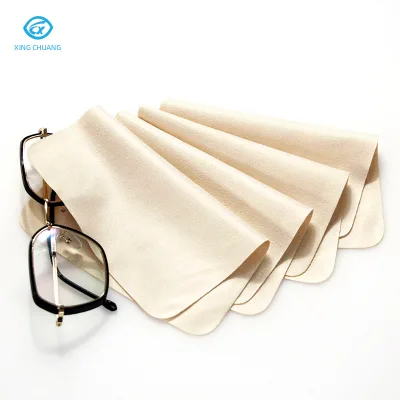
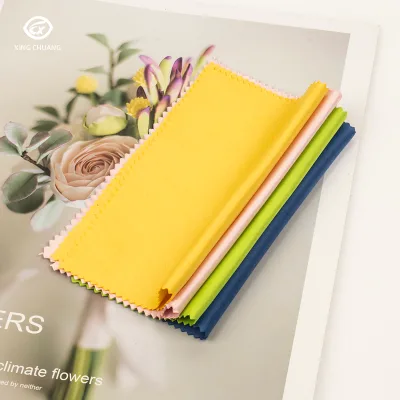
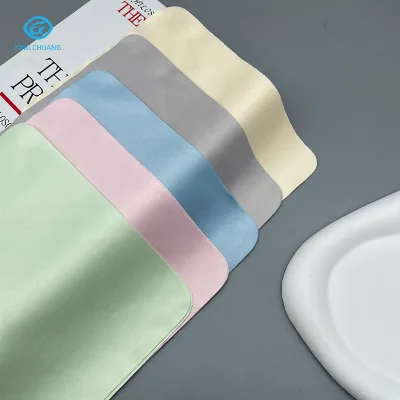
Microfiber Glasses Cleaning Cloths Eyeglasses Cleaning Lens Cleaning Cloth
$0.05 - $0.50
MOQ: 1000 Pieces


Ab-004 Custom Microfiber Eyeglasses Cleaning Cloth; Lens Cleaning Cloth
$0.59 - $0.67
MOQ: 1000 Pieces





Comprehensive Sourcing Guide
Strategic Sourcing Guide for Eyeglasses Cleaning Fluid Sets with Microfiber Cloths
Understanding the Microfiber Composition and Material Standards
When sourcing an eyeglasses cleaning fluid set, the microfiber cloth component is the primary technical variable that dictates cleaning efficacy and lens safety. Based on available market data, the material composition varies significantly between suppliers, ranging from 100% polyester to specialized blends. A high-performance cleaning cloth often utilizes a core material consisting of 70% Terylene (polyester) and 30% Polyamide (nylon). This specific blend is engineered to create a dense network of fibers that trap dust and oils without scratching delicate lens coatings. Conversely, some listings indicate products made from 100% cotton or 100% polyester, which may offer different absorbency profiles but potentially lower electrostatic attraction for fine particulates.
Buyers must verify the specific fiber ratio before committing to a bulk order. The "Microfiber Cleaning cloth" designation is common, yet the underlying construction determines whether the cloth is suitable for high-end optical lenses or general-purpose cleaning. The standard weight for these cloths is often cited around 190 G/M2, a density that balances softness with structural integrity. When evaluating samples, the tactile feel should be consistent, with no loose fibers that could transfer onto the lens surface. The presence of a "Suede Fabric" application suggests a specific weave pattern designed for gentle polishing, which is critical for preventing micro-scratches on anti-reflective coatings.
Technical Specifications and Customization Capabilities
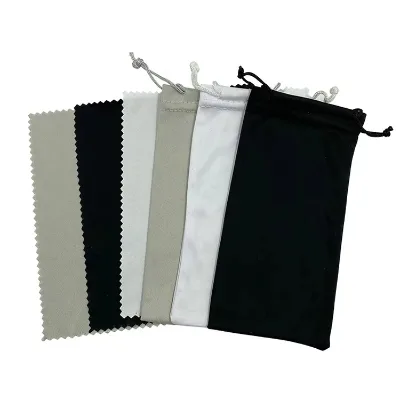
The physical dimensions and manufacturing techniques of the cleaning cloth are critical for both functionality and branding. Standard sizes observed in the market include 150 x 150 mm and 175 x 145 mm, with some suppliers offering custom dimensions such as a 30mm diameter or specific measurements like 15*15cm. The ability to customize the size is a significant advantage for brands looking to create a cohesive product identity. Furthermore, the production model numbers, such as AB-001, AB-004, or AG-Cloth_03, indicate that suppliers maintain distinct SKUs for different weave types or finishing processes.
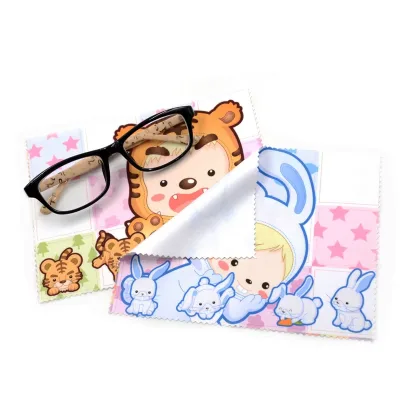
Customization extends beyond size to include printing and branding. Suppliers frequently offer digital transfer printing and screen printing as primary techniques for applying logos or instructions directly onto the cloth. This allows for high-resolution graphics that remain durable through repeated washing. The "Fittings" attribute suggests that the cloth may be designed to accommodate different functions, potentially including loops or grommets for attachment to keychains or cleaning kits. When specifying the product, buyers should confirm the "Any Kind" standard availability for custom shapes and sizes, ensuring the supplier can meet unique packaging requirements. The "Single Packed Vacuum" option is particularly relevant for maintaining hygiene and reducing shipping volume, as it compresses the cloth to a fraction of its original size.
Compliance, Eco-Friendliness, and Certification Verification
In the B2B procurement of cleaning accessories, environmental impact and safety compliance are increasingly important decision factors. Many suppliers explicitly market their microfiber cloths as "Eco-Friendly," with some noting "Competitive" eco-attributes. However, buyers must distinguish between marketing claims and verified certifications. The supply chain origin is predominantly located in Wuxi, Jiangsu, China, and other regions within Jiangsu Province. While the location is well-established for textile manufacturing, the specific environmental certifications (such as OEKO-TEX or GRS) are not universally guaranteed by the general product descriptions.
Buyers should request proof of compliance regarding the chemical treatments used on the fibers. Since the cleaning fluid set includes a liquid component, the cloth must be compatible with the fluid's pH balance to avoid degrading the fabric or leaving residues. The "Eco-Friendly" claim should be backed by documentation regarding the dyeing process and the biodegradability of the packaging materials. Additionally, the "Customer Design" and "OEM" capabilities suggest that suppliers are willing to adapt their production lines to meet specific regulatory requirements, such as REACH compliance for the European market or CPSIA for the United States. It is imperative to verify that the "Fast Service" and "Good Quality" promises are backed by a robust quality management system that ensures batch-to-batch consistency in material safety.
Cost Drivers, MOQ, and Lead Time Analysis
The total cost of ownership for an eyeglasses cleaning set is influenced by material costs, customization levels, and logistics. The observed market price range for these items is broad, spanning from $0.05 to $15.00 USD per unit, reflecting the variance between basic single-ply cloths and premium, branded sets with specialized packaging. The Minimum Order Quantity (MOQ) is a significant cost driver, with observed ranges from 1 piece for samples up to 5,000 pieces for bulk production. A common MOQ for standard orders is 20 pieces, which allows for flexibility in testing different designs before scaling.
Lead times are another critical factor in procurement planning. Production times are typically listed as 7 days, with sample delivery taking 3-5 days. For air freight shipments, the delivery time can be as short as 5-9 days, while sea freight offers a more economical but slower alternative. The "Shipment" options include FedEx, DHL, TNT, Air, Train, and Sea, providing buyers with the flexibility to balance speed and cost. The packaging method also impacts cost; options like "100PCS/Box, 4,000PCS/CTN" or "1PC/Polybag; 100PCS/Bigbag" affect the volumetric weight and shipping fees. Buyers should calculate the landed cost by factoring in the "Ctns" or "Single Packed Vacuum" requirements, as vacuum sealing reduces volume but may increase the unit price due to the additional processing step.
Supplier Evaluation and Quality Control Protocols
Selecting a reliable supplier requires a rigorous evaluation of their technical capabilities and quality control processes. The "Fine Workmanship" attribute, often associated with "Various Shapes," indicates a supplier's ability to handle complex cutting and finishing tasks. However, buyers must verify this through physical samples. The "Sample Order: Welcome" policy is a standard industry practice that allows buyers to assess the "Digital Transfer Printing" quality and the "Screen Printing" durability. When evaluating the "Fast Service" claim, buyers should look for evidence of consistent communication and on-time delivery records.
Quality control should focus on the integrity of the microfiber weave and the absence of lint. A simple test involves rubbing the cloth against a dark surface to check for fiber shedding. The "Application" attribute, which lists "Kitchen, Bath, Car, Digital Products," suggests a multifunctional design, but buyers must ensure the cloth is specifically optimized for optical lenses. The "Brand Name" EASTSHINE and other identifiers indicate that some suppliers offer white-label or branded solutions. Buyers should request a quality assurance report that details the results of tensile strength tests and absorbency rates. The "Production" timeline of 7 days should be treated as a baseline, with a buffer added for potential delays in material sourcing or printing setup.
Long-Term Procurement and Application Versatility
For long-term procurement, the versatility of the cleaning set is a key consideration. The "Usage" attributes highlight applications in "Kitchen, Bath, Car, and Digital Products," suggesting that the microfiber cloth can serve multiple roles within a household or corporate environment. This multifunctionality can justify a higher initial investment if the product is marketed as an all-in-one cleaning solution. The "Customized" and "Customized" attributes reinforce the need for a flexible supply chain that can adapt to changing market trends, such as the introduction of new lens coatings or eco-friendly packaging requirements.
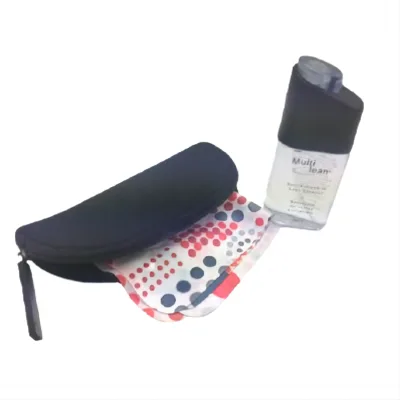
Buyers should also consider the "Single package size" of 15X15X0.1 cm, which is ideal for retail display and travel kits. The ability to customize the "Fittings" for different functions allows for the creation of specialized kits, such as those designed specifically for camera lenses or smartphone screens. The "Model Number" variations (e.g., DH-su0687, AL-clean cloth_4489) indicate a diverse product portfolio that can cater to different price points and quality expectations. To ensure long-term success, buyers should establish a partnership with a supplier who can provide consistent "Good Quality" and maintain the "Eco-Friendly" standards over multiple production cycles. The "Place of Origin" in Jiangsu, China, offers a mature supply chain, but buyers must remain vigilant about geopolitical factors that could impact logistics and lead times.
Summary of Key Sourcing Parameters
The following table summarizes the critical parameters observed in the market for eyeglasses cleaning fluid sets with microfiber cloths. This comparison aids in quickly identifying the specifications that align with specific procurement needs.
| Parameter | Observed Range / Standard | Key Considerations for Buyers |
|---|---|---|
| Material Composition | 100% Polyester, 100% Cotton, 70% Terylene + 30% Polyamide | Verify fiber ratio for lens safety and oil absorption. |
| Standard Size | 150 x 150 mm, 175 x 145 mm, 15*15cm, 30mm Dia. | Confirm custom sizing capabilities for branding. |
| Weight | 190 G/M2 | Higher density often correlates with better durability. |
| Printing Technique | Digital Transfer Printing, Screen Printing | Check print resolution and color fastness. |
| Packaging | Ctns, Single Packed Vacuum, 100PCS/Box | Evaluate impact on shipping volume and retail presentation. |
| MOQ | 1 Piece (Sample) to 5,000 Pieces | Balance initial testing costs with bulk pricing. |
| Lead Time | 3-5 days (Sample), 7 days (Production), 5-9 days (Air) | Plan inventory based on the specific shipping method. |
| Origin | Wuxi, Jiangsu, China; Jiangsu, China | Verify supplier location for logistics and compliance. |
By adhering to these evidence-based guidelines, buyers can navigate the complex landscape of microfiber cleaning cloth procurement, ensuring they secure high-quality, compliant, and cost-effective solutions for their eyeglasses cleaning fluid sets. The focus on verified material specifications, clear customization options, and robust supplier evaluation criteria will mitigate risks and support a successful long-term sourcing strategy.
FAQs
What material composition is best for lens safety?
The optimal composition is 70% Terylene and 30% Polyamide, which traps dust without scratching coatings. Some products use 100% polyester or cotton, but the blend offers superior electrostatic attraction for fine particulates on delicate lenses.
How can I customize the size and shape of the cloth?
Suppliers offer custom dimensions like 150 x 150 mm, 175 x 145 mm, or 30mm diameter based on customer design. You can also request various shapes and fittings to accommodate different functions or branding requirements.
What printing techniques are available for branding?
Digital transfer printing and screen printing are the primary techniques used for applying logos directly onto the cloth. These methods ensure high-resolution graphics remain durable through repeated washing and use.
Can I order samples before committing to a bulk order?
Yes, sample orders are welcome with a typical production time of 3 to 5 days. This allows you to verify the quality of the microfiber weave and printing before placing a larger bulk order.
What are the standard packaging options for shipping?
Packaging options include single packed vacuum, 100 pieces per box, or 4,000 pieces per carton. Vacuum sealing reduces shipping volume, while bulk cartons are suitable for large distribution requirements.
Where are these products typically manufactured?
Most products originate from Wuxi, Jiangsu, China, or other regions within Jiangsu Province. This location offers a mature supply chain for textile manufacturing and microfiber production.
What is the typical lead time for air freight delivery?
Air freight delivery typically takes 5 to 9 days after production is complete. Production itself usually requires 7 days, with samples ready in 3 to 5 days.