Source Telescopic Fiberglass Hot Stick for Line Fittings, Substations, and Maintenance
Find 30 Telescopic Fiberglass Hot Stick options rated for 10-750kV with triangle tube designs. Compare lengths from 2.43m to 12.5m, insulation materials, and customization features for high-voltage operations.
Key considerations
Products List


High Voltage Telescopic Fiberglass Electrical Hot Operating Fold Hot Stick
$4.00 - $8.00
MOQ: 1 Pieces


Telescopic Fiberglass Triangle Electrical Protection Hot Stick with Scale
$10.00 - $12.00
MOQ: 2 Pieces


Fiberglass Insulated Telescopic Triangle Measured Hot Stick/Operating Rod
$10.00 - $12.00
MOQ: 2 Pieces


High Voltage Insulation Electrical Telescopic Safety Rescue Hook Hot Stick
$150.00 - $350.00
MOQ: 10 Pieces


Telescopic Hot Stick for Surge Arrester Rubber Foot High Voltage Electric Poles
$150.00 - $350.00
MOQ: 1 Pieces


Jth-3 Electric High Voltage Fiberglass Telescopic FRP Triangle Hot Stick
$114.00 - $350.00
MOQ: 1 Pieces


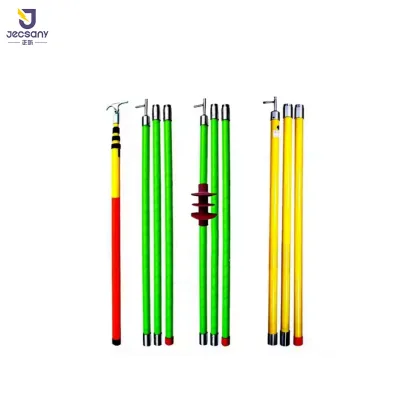
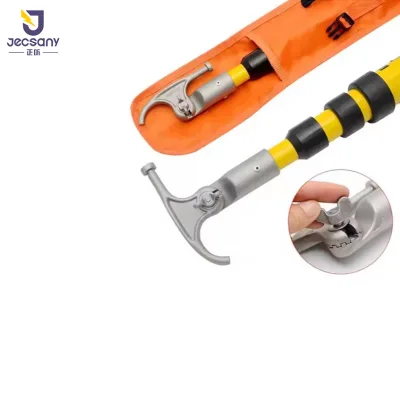


3 Meter Telescopic Fiberglass Supporting Poles Camouflage Net Supporting Stick
$30.00 - $40.00
MOQ: 10 Pieces
Comprehensive Sourcing Guide
Telescopic Fiberglass Hot Stick Sourcing Guide
Procuring telescopic fiberglass hot sticks requires a precise understanding of the specific electrical environments where these tools will operate, as the supply chain offers a wide spectrum of configurations ranging from basic link sticks to complex universal spline systems. Buyers must recognize that while the core material is consistently fiberglass, the specific resin formulations and tube geometries, such as the observed triangle tube design, directly influence the mechanical strength and dielectric properties required for high-voltage operations. The market data indicates a diverse product range where models are often customized to specific voltage ratings, with observed specifications covering a broad spectrum from 10kV up to 750kV, necessitating a rigorous verification process before any purchase decision is finalized.
The sourcing strategy must account for the variability in product attributes, including the distinction between rigid and telescopic designs, as well as the presence of operational features like integrated scales for height measurement. Suppliers in the region, particularly those originating from manufacturing hubs like Tianjin, often provide options for custom lengths and specific packing requirements, ranging from wooden cases to export-standard pallets. Buyers should approach this category with the understanding that "standard" models may not fit every utility requirement, and the ability to request custom dimensions or specific insulation types is a critical factor in securing a tool that meets the safety and operational demands of the intended high-voltage application.
Product Scope and Observed Listing Signals
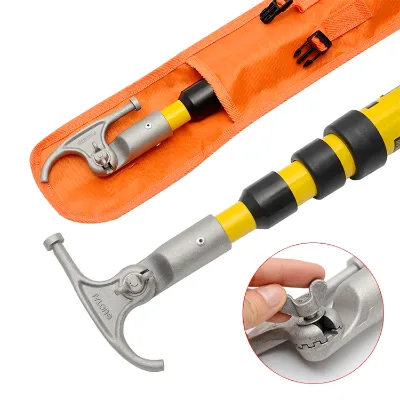
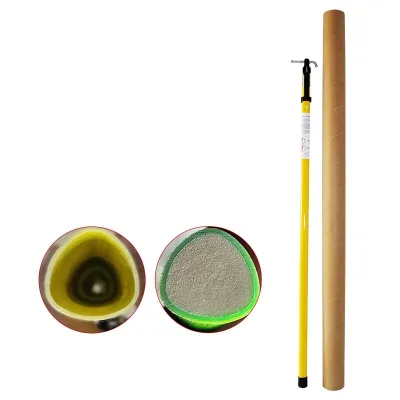
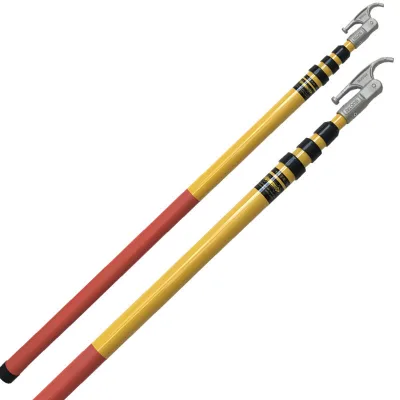
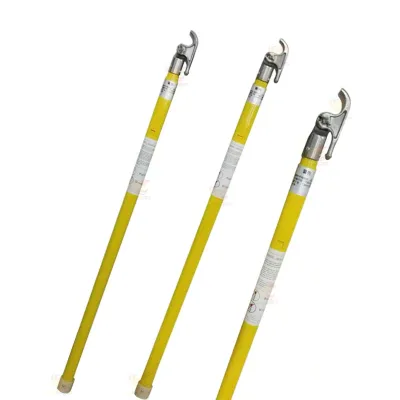
The observed product listings reveal a clear segmentation between general insulation materials and specialized high-voltage operating tools, with a strong emphasis on telescopic mechanisms that allow for adjustable reach in the field. Listings frequently highlight the "Triangle Hot Stick" configuration, which utilizes a specific tube shape to enhance torsional rigidity and reduce weight compared to traditional round tubes, a feature explicitly noted in multiple product descriptions. This geometric design is often paired with telescopic capabilities, allowing the tool to extend from lengths as short as 2.43 meters to over 12.5 meters, providing the flexibility needed for various substation and line fitting tasks without requiring multiple fixed-length tools.
Buyers must carefully distinguish between products labeled as "Insulation Tape" or generic "Inorganic Insulation Material" and those explicitly defined as "High Voltage Fiberglass Telescopic Link Stick" or "Universal Spline Hot Stick." The presence of specific technical terms like "Injection Molding" for certain components or "Super Epoxy Non-Alkali Fiberglass Fabric Tube" for the main body indicates a higher level of manufacturing sophistication and material integrity. When scanning listings, the presence of specific model numbers such as "WT" or descriptions mentioning "Easy to Operate" with scales suggests a focus on user ergonomics and precision, which are essential for tasks involving high-voltage testing or electrical maintenance where accuracy is paramount.
Technical Specifications to Verify
Verification of the rated voltage is the most critical technical step, as the observed data shows a wide range from 10kV to 750kV, and using a tool outside its rated capacity poses severe safety risks. Buyers must confirm that the specific model selected matches the maximum voltage of the system it will service, ensuring that the insulation properties of the fiberglass and epoxy resin are sufficient to prevent flashover under the expected electrical stress. The distinction between different voltage classes is not merely a marketing detail but a fundamental safety requirement, and procurement documents must explicitly state the maximum operating voltage to ensure compliance with utility safety protocols.
Beyond voltage, the physical dimensions and mechanical properties of the stick must be validated against the specific operational needs of the maintenance crew. The observed specifications indicate that lengths can be customized, with some models offering a range of 3 to 12 meters, while others extend up to 12.5 meters, and buyers should verify the exact extended and folded lengths to ensure the tool fits within transport constraints and reaches the required work height. Additionally, the material composition, specifically the use of non-alkali fiberglass fabric and epoxy resin, should be confirmed to ensure the tool maintains its structural integrity and dielectric strength over time, particularly in environments where thermal ratings up to 180°C or 250°C might be encountered.
Compliance and Safety Documentation
Safety documentation for high-voltage tools must include evidence of compliance with relevant national standards, such as the observed GB standard, which governs the manufacturing and testing of electrical safety equipment in the region of origin. Buyers should request test reports that verify the dielectric strength and mechanical load-bearing capacity of the telescopic joints, as these are the most vulnerable points in the assembly during operation. The presence of certifications like ISO9001 indicates a supplier's commitment to quality management systems, but this should be supplemented by specific product-level test data that confirms the tool meets the rigorous safety requirements for high-voltage insulation protection.
In addition to manufacturing standards, buyers must ensure that the product documentation includes clear instructions for use, maintenance, and storage to preserve the insulation properties of the fiberglass and resin. The observed mention of "High Voltage Insulation Protection" and "High Voltage Testing" applications implies that the tool is designed for direct interaction with energized equipment, making it essential that the supplier provides a certificate of conformity that explicitly links the product to the specific safety standards required by the buyer's local regulations. Without this documentation, the tool cannot be legally or safely deployed in a professional electrical maintenance environment, regardless of its physical appearance or advertised features.
Cost Drivers and Commercial Terms
The cost of a Telescopic Fiberglass Hot Stick is heavily influenced by the customization level, with observed listings showing that lengths and specific configurations can be made to customer requirements, which inevitably impacts the final price. The price range observed in the market, spanning from 4 to 350 USD, suggests a significant variance based on the complexity of the telescopic mechanism, the quality of the epoxy resin, and the specific voltage rating of the tool. Buyers should be aware that lower-priced items may correspond to basic models or shorter lengths, while higher-priced units likely include advanced features such as integrated scales, specialized spline connections, or higher voltage ratings that require more rigorous manufacturing controls.
Commercial terms regarding minimum order quantities (MOQ) and packaging are also key variables in the procurement process, with observed MOQs ranging from 1 to 50 units and packaging options varying from wooden cases to pallets. The flexibility of the supplier to accommodate small orders or custom packaging requests can significantly affect the total cost of ownership, especially for utilities that require a diverse inventory of tools for different tasks. Buyers should negotiate terms that align with their inventory strategy, ensuring that the supplier can deliver the required quantity within the specified lead time while maintaining the quality standards necessary for high-voltage safety equipment.
Supplier Qualification and Quality Control
Supplier qualification should extend beyond basic business registration to include a verification of their manufacturing capabilities, particularly their ability to produce consistent fiberglass and epoxy resin composites that meet high-voltage safety standards. The observed origin of these products from Tianjin, China, indicates a concentration of manufacturing expertise in this region, but buyers must still assess the specific factory's quality control processes to ensure that every unit produced undergoes the necessary dielectric and mechanical testing. The presence of OEM capabilities and customization options suggests that the supplier has the technical capacity to adapt their production lines, but this must be backed by a robust quality assurance system that prevents defects in the telescopic joints or insulation layers.
Quality control checks should focus on the consistency of the material properties, such as the thermal rating and the specific type of fiberglass fabric used in the tube construction. Buyers should request samples or third-party inspection reports to verify that the "Super Epoxy Non-Alkali Fiberglass Fabric Tube" meets the specified performance criteria and that the injection molding processes for any plastic components are free from defects that could compromise the tool's integrity. Establishing a clear communication channel with the supplier for ongoing quality monitoring is essential, as the long-term reliability of these tools depends on the consistency of the manufacturing process and the adherence to the agreed-upon technical specifications.
Long-Term Procurement Checks
Long-term procurement success relies on establishing a relationship with suppliers who can provide consistent support for maintenance, repair, and replacement of telescopic hot sticks over their service life. Buyers should verify the availability of spare parts, such as replacement telescopic sections or spline connectors, to ensure that the tools can be maintained rather than replaced entirely when minor damage occurs. The observed feature of "Telescopic, Easy to Operate" implies that the tools are subject to frequent mechanical stress, making the availability of technical support and replacement components a critical factor in the total cost of ownership and operational continuity.
Finally, buyers must implement a schedule for regular re-verification of the tools' condition and compliance with safety standards, as the dielectric properties of fiberglass and resin can degrade over time due to environmental exposure and mechanical wear. This includes checking for cracks, delamination, or contamination on the surface of the stick, which could compromise its insulation capabilities. By maintaining a proactive approach to asset management and working with suppliers who understand the lifecycle of high-voltage safety equipment, buyers can ensure that their teams always have access to reliable and safe tools for high-voltage operations.
FAQs
What is the rated voltage range for these sticks?
The rated voltage range is 10-750kV. This allows the Telescopic Fiberglass Hot Stick to be used for high voltage insulation protection across various power levels. The product is designed for line fittings and substation fittings, ensuring safety during high voltage operations.
How long is the Telescopic Fiberglass Hot Stick?
The length is 3-12m, or can be made as per your requires. Another specification lists the length as 2.43-12.5m. These dimensions allow for adjustable reach, making the stick suitable for high voltage operate or measure height tasks in diverse electrical maintenance scenarios.
What material is used for the tube construction?
The tube material is super epoxy non-alkali fiberglass fabric tube. This composition provides inorganic insulation material properties with hybrid insulation characteristics. The fiberglass construction ensures durability and high voltage insulation protection, making it ideal for demanding electrical environments and line fittings applications.
Can the product be customized for specific needs?
Yes, customization is available for the Telescopic Fiberglass Hot Stick. The standard is customized, and the model number can be tailored. This flexibility allows buyers to specify requirements for length, voltage rating, or other features, ensuring the product meets precise operational needs for high voltage testing.
What is the thermal rating of the insulation material?
The thermal rating is H 180. This indicates the material can withstand high temperatures while maintaining its insulating properties. The fiberglass and epoxy resin construction supports this rating, ensuring reliable performance in high voltage environments where heat resistance is critical for safety and operational efficiency.
Where is the product origin and how is it packed?
The product origin is Tianjin, China. It is packed in a wooden case or pallet, with export standard packing available. This ensures safe transportation of the Telescopic Fiberglass Hot Stick. The packaging protects the triangle tube insulated structure during shipping to global destinations for electrical maintenance use.