Source Telescopic Crowd Control Traffic Barrier for Events, Concerts, and Venues
Compare 30 Telescopic Crowd Control Traffic Barrier options from Chinese manufacturers. Buyers can evaluate variations in height, frame dimensions, and foot types to find the right solution for event and concert security needs.
Key considerations
Products List




Comprehensive Sourcing Guide
Strategic Sourcing Guide for Telescopic Crowd Control Traffic Barriers
Procuring telescopic crowd control traffic barriers requires a nuanced understanding of the intersection between mechanical engineering, safety compliance, and logistical efficiency. These systems are critical for managing high-density foot traffic at events, securing construction zones, and directing vehicular flow. The market offers a diverse array of configurations, ranging from semi-rigid to fully flexible barriers, each designed to meet specific operational demands. This guide synthesizes available product data and industry best practices to assist procurement professionals in making informed decisions without relying on unverified claims or specific supplier promises.
Technical Specifications and Structural Integrity
The foundational element of any crowd control barrier is its structural composition. Based on observed market data, the primary material for these systems is steel, selected for its durability and resistance to impact. The thickness of the steel components is a critical variable, with observed ranges spanning from 0.8mm to 2.5mm. Buyers must verify that the specific model selected aligns with the intended load-bearing requirements; a 0.8mm gauge may suffice for light pedestrian separation, whereas high-traffic concert venues may necessitate the upper end of this range.
The frame construction typically utilizes tubular steel with diameters varying between 25mm and 48mm. Common frame tube sizes include 25mm, 32mm, 38mm, and 48mm. The choice of tube diameter directly influences the barrier's rigidity and aesthetic profile. For instance, the ZH-B25 model and similar variants often employ a 25mm frame, while larger security applications might utilize 48mm tubing. The upright posts are equally significant, with dimensions observed as 19x19mm, 60x60mm, and 80x80mm. The 80x80mm post is frequently associated with central isolation barriers, offering enhanced stability for heavy-duty obstruction.
Barrier dimensions are highly customizable, yet standard specifications provide a baseline for comparison. Heights are commonly observed at 1.0m, 1.1m, and 1.2m, while lengths vary from 1.5m to 3.0m, with specific standard lengths including 2.0m, 2.2m, and 2.5m. The "telescopic" nature of these barriers implies a mechanism for extension, though the observed data also highlights rigid and semi-rigid barrier types. The degree of distortion is a key differentiator; some products are classified as "Rigid Barrier," while others are "Semi-Rigid" or "Flexible." This classification dictates how the barrier behaves under lateral pressure. A flexible barrier might bend to absorb impact without collapsing, whereas a rigid barrier maintains its shape to create an absolute physical block.
Surface Treatment and Environmental Durability
The longevity of steel barriers in outdoor environments is contingent upon the surface treatment applied. The two primary processes observed in the market are galvanization and powder coating. Galvanized barriers offer a robust defense against corrosion, making them suitable for long-term outdoor deployment or harsh weather conditions. Powder coating provides an additional layer of protection and allows for color customization, which is often required for branding or safety color-coding (e.g., yellow for caution, red for stop).
The standard for these treatments varies by manufacturer. Some products are listed with a "Galvanized" standard, while others offer "Custom Made" surface finishes. Buyers should verify the specific thickness of the zinc coating in galvanized products or the durability rating of the powder coat to ensure resistance to UV degradation and moisture. The origin of the product, often cited as China or specifically Hebei Anping, suggests a manufacturing hub with established supply chains for steel processing, but the specific quality of the coating must be validated through sample inspection rather than assumed based on origin alone.
Compliance, Certification, and Safety Standards
Navigating the compliance landscape is essential for B2B procurement, particularly when barriers are deployed in international markets or regulated industries. The supplied data indicates that some products carry ISO certification, which serves as a baseline for quality management systems. However, specific safety standards such as EN1090 or ISO3834 are mentioned only in low-confidence background contexts and should not be treated as guaranteed attributes of every listed product.
Buyers must treat certification claims as observations requiring verification. When evaluating a supplier, the procurement team should request valid, up-to-date certificates for the specific batch of goods. The presence of an ISO mark indicates adherence to general quality standards, but it does not automatically confer compliance with local safety regulations regarding crowd control in the buyer's jurisdiction. For applications involving public safety, such as concerts or major events, verifying that the barrier design meets local fire codes and structural load requirements is paramount. The "custom made" nature of many standards listed in the data suggests that compliance is often tailored to the project rather than being a one-size-fits-all attribute.
Cost Drivers and Economic Considerations
The pricing of telescopic crowd control barriers is influenced by a complex matrix of factors, including material thickness, frame dimensions, surface treatment, and customization levels. The observed price range in the market spans from $3.60 to $160.00 USD per unit. This wide variance reflects the difference between lightweight, simple flat-foot barriers and heavy-duty, fully galvanized systems with complex footings.
Minimum Order Quantity (MOQ) is another significant economic driver. While some suppliers may offer lower thresholds, the data indicates a common MOQ of 100 sets, with observed ranges extending from 2 to 200 units. High MOQs can impact the total cost of ownership for smaller events, potentially necessitating bulk purchasing for multiple venues or long-term storage. The "Custom Made" packing and specifications also introduce variable costs. Standard palletized shipping is more cost-effective than bespoke packaging, which may be required for specific branding or protection needs. Buyers should calculate the total landed cost, including shipping and potential duties, rather than focusing solely on the unit price, as the $3.60 entry point likely represents a minimal configuration that may not meet all safety requirements.
Typical Applications and Functional Requirements
The versatility of crowd control barriers allows them to serve a wide array of applications. The primary functions observed are separation, obstruction, and warning. These barriers are frequently deployed at events and concerts, where the need to manage large crowds and create secure perimeters is critical. The "Beautiful" function noted in some product attributes suggests that aesthetic integration is also a consideration, particularly for high-profile events where the visual impact of the barrier matters.
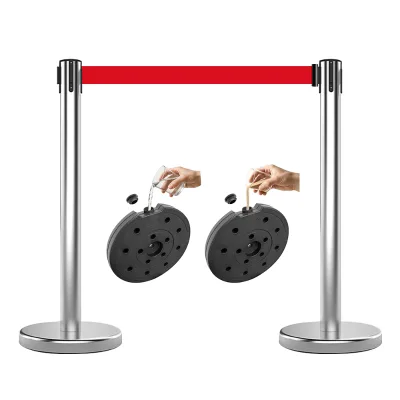
Specific applications dictate the choice of barrier type. For central isolation barriers, the 80x80mm upright post and semi-rigid distortion properties are ideal for creating permanent or semi-permanent divisions. In contrast, temporary crowd control barricades often utilize the 19x19mm or 25mm frames with flat, cross, or bridge feet. The foot type is a critical functional detail; welded feet provide permanent stability, while removable feet offer portability and ease of storage. The ability to customize the barrier length from 1.5m to 3m allows for precise fitting in irregular spaces, ensuring that no gaps exist that could compromise crowd safety.
Supplier Evaluation and Quality Control Protocols
Evaluating a supplier for crowd control barriers requires a rigorous approach to quality control. Given the "Custom Made" nature of many specifications, buyers should not assume that all listed attributes apply to every unit. Instead, the procurement process must include a verification step where samples are inspected against the agreed-upon specifications. The availability of free samples is a positive indicator, allowing buyers to physically test the "Degree of Distortion," the quality of the galvanization, and the stability of the footings.
Key evaluation criteria should include the consistency of the steel thickness, the uniformity of the surface coating, and the precision of the welding. The "ZH-B25," "ZH-0078," and other model numbers serve as identifiers, but the actual performance depends on the manufacturing process. Buyers should request detailed technical data sheets that specify the exact material grade, coating thickness, and load-bearing capacity. Furthermore, the origin location, such as Hebei Anping, should be verified as a legitimate manufacturing hub, but the specific factory's quality management system must be audited to ensure consistent output.
Long-Term Procurement and Lifecycle Management
For organizations planning long-term procurement, the lifecycle of the barrier system is a crucial consideration. The "Rigid Barrier" and "Semi-Rigid Barrier" classifications suggest different maintenance profiles. Rigid barriers may require less frequent replacement but can be more difficult to store if they are not collapsible. Flexible barriers offer better portability but may suffer from fatigue over time if subjected to repeated high-impact forces.
The "Custom Made" packing and standard options indicate that the supply chain can be adapted to specific logistical needs, such as palletized shipping for efficient handling. However, buyers should plan for the replacement of worn components, such as feet or locking mechanisms, which may degrade faster than the main frame. Establishing a relationship with a supplier who can provide replacement parts and offer consistent customization is essential for maintaining a fleet of barriers over several years. The ability to source barriers with varying heights (1.0m to 1.2m) and lengths allows for a modular approach, where the fleet can be expanded or reconfigured as event requirements change.
Conclusion
Sourcing telescopic crowd control traffic barriers is a multifaceted process that demands attention to technical specifications, material quality, and compliance standards. The market offers a broad spectrum of options, from lightweight 25mm frame barriers to heavy-duty 80x80mm isolation systems. By focusing on verified attributes such as steel thickness, surface treatment, and foot design, buyers can ensure that their procurement decisions align with safety and operational goals. The wide price range and variable MOQs require careful budgeting and planning, while the emphasis on customization allows for tailored solutions to specific event or site requirements. Ultimately, a disciplined approach to supplier evaluation and quality control is the key to securing reliable crowd control infrastructure that protects both personnel and assets.
FAQs
What materials are used for telescopic crowd control traffic barriers?
The primary material is steel, selected for its durability and impact resistance. Observed thickness ranges from 0.8mm to 2.5mm depending on the specific model and intended load-bearing requirements.
Can I customize the dimensions of these barriers for my event?
Yes, customization is available for both height and length to fit specific venue needs. Standard heights include 1.0m, 1.1m, and 1.2m, while lengths vary from 2.0m to 2.5m or can be customized up to 3m.
What surface treatments are available for outdoor durability?
Barriers typically feature either galvanization or powder coating to protect against corrosion. Galvanized finishes offer robust defense for harsh weather, while powder coating allows for color customization and additional UV protection.
Which certification standards apply to these crowd control systems?
Some products carry ISO certification as a baseline for quality management systems. Buyers should verify specific certificates for each batch, as standards like EN1090 are not guaranteed for every listed item.
What is the typical minimum order quantity for these barriers?
The standard minimum order quantity is 100 sets, though observed ranges can extend from 2 to 200 units. Buyers should confirm specific MOQs with suppliers as this impacts total cost for smaller events.
How are the barrier feet designed for stability and portability?
Feet options include flat, cross, or bridge types that are either welded or removable. Welded feet provide permanent stability for central isolation, while removable feet enhance portability for temporary event setups.
What is the price range for telescopic crowd control traffic barriers?
The observed price range spans from 3.6 to 160 USD per unit. This variance reflects differences in material thickness, frame dimensions, surface treatment, and the level of customization required for the specific application.