Source Telescopic Mini Pneumatic Cylinder for Print, Robot, Automation
Compare 30 Telescopic Mini Pneumatic Cylinder options featuring aluminum, steel, and alloy steel materials with double-acting or single-acting designs. Buyers can evaluate bore sizes, working pressures, and customization availability for print, semiconductor, and robot applications.
Key considerations
Products List


Telescopic Electric Hydraulic Double Acting Mini Pneumatic Air Cylinder
$537.00 - $697.00
MOQ: 1 Pieces


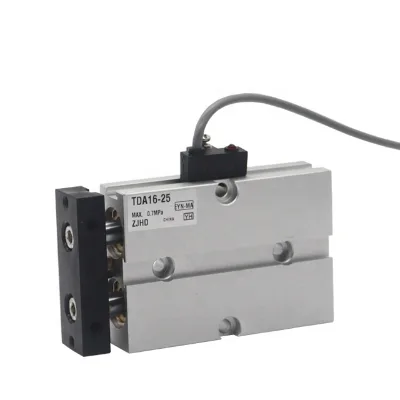
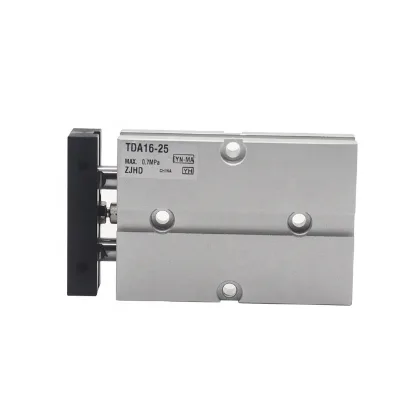


High Quality Mini Multi-Stage Hydraulic Engineering Machinery Hydraulic Cylinder
$300.00 - $500.00
MOQ: 1 Pieces


$15.00 - $150.00
MOQ: 1 Pieces

$15.00 - $150.00
MOQ: 1 Pieces


Comprehensive Sourcing Guide
Strategic Sourcing Guide for Telescopic Mini Pneumatic Cylinders
The procurement of telescopic mini pneumatic cylinders requires a nuanced understanding of component specifications, application constraints, and supplier reliability. These compact actuators are critical in automation systems where space is limited but extended reach is necessary. Buyers must navigate a complex landscape of material properties, pressure ratings, and customization options to ensure the selected components meet rigorous operational demands. This guide synthesizes available market data to provide a structured approach for sourcing these essential industrial components, focusing on verified attributes and practical evaluation criteria.
Technical Specifications and Structural Variations
When evaluating telescopic mini pneumatic cylinders, the primary focus must be on the structural configuration and power source. The market data indicates that these units predominantly utilize a piston cylinder structure, which is essential for maintaining stability during extension and retraction cycles. The power source is consistently pneumatic, operating within a working pressure range of 0.2 to 0.8 MPa for standard applications. However, for high-pressure scenarios, specific models are rated for a maximum working pressure of up to 25 MPa, necessitating careful selection based on the system's pressure requirements.
The acting mechanism varies significantly between single-acting and double-acting configurations. Single-acting cylinders rely on air pressure for extension and a spring or external force for retraction, while double-acting cylinders utilize air pressure for both directions. The observed data highlights the prevalence of double-acting cylinders, including specific variations such as double rod cylinders and pressurized cylinders. Furthermore, combination cylinder types, such as gas-liquid pressurized cylinders, offer unique capabilities for applications requiring precise force control or damping.
Stroke speed is another critical technical parameter, with observed ranges spanning from 10 to 300 mm/s. This variability allows for optimization based on the cycle time requirements of the specific machinery. The power stroke itself can range from 5 to 25 mm in certain configurations, though bore sizes offer a broader spectrum, including 63, 80, 100, 125, 160, 180, and 200 mm. Buyers must verify that the selected bore size aligns with the required output force, which can range from 10 to 800 kN depending on the model and pressure conditions.
Material Composition and Durability Factors
The longevity and performance of telescopic mini pneumatic cylinders are heavily dependent on the materials used in their construction. The supply chain offers a diverse range of materials, including aluminum, steel, alloy steel, and stainless steel. Aluminum is often selected for applications where weight reduction is a priority, while steel and alloy steel provide the necessary strength for heavy-duty industrial environments. Stainless steel is typically reserved for corrosive environments or industries with strict hygiene standards, such as food processing or pharmaceuticals.
The choice of material also influences the sealing system. High-performance seals from manufacturers like Hallite, Kaden, and Nok are commonly integrated into these cylinders to ensure leak-free operation under varying pressure conditions. The chrome thickness on specific components is noted to be between 0.015 and 0.025 mm, a specification that contributes to wear resistance and surface finish. Buyers should verify that the material grade matches the environmental conditions of the application, particularly regarding temperature extremes, as some models are rated for high-temperature working conditions.
Compliance, Certification, and Standardization
Navigating the compliance landscape is essential for ensuring that sourced cylinders meet international safety and quality benchmarks. The market data reveals a mix of standard and nonstandard offerings. While some products adhere to standard specifications, others are customized to fit unique application needs. Certification plays a pivotal role in validating product quality. Observed certifications include ISOCE and GS, which serve as indicators of adherence to specific safety and quality management systems.
Thread standards are another critical compliance factor. The data lists various thread types, including G1/4, G3/8, 1/4NPT, and 3/8NPT. These standards dictate the compatibility of the cylinder with existing piping and manifold systems. Buyers must ensure that the selected cylinder's thread standard matches the system's requirements to avoid costly modifications or leaks. Additionally, material standards such as 27SiMn and 16Mn are referenced for specific steel components, indicating the need for verification of material grades against project specifications.
Cost Drivers and Procurement Economics
The cost of telescopic mini pneumatic cylinders is influenced by several factors, including material selection, customization level, and production complexity. The observed price range in the market spans from 0.5 to 1088 USD, reflecting the vast difference between basic models and highly specialized, high-pressure units. Minimum Order Quantities (MOQ) vary from 1 to 100 units, offering flexibility for both prototyping and large-scale production runs.
Customization is a significant cost driver. While standard models are readily available, the availability of customization allows buyers to tailor dimensions, mounting options, and seal materials to specific needs. This flexibility, however, often comes with a premium. The working pressure and bore size also impact pricing, with higher pressure ratings and larger bore sizes generally commanding higher costs. Buyers should balance the need for specific performance attributes against the budget constraints, considering that higher-quality materials like stainless steel or specialized seals may increase the unit price but reduce long-term maintenance costs.
Typical Applications and Operational Context
Telescopic mini pneumatic cylinders are versatile components found across a wide array of industries. The observed usage data highlights their prevalence in printing, semiconductor manufacturing, automation and control systems, and robotics. In the printing industry, these cylinders are often used for precise paper feeding and alignment mechanisms. In semiconductor manufacturing, the cleanroom-compatible materials and high precision of these cylinders are crucial for handling delicate wafers.
Automation and control systems utilize these cylinders for tasks requiring compact yet powerful actuation, such as clamping, lifting, and positioning. The robotics sector benefits from the lightweight nature of aluminum models and the high stroke speed capabilities, enabling faster cycle times and improved throughput. The straight trip working method is common in these applications, providing linear motion that is easy to integrate into robotic arms and automated assembly lines. Understanding the specific operational context helps buyers select the right cylinder type, whether it be a pressurized cylinder for high-force applications or a gas-liquid combination for smooth, controlled movement.
Supplier Evaluation and Quality Assurance
Evaluating suppliers requires a rigorous approach to quality assurance and reliability. The data indicates that suppliers often implement multiple quality control checks, with some performing three inspections before delivery. This level of scrutiny is vital for ensuring that every cylinder meets the required specifications and performance standards. Buyers should inquire about the supplier's QC processes, including the frequency of testing and the specific parameters checked during production.
Packaging is another indicator of supplier professionalism. Observed packaging methods include inner boxes, outer cartons, pallets, and plywood cases. Proper packaging ensures that the cylinders arrive in pristine condition, protecting them from damage during transit. The origin of the products is primarily China, with specific mentions of Dongguan as a manufacturing hub. While the geographic location is a known fact, buyers should verify the specific factory capabilities and reputation of the supplier rather than relying solely on the country of origin.
Long-Term Procurement and Maintenance Considerations
Long-term procurement strategies should focus on the total cost of ownership, which includes maintenance, warranty, and replacement costs. The observed warranty period for some models is 14 months, providing a baseline for supplier confidence in product durability. Buyers should negotiate warranty terms that align with the expected lifespan of the equipment and the criticality of the application.
Maintenance considerations include the availability of spare parts, such as seal kits, and the ease of replacement. The use of standard seal brands like Hallite, Kaden, and Nok suggests that replacement parts are likely to be readily available in the market. Additionally, the adjustable form of some cylinders, described as regulated types, allows for fine-tuning of performance parameters over time, extending the useful life of the component. Buyers should also consider the color options available, as custom coloring can be useful for identification and safety marking in complex machinery.
| Feature Category | Observed Attributes | Verification Requirement |
|---|---|---|
| Structure | Piston Cylinder, Double Rod | Confirm stroke length and rod configuration |
| Material | Aluminum, Steel, Alloy Steel, Stainless Steel | Match material to environmental conditions |
| Pressure | 0.2-0.8 MPa (Standard), Up to 25 MPa (High) | Verify system pressure compatibility |
| Certification | ISOCE, GS | Request valid certification documents |
| Packing | Inner Box, Pallets, Plywood Case | Ensure packaging prevents transit damage |
| Warranty | 14 months (Observed) | Confirm warranty terms and coverage |
In conclusion, sourcing telescopic mini pneumatic cylinders demands a comprehensive understanding of technical specifications, material properties, and supplier capabilities. By focusing on verified attributes such as working pressure, bore size, and certification status, buyers can make informed decisions that ensure reliability and performance. The diversity of available options, from single-acting to double-acting and various material compositions, allows for tailored solutions that meet the specific needs of modern automation and industrial applications.
FAQs
What materials are used for telescopic mini pneumatic cylinders?
These cylinders are constructed from aluminum, steel, alloy steel, or stainless steel. Buyers must select the specific material grade based on environmental conditions, such as corrosion resistance or high-temperature requirements, to ensure long-term durability.
Which certifications are available for these pneumatic cylinders?
Certified products typically hold ISOCE and GS marks. These certifications indicate adherence to specific safety and quality management systems, which is essential for verifying product reliability before placing a bulk order.
Can buyers request customization for these cylinder models?
Yes, customization is available for many models to fit unique application needs. Buyers can specify dimensions, mounting options, and seal materials, though this flexibility often results in a higher unit price compared to standard configurations.
How is the working pressure range defined for these units?
Standard models operate between 0.2 and 0.8 MPa, while high-pressure variants can reach up to 25 MPa. It is critical to verify the system pressure requirements to select a cylinder that matches the operational demands safely.
What is the typical warranty period for these products?
Some models come with a 14-month warranty period. This baseline provides a measure of supplier confidence in product durability, but buyers should confirm specific warranty terms and coverage details during the procurement negotiation.
Which industries commonly use these telescopic mini pneumatic cylinders?
They are widely used in printing, semiconductor manufacturing, automation, and robotics. The specific application dictates the required bore size and stroke speed, ensuring the component meets the precision and force needs of the machinery.