Source HEPA Hydraulic Filter Cartridge for Oil Separation, Hydraulics, and Gas Systems
Explore 30 listings for the HEPA Hydraulic Filter Cartridge designed for solid-liquid separation and oil impurity removal. Buyers can compare specifications like filtration precision, working pressure, and customization options from verified Chinese manufacturers.
Key considerations
Products List


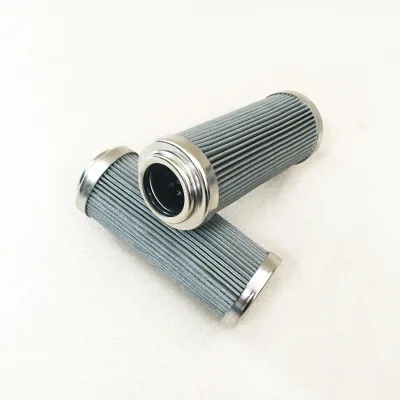
Manufacturer Custom New Condition Metal Stainless Steel Cartridge Hydraulic Oil Filter Element
$11.60 - $20.00
MOQ: 5 Pieces


$5.00 - $50.00
MOQ: 50 Pieces


Comprehensive Sourcing Guide
Strategic Sourcing Guide for HEPA Hydraulic Filter Cartridges
Understanding the Technical Landscape of Hydraulic Filtration
When sourcing a HEPA Hydraulic Filter Cartridge, buyers must first navigate the complex intersection of filtration media capabilities and hydraulic system requirements. The core keyword suggests a high-efficiency filtration medium, yet the product data indicates a diverse range of applications including solid-liquid separation, oil impurities, and oil-water separation. It is critical to distinguish between general hydraulic filtration and specialized high-efficiency requirements. The observed product attributes reveal that the mechanical principle often relies on adsorption, which is distinct from simple mechanical sieving. This suggests that the filtration process may involve capturing microscopic contaminants through surface adhesion rather than just physical blockage.
The filtration precision observed in the market data varies, with specific ratings noted at 10μm, 20μm, and 25μm. While the term "HEPA" typically implies a standard of 99.97% efficiency for particles of 0.3μm, the supplied product facts list filtration efficiencies of ≥99% and 99.9% for specific configurations. Buyers must verify if the "HEPA" designation in a hydraulic context refers to a specific high-efficiency grade or if it is a marketing term applied to general high-performance filters. The working pressure specifications are equally critical, with observed ranges from 0.6-1.2 MPa up to 145 (likely PSI or a specific unit not fully defined in the snippet). The operating temperature is recorded at 248, which likely refers to degrees Celsius or a specific thermal limit, requiring careful verification against the fluid's viscosity curve.
The structure of these units varies significantly between "Filter Element/Assy" and "Cartridge" types. The data also lists "Spin-on / Cartridge Type" as a classification, indicating that the physical mounting mechanism is a primary decision factor. The filtration medium is explicitly identified as Engine Lubricating Oil or General Hydraulic Oil, which dictates the chemical compatibility of the filter media. Furthermore, the seal materials are noted as NBR (Nitrile Butadiene Rubber) or FKM (Fluoroelastomer), which are standard choices for resisting hydraulic fluid degradation and temperature extremes.
Compliance, Certification, and Standard Verification
In the B2B procurement of industrial filtration components, compliance is not merely a formality but a prerequisite for system reliability. The supplied context mentions a standard value of 0.35 and a general classification of "OIL FILTER," but it lacks specific international certification bodies like ISO or SAE in the high-confidence facts. While low-confidence background information hints at ISO9001:2000, buyers should not rely on this as a confirmed attribute for any specific supplier without direct verification. The absence of explicit certification data in the high-confidence facts means that procurement teams must treat all certification claims as unverified until validated through direct supplier documentation.
Buyers should verify the origin of the product, as the data points to "China" and specifically "Henan, China" as production locations. Origin can influence supply chain transparency and adherence to international quality standards. The product standard is listed simply as "OIL FILTER" in some entries, which is a generic classification rather than a technical standard. This necessitates a rigorous request for specific technical datasheets that align with the buyer's internal quality management systems. The "Standard" attribute value of 0.35 is ambiguous without context; it could refer to a micron rating, a pressure drop, or a specific internal standard code. Consequently, the procurement strategy must include a clause requiring the supplier to provide the exact standard code or specification sheet that governs the product's manufacturing and testing.
Cost Drivers and Pricing Dynamics
The pricing landscape for hydraulic filter cartridges is influenced by several variables, including the complexity of the filtration media, the materials used for end caps and seals, and the level of customization required. The observed price range in the market data spans from 1 to 500 USD, a wide variance that reflects differences in product complexity, volume, and specification. A unit priced at the lower end of this spectrum may be a standard, off-the-shelf component with minimal customization, while a unit at the higher end likely incorporates specialized media, custom sizing, or proprietary sealing technologies.
Material costs are a significant driver. The end cap material is specified as Galvanized Steel, which offers corrosion resistance but adds to the base cost compared to plastic alternatives. The seal materials, NBR and FKM, also carry different price points; FKM generally commands a premium due to its superior chemical and thermal resistance. Customization is explicitly listed as "Available" with options for size, filter media, packaging, and logo. Each customization option introduces a variable cost. For instance, a "Customized Package" or "Neutral Package" may affect logistics costs, while a custom filter media formulation could significantly alter the unit price.
The Minimum Order Quantity (MOQ) is another critical cost factor. The observed MOQ range is 1 to 500 units. Suppliers offering an MOQ of 1 allow for low-risk sampling and prototyping but often charge a higher unit price. Conversely, suppliers requiring an MOQ of 500 may offer volume discounts but increase the initial capital outlay. The supply ability is noted as 10,000 pieces per week, suggesting that high-volume buyers can secure consistent supply without significant lead time penalties, provided the order volume aligns with the supplier's capacity. Buyers must balance the unit price against the total cost of ownership, which includes inventory holding costs and the risk of stockouts.
Typical Applications and System Compatibility
The versatility of the hydraulic filter cartridge is evident in its listed applications, which span Medicine, Food and Beverage, Industry, Metallurgy, and Textile. This broad applicability suggests that the filter is designed to handle diverse contaminants and fluid types. However, the specific mention of "Construction Machinery Oil Filter" and "Hydraulic Oil Circulation System" highlights the primary use case in heavy-duty industrial environments. In these sectors, the filter must withstand high mechanical stress and continuous operation.
The working medium is identified as General Hydraulic Oil and Engine Lubricating Oil, indicating that the filter is suitable for both power transmission systems and engine lubrication circuits. The "Activated Carbon Filter Type" is noted as "Compact," which implies an additional capability to adsorb odors or specific chemical contaminants, a feature that might be crucial in food and beverage applications where purity is paramount. The filter connector is specified as a "226 Connector," a detail that requires strict adherence to ensure compatibility with existing hydraulic manifolds. Mismatched connectors can lead to leaks, pressure drops, and system failure.
The service life is estimated at 2000 hours, a metric that buyers should use to calculate maintenance schedules and total operating costs. This lifespan assumes standard operating conditions; extreme temperatures or high contaminant loads may reduce this duration. The "Direct OEM Replacement" feature suggests that these filters are designed to fit into existing systems without modification, reducing installation time and labor costs. However, buyers must verify that the "Direct OEM Replacement" claim aligns with their specific equipment models, as OEM standards can vary between manufacturers.
Supplier Evaluation and Sourcing Strategy
Evaluating suppliers for hydraulic filter cartridges requires a multi-faceted approach that goes beyond price comparison. The availability of customization options, such as size, filter media, and packaging, indicates that the supplier should possess flexible manufacturing capabilities. Buyers should assess the supplier's ability to handle "Communicate" regarding packing, which implies a need for clear communication channels regarding logistics and packaging requirements. The "Pattern: Dry" attribute suggests a specific manufacturing or storage condition that must be maintained to prevent moisture contamination, which can degrade hydraulic fluid.
The "Feature" list highlights "Uniform Pore Size and High Strength" and "Large Amount of Dirt Absorbed," which are key performance indicators. Buyers should request test data or third-party verification to confirm these claims. The "Condition: New" is a basic requirement, but the supplier's history of delivering new, non-refurbished units is essential. The "OEM: Accept" status indicates that the supplier is willing to work with original equipment manufacturer specifications, which is crucial for maintaining warranty compliance and system integrity.
When selecting a supplier, buyers should prioritize those with a proven track record in the specific industries of interest, such as metallurgy or construction machinery. The "Supply Ability" of 10,000 pieces per week is a strong indicator of production capacity, but buyers should also inquire about the supplier's ability to scale during peak demand periods. The "Location" in Henan, China, suggests a specific supply chain geography that may impact shipping times and costs. Buyers should evaluate the logistics network of the supplier to ensure timely delivery, especially for critical spare parts.
Quality Control and Long-Term Procurement Considerations
Quality control in the production of hydraulic filter cartridges is paramount to prevent system failures. The "Performance" attribute is described as "Sophisticated Filters," which implies advanced manufacturing processes. Buyers should implement a rigorous incoming quality inspection protocol that includes visual inspection for defects, dimensional checks for the "226 Connector," and pressure testing to verify the "Working Pressure" ratings. The "Filtration Efficiency" of ≥99% and 99.9% should be validated through sample testing, as these figures are critical for maintaining fluid cleanliness.
Long-term procurement considerations involve establishing a partnership with a supplier who can provide consistent quality over time. The "Service Life" of 2000 hours is a target metric, but buyers should monitor actual performance in the field to adjust replacement intervals. The "Packaging" options, including "Cardboard Box Packaging" and "Customized Package," should be evaluated for their ability to protect the filter during transit and storage. Moisture and physical damage are common risks in logistics, and the packaging must be robust enough to mitigate these risks.
The "Customization" aspect offers a strategic advantage for buyers with unique system requirements. However, customization introduces complexity into the supply chain. Buyers should ensure that the supplier has a robust change management process to handle custom orders without compromising quality or lead times. The "Standard" attribute of "OIL FILTER" is a starting point, but buyers should work with the supplier to define more specific internal standards that align with their operational needs.
In conclusion, sourcing a HEPA Hydraulic Filter Cartridge requires a balanced approach that considers technical specifications, compliance, cost, applications, and supplier reliability. By leveraging the observed data and maintaining a rigorous verification process, buyers can secure high-quality filtration solutions that enhance system performance and longevity. The wide range of observed attributes, from pressure ratings to seal materials, underscores the importance of detailed specification matching. Buyers must remain vigilant in their due diligence, ensuring that every claim made by the supplier is substantiated by evidence before committing to a procurement contract. This disciplined approach will mitigate risks and ensure that the selected filters meet the demanding requirements of modern hydraulic systems.
FAQs
What is the filtration efficiency of this hydraulic filter?
The filtration efficiency is at least 99 percent for general configurations and can reach 99.9 percent for specific high-grade models. This performance relies on the adsorption mechanical principle and sophisticated filter media designed to capture oil impurities effectively.
Can I customize the size and packaging for this filter?
Yes, customization is available for size, filter media, packaging, and logo to meet specific buyer requirements. Buyers should communicate their specific packaging needs directly with the supplier to ensure the product meets their logistical and branding standards.
What is the working pressure range for this hydraulic filter?
The working pressure ranges from 0.6 to 1.2 MPa for standard applications, with some units rated up to 145 units of pressure. This range ensures compatibility with general hydraulic oil circulation systems and construction machinery oil filters.
Which seal materials are used in this filter assembly?
The seal materials used are typically Nitrile Butadiene Rubber or Fluoroelastomer to resist hydraulic fluid degradation. These materials ensure durability and prevent leaks when the filter operates within the specified temperature and pressure limits.
How long is the service life of this oil filter cartridge?
The estimated service life is 2000 hours under standard operating conditions. This duration assumes the filter is used in general hydraulic oil systems and is replaced according to the recommended maintenance schedule for optimal performance.
What is the minimum order quantity for purchasing this filter?
The minimum order quantity starts at 1 piece, allowing for low-risk sampling and prototyping. Suppliers may offer volume discounts for larger orders, with a supply ability of up to 10,000 pieces per week for high-volume buyers.
Where is the origin of this hydraulic filter cartridge?
The product originates from China, with specific manufacturing locations noted in Henan. Buyers should verify the specific factory location to ensure supply chain transparency and adherence to the stated production standards.