Source Threaded Adapter for Plumbing, Drilling, and Industrial Use
Find 30 Threaded Adapter options with varying specifications like DN20 to DN110mm and connection types including welding. Buyers can compare models, materials, and packing details to select the right component for plumbing, drilling, or industrial applications.
Key considerations
Products List




Comprehensive Sourcing Guide
Threaded Adapter Sourcing Guide
Sourcing threaded adapters requires a disciplined approach to navigating a fragmented market where product definitions vary significantly across industries. The term "Threaded Adapter" serves as a broad umbrella for components designed to connect piping systems, electrical devices, or mechanical assemblies with differing thread standards or dimensions. Buyers must first distinguish between industrial fluid power applications and consumer electronics accessories, as the technical requirements, material specifications, and compliance standards for these categories are entirely distinct. Confusing these two domains can lead to procurement errors, such as ordering a high-pressure hydraulic fitting when a low-voltage charging interface is required, or vice versa.
This guide synthesizes observed market signals to help procurement professionals navigate these divergent product lines. By focusing on verifiable attributes such as material composition, connection types, and packaging standards, buyers can establish clear criteria for supplier evaluation. The following sections provide a structured framework for assessing product scope, verifying technical specifications, ensuring compliance, and managing commercial risks. This evidence-based approach ensures that sourcing decisions are grounded in observable data rather than marketing claims, reducing the likelihood of supply chain disruptions or quality failures.
Product Scope and Observed Listing Signals
The market for threaded adapters exhibits a wide range of product types, from industrial pipe fittings to portable electronic charging units. In the industrial sector, listings often specify models such as DN20~DN110mm or 20-100, indicating a focus on dimensional compatibility with standard piping systems. These products are frequently described as having an inner diameter of "Many Kinds," suggesting a high degree of customization or a broad inventory of standard sizes. The connection type is explicitly noted as "Welding" in some contexts, which implies that these adapters are designed for permanent or semi-permanent installations in fluid or gas transport systems, requiring specific welding preparation and material integrity.
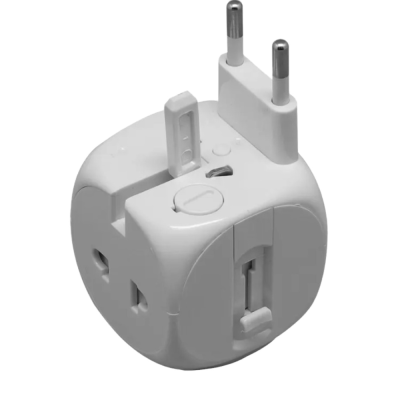
In contrast, the consumer electronics segment presents a different set of product signals. Listings for adapters in this category often highlight features such as "Quick Charging Function," "Over-Current Protection," and specific port configurations like "2xusb-C + 1xusb-a." These products are typically made from ABS material and are designed for portability, with a power source of "Electric" and an AC input of 100-240V/50-60Hz. The observed capacity ranges, such as a C1 port output of Pd 3.1 140W (Max.), indicate a focus on high-power delivery for laptops and smart devices. Buyers must carefully separate these electronic components from mechanical fittings, as their sourcing criteria, including safety certifications and electrical testing, are fundamentally different.
Technical Specifications to Verify
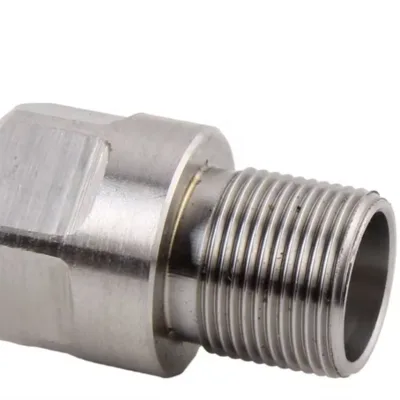
For industrial threaded adapters, verifying the material and manufacturing process is critical to ensuring durability and pressure resistance. Observed listings indicate that some products are made from Alloy Steel and undergo processes such as Forging and Polishing. These specifications suggest a high-strength application, potentially for energy and mining sectors, where components like rock drill tools or well drilling equipment are used. The diameter specifications, ranging from 76mm to 140mm, provide a clear range for compatibility checks. Buyers should verify that the alloy composition and forging quality meet the operational pressure requirements, which may range from atmospheric to high-pressure environments, depending on the specific application.
For electronic adapters, technical verification focuses on electrical performance and safety features. The presence of Quick Charging Function and Over-Current Protection are key indicators of a reliable product. Buyers should confirm the specific output capabilities of each port, such as the QC/FCP/AFC 30W (Max.) for USB-A ports, to ensure compatibility with target devices. The use of ABS material is common for housing, providing impact resistance and thermal stability. It is essential to verify that the internal circuitry supports the stated Power Delivery (PD) standards, such as PD 3.1, and that the device operates safely within the specified AC input range. Misalignment between the adapter's output and the device's input requirements can lead to inefficient charging or potential damage.
Compliance and Safety Documentation
Industrial threaded adapters must comply with relevant mechanical and material standards to ensure safety in high-pressure or hazardous environments. While specific certification statuses vary by supplier, buyers should request documentation that verifies compliance with recognized standards such as ASTM or AISI for material properties. The surface treatment of Polishing and the Manufacturing Process of Forging should be backed by quality control records that confirm dimensional accuracy and structural integrity. For applications in the Energy & Mining sector, additional documentation may be required to demonstrate suitability for well drilling or rock drilling operations, including resistance to corrosion and fatigue.
Electronic adapters require strict adherence to electrical safety and electromagnetic compatibility standards. Certifications such as CE are commonly associated with these products, indicating compliance with European health, safety, and environmental protection standards. Buyers should verify that the product has undergone appropriate testing for Over-Current Protection and short-circuit prevention. The packaging, whether in Wooden Box, Cartons, or PP Bags, should also be evaluated for its ability to protect the electronic components during transit. Ensuring that the supplier provides valid test reports and certification documents is crucial for mitigating liability and ensuring that the product meets the regulatory requirements of the destination market.
Cost Drivers and Commercial Terms
The cost of industrial threaded adapters is influenced by material costs, manufacturing complexity, and order volume. Alloy Steel and forging processes are generally more expensive than casting or machining, reflecting the higher strength and durability of the final product. The range of diameters and the availability of Customization options can also impact pricing, as bespoke specifications may require additional tooling or production time. Buyers should consider the MOQ (Minimum Order Quantity) ranges, which can vary from 1 to 5000 units, and negotiate terms that align with their inventory needs. The packaging method, such as Wooden Box for heavy industrial parts, may add to the overall cost due to material and labor requirements.
For electronic adapters, cost drivers include the complexity of the internal circuitry, the quality of the charging components, and the brand reputation. High-power adapters with multiple ports and advanced features like Quick Charging Function typically command a higher price. The use of ABS material and the inclusion of safety features such as Over-Current Protection contribute to the manufacturing cost. Buyers should compare prices across suppliers, keeping in mind that extremely low prices may indicate compromised quality or lack of necessary certifications. The MOQ for electronic adapters is often lower, allowing for more flexible ordering, but bulk purchases may still offer significant discounts.
Supplier Qualification and Quality Control
Evaluating supplier qualification for industrial threaded adapters requires a focus on manufacturing capabilities and quality management systems. Buyers should verify that the supplier has the necessary equipment for Forging and Polishing processes and can consistently produce components within the specified diameter tolerances. The origin of the product, often China for these types of components, should be considered in the context of the supplier's export experience and logistical reliability. Requesting samples for dimensional inspection and material analysis is a critical step in quality control. Suppliers should also provide evidence of their ability to handle Customization requests, ensuring that they can meet specific project requirements.
For electronic adapters, supplier qualification should emphasize electrical safety testing and production consistency. Buyers should verify that the supplier has a robust quality control process for testing Over-Current Protection and charging efficiency. The After-sales Service offered by the supplier is an important factor, indicating their commitment to product reliability and customer support. Packaging quality, whether in Carton Box or PP Bags, should be assessed to ensure that the products arrive in perfect condition. Suppliers with a history of providing valid certifications and positive feedback on product performance are preferable for maintaining a reliable supply chain.
Long-Term Procurement Checks
Long-term procurement of industrial threaded adapters requires ongoing monitoring of product performance and supplier reliability. Buyers should establish a feedback loop with end-users to identify any issues related to pressure resistance, corrosion, or dimensional fit. Regular audits of the supplier's quality control processes can help prevent defects from reaching the production line. The availability of spare parts and the supplier's ability to provide timely replacements for defective items are key indicators of long-term partnership viability. Maintaining a diverse supplier base can mitigate risks associated with supply chain disruptions or changes in raw material costs.
For electronic adapters, long-term checks should focus on product longevity and technological relevance. Buyers should monitor for any recalls or safety alerts related to the charging components or battery compatibility. The evolution of charging standards, such as the transition to newer PD versions, may require periodic updates to the product portfolio. Suppliers who invest in R&D and offer updated models with improved efficiency and safety features are valuable partners. Regular review of the supplier's compliance status and certification validity is essential to ensure continued adherence to regulatory requirements and market expectations.
FAQs
What customization options are available for threaded adapters?
Customization is available for threaded adapters according to product attributes. Buyers can request specific modifications to meet unique project requirements, though standard models also exist with fixed specifications like DN20 to DN110mm.
Which connection types are supported for these threaded adapters?
Welding is the supported connection type for these threaded adapters. This method ensures a secure and durable joint, making it suitable for applications requiring high integrity in piping systems across various industrial sectors.
How are these threaded adapters typically packed for shipment?
These threaded adapters are packed in wooden boxes, cartons, or PP bags and cartons. The specific packaging depends on the order size and shipping requirements, ensuring protection during transit from the origin in China.
What is the standard size range for the threaded adapters?
The standard size range spans from DN20 to DN110mm for many kinds of models. Some specifications also list ranges like 20-100 or 20-800, covering diverse diameter needs for different industrial applications.
Can I find threaded adapters with specific material certifications?
While some products mention ASTM and AISI standards, specific certification details like CE are not confirmed as high-confidence facts. Buyers should verify material properties such as Alloy Steel or ABS directly with suppliers for compliance.
What is the minimum order quantity for threaded adapters?
The minimum order quantity ranges from 1 to 5000 units depending on the supplier and product model. This flexibility allows buyers to source small batches or large volumes based on their specific project needs and budget.
Where are these threaded adapters manufactured and shipped from?
These threaded adapters are manufactured and shipped from China. The origin is consistently listed as China, indicating the primary source for these products in the global supply chain for various industrial and commercial applications.