Find Threaded Sanitary SMS Union for Dairy, Pharma, Beverage
Explore 30 Threaded Sanitary SMS Union options to compare materials like SS304 and SS316L. Review specifications for sizes ranging from DN15 to DN150 and connection types to ensure compatibility with your processing lines.
Key considerations
Products List


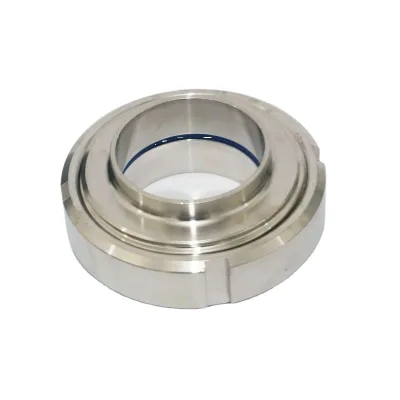
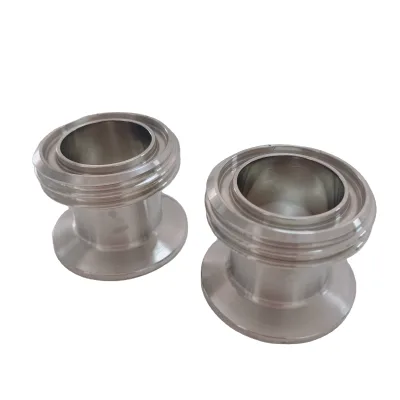


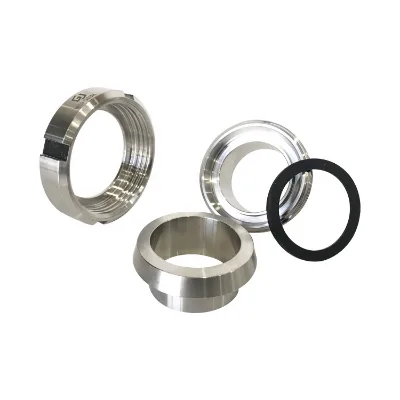
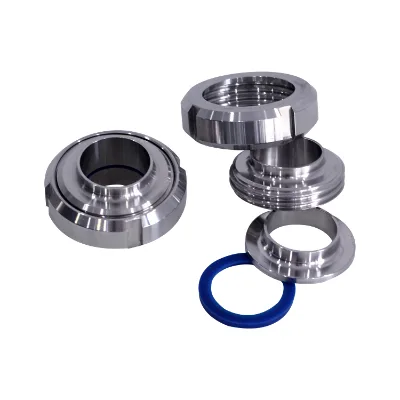

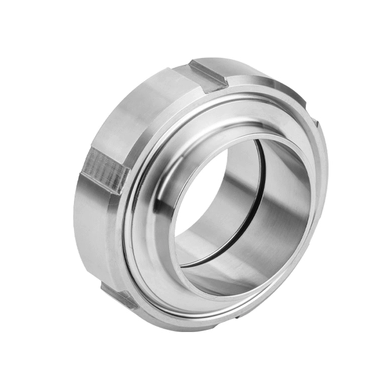


SMS Stainless Steel 316L Union Complete Set with SMS Male Sanitary Pipe Fittings
$10.00 - $15.00
MOQ: 10 Pieces


Comprehensive Sourcing Guide
Threaded Sanitary SMS Union Sourcing Guide
Threaded sanitary SMS unions are split-style pipe fittings used to join sanitary pipeline sections in food, beverage, dairy, and pharmaceutical process lines, allowing hand-tightened disassembly without cutting or specialized tools. For procurement teams, the threaded variant matters most where welded joints are impractical—equipment connections, instrument tie-ins, and lines that require frequent cleaning or component swaps. This guide distills what the current listing landscape reveals about these products and walks through the technical, compliance, and commercial checkpoints that separate reliable fittings from costly rework.
The listings observed for this category are concentrated in Wenzhou, Zhejiang, China, a recognized cluster for sanitary fittings, with models such as SS0153, QL46, and ql15 appearing alongside a generic "SMS Union" designation. Prices in the observed range span roughly USD 0.30 to 50, and minimum order quantities run from a single piece to 200, which signals a market that accommodates both sampling and mid-volume contract buying. Use that spread to structure a two-stage purchase: low-MOQ listings for qualification samples, then negotiated volume pricing once the fitting has passed your line trials.
Product Scope and Observed Listing Signals
The observed product scope covers sizes from 1/2" up to 8" in inch designations and DN15–DN150 in metric designations, with SMS-specific sizes listed at 25.4, 38.1, 50.8, 63.5, 76.2, and 101.6 mm. Material claims cluster on SS304 and SS316L, with some listings extending to SS304L and SS316, and construction described as forged and CNC-machined with a polished sanitary finish. Working environments cited include beer, dairy, beverage, pharmacy, and cosmetics media—so before committing to a listing, confirm that the media your line carries, including any cleaning chemicals, is compatible with the quoted stainless grade and seal material.
Connection flexibility is a second scope signal worth exploiting. Beyond the threaded unions that define this keyword, several observed listings state support for welded, clamp, and flanged ends, plus male-threaded variants, which lets a buyer standardize on one supplier family across mixed connection types in the same plant. Standards cited across listings include DIN, SMS, ISO, IDF, 3A, and RJT; treat these as claims to verify against drawings and certificates rather than assumptions, because "SMS" in a listing title does not automatically guarantee dimensional conformity to the SMS union pattern.
Technical Specifications to Verify
Dimensional conformity is the first verification priority. Threaded sanitary unions must mate with existing pipework, so confirm the thread form (for example, BSP or NPT as applicable to your plant standard), the sealing-face geometry, and the SMS size band against your pipeline schedule before ordering. The observed listings cite sizes from 1/2" to 8" and DN15–DN150, with one supplier noting larger sizes can be customized—use that custom capability deliberately, and request dimensioned drawings for any non-standard size rather than accepting a nominal description.
Pressure and temperature ratings follow. Observed listings state working pressures of 2–6 bar and working temperatures of –10 to 120 °C, with seals offered in silicone, EPDM, and FPM. Cross-check these figures against your actual process conditions, including CIP cycles that may exceed ambient temperature, and confirm which seal compound is supplied as standard and which are available as options. Surface finish is a third checkpoint: one listing specifies polish at Ra ≤ 0.8 µm, which is a meaningful sanitary benchmark—ask every candidate supplier to state their achievable Ra in writing and to confirm it is measured, not merely claimed.
Compliance and Safety Documentation
Because these fittings contact food, dairy, beverage, and pharmaceutical media, documentation is not optional overhead—it is the product. Ask each supplier for a material test certificate tied to the heat number of the actual batch, confirming the SS304/SS316L grade claimed in the listing. Where a listing cites standards such as DIN, SMS, ISO, IDF, 3A, or RJT, request evidence of which specific standard the union's dimensions and sealing face follow, and how conformity is demonstrated. A credible supplier will supply this without friction; hesitation here is itself a screening signal.
Also verify surface-finish and seal compliance for your regulated use. If your process is pharmaceutical, confirm the Ra ≤ 0.8 µm polish claim with a profilometer report and ask whether elastomer seals are available with the documentation your validation team requires. For food and beverage applications, confirm seal compounds are suitable for the stated media and temperature range, and request a declaration of materials for wetted parts. Keep a document set per shipment—certificates, dimensional reports, finish records—so traceability survives personnel changes on both sides.
Cost Drivers and Commercial Terms
Unit cost in this category is driven by size (the DN15–DN150 range spans a wide material-per-piece spread), stainless grade (SS316L commands a premium over SS304), surface polish requirements, seal type, and standard conformity. Customization is explicitly supported across the observed listings, but expect custom sizes, non-standard threads, or special finishes to move price and lead time away from catalog norms. Price the total assembly—union body, liner, nut, and seal—so a low fitting price is not offset by separately procured seals.
Commercial terms observed include MOQs from 1 piece to 200, carton and plywood-case packing, export-standard packaging options, and shipment by sea from Ningbo or Shanghai, by air, or by express. Use the low-MOQ listings for qualification, then negotiate volume tiers against your annual consumption. Clarify in writing what packing protects polished surfaces during transit—bubble wrap plus plywood cases as described in one listing is a reasonable benchmark—and confirm Incoterms, payment structure, and lead-time commitments per order size before the first production release.
Supplier Qualification and Quality Control
Qualify suppliers against process evidence rather than listing claims. The strongest observed signals are forges plus CNC machining in-house, controlled polishing to a stated Ra, and documented standards coverage (DIN, SMS, ISO, IDF, 3A, RJT across the listings). Ask candidates to describe their process flow from raw tube or forging to finished union, and to identify which stages are subcontracted. A Wenzhou-based supplier with in-house machining and finishing is easier to audit and to hold accountable than one assembling bought-in parts.
Then validate with physical and documentary sampling. Order samples at minimum MOQ, measure critical dimensions against the relevant standard drawing, check thread fit against your mating pipework, and inspect the sealing face for tool marks or finish defects. Run a pressure-holding or line test under your own conditions, since the 2–6 bar working-pressure claims are supplier-stated, not independently verified. Acceptance criteria you define at sampling—dimensional tolerances, Ra, seal performance—become the QC clause in your purchase contract.
Long-Term Procurement Checks
Once a supplier is approved, shift attention to repeatability. Confirm that production batches retain the same material heat traceability, polish quality, and dimensional conformity as your samples, and require batch certificates with every release rather than only the first order. Track defect and leak rates in your own lines as the true quality metric, and schedule periodic re-inspection of incoming fittings—suppliers change tooling, subcontractors, and seal sources over time, and certificate-only oversight will miss the drift.
Finally, manage supply continuity and cost evolution. Standardize sizes and standards across your plants where possible to consolidate volume and simplify spares; keep a qualified second source for critical sizes given the cluster's many interchangeable-looking listings; and store seal compounds as a managed spare with defined shelf life, since seals, not bodies, typically fail first in the –10 to 120 °C, 2–6 bar service envelope. Revisit pricing annually against the observed market range, and re-confirm customization lead times before standardizing on any non-standard dimension.
FAQs
What materials are used for threaded sanitary SMS unions?
Threaded sanitary SMS unions are typically manufactured from SS304 or SS316L stainless steel. These materials provide the necessary corrosion resistance for sanitary applications in the food, beverage, and pharmaceutical industries. Buyers should verify the specific grade required for their process media.
What size range is available for threaded sanitary SMS unions?
Available sizes generally range from DN15 to DN150, which corresponds to 1/2 inch to 6 inch nominal diameters. Some suppliers can customize larger sizes upon request. Ensure the selected size matches your existing piping infrastructure to maintain system integrity and flow rates.
Can threaded sanitary SMS unions be customized for specific applications?
Yes, customization is available for threaded sanitary SMS unions. Manufacturers can adjust dimensions, surface finish, or connection types to meet specific project requirements. Providing detailed technical drawings or specifications helps ensure the final product meets your operational needs.
What standards do threaded sanitary SMS unions comply with?
These unions often comply with standards such as DIN, SMS, ISO, and IDF. Some products may also meet 3A requirements for high-hygiene applications. Verifying standard compliance ensures the components are suitable for your industry's regulatory and quality requirements.
What is the typical MOQ for threaded sanitary SMS unions?
The minimum order quantity can vary by supplier, with some offering a low MOQ of 1 piece for sampling or small projects. Larger production orders may have higher MOQs. Clarifying the MOQ early helps in planning inventory and managing procurement costs effectively.
How are threaded sanitary SMS unions packaged for shipping?
Packaging usually includes cartons, paper boxes, or plywood cases to protect the components during transit. Export standard packing is common to ensure safety. Proper packaging prevents surface damage and maintains the polished finish of the stainless steel parts.
What is the working pressure for threaded sanitary SMS unions?
The working pressure is typically between 2 and 6 Bar, depending on the specific design and size. Always check the manufacturer's data sheet for the exact pressure rating of the selected model to ensure it matches your system's operational parameters.