Source Three Motor Hospital Bed for clinics, homes, and rehab
Find 30 Three Motor Hospital Bed options with electric adjustments for medical facilities, home care, and rehabilitation centers. Compare models featuring ABS rails, locking casters, and customizable mattresses from verified Chinese manufacturers.
Key considerations
Products List


Three Functions ICU Electric Medical Hospital Bed Basic Hospital Equipment Bed
$218.00 - $268.00
MOQ: 1 Pieces


Electric Typetwo Function Medical Hospital Bed with High Quality Motor
$221.00 - $295.00
MOQ: 10 Pieces


Motorized Medical Bed Electric Hospital Medical Care Patient Nursing Bed
$150.00 - $3000.00
MOQ: 1 Pieces




Comprehensive Sourcing Guide
Strategic Sourcing Guide for Three-Motor Hospital Beds
Understanding the Technical Architecture of Electric Hospital Beds
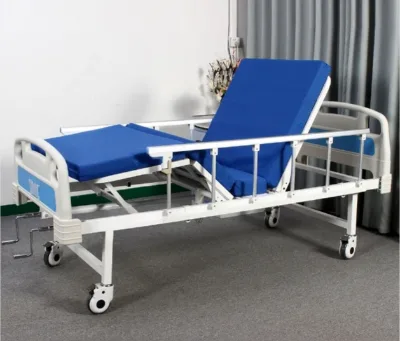
When sourcing a three-motor hospital bed, the primary objective is to identify equipment that offers precise, independent control over patient positioning to enhance clinical care and staff efficiency. The core distinction between a standard bed and a "three-function" or "three-motor" model lies in the actuation system. Based on observed product attributes, a three-function bed typically features independent motors for the head section, the knee section, and the height adjustment of the entire frame. This configuration allows for complex positioning, such as the Trendelenburg or reverse Trendelenburg positions, which are critical for respiratory management and patient comfort.
The physical dimensions of these beds vary significantly depending on the manufacturer's design philosophy. Observed specifications indicate standard lengths ranging from 2030mm to 2200mm, with widths consistently around 960mm to 1020mm. Height adjustments typically span a range from 400mm to 700mm, accommodating both seated and lying positions for patients and caregivers. It is essential to verify the specific standard dimensions for any unit under consideration, as the "universal" standard mentioned in some listings may not apply to all models. The frame construction often utilizes a combination of high-quality metal and ABS plastic components. The metal frame provides the necessary structural integrity to support a bed capacity of up to 250kg, while the ABS plastic is frequently used for side rails, headboards, and footboards due to its durability and ease of cleaning.
Compliance and Certification Verification Protocols
In the medical device sector, compliance is not merely a regulatory formality but a fundamental safety requirement. When evaluating potential suppliers for three-motor hospital beds, buyers must rigorously verify the certification status of the product. The market data indicates that reputable units often carry certifications such as FDA, ISO, SGS, and CE. Specifically, the ISO 13485 standard is a critical benchmark for medical device quality management systems, and listings confirming "Yes" for this attribute suggest a supplier adheres to strict quality controls.
Furthermore, the electrical components, particularly the motors, must meet specific safety standards. Evidence suggests that compliant motors are often CE and RoHS certified, ensuring they are free from hazardous substances and meet electromagnetic compatibility requirements. Buyers should also look for the HS Code 94029000, which classifies medical furniture, to ensure correct tariff classification and import procedures. It is important to note that while some listings mention "ISOCE" or "ISO13485," these should be treated as observed attributes that require independent verification against the supplier's official documentation. Do not assume that a product listed with these tags automatically satisfies all local regulatory requirements in the buyer's destination country; local health authorities may have additional mandates.
Cost Drivers and Pricing Structure Analysis
The pricing of three-motor hospital beds is influenced by a complex interplay of factors, including material quality, motor brand, customization options, and packaging standards. The observed price range in the market spans from $0.10 to $3,500, a variance that reflects the difference between basic manual frames and fully automated, high-specification electric beds. A price point near the lower end of this spectrum may indicate a manual bed or a unit with fewer features, whereas the upper end typically corresponds to beds with advanced motor systems, specialized mattresses, and premium finishing.
Material selection is a primary cost driver. Beds constructed with high-quality metal frames and medical-grade ABS plastic command higher prices than those using lower-grade alternatives. The type of motor is another significant factor; motors that are CE and RoHS certified often cost more due to the rigorous testing involved. Additionally, the "Customization" attribute is a key variable. Buyers seeking customized mattress types, specific packing solutions (such as plywood boxes versus standard cartons), or unique color schemes will incur additional costs. The MOQ (Minimum Order Quantity) also impacts the unit price, with observed ranges starting from 1 unit up to 100 units. Bulk orders often benefit from economies of scale, but the flexibility to order single units allows for smaller procurement cycles.
Typical Clinical Applications and Functional Requirements
Three-motor hospital beds are designed to meet the diverse needs of various clinical environments. The primary application is in general wards, intensive care units (ICUs), and recovery rooms where patient mobility is restricted. The ability to adjust the head, knee, and height sections independently facilitates critical nursing tasks such as wound care, dressing changes, and patient transfers. The "Using Ambient" attribute explicitly lists "Hospital," confirming the intended setting, but these beds are also suitable for long-term care facilities and home health care environments.
The functional capabilities extend beyond simple elevation. The three-function design allows for the creation of specific therapeutic positions. For instance, elevating the head section aids in breathing for patients with respiratory distress, while raising the knee section can reduce pressure on the lower back. The independent locking casters are a vital safety feature, ensuring the bed remains stationary during critical procedures. The bed capacity of 250kg is a crucial specification for bariatric care, ensuring the equipment can safely support heavier patients without compromising structural stability. Buyers should match the bed's functional capabilities to the specific patient demographics of their facility to ensure optimal utility.
Supplier Evaluation and Origin Considerations
When evaluating suppliers, the geographic origin of the product plays a significant role in logistics and quality perception. The provided data indicates that many three-motor hospital beds originate from China, with specific regions like Hebei noted as production hubs. While the "China" origin is a factual observation, buyers must look beyond geography to assess the supplier's reliability. Key evaluation criteria include the supplier's willingness to provide samples, as indicated by the "Sample Making: Highly Welcomed" attribute. Requesting samples allows buyers to physically inspect the build quality, motor smoothness, and finish of the ABS components.
The "Customization" and "Customizable" attributes suggest that suppliers are open to tailoring products to specific buyer needs. This flexibility is a strong indicator of a responsive supply chain. However, buyers should also scrutinize the "Services" offered, such as the provision of HD pictures and videos, which can serve as a preliminary quality check before physical inspection. The "Condition: New" attribute is a standard expectation, but it is worth confirming that the supplier does not sell refurbished units as new. Additionally, the "Waranty" period of 12 months is a common offering, but buyers should verify if this covers the motors and electronic components specifically, as these are the most likely points of failure.
Quality Control and Long-Term Procurement Strategy
Ensuring long-term reliability requires a robust quality control strategy. The "prod_packing" attributes, ranging from "Box" to "Carton/Plywood Boxes," highlight the importance of secure shipping. Proper packaging is essential to prevent damage to the delicate motor mechanisms and the ABS side rails during transit. Buyers should verify that the packaging standards align with international export requirements, especially if the "Export Paper Carton Box" is specified for international shipments.
For long-term procurement, the warranty terms are a critical consideration. The observed "12 Months" warranty is a baseline, but buyers should negotiate terms that cover the specific wear and tear of high-frequency use. The "Three-function" specification implies a complex mechanical system; therefore, the availability of spare parts and technical support is paramount. Suppliers that offer "HD Pictures, Videos" and "Sample Making" are likely to have better documentation and support structures. Buyers should also consider the "Standard" dimensions (e.g., 2070960(400-700)mm) to ensure compatibility with existing hospital infrastructure, such as bed rails and mattress sizes.
| Feature Category | Observed Attribute | Procurement Verification Action |
|---|---|---|
| Certification | FDA, ISO, SGS, CE, ISO13485 | Request valid certificates for specific batch numbers. |
| Material | Metal, ABS Plastic, Medical ABS | Inspect sample for material thickness and finish quality. |
| Functionality | Three-function, Electric, 250kg Capacity | Test motor response and load stability on sample unit. |
| Dimensions | 2030-2200mm (L), 960-1020mm (W) | Verify against facility room dimensions and doorways. |
| Warranty | 12 Months | Confirm coverage scope for motors and electronics. |
| Packaging | Carton, Plywood, Export Paper Box | Ensure packaging meets international shipping standards. |
Conclusion and Final Procurement Recommendations
Sourcing a three-motor hospital bed requires a balanced approach that weighs technical specifications against compliance and cost factors. The market offers a wide array of options, from basic models to highly customized units, with prices reflecting the complexity of the motor system and the quality of materials used. Buyers must prioritize verification of certifications like ISO 13485 and CE, as these are non-negotiable for medical safety. The ability to customize the bed, including mattress types and packaging, adds significant value but must be managed within the budget constraints.
Ultimately, the decision should be based on a comprehensive evaluation of the supplier's track record, the specific clinical needs of the facility, and the long-term maintenance requirements. By focusing on the verified attributes of the product—such as the 250kg capacity, the three-function motor system, and the 12-month warranty—buyers can make informed decisions that ensure patient safety and operational efficiency. The procurement process should always begin with a detailed request for information and a sample inspection to validate the claims made in the product listings. This disciplined approach minimizes risk and ensures that the acquired equipment meets the rigorous standards required in modern healthcare environments.
FAQs
What certifications do three motor hospital beds typically have?
These beds often carry FDA, ISO, SGS, and CE certifications. Some listings also mention ISO13485 compliance for medical device quality management, though buyers should verify specific batch documentation before purchase.
How much weight can a Three Motor Hospital Bed support?
The bed capacity is observed to be up to 250kg. This structural limit ensures safety for bariatric care, provided the frame is constructed from high-quality metal and ABS components as specified.
Can I customize the mattress type for this hospital bed?
Yes, the mattress is customizable according to specific buyer requirements. Suppliers also offer customization for packing solutions like plywood boxes and may provide samples for quality inspection before bulk orders.
What is the standard warranty period for these beds?
The observed warranty period is 12 months for the equipment. Buyers should confirm if this coverage specifically includes the motors and electronic components, as these are critical functional parts.
Which dimensions are standard for a three function electric bed?
Standard dimensions vary, with lengths ranging from 2030mm to 2200mm and widths around 960mm. Heights typically adjust between 400mm and 700mm to accommodate different patient and caregiver needs.
Where are these hospital beds manufactured?
The products originate from China, with specific production hubs noted in Hebei. Buyers should consider this origin when planning logistics and verifying that local regulatory requirements are met for import.
What is the minimum order quantity for these beds?
The minimum order quantity can be as low as 1 unit. However, some suppliers may have different thresholds, and bulk orders often benefit from economies of scale while maintaining flexibility for single units.