Source Three-Phase High Voltage Power Capacitors for Air Conditioner, Automobile, Power
Find and compare 30 listings of Three-Phase High Voltage Power Capacitors suitable for air conditioners, automobiles, and general power applications. Buyers can evaluate specifications like voltage, material, and packaging to select the right components for high voltage and AC motor systems.
Key considerations
Products List


High-Efficiency 30kvar Three Phase Capacitor for Power Factor Correction2.
$11.00 - $46.00
MOQ: 1 Pieces

High-Efficiency Low Voltage Three Phase Capacitor Solutions for Industrial Use
$11.00 - $46.00
MOQ: 1 Pieces


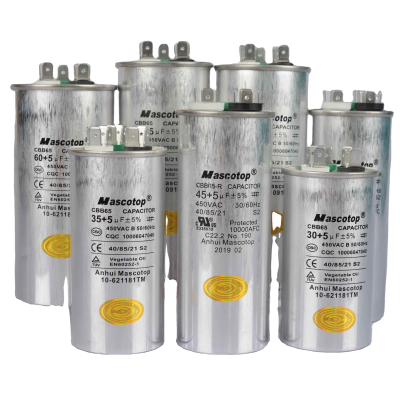

Power Capacitor Bank Capacitor 3-Phase Capacitors for Power Factors Units
$25.00 - $26.00
MOQ: 10 Pieces


High Voltage DC Link Capacitor Energy Storage System Capacitor 150UF-1500UF
$65.00 - $100.00
MOQ: 50 Pieces


Comprehensive Sourcing Guide
Strategic Sourcing Guide for Three-Phase High Voltage Power Capacitors
Understanding Technical Specifications and Construction
When sourcing three-phase high voltage power capacitors, buyers must first distinguish between the specific construction types available in the current market. The supply chain presents a diverse array of fixed capacitors, ranging from surface mount configurations to large cylindrical units designed for industrial power applications. A critical observation in the current product landscape is the variation in manufacturing materials. While some units utilize polypropylene as the primary dielectric material, others are described as polyester film capacitors or aluminum electrolytic capacitors. This distinction is paramount because polypropylene capacitors, often designated with model codes like MKP, are generally preferred for high-frequency bypass, snubber applications, and DC link configurations due to their self-healing properties and low loss characteristics. Conversely, aluminum electrolytic types are frequently cited for filtering and low-frequency coupling tasks.
The structural integrity of these components varies significantly. Buyers will encounter fixed capacitors with surface mount packaging, which are typically smaller and intended for electronic circuit integration, alongside fixed board structures designed for heavy-duty power systems. For high-voltage applications, the shell material is often a steel plate, providing necessary mechanical strength and protection. The insulation class and operating voltage ranges are equally critical; observed specifications indicate operating voltages spanning from 3000V to 10,000V DC. In three-phase AC systems, rated voltages such as 380V ±20% are common for motor and general power applications. The frequency of operation is typically standardized at 50/60Hz, aligning with global utility standards, though specific high-frequency bypass models may operate differently.
The intended application dictates the required model specification. The market lists several distinct model identifiers, including "DC Link," "Snubber," and specific series like "BGMJ0.45-30-3." These models often correspond to specific reactive power ratings, with standards observed ranging from 100kvar to 600kvar, and up to 700kvar for larger industrial units. The "DC Link" designation specifically points to capacitors used in power electronics for smoothing voltage ripples, while "Snubber" models are engineered to suppress voltage transients. Understanding these model codes is essential for matching the component to the specific circuit topology, whether it involves air conditioning compressors, automobile power systems, or general industrial motor drives.
Compliance, Certification, and Safety Standards
Navigating the compliance landscape for high voltage capacitors requires rigorous verification of certifications and adherence to international standards. The presence of certifications such as CCC (China Compulsory Certification) and ISO9001 is a strong indicator of a manufacturer's commitment to quality management systems. However, buyers must verify that these certifications are current and applicable to the specific product line being procured, as the "Form: All- packaged Type" note suggests variations in packaging that might affect certification scope.
Safety standards are particularly critical given the high voltage nature of these components. The operating voltage range of 3000V to 10,000V DC places these capacitors in a category where dielectric breakdown and thermal runaway are significant risks. Therefore, the insulation class and protection grades must be meticulously checked. Some units are described with shell protection grades like "IPSize:1 Uint," which implies a specific ingress protection rating, though the exact numerical IP code requires confirmation from the supplier's datasheet. For applications involving oil, such as in certain high-voltage transformers or specific industrial environments, the oil type must be verified as Non-PCB (Polychlorinated Biphenyls) to meet environmental and safety regulations.
Standardization is another pillar of compliance. The observed standards include specific reactive power ratings like 100kvar, 600kvar, and 100-700kvar ranges. These are not merely descriptive but often represent adherence to specific industry standards for power factor correction and harmonic filtering. Buyers should ensure that the product standard explicitly matches the required application, such as "DC Link" for power electronics or "Snubber" for transient suppression. Furthermore, the origin of the product, often listed as Guangdong, China, or Zhejiang, China, should be cross-referenced with the manufacturer's ability to meet export standards and local regulations in the buyer's region. The "Original: ABB China" reference in some listings suggests that some products may be OEM or rebranded versions of established global technologies, necessitating a check on the actual manufacturing entity to ensure quality consistency.
Cost Drivers and Pricing Dynamics
The pricing structure for three-phase high voltage power capacitors is influenced by a complex interplay of technical specifications, material costs, and order volume. The observed price range in the market spans from $0.01 to $1000 USD, a vast disparity that reflects the difference between small surface mount components and large industrial capacitor banks. For high-voltage, high-kvar units, the cost is driven primarily by the dielectric material, the volume of the capacitor, and the complexity of the housing. Polypropylene film, while offering superior performance, is a cost factor that must be weighed against polyester alternatives.
Minimum Order Quantity (MOQ) is a significant driver of unit cost. The market data indicates an MOQ range from 1 to 5000 units. Small orders, often in the range of 1 to 100 units, typically carry a higher per-unit cost due to the fixed setup and handling expenses. Conversely, bulk orders approaching the 5000-unit threshold can leverage economies of scale, significantly reducing the price per unit. Buyers must balance their inventory needs against cash flow constraints, as larger orders may require a higher upfront capital outlay.
Additional cost factors include customization and packaging. The availability of customization allows buyers to tailor specifications, such as capacity, voltage ratings, or terminal configurations, but this often incurs a premium. Packaging types, ranging from standard cartons to plywood cartons for heavy industrial units, also add to the overall cost. The "Average Loss" specification, noted as less than 0.2W/kvar for some units, is a performance metric that can influence long-term operational costs. While a capacitor with lower losses may have a higher initial purchase price, the energy savings over the lifespan of the equipment can result in a lower total cost of ownership. Buyers should evaluate the trade-off between initial capital expenditure and long-term efficiency gains when analyzing the total cost of the procurement.
Typical Applications and Usage Scenarios
Three-phase high voltage power capacitors serve a multitude of critical functions across various industries. The primary application areas identified in the market include air conditioning systems, automobile electronics, general power distribution, and high-voltage transmission networks. In the air conditioning sector, these capacitors are essential for motor starting and running, ensuring efficient compressor operation. Similarly, in the automobile industry, they play a vital role in power management systems, particularly in electric and hybrid vehicles where DC link capacitors are used to stabilize voltage in the powertrain.
Beyond these specific sectors, the general power and AC motor applications are the most common use cases. In industrial settings, capacitors are employed for power factor correction, reducing reactive power demand and improving the efficiency of the electrical grid. The "Filter" and "Low Frequency Coupling" usage types indicate their role in harmonic filtering, which is crucial for protecting sensitive electronic equipment from power quality issues. The "High Frequency Bypass" and "High Frequency Coupling" applications suggest their use in electronic circuits where rapid charge and discharge cycles are required.
The versatility of these components is further highlighted by their application in textile manufacturing and oil-related industries. In textile mills, capacitors help maintain stable power for high-speed machinery, while in oil applications, the non-PCB oil-filled variants provide necessary insulation and cooling in harsh environments. The "Smart Capacitors" mentioned in the product listings suggest an emerging trend towards intelligent power management, where capacitors may include monitoring capabilities for real-time performance tracking. Whether used in lighting systems, general purpose motors, or high-voltage transmission lines, the selection of the correct capacitor type—whether DC link, snubber, or cylindrical—depends heavily on the specific electrical requirements of the application.
Supplier Evaluation and Origin Verification
Evaluating suppliers for high voltage power capacitors requires a deep dive into their geographical origins and manufacturing capabilities. The majority of the observed products originate from China, specifically from regions like Guangdong, Shenzhen, and Zhejiang. These regions are known for their robust manufacturing ecosystems and specialized component production. However, the presence of "Original: ABB China" in some listings indicates that some products may be manufactured under license or as part of a joint venture with a global brand. Buyers should verify whether the supplier is the original manufacturer or a distributor to ensure direct access to technical support and warranty services.
The manufacturing material and structure are key indicators of supplier capability. Suppliers offering polypropylene capacitors with surface mount or fixed board structures demonstrate a focus on precision electronics, while those producing large cylindrical units with steel plate shells and non-PCB oil fillings show expertise in heavy industrial power equipment. The "Customization" attribute available across many listings suggests that suppliers are flexible and capable of adapting products to specific client needs. Buyers should assess the supplier's ability to handle custom orders, including the capacity to adjust voltage ratings, capacitance values, and packaging types.
Quality control is another critical aspect of supplier evaluation. The presence of ISO9001 certification is a baseline requirement, but buyers should also inquire about the supplier's internal testing protocols. Given the high voltage nature of the products, the ability to perform rigorous dielectric strength tests and thermal cycling tests is essential. The "Average Loss" specification of less than 0.2W/kvar for some units serves as a benchmark for quality; suppliers should be able to provide test data or certificates confirming that their products meet or exceed these loss standards. Additionally, the packaging type, whether standard carton or plywood carton, reflects the supplier's attention to logistics and product protection during transit.
Quality Control and Long-Term Procurement Considerations
Ensuring the long-term reliability of three-phase high voltage power capacitors requires a robust quality control strategy. The observed specifications, such as the voltage range of 3000-10000V DC and the frequency of 50/60Hz, must be strictly adhered to during the manufacturing process. Buyers should demand comprehensive test reports that verify the dielectric strength, insulation resistance, and capacitance tolerance of the delivered units. The "Insulation Class: Other" designation found in some listings is a red flag that requires clarification; buyers must ensure that the insulation class is appropriate for the intended operating environment and voltage stress.
Long-term procurement considerations extend beyond the initial purchase to include maintenance, replacement, and lifecycle management. The "Average Loss" metric is a key indicator of efficiency; capacitors with higher losses will generate more heat, leading to premature failure and increased energy costs. Selecting products with verified low-loss characteristics, such as those rated at <0.2W/kvar, can significantly reduce long-term operational expenses. Furthermore, the "Capacity: Customized" attribute offers flexibility for future upgrades or system expansions, allowing buyers to adapt their capacitor banks as their power requirements evolve.
The packaging and protection grade also play a role in long-term reliability. Units with "Shell Protection Grade: IPSize:1 Uint" or similar ratings must be installed in environments that match their protection level to prevent moisture ingress and corrosion. For outdoor or harsh industrial applications, additional protective measures may be necessary. The "Plywood Carton" packaging for heavy units suggests a focus on robust shipping, but buyers should verify that the internal packaging provides adequate cushioning and moisture protection to prevent damage during transit.
Finally, the standardization of the product, such as the "100-700kvar" or "600kvar" standards, ensures compatibility with existing infrastructure. Buyers should prioritize suppliers who can provide products that adhere to these established standards to avoid integration issues. By focusing on technical specifications, verifying certifications, and evaluating supplier capabilities, buyers can secure a reliable supply of high voltage power capacitors that meet the demanding requirements of modern industrial and commercial applications.
FAQs
What materials are used for Three-Phase High Voltage Power Capacitors?
Manufacturers primarily use polypropylene film for these capacitors, though some listings describe polyester film or aluminum electrolytic types. Polypropylene is preferred for high-frequency bypass and DC link applications due to its self-healing properties and low loss characteristics.
Which certifications should buyers verify for high voltage power capacitors?
Buyers should look for CCC and ISO9001 certifications as strong indicators of quality management. These certifications ensure the manufacturer adheres to safety standards, particularly important for units operating at voltages ranging from 3000V to 10000V DC.
Can suppliers customize the capacity and voltage ratings for these capacitors?
Yes, customization is available for capacity, voltage ratings, and terminal configurations. Buyers can request specific model codes like DC Link or Snubber to match their circuit topology, though custom orders may incur a premium and require longer lead times.
What is the typical price range for Three-Phase High Voltage Power Capacitors?
The market price ranges from 0.01 to 1000 USD, depending on the unit size and application. Small surface mount components cost less, while large industrial units with high kvar ratings and steel plate shells command higher prices based on material and volume.
How does the Minimum Order Quantity affect the unit cost of capacitors?
MOQs range from 1 to 5000 units, significantly impacting the per-unit price. Small orders of 1 to 100 units carry higher costs due to setup fees, whereas bulk orders near 5000 units leverage economies of scale to reduce the final price.
Where are the majority of these capacitors manufactured and shipped from?
Most products originate from Guangdong, Shenzhen, and Zhejiang in China. Some listings reference ABB China, suggesting OEM or licensed manufacturing, so buyers must verify the actual manufacturing entity to ensure quality consistency and technical support availability.
What are the common applications for Three-Phase High Voltage Power Capacitors?
These capacitors are used in air conditioning, automobiles, power distribution, and high voltage transmission. Specific models serve as DC Link capacitors for power electronics or Snubber capacitors for transient suppression in motor drives and industrial power factor correction systems.