Source Tin Plated Grounding Busbar for electrical panels, power systems, and industrial machinery
Find 30 listings for Tin Plated Grounding Busbar with customizable dimensions and certifications like CE and RoHS. Buyers can compare specifications including material, plating, and packaging options from verified Chinese manufacturers offering OEM services.
Key considerations
Products List


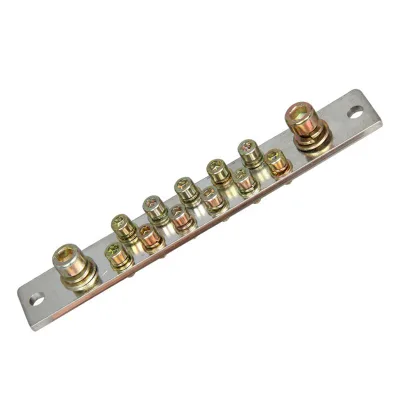
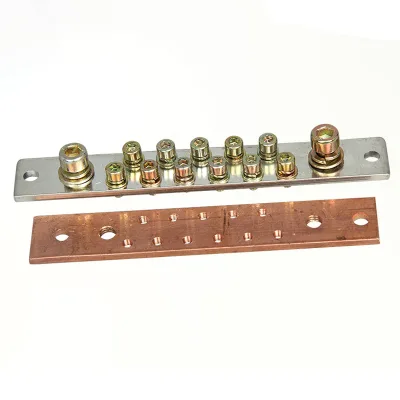


Comprehensive Sourcing Guide
Strategic Sourcing Guide for Tin Plated Grounding Busbars
Understanding Technical Specifications and Material Composition
When sourcing tin plated grounding busbars, the primary objective is to secure a component that ensures reliable electrical conductivity while maintaining structural integrity under operational stress. The core material for these components is typically high-purity copper, specifically designated as T2 Copper in the provided data. This grade of copper is essential for grounding applications due to its superior electrical conductivity and ductility. The physical form of the busbar often varies, with specific model identifiers such as "KS-417" or "LZ000043" appearing in market listings, indicating that buyers must verify the exact model number against their engineering drawings rather than relying on generic descriptions.
The plating process is a critical technical differentiator. The surface treatment for these busbars is explicitly noted as Tin Plated, though other finishes like Nickel Plating or Bare Copper are also observed in the broader market. Tin plating is preferred for grounding applications because it offers excellent resistance to oxidation and corrosion, ensuring a low-resistance connection over time without the need for frequent maintenance. The surface finish is described as "Smooth," which is vital for ensuring consistent contact pressure in bolted or clamped connections. Buyers should verify that the plating thickness is sufficient to protect the underlying copper, as the data indicates that surface treatments can range from bare to various plating options depending on the specific product configuration.
Dimensions and current capacity are rarely standardized across all listings. The provided facts indicate that both "Size" and "Current" are customizable, often adhering to "as drawing" or "Customized" standards. This flexibility allows manufacturers to produce busbars that fit specific enclosure constraints or handle unique load requirements. However, this customization necessitates rigorous communication between the buyer and the supplier. The industry standard for these components often references GB (Guobiao) standards, but buyers must confirm if the specific supplier adheres to international standards like ASTM or JIS if the project requires global compliance. The insulation requirements are also variable, with options including PE or PVC heat shrink tubes, which must be selected based on the voltage class and environmental conditions of the installation site.
Compliance and Certification Verification Protocols
Navigating the compliance landscape for tin plated grounding busbars requires a meticulous verification of certifications. The market data presents a wide array of certifications, ranging from ISOCE and RoHS to more comprehensive lists including ISOTUV, JIS, GB, REACH, UL, and ASTM. It is crucial for buyers to understand that not every listed product satisfies every certification simultaneously. The presence of "ISOCE" and "RoHS" in the data suggests a baseline compliance with international quality management and hazardous substance restrictions. However, for projects requiring specific safety approvals, such as UL certification for North American markets or CE marking for European compliance, buyers must explicitly request proof of these specific certifications for the exact model being purchased.
The certification status should be treated as an observation of the supplier's capabilities rather than a universal guarantee for all inventory. For instance, one entry lists "ISOTUV,JIS,GB,REACH,CE,RoHS,ASTM," while another lists only "ISOCE,RoHS." This variance indicates that certification coverage is often product-specific or batch-specific. Buyers should not assume that a supplier's general ISO certification extends to every SKU they offer. Instead, the procurement strategy must involve requesting a Certificate of Conformity (CoC) or a Test Report for the specific Tin Plated Grounding Busbar model. This document should verify that the material composition (T2 Copper), the plating process (Tin Plated), and the final product meet the claimed standards.
Furthermore, the "Customized" standard noted in the data implies that the product may be manufactured to meet specific project requirements that deviate from standard industry norms. In such cases, the supplier's ability to validate the product against the buyer's specific technical drawings becomes the primary compliance metric. Buyers should verify if the supplier holds the necessary accreditations to perform the required testing, such as flammability tests (UL 94V0 is mentioned in the data for insulation materials) or electrical performance tests. Relying solely on a supplier's marketing claims without documented evidence of compliance can lead to significant risks during regulatory audits or safety inspections.
Cost Drivers and Pricing Dynamics
The pricing structure for tin plated grounding busbars is influenced by a complex interplay of material costs, customization levels, and order volume. The observed price range in the market spans from 0.1 to 1000 USD, a wide spectrum that reflects the diversity of product sizes, current ratings, and plating thicknesses. A busbar with a minimal cross-section and standard plating will naturally fall at the lower end of this range, while a heavy-duty, custom-dimensioned busbar with thick tin plating and specialized insulation will command a premium price. The material cost of T2 Copper is a significant driver, as copper prices fluctuate in the global commodities market. Buyers should be aware that the quoted price may be sensitive to these fluctuations, and contracts should include clauses regarding material price adjustments if the order lead time is extended.
Order Volume is another critical cost driver. The observed Minimum Order Quantity (MOQ) ranges from 1 to 2000 units. For buyers requiring small quantities for prototyping or maintenance, an MOQ of 1 is advantageous, though the unit price will likely be higher due to the setup costs associated with custom tooling and plating. Conversely, large-scale procurement can leverage economies of scale, potentially reducing the unit cost significantly. The data indicates that "Free samples" are available, which is a valuable tool for buyers to evaluate quality before committing to a large order. However, buyers should clarify if the "free" sample covers only the product or if shipping costs are included, as this can impact the total cost of evaluation.
Customization is a double-edged sword regarding cost. While the ability to customize dimensions, current ratings, and surface treatments allows for precise engineering solutions, it often incurs additional tooling fees and longer lead times. The use of "Multistep Progressive Dies" suggests a manufacturing process that is efficient for high volumes but requires significant upfront investment for mold creation. For low-volume orders, this setup cost may be prohibitive, leading to higher per-unit prices. Buyers must balance the need for specific technical specifications against the budget constraints, potentially opting for standard sizes where possible to minimize costs. Additionally, packaging requirements, such as "Carton," "Wooden Case," or "Pallet," can influence the final landed cost, especially for international shipments where freight charges are calculated based on volume and weight.
Typical Applications and Industry Usage
Tin plated grounding busbars are integral components in a variety of electrical and industrial systems where reliable grounding is paramount. The primary industry application identified is "General Stamping," which encompasses a broad range of manufacturing sectors. However, the specific usage is often categorized under "Line Fittings," indicating their role in power distribution networks, substations, and electrical panels. In these environments, the busbar serves as the central conductor for grounding connections, ensuring that fault currents are safely diverted to the earth, thereby protecting equipment and personnel.
The versatility of these components allows them to be used in diverse settings. The "Cold Stamping" process mentioned in the data suggests that these busbars are formed at room temperature, which is suitable for creating complex shapes and maintaining high dimensional accuracy. This makes them ideal for use in compact electrical enclosures where space is limited but grounding integrity is critical. The availability of "OEM" and "ODM" services indicates that these busbars are frequently used by original equipment manufacturers who integrate them into larger assemblies, such as switchgear, control panels, and transformer stations.
Furthermore, the specific mention of "Ball Eye Qn Type" and "copper bus bar" models highlights their application in specific connection scenarios. The ball eye design likely facilitates secure mechanical connections using bolts or pins, which is essential for maintaining a low-resistance path in high-vibration environments. The "Welding" technique noted in the data suggests that these busbars may also be used in applications where permanent, high-strength connections are required, such as in the fabrication of custom grounding grids. The insulation options, including PE and PVC heat shrink tubes, further expand their utility to applications where electrical isolation from surrounding components is necessary to prevent short circuits. Buyers should align their application requirements with the specific capabilities of the busbar, ensuring that the current rating, insulation type, and mechanical strength match the demands of the intended installation.
Supplier Evaluation and Manufacturing Capabilities
Evaluating a supplier for tin plated grounding busbars requires a deep dive into their manufacturing capabilities and service offerings. The data highlights that suppliers offer "OEM" and "ODM" services, indicating a capacity to produce custom designs based on client specifications. This is a strong indicator of a supplier's flexibility and technical competence. Buyers should assess the supplier's ability to handle "Multistep Progressive Dies," as this technology is essential for producing high-volume, precision busbars efficiently. The presence of "Free samples" is another positive signal, suggesting that the supplier is confident in their product quality and willing to engage in a trial phase.
The origin of the products is consistently listed as "China," which is a major manufacturing hub for electrical components. While this offers competitive pricing, buyers must ensure that the supplier maintains strict quality control standards to meet international expectations. The "Warranty" period of 12 months is a standard offering, but buyers should verify the terms of this warranty, including what constitutes a defect and the process for claims. Additionally, the "Trade Terms" listed as Fob, CFR, and CIF provide flexibility in logistics, allowing buyers to choose the shipping method that best suits their supply chain strategy.
When evaluating suppliers, buyers should also consider their production capacity and lead times. Although specific lead times are not provided in the data, the complexity of the "Forming Process" and the need for custom tooling suggest that lead times may vary significantly based on order volume and customization. A supplier with a robust inventory of standard models may offer faster delivery, while a supplier focused on custom ODM projects may require longer lead times. Buyers should request a detailed production schedule and confirm the supplier's ability to meet project deadlines. Finally, the "Brand" name "Lz" appears in the data, but buyers should not rely on brand recognition alone; instead, they should focus on the supplier's track record, customer reviews, and technical documentation to ensure reliability.
Quality Control and Long-Term Procurement Considerations
Ensuring the long-term reliability of tin plated grounding busbars requires a robust quality control (QC) framework. The data mentions specific attributes such as "Flammability: UL 94V0" for insulation materials, which is a critical safety standard. Buyers must verify that the QC process includes testing for flammability, electrical conductivity, and mechanical strength. The "Surface Treatment" of tin plating must be inspected for uniformity and adhesion to prevent peeling or corrosion over time. Regular sampling and testing during the production process can help identify defects early, ensuring that only products meeting the specified standards are shipped.
For long-term procurement, buyers should consider the sustainability and lifecycle of the busbars. The "Customized" nature of the product means that spare parts may need to be ordered years after the initial installation. Buyers should ensure that the supplier maintains the capability to produce replacement busbars with the same specifications, even if the original design is no longer in active production. The "Standard Package" and "Exportation Standard Package" mentioned in the data suggest that the supplier is experienced in protecting products during transit, which is crucial for maintaining quality upon arrival.
Additionally, buyers should establish a clear communication channel with the supplier for ongoing support. The availability of "According to Customer Requirements" for printing and customization suggests that the supplier is responsive to changing needs. However, buyers should formalize these requirements in a contract to avoid misunderstandings. Regular audits of the supplier's facilities and quality management systems can also help maintain high standards over time. By focusing on these long-term considerations, buyers can build a resilient supply chain that ensures the continued performance and safety of their electrical grounding systems.
FAQs
What certifications are available for tin plated grounding busbars?
Available certifications include ISOCE, RoHS, CE, and UL depending on the specific product model. Some listings also show compliance with JIS, GB, REACH, and ASTM standards. Buyers must verify the exact certificate for the requested model rather than assuming all products hold every listed certification.
Can I get free samples of tin plated grounding busbars?
Free samples are available for tin plated grounding busbars to allow quality evaluation before bulk orders. While the product itself is offered without charge, shipping costs may apply depending on the supplier. This option helps verify material grade and plating quality before committing to larger quantities.
What material is used for tin plated grounding busbars?
The core material is typically T2 Copper, which offers high electrical conductivity and ductility. Some listings also mention brass or copper as base materials. The surface is treated with tin plating to ensure corrosion resistance and maintain a smooth finish for reliable electrical connections.
How are tin plated grounding busbars customized for specific needs?
Customization is available for size, current rating, and surface treatment according to customer requirements. Manufacturers use multistep progressive dies to create specific shapes like ball eye types. Buyers can request dimensions and standards such as GB or customized drawings to fit their specific engineering designs.
What is the warranty period for tin plated grounding busbars?
The standard warranty period provided for these products is 12 months. This coverage applies to manufacturing defects and material integrity under normal usage conditions. Buyers should confirm specific warranty terms with the supplier to understand the scope of protection for their specific order.
Which packaging options are used for tin plated grounding busbars?
Packaging options include carton, wooden case, pallet, foam pack, or exportation standard packages. The specific choice depends on order volume and shipping requirements. Custom packaging can be arranged as required to ensure safe transport and protection of the copper busbars during international delivery.