Source Tin Coated PCD Router Bit for Woodworking, Engraving, Milling
Compare 30 Tin Coated PCD Router Bit options from verified Chinese suppliers. These carbide tools feature PCD blanks and are suitable for CNC machines, solid wood, and particle board processing with clean hole cutting capabilities; compare the available evidence and request quotations based on your requirements.
Key considerations
Products List
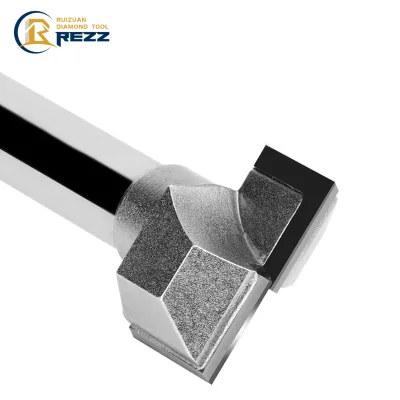


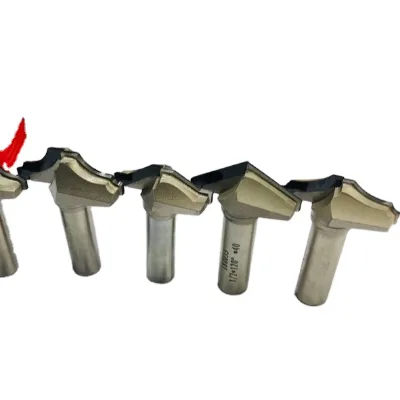



High-End PCD Router Bits for Accurate Edge Banding & Smooth Surface Finishing
$100.00 - $300.00
MOQ: 2 pieces


Comprehensive Sourcing Guide
Tin Coated PCD Router Bit Sourcing Guide
Procuring tin-coated PCD router bits requires a nuanced understanding of material science and surface engineering, as this specific combination is not a standard industry offering. The core keyword suggests a potential confusion between tin plating, which is rare for high-speed woodworking cutters, and the more common PCD (Polycrystalline Diamond Compact) or TCT (Tungsten Carbide Tipped) variants. Buyers must first clarify whether the "tin" reference implies a specific anti-corrosion coating, a misinterpretation of the carbide substrate, or a niche application for non-ferrous metals. Standard PCD bits typically feature a diamond layer bonded to a carbide body, often with a protective coating like TiN (Titanium Nitride) or DLC (Diamond-Like Carbon) to reduce friction and heat.
The sourcing strategy must prioritize verifying the actual coating material through supplier technical data sheets rather than relying on product titles alone. Mislabeling is common in global marketplaces, where terms like "tin" might be used erroneously for "titanium" or "tungsten." Buyers should request high-resolution microscopy images or material certificates to confirm the presence of a true tin layer, if that is the specific requirement. If the goal is general woodworking efficiency, standard PCD or TCT bits with appropriate coatings are likely the correct choice, offering superior wear resistance and cutting cleanliness compared to uncoated carbide tools.
Product Scope and Observed Listing Signals
The observed market signals indicate a diverse range of router bits, primarily focusing on PCD and TCT technologies rather than tin-coated variants. Listings frequently highlight attributes such as "Cutting Clean Holes," "Engraving," and suitability for solid wood, hardwood, particle board, and density board. The brand names observed include RZ and Kws, with origins predominantly in Henan and Chengdu, China. These signals suggest that the market is saturated with high-performance woodworking tools designed for CNC machines, where precision and durability are paramount. Buyers should interpret "tin coated" as a potential outlier or error, focusing instead on the prevalent PCD and TCT specifications that dominate the current inventory.
Specific model numbers and dimensions observed include straight router bits with configurations like 1/2H82T and 1/2H102T, indicating a standard shank diameter of 12.7mm (1/2 inch). The product scope extends to various lengths and tooth counts, catering to different machining depths and chip evacuation needs. Some listings mention imported PCD blanks from DI or E6, signaling a tiered quality structure where the raw diamond material origin impacts performance. Buyers should cross-reference these observed specifications with their machine capabilities, ensuring compatibility with shank sizes and maximum rotational speeds, as the listed data points to a broad spectrum of industrial-grade woodworking tools.
Technical Specifications to Verify
Verifying the technical specifications is critical to ensuring the router bit meets the operational demands of the CNC machine. Key parameters to confirm include the shank diameter, cutting diameter, and overall length, as mismatches can lead to tool breakage or poor surface finish. The observed data highlights straight router bits with specific tooth geometries, such as 2T (two teeth), which are ideal for rapid material removal in softwoods or plastics. Buyers must also verify the blade material, distinguishing between solid carbide, cemented carbide, and PCD variants, as each offers different wear characteristics and cost efficiencies. The coating type, whether PCD, nitride, or uncoated, significantly influences heat resistance and friction levels during high-speed operation.
Additionally, the structural integrity of the bit, including the welding tooth process and tooth form, must be assessed for consistency and strength. The observed listings mention "Welding Tooth" structures and "Straight Tooth" forms, which are standard for general-purpose milling. Buyers should request detailed dimensional drawings to verify tolerances, especially for specialized applications requiring precise hole dimensions. The single package size and gross weight, observed at 10x10x8 cm and 0.500 kg respectively, provide logistical insights but do not replace the need for technical validation. Ensuring that the PCD blank quality and coating adhesion meet industry standards is essential for maintaining tool life and machining accuracy.
Compliance and Safety Documentation
Compliance and safety documentation form the backbone of a responsible procurement process, ensuring that the router bits meet international safety and quality standards. While specific certification statuses for tin-coated bits are not explicitly detailed in the observed listings, general PCD and TCT tools often adhere to SGS standards, as noted in some product descriptions. Buyers should request certificates of conformity that verify the material composition, ensuring that no hazardous substances are present in the coating or substrate. This is particularly important for tools used in environments with strict environmental regulations or where worker safety is a priority.
Safety data sheets (SDS) should be obtained to understand the handling, storage, and disposal requirements for the router bits. These documents provide critical information on potential hazards, such as dust generation during machining or the stability of the coating under high temperatures. Buyers must also verify that the tools comply with relevant machinery directives, such as CE marking for European markets, which ensures that the product meets essential health and safety requirements. Although the observed listings mention SGS standards, buyers should confirm the scope of these certifications to ensure they cover the specific product attributes and manufacturing processes involved.
Cost Drivers and Commercial Terms
Cost drivers for PCD and TCT router bits include the quality of the raw materials, the complexity of the coating process, and the precision of the manufacturing tolerances. The observed listings indicate a wide price range, reflecting the variability in brand reputation, material origin, and performance capabilities. Imported PCD blanks from reputable sources like DI or E6 typically command a premium due to their superior hardness and wear resistance. Buyers should analyze the cost per cut rather than just the unit price, as higher-quality bits often offer longer tool life and better surface finishes, reducing overall machining costs.
Commercial terms such as MOQ (Minimum Order Quantity) and shipping methods also impact the total cost of ownership. The observed MOQ of 10 pieces suggests flexibility for small to medium-sized orders, while shipping options like DHL, FedEx, UPS, and TNT indicate global availability. Buyers should negotiate bulk discounts for larger volumes and consider the lead times associated with customized orders, as OEM and ODM support is available. Packaging options, ranging from plastic tubes to carton boxes, should be evaluated for their protective qualities to prevent damage during transit, which can otherwise lead to additional costs and production delays.
Supplier Qualification and Quality Control
Supplier qualification is essential to ensure that the router bits meet the required quality standards and delivery expectations. Buyers should assess the supplier's manufacturing capabilities, including their experience with PCD and TCT technologies, and their ability to provide customized solutions. The observed listings mention OEM and ODM support, indicating that suppliers are capable of tailoring products to specific customer requirements. Buyers should request samples to evaluate the cutting performance, dimensional accuracy, and coating durability before committing to larger orders.
Quality control processes should be transparent and rigorous, with suppliers providing inspection reports and test results for each batch. Buyers should verify the supplier's adherence to international quality management standards, such as ISO 9001, to ensure consistent product quality. Communication channels should be established to address any technical queries or issues promptly, as the complexity of PCD tools requires specialized knowledge. Building a long-term relationship with a reliable supplier can lead to better pricing, priority support, and access to new product innovations, enhancing the overall procurement experience.
Long-Term Procurement Checks
Long-term procurement checks involve continuous monitoring of supplier performance, product quality, and market trends to ensure sustained value. Buyers should establish key performance indicators (KPIs) such as defect rates, delivery times, and customer satisfaction scores to evaluate supplier reliability. Regular audits of the supplier's quality control processes can help identify potential issues before they impact production. Buyers should also stay informed about advancements in PCD and TCT technologies, as new coatings and materials may offer improved performance and cost efficiencies.
Feedback loops with the end-users of the router bits, such as CNC operators and machinists, are crucial for gathering insights on tool performance and durability. This feedback can inform future purchasing decisions and help in selecting the most suitable products for specific applications. Buyers should also monitor market prices and availability to anticipate supply chain disruptions or price fluctuations. By maintaining a proactive approach to supplier management and product evaluation, buyers can optimize their procurement strategy and ensure a steady supply of high-quality router bits for their woodworking operations.
FAQs
What is the standard MOQ for PCD router bits?
The standard minimum order quantity is 10 pieces. This baseline allows buyers to test product quality before committing to larger volumes. Customized support for OEM and ODM is available, enabling tailored production runs that align with specific project requirements and branding needs.
Which materials can these router bits process effectively?
These bits are suitable for solid wood, hardwood, particle board, and density board. The PCD coating ensures clean cutting holes and precise engraving. This versatility makes them ideal for various woodworking industry applications, providing durability and consistent performance across different material densities.
Can I request custom packaging for my order?
Yes, customization is available for packaging requirements. Options include plastic packages, boxes, tubes, or carton boxes. Buyers can specify their preferred packing method to ensure safe transit and compliance with their internal logistics standards, supporting both small batch and bulk shipment needs.
What are the available specifications for straight router bits?
Available specifications include various sizes such as 1/2*H8*2T, 1/2*H10*2T, and 1/2*H12*2T. The product length is typically 47mm. These dimensions cater to different milling cutter requirements, allowing users to select the exact tool geometry needed for their specific CNC machine setups and woodworking tasks.
How are these products shipped internationally?
Products are shipped via DHL, FEDEX, UPS, or TNT. This ensures reliable and fast delivery to global destinations. The single gross weight is 0.500 kg, and the single package size is 10x10x8 cm, facilitating efficient handling and cost-effective logistics for international B2B transactions.