Source Ultra Fine Air Classifier Mill for Minerals, Chemicals, and Plastics
Find 30 Ultra Fine Air Classifier Mill units from verified Chinese manufacturers. Compare specifications including power, particle size, and motor ratings to select the right grinding equipment for your production needs.
Key considerations
Products List


Air Classifier with Ball Mill Production Line Ultrafine Powder Grinding Mill
$60000.00 - $90000.00
MOQ: 1 Sets


2-3000kg/H Ultrafine Powder Grinding Production Line Air Classifier Mill
$40000.00 - $90000.00
MOQ: 1 Sets


China Manufacturer Air Classifier Mill Grinding Mill for Powder Coating Machine
$8000.00 - $100000.00
MOQ: 1 Pieces
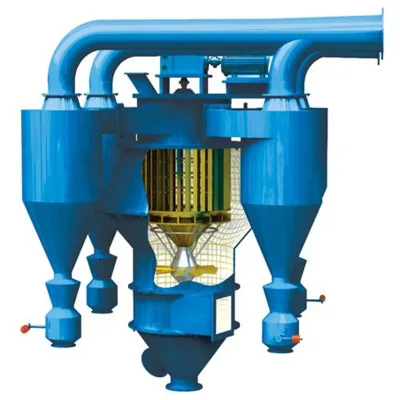


High Performance Air Classifier for Ultra Fine Classification in Closed Circuit Milling
$38500.00 - $127000.00
MOQ: 1 Pieces

Dynamic Air Classifier for Ball Mill to Improve Product Quality and Grinding Efficiency
$46500.00 - $127000.00
MOQ: 1 Pieces

Precision Air Classifier for Accurate Particle Size Control in Mineral Processing Plants
$47000.00 - $132000.00
MOQ: 1 Pieces

Energy Saving Air Classifier for Reducing Overgrinding in Ball Mill Circuit Operations
$43000.00 - $117000.00
MOQ: 1 Pieces
Comprehensive Sourcing Guide
Strategic Sourcing Guide for Ultra-Fine Air Classifier Mills
Procuring an ultra-fine air classifier mill represents a significant capital investment for industrial operations requiring precise particle size reduction. These machines integrate grinding and classification technologies to achieve micron-level fineness, making them essential for sectors ranging from mineral processing to advanced material manufacturing. This guide provides a disciplined framework for evaluating suppliers, understanding technical parameters, and ensuring long-term operational reliability without relying on unverified marketing claims. Buyers must approach this procurement process with a focus on verified specifications, clear contractual terms, and rigorous quality assurance protocols.
Technical Architecture and Performance Parameters
The core functionality of an ultra-fine air classifier mill relies on the synergy between the grinding mechanism and the internal air classifier. Based on observed industry data, the crushing degree for these units is frequently categorized as either "Ultra-Fine Mill" or "Fine Grinding Machine," indicating a capability to process materials with a Mohs hardness of less than 5. The grinding action typically employs a "Grinding and Impact" style, utilizing hard alloy cutters to ensure durability against abrasive feedstocks. The power requirements for the main grinding motor generally range from 5 to 200kw, though specific configurations may vary between 7.5 and 132kw depending on the throughput capacity.
A critical differentiator in these systems is the classification mechanism. The rotor speed for the grinding disc typically operates between 1700 and 7500r/Min, while the classifier unit itself functions within a range of 200 to 4500r/Min. This dual-speed capability allows for precise control over the final particle size distribution. The product size specification for these mills is commonly observed between 5 and 300um, with specific models capable of achieving a D50 particle size of 2 to 45um. The classification motor power, which drives the air separation process, typically spans from 1.5 to 30kw, with some configurations utilizing a fan power of 4 to 55kw.
The air consumption is a vital metric for system design, with observed ranges from 70 to 15000m3/H. This high airflow is necessary to transport ground particles to the classifier and separate them based on aerodynamic properties. The maximum air flow capacity can reach up to 15000m3/H in larger industrial units. The system structure is predominantly horizontal, and the drive mechanism is electric, often featuring PLC programming control for automated operation. Buyers should verify the linear speed of the grinding disc, which is observed to be between 102.6 and 110.6 M/S, as this directly impacts the energy efficiency and wear rate of the grinding media.
Compliance, Certification, and Safety Standards
In the global machinery market, compliance with international safety and quality standards is non-negotiable. While specific certifications can vary by manufacturer, the observed data indicates that reputable suppliers often provide units certified under CE, ATEX, TUV, and SGS frameworks. The ATEX certification is particularly critical for operations involving explosive dust environments, ensuring the equipment meets strict explosion protection requirements. The CE mark confirms conformity with health, safety, and environmental protection standards for products sold within the European Economic Area.
The voltage requirements for these machines are diverse, accommodating global electrical infrastructure. Observed voltage specifications include 440V, 380V, 220V, and 110V, allowing for flexibility in installation across different regions. However, buyers must explicitly confirm the voltage configuration required for their specific site to avoid costly retrofitting. The production standard for these units is often described as "Flexible arranged" or adhering to a "PLC control system" standard, indicating a modular approach to automation.
It is important to note that while ISO9001 is a common background standard in the industry, buyers should not assume its presence without explicit verification in the supplier's documentation. The warranty period is a key indicator of manufacturer confidence, with observed terms ranging from 2 to 5 years. A longer warranty period often correlates with higher build quality and more robust after-sales support structures. Buyers should also verify the "Automatic Grade" of the machine, which is typically "Full-Automatic," ensuring minimal human intervention during the grinding and classification process.
Cost Drivers and Pricing Dynamics
The pricing for ultra-fine air classifier mills is highly variable, with observed listed prices ranging from 1600 to 150000 USD. This wide disparity is driven by several factors, including the scale of production capacity, the complexity of the control system, and the specific customization required. The production capacity, measured in kilograms per hour, typically ranges from 100 to 3000 Kg/H. Larger capacities naturally command higher prices due to the increased material usage and engineering complexity.
The minimum order quantity (MOQ) for these industrial machines is generally 1 unit, reflecting the custom-engineered nature of the equipment. However, the lead time and total cost of ownership are influenced by the "prod_packing" method. Standard packing may involve plywood cases and pallets, while sea packages are used for larger units to prevent damage during ocean freight. The origin of the equipment, often listed as Shandong or Yantai in China, can influence shipping costs and delivery timelines.
Buyers should be aware that the "Application Method" can also impact the final cost. For instance, if the mill is intended for specific applications like electrostatic spray coating with polyester materials, the internal components may require specialized coatings or modifications. The customization availability is a significant cost driver; while standard models are available, bespoke configurations for unique material properties will incur additional engineering fees.
Typical Applications and Material Compatibility
These mills are primarily designed for the processing of mineral materials, but their versatility extends to various non-metallic minerals and chemical powders. The ability to achieve a particle size of 2 to 45um makes them suitable for applications requiring high surface area and uniform distribution. The "Object" of the machine is specified as mineral material, but the "Application Method" suggests utility in advanced coating processes.
The Mohs hardness limit of less than 5 restricts the machine's use to softer minerals and non-abrasive materials. Harder materials may require different grinding technologies or pre-treatment. The "Structure" being horizontal is advantageous for continuous processing lines, allowing for easy integration with upstream feeding and downstream packaging systems. The "Type" of the machine is identified as an Air Classifier Mill, which distinguishes it from traditional ball mills or hammer mills that rely solely on impact or attrition without internal classification.
| Feature | Standard Configuration | High-Performance Configuration |
|---|---|---|
| Grinding Motor Power | 7.5 - 132 Kw | Up to 200 Kw |
| Classifier Speed | 200 - 4500 r/Min | 0 - 3000 r/Min (Variable) |
| Particle Size (D50) | 5 - 300 um | 2 - 45 um |
| Control System | PLC Programming | Full-Automatic with Advanced Sensors |
| Warranty | 2 Years | 5 Years |
Supplier Evaluation and Verification Protocols
When evaluating potential suppliers, buyers must look beyond the marketing materials and focus on verifiable data points. The "prod_model" identifiers, such as CSM-V, CSM-VD, CSM-H, and ACM, serve as specific reference points for different machine configurations. Buyers should request detailed technical datasheets that explicitly link these model numbers to the observed specifications, such as the rotor speed and air consumption rates.
The "After-sales Service" is a critical component of the supplier evaluation. Observed services include installation, commissioning, and training, which are essential for ensuring the machine operates correctly upon arrival. The "After-Sales Service" rating of "1" in some contexts may indicate a basic support tier, so buyers must clarify the scope of support, including response times and spare parts availability. The "prod_origin" location, whether Shandong or Yantai, can provide insight into the regional manufacturing ecosystem and logistics capabilities.
Buyers should also verify the "prod_standard" to ensure the machine meets the specific operational requirements of their facility. While "Flexible arranged" suggests adaptability, the "PLC control system" standard is a more concrete requirement for automated plants. The "Certification" list should be cross-referenced with the buyer's local regulatory requirements, particularly regarding electrical safety and explosion protection.
Quality Control and Long-Term Procurement Considerations
Quality control begins with the selection of raw materials. The "Cutter Material" is specified as Hard Alloy, which is crucial for maintaining grinding efficiency and minimizing wear. Buyers should verify the specific grade of the hard alloy used, as this directly impacts the lifespan of the grinding components. The "Warranty" period, ranging from 2 to 5 years, serves as a guarantee of the manufacturer's confidence in their quality control processes.
Long-term procurement considerations include the availability of spare parts and the ease of maintenance. The "Linear Speed of Grinding Disc" and "Rotor Speed" are critical parameters that affect the wear rate of the machine. Buyers should request a maintenance schedule that outlines the expected replacement intervals for cutters, classifiers, and seals. The "Air Consumption" and "Max Air Flow" parameters should be matched with the facility's compressed air capacity to ensure optimal performance.
The "Product Size" and "Particle Size" specifications must be validated through trial runs before final acceptance. While the observed ranges are 5-300um and D50:2-45um, actual performance may vary based on the feed material properties. Buyers should insist on a factory acceptance test (FAT) or a site acceptance test (SAT) to verify that the machine meets the agreed-upon specifications. The "Standard Packing" and "Sea Package" options should be evaluated to ensure the machine arrives in pristine condition, minimizing the risk of damage during transit.
In conclusion, sourcing an ultra-fine air classifier mill requires a meticulous approach that balances technical specifications, compliance requirements, and cost considerations. By focusing on verified data points such as motor power, rotor speed, and certification status, buyers can make informed decisions that ensure the long-term success of their grinding operations. The diversity of models and configurations available allows for tailored solutions, but the responsibility lies with the buyer to rigorously validate every claim against the supplied facts and industry standards.
FAQs
What is the crushing degree of this mill?
The crushing degree is categorized as an Ultra-Fine Mill or Fine Grinding Machine. It utilizes a grinding and impact style with hard alloy cutters to process materials effectively.
Can the machine handle materials with high hardness?
No, the machine is designed for materials with a Mohs hardness of less than 5. This limitation ensures the hard alloy cutters maintain durability without excessive wear during operation.
What particle size can the mill achieve?
The product size specification ranges from 5 to 300 micrometers. Specific models can achieve a D50 particle size between 2 and 45 micrometers for ultra-fine applications.
How is the machine controlled during operation?
The system features PLC programming control for automated operation. This ensures precise management of rotor speeds and air consumption for consistent grinding and classification results.
What certifications are available for these mills?
Reputable units often carry CE, ATEX, TUV, and SGS certifications. These ensure compliance with international safety standards, particularly for explosive dust environments under ATEX requirements.
What is the warranty period for the equipment?
Warranty terms typically range from 2 to 5 years depending on the configuration. A longer warranty often indicates higher build quality and robust after-sales support structures.
Which locations manufacture these air classifier mills?
Production origins are commonly listed as Shandong or Yantai in China. These regions provide access to a specialized manufacturing ecosystem for industrial grinding machinery.