Source Vehicle Headlight Bracket for VW, Benz, and BMW
Find 30 Vehicle Headlight Bracket options for Volkswagen, Benz, and BMW. Buyers can compare specifications, certifications, and prices to select the right replacement part for repair or replacement needs.
Key considerations
Products List
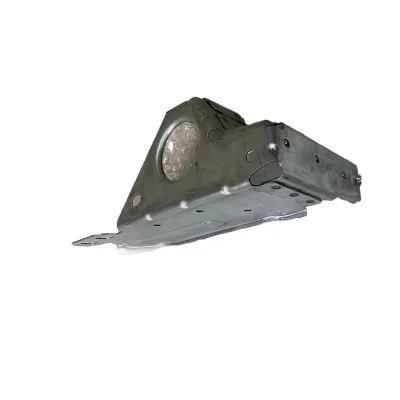


Comprehensive Sourcing Guide
Strategic Sourcing Guide for Vehicle Headlight Brackets
Navigating the global market for vehicle headlight brackets requires a disciplined approach that balances technical precision with rigorous supply chain verification. For procurement professionals, the core keyword "Vehicle Headlight Bracket" represents a critical component where structural integrity and optical alignment directly impact vehicle safety and aesthetics. The available market data indicates a diverse range of products, from standardized replacement parts to custom-fabricated solutions, originating primarily from manufacturing hubs in China. Buyers must distinguish between generic inventory and specialized engineering components to ensure compatibility with specific vehicle models and regulatory environments.
Technical Specifications and Compatibility Analysis
The technical landscape for headlight brackets is defined by precise dimensional tolerances and material properties. Observations from the current market reveal that brackets are often designed for specific vehicle architectures, with compatibility lists spanning major manufacturers including Volkswagen, WuLing, Benz, BMW, Hyundai, Honda, Toyota, Jeep, Nissan, Ford, Buick, Chery, Chevrolet, Cadillac, Geely, Roewe, Audi, Peugeot, Lexus, Volvo, Mazda, and Kia. This extensive list suggests that while some components are universal, many are engineered for specific chassis configurations.
Material selection is a primary differentiator. The market data highlights Stainless Steel as a prevalent material, chosen for its corrosion resistance and structural strength in automotive environments. However, other listings indicate "Metal" as a broader category, necessitating a request for specific alloy grades during the inquiry phase. The manufacturing arts often involve "Bending" processes, which are critical for achieving the complex geometries required to mount headlights securely.
Dimensional standards vary significantly across product lines. Some listings cite specific standard component sizes such as 100120120 or 1200*1000, while others describe dimensions as "Common." This ambiguity requires buyers to verify exact measurements against their vehicle's mounting points. Furthermore, tolerance levels are a critical quality indicator; observed data specifies a tolerance of +/-0.01mm for sheet metal fabrication parts, a precision level essential for maintaining headlight aim and preventing vibration-induced loosening. Buyers should explicitly request tolerance data for any custom or semi-standard parts to ensure fitment accuracy.
Compliance and Certification Verification
In the automotive sector, certification is not merely a formality but a prerequisite for market entry and liability protection. The observed product data lists a wide array of certifications, including NRCS, GCC, ARAI, CCC, E-mark, DOT, GOST, SONCAP, and PVOC. These certifications correspond to different regional regulatory bodies, such as the European Union (E-mark), the United States (DOT), and various Asian and African markets (NRCS, GCC, ARAI).
The presence of CCC (China Compulsory Certification) is noted for specific models, indicating compliance with Chinese domestic standards. However, the mere listing of a certification does not guarantee that every unit in a shipment is certified. Buyers must verify that the specific batch they are purchasing holds valid, current certificates for the target export market. For instance, a bracket intended for the European market must possess a valid E-mark, while one for the Middle East requires GCC certification.
Additionally, the data references standards such as China GB Code and EN standards. When sourcing, procurement teams should demand proof of conformity to these specific codes. The "Standard Component" designation in some listings suggests that certain brackets meet baseline industry requirements, but this should be cross-referenced with the specific vehicle manufacturer's engineering specifications. Relying solely on the presence of a certification label without verifying the scope of that certification against the specific application can lead to compliance failures and customs delays.
Cost Drivers and Pricing Dynamics
The pricing structure for vehicle headlight brackets is influenced by a complex interplay of factors, including material costs, customization levels, and order volume. The observed price range in the market spans from $0.66 to $100 USD. This wide disparity reflects the difference between simple, mass-produced replacement brackets and complex, custom-engineered components.
Low-cost items typically correspond to "Common" sizes, standard materials, and high-volume production runs with minimal customization. Conversely, the upper end of the price spectrum is driven by specialized designs, such as those with specific "Adjusted" features or complex "Single-side Bracket" structures. The "Customization: Available" attribute indicates that buyers can request tailored solutions, which inherently increases the unit cost due to tooling and setup expenses.
Order Volume (MOQ) is another significant cost driver. The observed MOQ range extends from 1 to 10,000 units. Small orders of 1-10 units will carry a premium per unit, reflecting the inefficiencies of low-volume production. Bulk purchases, potentially up to 10,000 units, may unlock economies of scale, reducing the per-unit cost significantly. Buyers must balance their inventory needs against the upfront capital required for larger MOQs. Additionally, packaging methods, ranging from "Wooden Box" to "Cardboard Box" or "Individual Packaging," can impact the final landed cost, especially for international shipping where volume and weight are critical.
Typical Applications and Structural Design
Headlight brackets serve multiple functions beyond simple mounting. The data indicates applications such as "Air Conditioner Bracket," "Shelf Bracket," "TV Bracket," and "Wall Bracket," suggesting that the manufacturing facilities often produce a variety of metal brackets. However, for the specific "Headlight Bracket" application, the design must prioritize vibration resistance and precise optical alignment.
The "Structure" of these brackets is often described as "Single-side Bracket," which implies a specific mounting geometry. Some products are noted as "With Adjusted," suggesting adjustable features that allow for fine-tuning of the headlight angle, a crucial feature for safety and compliance with lighting regulations. The "Style" is generally "Simple Modern," and the "Color" is typically "Metallic," often left unpainted or treated with a metallic finish to match the vehicle's under-hood aesthetic.
The "Folded" attribute is listed as "Unfolded," indicating that the brackets are supplied in their final assembled or semi-assembled state, ready for installation. This reduces the labor required by the assembler on the vehicle line. The "Usage" category also includes "Projector Bracket," hinting at compatibility with more advanced lighting systems. Buyers should ensure that the bracket's structural design matches the specific lighting technology (e.g., LED, HID, Halogen) being used, as different technologies may impose different weight and heat dissipation requirements.
Supplier Evaluation and Operational Capabilities
Selecting a reliable supplier requires a deep dive into their operational capabilities and geographic footprint. The primary production locations identified are Guangdong and Chongqing, China. These regions are established manufacturing hubs with mature supply chains for automotive components. However, the specific origin (e.g., Chongqing vs. Guangdong) may influence logistics costs and lead times depending on the buyer's location.
Supplier evaluation should focus on their "Manufacturing Arts" and "Machining Method." The data confirms "Metal" manufacturing and "Bending" as standard processes. Buyers should inquire about the supplier's capacity for "Sheet Metal Fabrication Parts" and their ability to handle "Standard Component" production versus "Customized" orders. The "Production Name" and "Alias" fields, such as "Headlight Bracket" or "Roller Part," help in verifying the supplier's specialization.
A critical aspect of supplier evaluation is the "Condition" of the products. All observed data points to "New" condition, which is standard for replacement parts. However, buyers must verify the "Warranty" terms, with 12 months being a common offering. This warranty period provides a safety net for quality issues. Furthermore, the "Purpose" is explicitly stated as "for replace/repair," confirming that these parts are intended for the aftermarket or OEM replacement lines.
Quality Control and Long-Term Procurement
Ensuring consistent quality is paramount in automotive sourcing. The "Tolerance" of +/-0.01mm is a high standard that must be maintained throughout the production run. Buyers should implement a quality control plan that includes incoming inspection of dimensions and material verification. The "Standard" field references "China GB Code, EN, GB," indicating that the supplier claims adherence to both national and international standards.
Long-term procurement considerations involve the stability of the supply chain. The "Customization: Available" attribute offers flexibility for future design changes, but it also introduces complexity. Buyers should assess the supplier's ability to manage "Customized" orders without compromising lead times or quality. The "Product Type" is listed as "Inserted," which may refer to the installation method or the type of bracket design.
Packaging is another long-term consideration. Options include "Wooden Box," "Cardboard Box," "Paper Box/Carton/Air Bubble Film," and "Individual Packaging." The choice of packaging affects the protection of the parts during transit and the efficiency of storage. For high-value or precision parts, "Air Bubble Film" or "Carton" packaging is preferable to prevent damage. The "N.W." (Net Weight) of 0.35 for some items helps in calculating shipping costs and planning logistics.
Comparative Analysis of Product Attributes
To facilitate decision-making, the following table summarizes key attributes observed in the market for vehicle headlight brackets:
| Attribute Category | Observed Values | Procurement Implication |
|---|---|---|
| Material | Stainless Steel, Metal | Verify alloy grade for corrosion resistance. |
| Tolerance | +/-0.01mm | Critical for fitment; request inspection reports. |
| Certifications | CCC, E-mark, DOT, GCC, etc. | Match certification to target export market. |
| MOQ Range | 1 - 10,000 | Balance inventory needs with unit cost. |
| Price Range | $0.66 - $100 USD | Correlates with customization and complexity. |
| Origin | Guangdong, Chongqing, China | Factor in logistics and lead time. |
| Warranty | 12 months | Standard term; verify claim process. |
| Customization | Available | Enables tailored solutions but increases cost. |
| Packing | Wooden, Cardboard, Air Bubble | Select based on part fragility and shipping mode. |
Conclusion
Sourcing vehicle headlight brackets requires a meticulous approach that integrates technical verification, compliance checks, and strategic supplier selection. The market offers a wide spectrum of options, from basic replacement parts to highly customized engineering solutions. By focusing on material integrity, dimensional tolerances, and regional certification requirements, buyers can mitigate risks and ensure the procurement of high-quality components. The data underscores the importance of clear communication regarding specifications and the necessity of validating supplier capabilities against specific project needs. Ultimately, a disciplined procurement strategy that leverages these insights will result in a reliable supply chain for critical automotive components.
FAQs
What certifications are available for vehicle headlight brackets?
Vehicle headlight brackets often carry certifications like CCC, E-mark, DOT, and GCC to meet regional regulatory standards. Buyers must verify that the specific batch holds valid certificates for their target export market before purchasing.
Which materials are commonly used for vehicle headlight brackets?
Stainless steel is a prevalent material chosen for its corrosion resistance and structural strength in automotive environments. Some listings also specify metal broadly, requiring buyers to request specific alloy grades during the inquiry phase.
Can vehicle headlight brackets be customized for specific models?
Customization is available for vehicle headlight brackets to accommodate specific chassis configurations and engineering requirements. This option increases unit costs due to tooling and setup expenses but allows for tailored solutions.
What is the typical price range for vehicle headlight brackets?
The observed price range for vehicle headlight brackets spans from 0.66 to 100 USD depending on complexity. Low-cost items usually correspond to common sizes and high-volume runs, while custom designs cost more.
How does the MOQ affect the cost of vehicle headlight brackets?
The minimum order quantity ranges from 1 to 10,000 units, significantly impacting the per-unit price. Small orders carry a premium, whereas bulk purchases up to 10,000 units may unlock economies of scale.
Where are vehicle headlight brackets typically manufactured?
Primary production locations for vehicle headlight brackets include Guangdong and Chongqing in China. These regions are established manufacturing hubs with mature supply chains for automotive components.