Source Vehicle Emergency Starting Power for Cars Trucks Motorcycles
Explore 30 options for Vehicle Emergency Starting Power supplies featuring lithium-ion batteries and high peak currents. Buyers can compare specifications like output voltage, capacity, and certifications including CE and RoHS for passenger cars, motorcycles, and trucks.
Key considerations
Products List

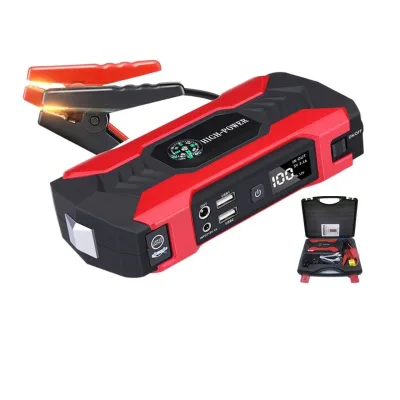
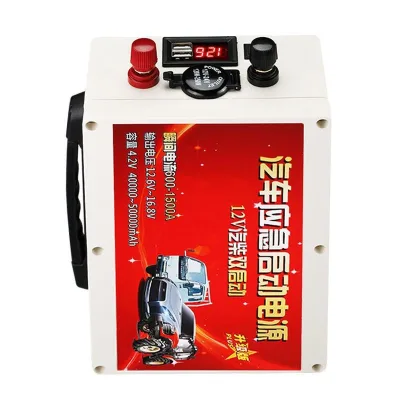


Durable Car Power Emergency Command Vehicle Command Mobile Vehicle
$900000.00 - $930000.00
MOQ: 1 Pieces


Four Stroke Water Cooling Reliable Open Type Generator Emergency Power
$3300.00 - $558000.00
MOQ: 1 Pieces

Four Stroke OEM Factory Calsion High Quality Genset Emergency Power
$4900.00 - $558000.00
MOQ: 1 Pieces

AC Three Phase Land Use Industrial Open Type Genset Emergency Power
$3300.00 - $558000.00
MOQ: 1 Pieces

Four Stroke AC Three Phase High Performance Diesel Generator Emergency Power
$3300.00 - $558000.00
MOQ: 1 Pieces


Generation Emergency Power Supply Vehicle for Power Outage Repair
$100000.00 - $700000.00
MOQ: 1 Piece

Fast Response Emergency Power Supply Vehicle for Backup Power Supply
$100000.00 - $700000.00
MOQ: 1 Piece

Powerful Stable Voltage Emergency Power Supply Vehicle for Power Outage Repair
$100000.00 - $700000.00
MOQ: 1 Piece

Durable Emergency Power Supply Vehicle for Engineering Power Supply
$100000.00 - $700000.00
MOQ: 1 Piece
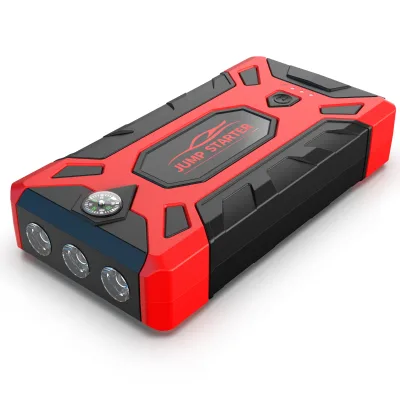

Comprehensive Sourcing Guide
Strategic Sourcing Guide for Vehicle Emergency Starting Power Solutions
Understanding Core Technical Specifications and Performance Metrics
When sourcing Vehicle Emergency Starting Power solutions, buyers must first distinguish between the diverse technical architectures available in the market. The core functionality revolves around high-current discharge capabilities designed to jump-start internal combustion engines, ranging from small passenger vehicles to heavy-duty diesel trucks. A critical observation from current market listings indicates that battery chemistry is predominantly Lithium-ion, offering a balance of energy density and cycle life. However, specifications vary significantly regarding capacity and output voltage.
Buyers should expect to encounter units with varying capacity ratings. Some product listings reference capacities around 16,000mAh, while others specify higher ranges such as 28,000mAh or even 40,000-50,000mAh. It is essential to verify that the listed capacity corresponds to the actual cell rating and not a marketing figure derived from a different voltage baseline. Furthermore, the output voltage is a pivotal specification; standard units typically operate at 12V, with some advanced models supporting a range of 12.6V to 16.8V to accommodate different vehicle electrical systems.
The peak current and instantaneous current ratings are perhaps the most critical performance indicators. These metrics determine the unit's ability to crank an engine, particularly in cold conditions or for larger displacement engines. Market data shows a wide spectrum of capabilities, with some units rated for a peak current of 2000A, while others are specified for 600A to 1500A, or even lower starting currents around 400A. Procurement teams must align these figures with the specific vehicle fleet requirements. For instance, a unit with a 600A peak current may suffice for gasoline vehicles below a certain displacement, whereas diesel vehicles often require higher instantaneous current ratings, sometimes up to 1500A or more.
Input and output interfaces also vary. Many modern units feature Type-C inputs supporting 5V/9V-2A charging profiles, alongside standard USB outputs rated at 5V-2A or 9V-2A. Some advanced models integrate Qi wireless charging capabilities, adding versatility for mobile devices. The physical dimensions are another constraint; standard packaging sizes often measure approximately 178.83.8cm, though single package sizes can vary. Buyers must ensure the physical footprint fits the intended storage location, whether in a glove compartment or a dedicated emergency kit.
Compliance, Certification, and Safety Standards Verification
In the realm of high-power portable electronics, regulatory compliance is non-negotiable. Buyers must rigorously verify that suppliers possess valid certifications before placing orders. The most frequently observed certifications in the market include CE, RoHS, and FCC. These marks indicate compliance with European safety directives, restrictions on hazardous substances, and Federal Communications Commission regulations for electromagnetic interference, respectively.
Beyond general electronics certifications, specific safety standards for lithium-ion batteries are paramount. The UN38.3 certification is a critical standard for the transportation of lithium batteries, ensuring they can withstand the rigors of shipping without catching fire or exploding. While some product listings explicitly mention UN38.3 alongside CE, RoHS, and FCC, buyers should treat this as a verification point rather than an assumption. Not every unit in the category will automatically possess this certification, and the absence of such documentation poses a significant logistical and safety risk.
Quality management systems also play a role in compliance. Some suppliers adhere to ISO 9001:2008 standards, which governs the quality management system rather than the product itself. While this indicates a structured approach to manufacturing, it does not replace product-specific safety testing. Buyers should request test reports that validate the specific claims made about the product, such as the cycle life or peak current output. The presence of a guarantee, often cited as 2 years in the market, should be backed by clear terms and conditions regarding what constitutes a defect versus normal wear and tear.
Cost Drivers and Pricing Structure Analysis
The pricing for Vehicle Emergency Starting Power units exhibits extreme volatility, ranging from approximately $13.50 to $930,000 in observed market listings. This vast disparity is not indicative of a single product line but rather reflects the inclusion of vastly different specifications, volumes, and value-added features. Buyers must deconstruct this range to understand the actual cost drivers.
The primary driver of cost is the battery capacity and the quality of the cells used. Units with higher mAh ratings, such as the 40,000-50,000mAh variants, naturally command higher prices due to the increased material cost of lithium cells. Similarly, the peak current rating is a significant cost factor. A unit capable of delivering 2000A requires robust internal circuitry, thicker copper busbars, and high-grade cells that can handle massive discharge rates without overheating. These engineering requirements drive up the manufacturing cost significantly compared to lower-ampere models.
Additional cost factors include the inclusion of advanced features such as digital screens, LED lighting, and wireless charging pads. The complexity of the Printed Circuit Board (PCB) and the software required to manage these features also contribute to the final price. Packaging and branding are secondary but relevant factors; products labeled with specific brand names like HXN or those offering custom packaging may carry a premium.
It is crucial for buyers to recognize that the lowest price point often correlates with the lowest capacity or current rating. Conversely, the highest price points may include bulk industrial orders or specialized configurations. When evaluating quotes, procurement teams should compare apples to apples by matching the peak current, capacity, and certification status. A unit priced at $50 with a 600A rating is fundamentally different from a unit priced at $100 with a 2000A rating, even if the base form factor is similar.
Typical Applications and Use Case Scenarios
Vehicle Emergency Starting Power supplies are designed for a broad spectrum of applications, ranging from personal automotive use to commercial fleet maintenance. The versatility of these devices is evident in their intended use cases, which include passenger cars, motorcycles, and trucks. The specific application dictates the required technical specifications.
For passenger cars and motorcycles, the primary requirement is a reliable, compact unit capable of starting gasoline engines. These vehicles typically have smaller engines and lower cranking current demands. A unit with a peak current of 400A to 600A is often sufficient for these applications. The inclusion of features like a digital screen and LED light adds value for personal users who may need to inspect the battery condition or work in low-light environments.
Diesel vehicles present a more challenging scenario. Diesel engines, particularly in trucks and heavy machinery, require significantly higher cranking currents to overcome the compression ratio. Units designed for this purpose often specify support for diesel vehicles below 3.5 liters or higher, depending on the specific model. The market shows models explicitly labeled as "Diesel Car Emergency Starting Power Supply" with higher instantaneous current ratings, such as 600A to 1500A. These units are essential for commercial fleets, roadside assistance providers, and off-road enthusiasts.
Furthermore, the portability of these units makes them suitable for various environments. Whether stored in a vehicle glove box for personal emergencies or kept in a workshop for fleet maintenance, the design must balance size and power. Some units are marketed specifically as "car emergency power supply" or "jump starter power bank," emphasizing their dual role as a backup power source for electronics and a starter for vehicles. The ability to support starting for both gasoline and diesel vehicles makes them a versatile investment for mixed fleets.
Supplier Evaluation and Customization Capabilities
Selecting the right supplier involves more than just comparing price lists; it requires a deep dive into their manufacturing capabilities and customization options. The market data indicates that customization is available for many of these products. Buyers should verify the extent of this customization, which can range from simple branding (OEM/ODM) to modifications in capacity, voltage, or physical dimensions.
The "Customized processing" attribute suggests that suppliers are willing to tailor products to specific client needs. This is particularly relevant for corporate buyers who require branded units for their fleet or specific technical requirements that differ from standard off-the-shelf models. When evaluating suppliers, buyers should inquire about their ability to modify the model number, such as the HXN-64705 or HXN-59705 series, to meet specific project requirements.
Location is another factor in supplier evaluation. Many products originate from Guangdong, China, a region known for its robust electronics manufacturing ecosystem. This concentration of suppliers often leads to competitive pricing and rapid prototyping capabilities. However, buyers must also consider the logistics of shipping and the reliability of the supply chain. The "place of origin" and "prod_origin" fields should be verified to ensure transparency in the supply chain.
Additionally, the "Selling Units" attribute, often listed as "Single item," suggests that suppliers are flexible with order quantities. However, the observed Minimum Order Quantity (MOQ) ranges from 1 to 500 units. Buyers should clarify the MOQ for custom orders, as this can vary significantly from standard stock items. A supplier with a low MOQ for custom branding may be ideal for small businesses, while larger enterprises might negotiate lower unit costs for bulk orders.
Quality Control and Long-Term Procurement Considerations
Ensuring the long-term reliability of Vehicle Emergency Starting Power supplies requires a robust quality control strategy. One of the key metrics for longevity is the cycle life of the battery. Market observations indicate cycle times ranging from ≥1000 times to more than 10,000 times. This variance highlights the importance of verifying the specific cycle life claims for each product. A higher cycle life indicates better cell quality and more durable internal components, which translates to a longer service life for the buyer.
Protection functions are also critical for safety and longevity. Units should include features such as anti-current reverse charging, magnetic field protection, and short-circuit protection. These safeguards prevent damage to the vehicle's electrical system and the power bank itself. Buyers should request detailed schematics or technical datasheets that explain how these protection mechanisms function.
The guarantee period, often cited as 2 years, is a standard industry offering. However, the terms of this guarantee should be clearly understood. Does it cover the battery capacity degradation, or only manufacturing defects? Long-term procurement considerations also include the availability of spare parts and the supplier's ability to provide technical support. A supplier with a strong track record in the "Emergency supply" category is more likely to offer reliable after-sales service.
Finally, buyers should consider the packaging and standardization of the products. The "prod_packing" attribute, often listed as "CTN" or "Standard Exporting Packing," ensures that the units are protected during transit. For international buyers, this is crucial to prevent damage before the product even reaches the destination. By focusing on these quality control aspects, buyers can mitigate risks and ensure that their investment in Vehicle Emergency Starting Power solutions delivers consistent performance over time.
Comparative Analysis of Key Product Attributes
To facilitate decision-making, the following table summarizes the key attributes observed in the market, providing a clear comparison of the technical specifications and compliance standards.
| Attribute | Observation A | Observation B | Observation C |
|---|---|---|---|
| Battery Type | Lithium-ion | Lithium-ion | Lithium-ion |
| Peak Current | 2000A | 600A | 600-1500A |
| Capacity | 16000mAh | 28000mAh | 40000-50000mAh |
| Output Voltage | 12V | 12.6V-16.8V | 12V |
| Certifications | CE, RoHS, FCC | CE, RoHS, FCC, UN38.3 | CE, RoHS, FCC |
| Cycle Life | ≥1000 times | More Than 10,000 Times | Not Specified |
| Guarantee | 2 years | Not Specified | 2 years |
| Product Type | Car Starter | Diesel Car Emergency Starting Power Supply | Wireless Car Jump Start Power Bank |
| Origin | Guangdong, China | China | China |
| Customization | Available | Yes | Available |
This comparison underscores the diversity of the market. Buyers must carefully match these attributes to their specific operational needs. For example, a fleet manager requiring high reliability for diesel trucks would prioritize the 600-1500A peak current and UN38.3 certification, while a personal user might opt for the 28000mAh model with wireless charging capabilities. By systematically evaluating these factors, procurement teams can make informed decisions that balance cost, performance, and safety.
FAQs
What battery type is used in these power supplies?
These units predominantly use Lithium-ion batteries for their high energy density and reliability. This chemistry supports the required cycle times of at least 1000 times and ensures stable performance for starting vehicles.
Which certifications are typically included with these products?
Most listings include CE, RoHS, and FCC certifications to ensure safety and electromagnetic compliance. Some advanced models also carry UN38.3 certification for safe lithium battery transportation and ISO 9001:2008 for quality management.
How much peak current can these jump starters deliver?
Peak current ratings vary significantly, with some units delivering up to 2000A while others range from 400A to 1500A. Buyers must select a rating that matches their specific vehicle engine size and starting requirements.
Can these devices support both gasoline and diesel engines?
Yes, specific models are designed to support both gasoline and diesel vehicles, often with different current thresholds. Units labeled for diesel cars typically offer higher instantaneous currents to handle the greater compression ratio of diesel engines.
What is the typical output voltage for these emergency supplies?
Standard output voltage is 12V, though some advanced models support a range of 12.6V to 16.8V. This variability allows the units to accommodate different vehicle electrical systems and battery states effectively.
Is customization available for these power supply units?
Customization is available for many products, allowing for branding and specific technical modifications. Suppliers can often adjust model numbers, capacities, or packaging to meet specific client requirements and fleet needs.
What is the expected cycle life of the battery?
Cycle life varies by model, with some units rated for at least 1000 cycles and others exceeding 10,000 times. Higher cycle counts indicate better cell quality and longer durability for repeated emergency use.