Source Vertical CNC Induction Quenching Machine for Gear, Shaft, and Roller Hardening
Find and compare 30 Vertical CNC Induction Quenching Machine models from Chinese manufacturers. Evaluate options featuring horizontal or vertical structures, CNC control, and certifications like CE and RoHS for industrial gear, shaft, and roller hardening applications.
Key considerations
Products List


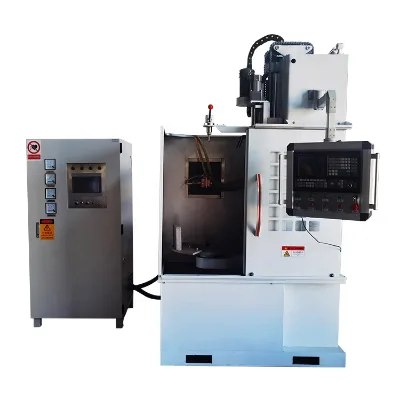
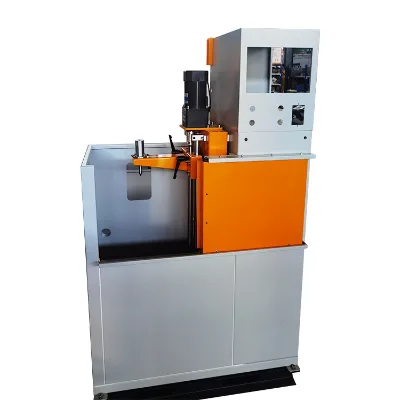
Steel Shafts/wheels/gears Surface Hardening Induction Heating Machine Tool
$5000.00 - $6000.00
MOQ: 1 sets


Ord-1.5m Low Price Induction Quenching Machine Tools for Gear and Shaft
$8000.00 - $12500.00
MOQ: 1 Pieces


Comprehensive Sourcing Guide
Vertical CNC Induction Quenching Machine Sourcing Guide
Selecting the right Vertical CNC Induction Quenching Machine requires a careful balance of technical precision, operational reliability, and supplier accountability. These machines are specialized industrial assets designed to harden specific metal components, such as gears, rollers, and shafts, through controlled electromagnetic induction. The vertical configuration offers distinct advantages in workspace utilization and part handling, particularly for components that benefit from gravity-assisted loading or require precise vertical alignment during the heating process. Buyers must approach this procurement with a clear understanding of the machine’s structural capabilities, control systems, and the specific metallurgical outcomes required for their production line.
The market for these machines is characterized by a wide range of specifications, from standard horizontal types to advanced vertical CNC models. Observed listings indicate a diverse product landscape, with models ranging from the HKVC to the GY-CNC series, including variants like the GY-CNC600, GY-CNC1000, and GY-CNC2000. This variety suggests that buyers can find solutions tailored to different scales of operation, from small-batch customization to high-volume continuous production. Understanding the nuances between these models, such as their movement methods, cooling systems, and control loops, is essential for making an informed purchasing decision that aligns with long-term manufacturing goals.
Product Scope and Observed Listing Signals
The product scope for vertical CNC induction quenching machines encompasses a variety of structural designs and control technologies. Listings reveal that manufacturers offer both horizontal and vertical types, with some models explicitly supporting both configurations. The core application focuses on metal hardening, specifically targeting gears, rollers, and shafts. This indicates that the machines are engineered for precision surface hardening rather than through-hardening, making them ideal for components that require a hard exterior and a tough core. The presence of CNC (Computer Numerical Control) and MNC (Machine Numerical Control) attributes in the listings highlights the shift towards automated, programmable processes that reduce human error and increase repeatability in heat treatment operations.
Observed listing signals also point to significant customization capabilities within this category. Many suppliers support both OEM (Original Equipment Manufacturer) and ODM (Original Design Manufacturer) services, allowing buyers to tailor the machine to their specific part geometries and production requirements. The availability of customized standard specifications further supports this flexibility. Additionally, the observed price range of 0 to 700,000 USD suggests a broad spectrum of machine capabilities, from entry-level units to high-end CNC machine tools. Buyers should interpret this wide range as an indicator that price is heavily influenced by factors such as power output, control precision, and the level of automation integrated into the system.
Technical Specifications to Verify
When evaluating technical specifications, the control method and movement system are critical differentiators. Listings indicate the use of semi-closed loop control and point-to-point or linear control methods. Buyers must verify which control architecture is employed, as it directly impacts the accuracy of the induction coil’s movement relative to the workpiece. For high-precision applications, a closed-loop system may be preferable, but the observed data suggests that semi-closed loop systems are common in this category. Additionally, the processing precision is listed as either ±0.05mm or within a range of 0.1~5mm. This discrepancy highlights the need for buyers to clarify the specific tolerance requirements for their parts and ensure the machine’s stated precision aligns with their quality standards.
Power and cooling systems are another vital area for verification. The machines are electrically powered, with some listings specifying a 380V 3-phase power source, which is standard for industrial equipment in many regions. Cooling is consistently identified as water-based, utilizing tubular heat exchangers for heat transfer. Buyers should confirm the water pressure and flow rate requirements to ensure their facility can support the cooling infrastructure. Furthermore, the machines are designed for continuous operation, with some specifications noting the ability to work continuously for 24 hours. This durability is essential for high-throughput environments, but buyers should also inquire about the thermal management capabilities of the induction generator to prevent overheating during extended shifts.
Compliance and Safety Documentation
Compliance with international standards is a non-negotiable aspect of sourcing industrial machinery. The observed listings frequently mention certifications such as ISO, CE, RoHS, SGS, and FCC. While these certifications are common, buyers must verify the specific scope and validity of each certificate for the exact model being purchased. For instance, CE marking indicates conformity with health, safety, and environmental protection standards for products sold within the European Economic Area, while ISO certification typically relates to quality management systems. RoHS compliance ensures that the machine is free from certain hazardous substances, which is increasingly important for global supply chains with strict environmental regulations.
Safety documentation should also include detailed operational manuals and emergency procedure guides. Given that induction heating involves high electrical currents and intense heat, the machine must be equipped with appropriate safety interlocks and shielding. Buyers should request evidence of electrical safety testing and thermal insulation verification. Additionally, the presence of SGS and FCC certifications suggests that the equipment meets specific electromagnetic compatibility and safety performance criteria. It is crucial to ensure that all safety features are not only present but also functional and compliant with local occupational health and safety regulations in the buyer’s country.
Cost Drivers and Commercial Terms
Several factors influence the total cost of ownership for vertical CNC induction quenching machines. The primary cost drivers include the machine’s power rating, the sophistication of its CNC control system, and the level of customization required. High-end CNC machine tools with advanced linear control and high processing precision will naturally command a higher price. Additionally, the inclusion of specialized features, such as automated part loading systems or custom-designed induction coils, can significantly increase the initial investment. Buyers should also consider the cost of ancillary equipment, such as water chillers and transformers, which may not be included in the base machine price.
Commercial terms and delivery conditions are equally important in the procurement process. Listings indicate a standard delivery time of 20 workdays, but this can vary based on the level of customization and the supplier’s current production capacity. The minimum order quantity (MOQ) is observed to be 1, which is typical for custom industrial machinery. Buyers should negotiate clear terms regarding payment schedules, warranty coverage, and after-sales support. The observed warranty period of 12 months is a baseline expectation, but buyers may be able to extend this through additional service contracts. Packaging is typically done in wooden boxes or vacuum packing to protect the machine during transit, which should be factored into logistics planning.
Supplier Qualification and Quality Control
Supplier qualification is a critical step in ensuring the reliability of the purchased equipment. Buyers should verify the supplier’s manufacturing capabilities, including their facility size, production lines, and quality control processes. The observed origins of these machines, such as Shiyan and Dongguan in China, indicate that buyers may be dealing with manufacturers in established industrial hubs. It is advisable to request evidence of the supplier’s experience in producing induction heating machines, including case studies or references from existing clients. Additionally, buyers should assess the supplier’s ability to provide ODM and OEM services, as this indicates a level of engineering flexibility and technical expertise.
Quality control measures should be integrated into the procurement process from the outset. Buyers should request a detailed inspection plan that covers factory acceptance testing (FAT) and site acceptance testing (SAT). The FAT should verify that the machine meets all specified technical parameters, including power output, cooling efficiency, and control accuracy. The SAT should confirm that the machine performs correctly in the buyer’s actual production environment. Furthermore, buyers should inquire about the supplier’s after-sales support structure, including the availability of spare parts, technical training, and remote diagnostic capabilities. A robust support network is essential for minimizing downtime and ensuring the long-term performance of the machine.
Long-Term Procurement Checks
Long-term procurement success depends on the machine’s ability to adapt to changing production needs and maintain consistent performance over time. Buyers should consider the scalability of the machine, including its ability to handle different part sizes and geometries through software adjustments or quick-change tooling. The observed customization options suggest that many machines can be modified to suit new products, but buyers should verify the ease and cost of such modifications. Additionally, the availability of software updates and firmware upgrades should be confirmed, as these can enhance the machine’s functionality and security over its lifespan.
Energy efficiency and maintenance requirements are also key considerations for long-term operations. Induction heating is generally more energy-efficient than traditional resistance heating, but buyers should still evaluate the specific energy consumption of the machine under typical operating conditions. Regular maintenance schedules should be established to inspect the water cooling system, electrical connections, and CNC components. Buyers should also plan for the eventual replacement of wear parts, such as induction coils and capacitors, which are subject to thermal and electrical stress. By proactively managing these aspects, buyers can maximize the return on investment and ensure the machine remains a reliable asset in their manufacturing operations.
FAQs
What certifications do these machines hold?
These machines hold ISO, CE, RoHS, SGS, and FCC certifications. The specific certifications vary by model, with some units featuring RoHS, ISO, and CE, while others include SGS and FCC to meet international safety and quality standards.
Can the machine operate continuously for 24 hours?
Yes, the machine is designed to work continuously for 24 hours. It utilizes water cooling systems to maintain stable performance during extended operation cycles required for industrial hardening applications.
Which customization options are available for this equipment?
Customization is available with both ODM and OEM support. Buyers can request standard specifications or customized solutions, including specific structural types like horizontal or vertical configurations to fit their production needs.
What is the delivery time for these machines?
The standard delivery time is 20 workdays. This lead time applies to the manufacturing and preparation of the equipment before it is shipped from the origin locations in China.
How is the machine packed for shipping?
The machines are packed in wooden boxes or vacuum packing. Some models specifically use wooden boxes to ensure safe transport, while others may utilize vacuum packing for additional protection during transit.
What applications does this induction heating machine support?
This machine supports gear, roller, and shaft hardening applications. It is specifically designed for metal hardening processes, including gear quenching and shaft hardening, using electric power sources.
What is the warranty period for the equipment?
The equipment comes with a 12-month warranty. This coverage ensures that buyers receive support for one year after purchase, covering potential defects or operational issues under normal conditions.