Source Vertical Spindle Moulder Woodworking Machine for Wood Press, Woodworking Process, and Wood Press
Explore 30 listings of the Vertical Spindle Moulder Woodworking Machine designed for wood pressing and general woodworking processes. Buyers can compare specifications like spindle speed, power, and dimensions to find the right equipment for their needs.
Key considerations
Products List


Customized Vertical Spindle Moulder Woodworking Machine with CE Certification
$1450.00 - $1600.00
MOQ: 1 Sets


Wood Board Vertical Table Spindle Milling Machine Shaper Spindle Moulder
$1450.00 - $1600.00
MOQ: 1 Sets


Spindle Moulder Woodworking Machine Spindle Router Woodworking Machine Price
$760.00 - $980.00
MOQ: 1 SET


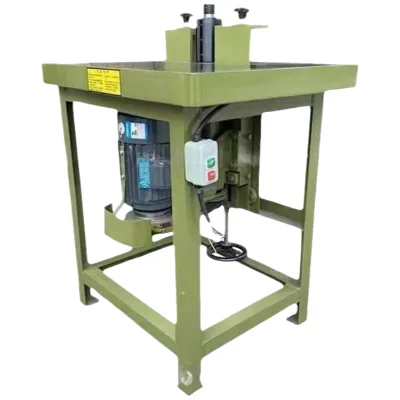

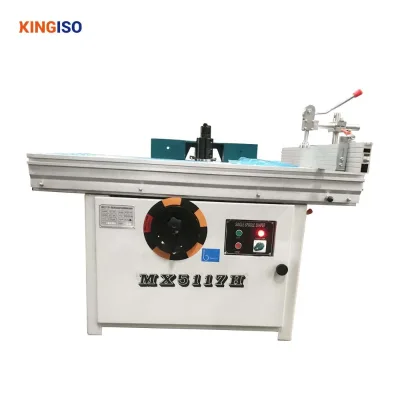
Mx5115 Woodworking Vertical Wood Shaper Machine Spindle Moulder Machine
$550.00 - $650.00
MOQ: 1 Pieces


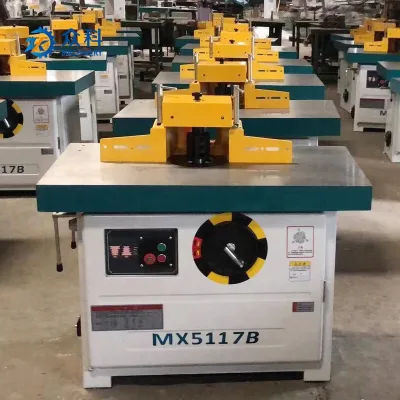
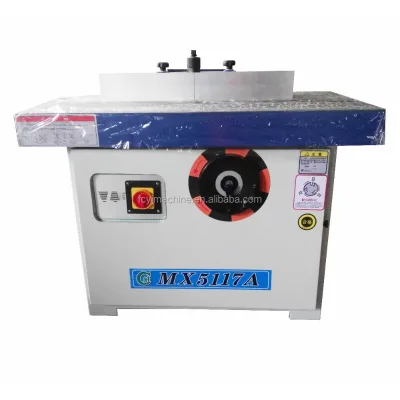


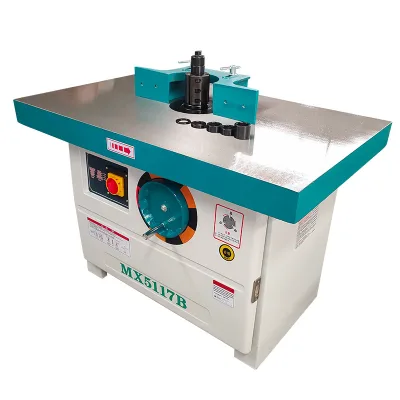


Comprehensive Sourcing Guide
Strategic Sourcing Guide for Vertical Spindle Moulder Woodworking Machines
The global demand for precision woodworking machinery continues to rise, with the vertical spindle moulder serving as a cornerstone for high-quality furniture manufacturing, cabinetry, and decorative wood processing. For procurement professionals, navigating the market for these specialized machines requires a disciplined approach that balances technical capability with compliance and supplier reliability. This guide provides an evidence-based framework for sourcing vertical spindle moulder woodworking machines, focusing on the specific attributes observed in current market listings while adhering to strict verification protocols. Buyers must understand that while specific model data exists, generalizing these attributes across all suppliers requires careful due diligence to avoid procurement risks.
Technical Specifications and Operational Capabilities
When evaluating a vertical spindle moulder, the primary focus must be on the machine's core mechanical specifications, which directly dictate its suitability for specific production tasks. The market currently features distinct configurations, such as the Mx5117t and Mxq45 models, each offering unique performance characteristics. A critical observation in the current supply base is the variation in spindle layout; while some units feature a vertical layout, others are categorized specifically as "Spindle Over" or "Vertical Uniaxial Wood Router." This distinction is vital for floor planning and operator ergonomics.
The spindle speed is another pivotal parameter. Observed data indicates a range of operational speeds, with some models offering 6000/8000/10000r/Min, while others are rated for 8000/10000r/Min. The ability to operate within these ranges allows for versatility in cutting different wood densities and profiles. Power consumption also varies, with listings showing Total Power ratings of 4kw or 5.5kw, and specific voltage configurations such as 380V 4kw. Buyers must verify that their facility's power infrastructure aligns with these requirements before finalizing a purchase.
Dimensional constraints are equally important for integration into existing workshops. The working table size is a key metric for material handling; observed dimensions include 1100450mm and 1130670mm. The overall dimensions of the machines further impact installation planning, with observed footprints ranging from 11306801050mm to 1650760980mm. The weight of the unit, observed between 320kg and 400kg, influences the foundation requirements and the logistics of moving the machine within a facility. Additionally, the spindle diameter, noted at 35mm in specific listings, determines the compatibility with various cutter heads and tooling accessories.
Compliance, Certification, and Safety Standards
In the international trade of industrial machinery, compliance with safety and quality standards is non-negotiable. The observed product listings frequently reference ISO and CE certifications. While the presence of these marks suggests adherence to international quality management systems and European safety directives, buyers must treat these as observations rather than universal guarantees. The specific certification status must be verified against the actual documentation provided by the supplier for the specific serial number of the machine being purchased.
The "prod_standard" field in current listings often mirrors the physical dimensions of the machine, such as 1650760980mm or 11306801050mm. However, in a procurement context, "standard" should also refer to industry safety norms regarding electrical safety, noise levels, and operator protection. Buyers should explicitly request test reports or compliance certificates that validate the machine's adherence to relevant regional safety regulations, rather than relying solely on the "CE" or "ISO" labels found in marketing materials. The origin of the machinery, often cited as China or specifically Shandong province, does not inherently dictate quality; rather, the specific factory's quality control processes and their ability to produce certified units are the true indicators of compliance.
Cost Drivers and Pricing Structures
Understanding the cost structure of vertical spindle moulders is essential for budgeting and negotiation. The observed price range in the current market is extensive, spanning from approximately $308.77 to $50,000. This wide variance is not indicative of a single product tier but rather reflects differences in brand positioning, automation levels, power ratings, and included features. A unit priced at the lower end of the spectrum may be a manual, single-spindle model with basic controls, whereas a unit at the higher end likely incorporates CNC controlling modes, higher precision components, and advanced safety features.
The Minimum Order Quantity (MOQ) observed in the market is consistently 1 set, which facilitates procurement for small to medium-sized enterprises. However, the "MOQ" attribute often interacts with customization options. While customization is listed as "Available," the cost implications of customizing a machine—such as altering the spindle layout, adjusting the table size, or modifying the electrical configuration—can significantly impact the final price. Buyers should clarify whether the listed price includes the cost of customization or if it is a base price subject to change. Furthermore, the "Key Selling Points" such as "Long Service Life" and "Energy Saving" capabilities are qualitative claims that should be substantiated with data or warranty terms before they can be considered as value drivers in the cost analysis.
Typical Applications and Material Compatibility
The application of vertical spindle moulders is primarily centered on the woodworking process, with a specific focus on wood pressing and profile shaping. The "Usage" attribute explicitly identifies "Wood Press" as a primary function, indicating the machine's capability to handle pressing operations alongside traditional moulding tasks. The "Application" field broadly categorizes these machines under "Woodworking Process," which encompasses a wide array of activities including edge profiling, groove cutting, and decorative shaping.
The versatility of these machines is enhanced by their ability to handle various wood types, provided the spindle speed and power are matched to the material density. For instance, the 4kw to 5.5kw power ratings suggest suitability for both softwoods and hardwoods, though the specific spindle speed (ranging from 6000 to 10000r/Min) must be selected carefully to prevent burning or excessive wear on the cutter heads. The "Working Table Size" directly influences the maximum sheet size that can be processed, making the 1130670mm models more suitable for larger panels compared to the 1100450mm variants. Buyers should assess their specific production volume and material requirements to determine if a manual or automatic grade machine is more appropriate for their workflow.
Supplier Evaluation and Verification Protocols
Selecting the right supplier is as critical as selecting the right machine. The current market data indicates a concentration of suppliers from China, with specific mentions of Shandong as a production hub. While this geographic concentration can offer logistical advantages and competitive pricing, it necessitates rigorous supplier evaluation. Buyers should verify the "Brand Name" associated with the machine, such as "Hiwinstar," and cross-reference this with the manufacturer's actual corporate identity. It is common for trading companies to list brand names that differ from the actual factory of origin.
When evaluating a supplier, buyers must look beyond the "Condition: New" and "Customized: Customized" attributes. These are standard descriptors that do not guarantee the quality of the new machine or the reliability of the customization service. Instead, focus on the supplier's ability to provide detailed technical documentation, after-sales support, and a clear warranty structure. The "Warranty: 1 Year" observed in some listings is a baseline expectation; however, the scope of this warranty—what parts are covered, what labor costs are included, and the response time for service calls—must be explicitly defined in the contract. Additionally, the "Package" type, whether "Wooden Case" or "Plywood Box," should be evaluated for its ability to protect the machine during international shipping, especially given the significant weight of these units.
Quality Control and Long-Term Procurement Considerations
Ensuring the long-term reliability of a vertical spindle moulder requires a proactive approach to quality control and maintenance planning. The "Controlling Mode" observed ranges from "Artificial" (manual) to "CNC," with some units boasting "High Precision" and "Energy Saving" features. The transition from manual to CNC control represents a significant shift in operational complexity and maintenance requirements. Buyers must assess their technical staff's capability to operate and maintain CNC systems versus manual machines.
The "Automatic Grade" attribute, listed as "Automatic" in some contexts, suggests a higher level of integration and automation. However, the term "Automatic" should be verified against the actual control system to ensure it aligns with the buyer's production needs. Long-term procurement considerations also include the availability of spare parts. Given the "Spindle Diameter" of 35mm and specific "Working Table" dimensions, buyers should confirm that replacement parts for these specific configurations are readily available from the supplier or third-party vendors. The "Overall Dimensions" and "Weight" also play a role in the long-term cost of ownership, as they affect the energy consumption and the potential need for facility upgrades to accommodate the machine's footprint and vibration isolation requirements.
Comparative Analysis of Machine Configurations
To assist in decision-making, the following table summarizes the key technical variations observed in the current market data. This comparison highlights the diversity in specifications that buyers must navigate.
| Feature | Configuration A (Model Mx5117t) | Configuration B (Model Mxq45) | Configuration C (Model MX5117B) |
|---|---|---|---|
| Spindle Layout | Vertical | Vertical Uniaxial | Spindle Over |
| Spindle Speed | 8000/10000r/Min | 6000/8000/10000r/Min | 6000-10000r/Min |
| Total Power | 4kw/5.5kw | 4kw (380V) | Not Specified |
| Working Table | 1100*450mm | 1130*670mm | Not Specified |
| Overall Dimensions | 1650760980mm | 11306801050mm | 11006701050mm |
| Weight | 400kg | 320kg | 350kg |
| Controlling Mode | Artificial | Not Specified | CNC |
| Certification | ISO, CE | CE | CE |
| Customization | Available | Not Specified | Not Specified |
This table illustrates that no single configuration dominates the market; rather, buyers must match their specific operational needs to the available specifications. For instance, a facility requiring high precision and automated control might prioritize Configuration C, while a workshop needing a robust, high-power unit for heavy-duty pressing might lean toward Configuration A.
Final Procurement Recommendations
The procurement of a Vertical Spindle Moulder Woodworking Machine is a complex process that demands a meticulous review of technical specifications, compliance documentation, and supplier capabilities. Buyers should avoid making assumptions based on broad market trends or generic product descriptions. Instead, they must verify every claim, from the spindle speed and power rating to the certification status and warranty terms. The wide range of observed prices and specifications underscores the importance of a tailored approach to sourcing. By focusing on the specific attributes relevant to their production environment and maintaining a rigorous verification process, buyers can secure machinery that delivers the required performance, safety, and longevity. The ultimate goal is to establish a partnership with a supplier who can provide not just a machine, but a reliable solution that supports the long-term growth and efficiency of the woodworking operation.
FAQs
What certifications do vertical spindle moulder woodworking machines have?
These machines typically carry ISO and CE certifications. Buyers must verify that specific documentation matches the actual serial number of the unit being purchased rather than relying solely on marketing labels.
Which spindle speed ranges are available for these machines?
Operational speeds vary between 6000 and 10000 revolutions per minute. Specific models offer combinations like 8000 or 10000 r/Min, allowing versatility for different wood densities and profile cutting tasks.
How much does a Vertical Spindle Moulder Woodworking Machine cost?
Prices range widely from approximately 308.77 to 50,000 USD. This variance reflects differences in automation levels, power ratings, and included features like CNC control or custom modifications.
Can I customize the specifications of this woodworking machine?
Customization is available for many units in the current supply base. Buyers should clarify if the listed price includes customization costs or if it is a base price subject to change based on requirements.
What is the minimum order quantity for these machines?
The minimum order quantity is consistently 1 set for most listings. This facilitates procurement for small to medium-sized enterprises without requiring bulk purchases to initiate an order.
Where are these vertical spindle moulder woodworking machines manufactured?
Products originate primarily from China, with specific mentions of Shandong province as a production hub. Buyers should evaluate the specific factory's quality control processes rather than relying solely on geographic origin.
What are the typical working table dimensions for these machines?
Working table sizes observed include 1100 by 450 mm and 1130 by 670 mm. These dimensions directly influence the maximum sheet size that can be processed during the woodworking operation.