Source Vertical Submersible Water Pump for Irrigation, Sewage, and Drainage
Find 30 verified Vertical Submersible Water Pump options with varying horsepower, pressure ratings, and materials. Compare specifications from suppliers in Zhejiang, China, including models like Wq and QDX for industrial and agricultural applications.
Key considerations
Products List


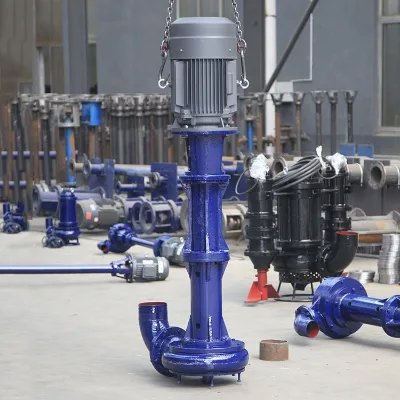
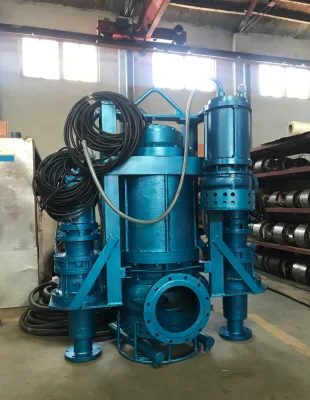


Comprehensive Sourcing Guide
Strategic Sourcing Guide for Vertical Submersible Water Pumps
The global demand for efficient fluid handling solutions has elevated the Vertical Submersible Water Pump to a critical component in diverse industrial and municipal infrastructure. Sourcing these specialized units requires a disciplined approach that balances technical performance with rigorous supplier evaluation. Unlike standard surface pumps, vertical submersible models operate entirely underwater, necessitating specific design considerations regarding sealing, motor protection, and structural integrity. This guide provides a comprehensive framework for buyers to navigate the procurement landscape, ensuring that selected equipment aligns with operational requirements while mitigating supply chain risks.
Technical Architecture and Performance Specifications
Understanding the technical architecture of vertical submersible pumps is the first step in defining procurement requirements. The core mechanism relies on centrifugal force to move fluid, a principle explicitly noted in the observed product attributes where the "Theory" is identified as a Centrifugal Pump. These units are designed with a vertical orientation, meaning the "Position of Pump Shaft" is configured as a Vertical Pump. This design allows for deep installation in wells, sumps, or tanks, optimizing space utilization in constrained environments.
The impeller configuration plays a pivotal role in performance. Data indicates a prevalence of "Single-Stage Pump" designs with a "Closed" impeller type, which is typical for applications requiring high efficiency and stable flow rates. However, the market also presents "Multistage Pump" variants, particularly for applications demanding higher heads. The "Influent Type of Impeller" is generally observed as a "Single Suction Pump," which influences the hydraulic balance and installation orientation.
Motor specifications are equally critical for long-term reliability. The observed data highlights a horsepower range spanning from 0.75kW to 160kW, with specific models offering ranges like 0.75-30kW or 0.75-75kW. This wide variance suggests that buyers must carefully match the motor power to the specific hydraulic load. The motor insulation is typically rated at Class F, providing robust thermal protection, while the protection rating is specified as IP 68, ensuring the motor is dust-tight and capable of continuous immersion in water. The starting mechanism is consistently identified as an "Electric Pump," requiring a reliable power supply, often cited as 220V/380V.
Operational Parameters and Environmental Constraints
When evaluating a vertical submersible pump, buyers must scrutinize the operational parameters to ensure compatibility with the intended environment. The "Working Pressure" can vary significantly; some units are classified as "Low Pressure Pump" suitable for general circulation, while others are engineered as "High Pressure Pump" for demanding industrial tasks. The maximum head for certain high-performance models can exceed 150 meters, with specific configurations reaching approximately 300 meters. Correspondingly, the pressure rating for these high-head units can reach approximately 5.0 MPa.
The material composition of the pump is a primary determinant of its lifespan and corrosion resistance. The most common material observed is "Cast Iron," which offers a cost-effective solution for non-corrosive applications. However, the shaft material is often upgraded to "Chrome Plating Steel" to resist wear and corrosion in submerged conditions. The sealing system is another critical area; the standard configuration involves a "Mechanical Seal" utilizing a combination of Carbon, Silicon Carbide (Sic), and Nitrile Butadiene Rubber (NBR). This triple-material seal is essential for preventing fluid leakage into the motor compartment.
Temperature constraints are also vital. While standard pumps operate within typical ambient ranges, specialized industrial models are rated for extreme conditions, with a temperature range spanning from -80°C to +450°C. Buyers must verify if their specific application falls within these thermal limits. The suction pipe diameter varies widely, with observed ranges from 1.6 inches to 14 inches, indicating that the pump must be matched to the pipeline infrastructure. The "Mounting Height" is another specific attribute, with some units designed for "Suction Centrifugal" applications and others for "Since Irrigation Centrifugal Pumps," suggesting distinct installation profiles.
Compliance, Standards, and Certification Verification
In the realm of industrial procurement, compliance with international standards is non-negotiable for ensuring safety and interoperability. The supplied data explicitly references the "API610" and "Vdma24297" standards. API610 is the global benchmark for centrifugal pumps used in the petroleum, petrochemical, and natural gas industries, defining rigorous requirements for design, materials, and testing. VDMA 24297 is a German standard often associated with slurry pumps and abrasive service, indicating suitability for harsh environments.
While background information mentions "CE" and "ISO9001" as potential certifications, buyers must exercise caution. These should be treated as observed attributes rather than guaranteed facts for every listed product. Procurement teams should request valid, current certificates from the supplier rather than relying on marketing claims. The "Standard" attribute in the product data suggests that some models adhere to these specific international norms, but verification is required on a per-order basis.
Additionally, the "Usage" category encompasses a broad spectrum, including "Clarified Water Pump," "Submersible Pump," "Condensate Pump," "Slurry Pump," and "Circulating Pump." Each application may have unique regulatory requirements. For instance, pumps used in drinking water applications must comply with local health and safety regulations regarding material leaching, which may not be covered by general industrial standards like API610. Buyers should ensure that the "Model No," such as "Wq," "Wqv," "SPA," "QDX," or "SPP-370F," corresponds to the specific regulatory compliance needed for their jurisdiction.
Cost Drivers and Commercial Terms
The financial structure of sourcing vertical submersible pumps involves several variables beyond the unit price. The observed "MOQ" (Minimum Order Quantity) ranges from 1 to 100 units, but a specific attribute indicates a "MOQ" value of 3000USD. This suggests that while small orders might be possible, significant discounts or standard terms may apply only above a certain monetary threshold. The "Observed listed price range" in USD is vast, spanning from 20 to 50,000. This wide disparity reflects differences in horsepower, material quality, brand reputation, and customization levels.
Customization is a key cost driver. The "Customization" attribute is marked as "Available," and "OEM" (Original Equipment Manufacturer) services are "Accept"ed. This means buyers can request modifications to the suction pipe size, motor voltage, or impeller material, which will inevitably increase the unit cost and potentially extend the lead time. The "prod_packing" varies between "Standard Export Wooden Box," "Carton," and "Plywood Box," each carrying different shipping costs and protection levels.
When negotiating, buyers should clarify whether the quoted price includes the motor, the seal assembly, and the mounting hardware. The "Horsepower" range of 0.75-160kW implies that a 160kW unit will cost significantly more than a 0.75kW unit, but the price per kilowatt may decrease with scale. Buyers must also consider the "Location" of the origin, which is consistently noted as "Zhejiang, China" or generally "China." While this provides a baseline for shipping logistics, it is essential to verify the specific factory location to assess supply chain resilience and potential tariffs.
Supplier Evaluation and Quality Assurance
Evaluating a supplier for vertical submersible pumps requires a multi-dimensional approach. The "Application" data shows that these pumps are used in critical systems, making supplier reliability paramount. Buyers should prioritize suppliers who demonstrate a clear understanding of the "Theory" behind centrifugal pumping and can provide detailed engineering support. The presence of specific model numbers like "KZ-L(XWZ-A)" indicates a structured product line, which is a positive indicator of a mature manufacturing process.
Quality control should be a central part of the supplier assessment. Given the "Mechanical Seal" and "Bearing" specifications (with "NSK" bearings noted), buyers should request test reports verifying the performance of these components. The "Bearing" brand is a significant quality indicator, as NSK is a recognized global manufacturer. Similarly, the "Seal" composition of Carbon-Sic-NBR should be verified against the specific fluid being pumped to ensure chemical compatibility.
Buyers should also evaluate the "prod_packing" standards. A "Standard Export Wooden Box" or "Plywood Box" suggests a commitment to protecting the equipment during long-distance transit. The "Performance" attribute is listed as "Automatic Pump," implying the inclusion of control systems or sensors. Suppliers should be able to demonstrate the reliability of these automatic features through case studies or third-party testing.
Long-Term Procurement and Maintenance Strategy
Sourcing a vertical submersible pump is not a one-time transaction but the beginning of a long-term operational relationship. The "Usage" category includes "Slurry Pump" and "Circulating Pump," which are subject to high wear and tear. Therefore, the availability of spare parts is a critical consideration. The "Material" of the impeller and casing, such as "Cast Iron," must be matched with the availability of replacement parts to minimize downtime.
Maintenance planning should account for the "Working Pressure" and "Head" specifications. High-pressure units operating near their maximum head (e.g., >150m or ~300m) may require more frequent inspections of the mechanical seal and bearings. The "Motor" insulation class F and IP 68 rating provide a baseline for durability, but buyers should establish a preventive maintenance schedule that includes checking the "Shaft" for chrome plating integrity and verifying the "Seal" condition.
Furthermore, the "Customization" and "OEM" capabilities of the supplier become increasingly valuable over time. As operational needs evolve, the ability to retrofit a pump or modify its configuration can extend the asset's lifecycle. Buyers should maintain open communication channels with the supplier to discuss potential upgrades or replacements. The "Location" of the supplier in Zhejiang, China, offers access to a robust manufacturing ecosystem, but buyers should ensure that logistics and after-sales support are clearly defined to avoid delays in receiving critical components.
Comparative Analysis of Key Pump Attributes
To facilitate decision-making, the following table summarizes the key technical and commercial attributes observed in the market for vertical submersible water pumps. This comparison highlights the variability in specifications that buyers must navigate.
| Attribute Category | Observed Range / Specifics | Procurement Consideration |
|---|---|---|
| Model Series | Wq, Wqv, SPA, QDX, SPP-370F, KZ-L(XWZ-A) | Verify model compatibility with specific application needs. |
| Horsepower | 0.75kW - 160kW (varies by model) | Match power to hydraulic load; higher HP increases cost. |
| Impeller Type | Single-Stage (Closed), Multistage | Single-stage for general use; Multistage for high head. |
| Shaft Position | Vertical Pump | Essential for submersible installation requirements. |
| Material | Cast Iron (Casing), Chrome Plating Steel (Shaft) | Verify corrosion resistance for specific fluid types. |
| Seal Type | Mechanical Seal (Carbon-Sic-NBR) | Critical for preventing motor failure; check chemical compatibility. |
| Motor Protection | IP 68, Insulation Class F | Ensure suitability for continuous immersion. |
| Working Pressure | Low Pressure to High Pressure (~5.0 MPa) | Confirm pressure rating matches system requirements. |
| Head Range | >150m to ~300m | Select based on vertical lift requirements. |
| Standards | API610, Vdma24297 | Verify certification for industrial compliance. |
| Origin | Zhejiang, China | Assess logistics and supply chain stability. |
| MOQ | 1-100 units or 3000USD | Clarify minimum order thresholds before negotiation. |
In conclusion, sourcing vertical submersible water pumps requires a meticulous alignment of technical specifications with commercial realities. By focusing on the core attributes such as motor protection, seal integrity, and material durability, buyers can secure equipment that delivers reliable performance. The wide range of available models and customization options offers flexibility, but it also demands a rigorous evaluation process to ensure that the selected pump meets the specific demands of the application. Through careful supplier assessment and adherence to international standards, organizations can optimize their fluid handling infrastructure for long-term efficiency and safety.
FAQs
What motor protection rating do vertical submersible pumps have?
The motor protection rating is IP 68, ensuring dust-tight operation and continuous immersion in water. This rating applies to models with Insulation Class F motors, providing robust thermal protection for long-term reliability in submerged conditions.
Which impeller types are available for these centrifugal pumps?
Available impeller types include single-stage closed impellers and multistage configurations. The influent type is typically single suction, designed for high efficiency and stable flow rates in applications like clarified water or slurry pumping.
Can I request customization for the pump suction pipe size?
Yes, customization is available including specific suction pipe dimensions ranging from 1.6 inches to 14 inches. Buyers can also request modifications to motor voltage, horsepower, and material composition to match specific operational requirements.
What materials are used for the pump casing and shaft?
The pump casing is commonly made of cast iron for cost-effective durability. The shaft is typically constructed from chrome-plating steel to resist wear and corrosion, while the mechanical seal uses Carbon, Silicon Carbide, and NBR materials.
How does the working pressure vary across different pump models?
Working pressure varies from low pressure for general circulation to high pressure reaching approximately 5.0 MPa. High-head models can achieve heads exceeding 150 meters, with some specialized configurations reaching up to 300 meters.
What standards do these pumps comply with for industrial use?
Some models comply with API610 and Vdma24297 standards, which define rigorous requirements for design and materials in petroleum and slurry applications. Buyers should verify specific certificates as these standards are not guaranteed for every listed product.
What is the minimum order quantity for purchasing these pumps?
The minimum order quantity ranges from 1 to 100 units, with a specific monetary threshold of 3000 USD noted for standard terms. Buyers should clarify if discounts or specific terms apply based on the total order value.
Which bearing brand is used in the pump assembly?
The pump assembly utilizes NSK bearings, a recognized global manufacturer known for reliability. This component is critical for long-term performance, and buyers should request test reports to verify the quality of the seal and bearing systems.