Source Vertical V-Cut PCB Cutter for Assembly, Testing, and Packaging
Find 30 Vertical V-Cut PCB Cutter options from verified Chinese manufacturers. Compare specifications including cutting dimensions, automation levels, and certifications like CE and ISO to select the right equipment for your production line.
Key considerations
Products List


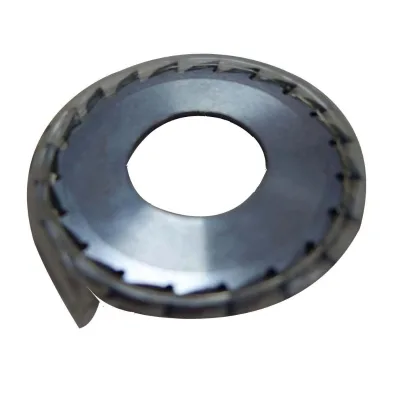


Diamond PCB V Scoring Cutter for Cutting V Groove for PCB/Cem1/Cem3/Fr2/Fr4
$100.00 - $120.00
MOQ: 3 Sets


Precision Manual Type PCB V Cutter for Efficient Circuit Board Cutting
$3000.00 - $4000.00
MOQ: 1 Unit


Comprehensive Sourcing Guide
Strategic Sourcing Guide for Vertical V-Cut PCB Cutters
Understanding Vertical V-Cut Technology and Core Specifications
The vertical V-cut PCB cutter represents a specialized class of industrial equipment designed for the precise separation of printed circuit boards (PCBs) after assembly. Unlike horizontal cutting systems, vertical configurations utilize a downward-acting blade mechanism, often driven by pneumatic or automatic systems, to score and separate panels. This orientation is particularly advantageous for handling boards with varying component heights and for integrating into automated production lines where space efficiency is critical. When evaluating a vertical V-cut machine, buyers must first distinguish between manual and automatic grades. The market data indicates the existence of both semiautomatic and fully automatic variants, each serving different production volumes. For instance, specific models are identified as semiautomatic, relying on intermittent operation types, while others are classified as fully automatic with pneumatic driving mechanisms.
The physical dimensions and cutting capabilities are the primary technical differentiators. A critical specification to verify is the cutting thickness range, which typically spans from 0.8mm to 5mm in observed configurations. This range accommodates standard PCB thicknesses while allowing for slight variations in material density. Furthermore, the cutting length is a vital parameter for panel size compatibility; observed specifications suggest a range extending from 0 to 350mm, which dictates the maximum width of the PCB panel that can be processed in a single pass. Buyers should also examine the operating speed, with some units offering a cutting speed of up to 400mm per second, ensuring high throughput for mass production environments. The machine's ability to handle component height is equally important; a vertical cutter must accommodate components ranging from 2mm to 34mm in height without causing collision or damage during the cutting process. This clearance is essential for boards with tall capacitors or connectors that protrude significantly above the substrate.
Compliance, Certification, and Regulatory Standards
In the B2B procurement of industrial machinery, compliance with international safety and quality standards is non-negotiable. The vertical V-cut PCB cutter market demonstrates a strong adherence to specific certification frameworks. Observed product listings consistently highlight CE and ISO certifications, which serve as indicators of conformity with European safety directives and international management system standards. The presence of CCC (China Compulsory Certification) on certain models further suggests compliance with domestic Chinese regulations, which is relevant for buyers sourcing directly from manufacturers in the region. While ISO9001 and ISO14001 are frequently cited in general industry contexts, buyers must verify their specific application to the machine model in question, as not all listed products explicitly confirm these standards in their primary attributes.
Electrical safety is another critical compliance area. The power supply specifications for these machines vary, with a common configuration being 1 pH AC 220V at 50/60Hz. However, flexibility is often available, with options for 110V to 230V inputs to accommodate different regional power grids. Buyers must ensure that the electrical specifications of the selected unit match the local power infrastructure to prevent equipment damage or safety hazards. Additionally, the pressure systems used in pneumatic models are often categorized as low pressure, which simplifies the safety requirements for the plant environment but requires verification of the specific pressure ratings against the manufacturer's data sheet. The absence of specific RoHS certification claims in the high-confidence data suggests that buyers should explicitly request confirmation of material compliance regarding hazardous substances, particularly if the machinery is destined for markets with strict environmental regulations.
Cost Drivers and Pricing Dynamics
The pricing structure for vertical V-cut PCB cutters is highly variable, reflecting the diversity in automation levels, build quality, and included features. The observed price range in the market spans from $4 to $24,000 USD, a broad spectrum that indicates significant differentiation between entry-level manual units and high-end automated systems. The lower end of this range likely corresponds to manual or semi-automatic desktop units, which may have limited features such as basic cutting lengths and manual operation types. In contrast, the higher price points are associated with fully automatic, pneumatic-driven machines that offer higher cutting speeds, advanced customization options, and robust construction.
Several factors drive these cost variations. The automatic grade is a primary determinant; semiautomatic models are generally more affordable than their fully automatic counterparts. The complexity of the cutting mechanism, including the availability of blade customization, also influences the final cost. Machines that offer customizable blades to suit specific V-groove angles or PCB materials command a premium. Additionally, the packaging and shipping requirements play a role in the total cost of ownership. Products are typically shipped in wooden cases or vacuum wooden boxes, which are essential for protecting the machinery during transit but add to the overall weight and logistics costs. The weight of the machine itself, ranging from 60kg for smaller units to 750kg for larger industrial models, directly impacts freight charges and the need for specialized handling equipment at the destination.
Typical Applications and Operational Versatility
Vertical V-cut PCB cutters are engineered for a wide array of applications within the electronics manufacturing sector. Their primary function is anti-corrosion and precise panel separation, making them indispensable for post-assembly processing. The ability to handle different installation types, including vertical and horizontal configurations, allows these machines to be integrated into various production line layouts. For example, a vertical installation is often preferred for space-constrained environments or when the workflow requires a downward cutting motion to clear overhead obstructions. The intermittent operating type found in some models makes them suitable for batch processing, where operators load panels, initiate the cut, and then unload the separated boards.
The versatility of these machines extends to their compatibility with different PCB sizes and thicknesses. With cutting lengths up to 350mm and thickness capabilities up to 5mm, they can process a vast majority of standard PCB formats used in consumer electronics, industrial controls, and telecommunications. The component height tolerance of up to 34mm ensures that boards with complex, multi-layered components can be cut without the need for pre-processing or component removal. Furthermore, the availability of blade customization allows manufacturers to tailor the cutting angle and depth to specific PCB materials, such as FR-4 or aluminum-backed boards, ensuring clean edges and minimal burr formation. This adaptability makes the vertical V-cut cutter a versatile asset for both high-volume mass production and low-volume prototyping facilities.
Supplier Evaluation and Geographic Considerations
When sourcing vertical V-cut PCB cutters, the geographic origin of the manufacturer is a significant factor in the procurement strategy. The observed data indicates a concentration of suppliers in China, with specific mentions of Beijing, Guangdong, and the broader China (Mainland) region. Guangdong, in particular, is a known hub for electronics manufacturing equipment, offering a dense ecosystem of suppliers with established supply chains. Buyers should verify the specific origin of the machine, as this can influence lead times, shipping costs, and the availability of after-sales support.
Supplier evaluation should extend beyond the basic product specifications to include the warranty and support structure. A standard warranty period of 12 months is commonly observed, providing a baseline for protection against manufacturing defects. However, buyers must clarify the scope of this warranty, including whether it covers labor, parts, or both, and the response time for technical support. The condition of the product, consistently listed as "New," suggests that buyers should be vigilant about the possibility of refurbished units being mislabeled, especially when dealing with lower-priced listings. Additionally, the packaging standard, whether a wooden case or vacuum wooden box, should be scrutinized to ensure it meets the protection requirements for the specific machine weight and fragility.
Quality Control and Long-Term Procurement Strategy
Implementing a robust quality control (QC) protocol is essential when procuring vertical V-cut PCB cutters. Buyers should verify the "Mould Life" specifications, which are often listed as a range (e.g., 000-000 shots), indicating the expected durability of the cutting blade or mold. While the specific numerical values may vary, understanding the expected lifespan of critical components is vital for calculating the total cost of ownership. Regular maintenance schedules should be established to ensure the pneumatic systems and cutting mechanisms remain operational. The "New" condition of the products implies that initial QC checks should focus on verifying the integrity of the packaging and the functionality of the machine upon arrival.
For long-term procurement, buyers should consider the scalability of the equipment. As production volumes increase, the transition from manual or semiautomatic models to fully automatic, pneumatic-driven systems may be necessary. The availability of spare parts, such as customized blades and pneumatic components, should be confirmed before finalizing the purchase. The standard export packaging and the specific model numbers (e.g., HS2, ICT-MV350, RSM-1000) serve as identifiers for future parts ordering. By maintaining a clear record of the model specifications and origin, buyers can ensure a smooth supply chain for replacements and upgrades. Ultimately, the selection of a vertical V-cut PCB cutter should be based on a holistic assessment of technical fit, compliance, cost efficiency, and the supplier's ability to support the machine throughout its lifecycle.
Comparative Analysis of Key Machine Attributes
To facilitate informed decision-making, the following table summarizes the key attributes observed across different vertical V-cut PCB cutter models. This comparison highlights the diversity in specifications and helps buyers identify the features that align with their specific production requirements.
| Attribute | Manual/Intermittent Models | Automatic/Pneumatic Models |
|---|---|---|
| Operation Type | Manual, Intermittent Type | Automatic, Pneumatic Driven |
| Installation | Horizontal, Vertical | Vertical, Desktop |
| Cutting Speed | Variable, Manual Control | Up to 400mm/S Operation |
| Cutting Thickness | 0.8 to 5mm | 0.8 to 5mm |
| Component Height | 2-34mm | 2-34mm |
| Certification | CE, ISO, CCC | CE, ISO |
| Weight | ~60kg | Up to 750kg |
| Warranty | 12 Months | 12 Months |
| Packaging | Wrap Film, Wooden Case | Vacuum Wooden Box, Standard Export |
This comparative overview underscores that while the core cutting capabilities remain consistent across models, the automation level and physical footprint vary significantly. Buyers must weigh these differences against their production volume and space constraints to select the optimal solution. By adhering to these evidence-based guidelines, procurement teams can navigate the complex landscape of vertical V-cut PCB cutter sourcing with confidence and precision.
FAQs
What certifications do vertical v cut pcb cutters have?
These machines typically carry CE, ISO, and CCC certifications. Some models specifically list ISO and CE compliance, while others include CCC, indicating adherence to international safety and quality standards for industrial equipment.
How much does a Vertical V-Cut PCB Cutter cost?
The price range spans from 4 to 24000 USD depending on the model and automation level. Entry-level manual units are cheaper, while fully automatic pneumatic systems with higher cutting speeds command premium prices.
Which installation types are available for these cutters?
Available installation types include desktop, horizontal, and vertical configurations. Buyers can select vertical setups for space efficiency or horizontal layouts depending on their specific production line requirements and component height constraints.
Can the cutting thickness be customized for different boards?
Yes, the cutting thickness range is typically 0.8 to 5mm. Blade customization is also available to suit specific V-groove angles or PCB materials, ensuring clean edges for various board densities and thicknesses.
What is the warranty period for these machines?
The standard warranty period is 12 months for new units. This coverage protects against manufacturing defects, though buyers should verify if labor and parts are included in the specific supplier agreement.
How heavy are the vertical v cut pcb cutters?
Weights vary significantly from 60kg for smaller desktop units to 750kg for large industrial models. The weight impacts shipping costs and requires specialized handling equipment for installation at the destination facility.
What power supply options are supported by these cutters?
Common power supply is 1 pH AC 220V at 50/60Hz. Options for 110V to 230V inputs are often available to accommodate different regional power grids and ensure electrical safety compliance.