Source Water Based Ceramic Tile Adhesive for Construction, Bathroom, and Flooring
Find 30 available options for Water Based Ceramic Tile Adhesive suitable for construction, bathroom installations, and general flooring projects. Compare specifications such as curing time, adhesion strength, and packaging sizes to identify the right material for your specific application needs.
Key considerations
Products List


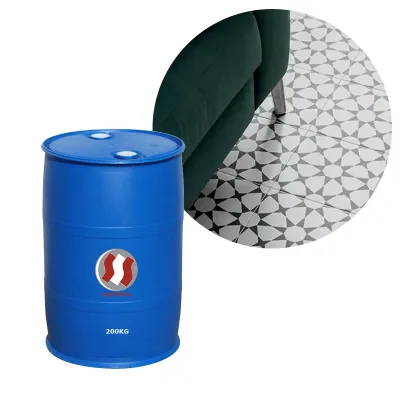
Super Strong Water Based Adhesive Ceramic Tile Glue for Drywall Fiber Plywood and Tile
$2.20 - $2.80
MOQ: 1000 Minimum
Comprehensive Sourcing Guide
Water Based Ceramic Tile Adhesive Sourcing Guide
Procuring water-based ceramic tile adhesive requires a clear understanding of the specific product variations available in the current market, as the term often encompasses a range of formulations from cement-based mortars to specialized polymer-modified sealants. Buyers must distinguish between products designed for structural bonding in high-moisture environments and those intended for general construction or specific applications like footwear and woodworking, as the supplied data indicates a diverse range of morphologies including solvent-based, water-soluble, and solid-state options. The presence of "Instant Adhesive" and "Structural Adhesive" classifications alongside "Room Curing" capabilities suggests that the market offers both rapid-setting solutions and standard curing systems, necessitating a precise match between the adhesive's chemical composition and the project's timeline requirements.
The observed product landscape reveals significant variation in packaging and volume, ranging from small 0.8L containers to bulk 25kg bags, which directly impacts logistics and storage planning for procurement teams. While some listings highlight a "Free Sample" availability and "Negotiable" pricing, the Minimum Order Quantity (MOQ) can vary drastically from single units to 3000 pieces, requiring buyers to align their initial order volume with supplier capabilities to avoid unnecessary costs. It is critical to verify whether the specific adhesive is an inorganic or organic material, as this distinction influences the bonding mechanism and compatibility with substrates like wood, fiber, and leather, which are listed as potential application areas alongside traditional construction and bathroom installations.
Product Scope and Observed Listing Signals
When evaluating product listings, buyers should look for specific signals regarding the adhesive's morphology and composition to ensure it meets the project's environmental demands. The data indicates that products may be classified as "Water-Soluble" or "Solvent" based, with some explicitly noted as "Inorganic Material" while others are "Organic Material" or "Polyurethane Elastomer." This variance suggests that a single search term may yield results for cement-based grouts, epoxy sealants, and polyurethane adhesives, all of which serve different functions in the construction and manufacturing sectors. Procurement teams must scrutinize the "Application" field to confirm if the product is suitable for the intended use, such as "Ceramic Tile Installation," "Bathroom" renovation, or "Automobile" assembly, rather than assuming all water-based adhesives are interchangeable.
Packaging and physical characteristics serve as another key indicator of product suitability and intended scale of operation. Listings show a mix of packaging formats, including "24 PCS in Box," "25kg Per Bag," and "20kg/Bag," alongside specific size specifications like "2-2.5mm" thickness or volume-based standards like "400ml." The color of the adhesive, observed as "White," "Grey," or "White or Grey," is a practical consideration for aesthetic integration, particularly in visible tiling applications where grout lines or adhesive residue might be exposed. Buyers should also note the "Appearance" and "Color" attributes to ensure the final product aligns with design specifications, while recognizing that the "Shelf Life" of 12 months is a common standard that must be managed through inventory rotation to maintain performance integrity.
Technical Specifications to Verify
Technical verification begins with confirming the curing mechanism and environmental tolerance of the adhesive, as these factors dictate the feasibility of the installation process. The supplied facts highlight "Room Curing" as a primary classification, with an "Application Temperature" range of 5°C to 40°C, which defines the operational window for the adhesive to achieve optimal bond strength. Buyers must verify if the product offers "Standard Curing" times or if "Instant Adhesive" properties are required for high-speed production lines, as the curing time directly impacts project scheduling and labor costs. Additionally, the "Water Resistance" attribute is critical; while some products are designed for "Dry Environments Only," others may offer superior performance in wet areas, and this distinction must be validated against the specific humidity and water exposure levels of the installation site.
The chemical composition and bonding strength are equally vital parameters that determine the long-term durability of the tile installation. The data indicates a mix of "Epoxy," "Cement Base," and "Polyurethane Elastomer" materials, each offering different levels of "High Strength" adhesion and flexibility. Buyers should specifically check the "Main Agent Composition" to ensure compatibility with the substrate, whether it is wood, fiber, or concrete, and verify the "Promoter Composition" which often includes a "Curing Agent" to activate the bonding process. The "Anti-Fungal" property is a significant technical feature for applications in bathrooms or humid climates, and its presence should be confirmed to prevent mold growth that could compromise the adhesive bond over time.
Compliance and Safety Documentation
Safety and compliance documentation for water-based ceramic tile adhesives must address both the chemical composition and the environmental impact of the product. While the supplied facts mention "International Standard" as a general classification, buyers should request specific test reports that verify the product's adherence to regional safety regulations regarding volatile organic compounds (VOCs) and heavy metals, especially since the composition ranges from inorganic to organic materials. The presence of "Solvent" or "Water-Soluble" morphologies implies different handling requirements, and safety data sheets (SDS) must be reviewed to understand the necessary personal protective equipment (PPE) and ventilation requirements during application.
Environmental compliance is another critical area where documentation is essential, particularly for projects targeting green building certifications. Although "ISO 14001" is mentioned in the background context, it should not be assumed as a verified attribute of every listed product without explicit confirmation from the supplier. Buyers must request evidence of compliance with local environmental standards regarding waste disposal and emissions, ensuring that the "Inorganic Material" or "Organic Material" content does not violate specific regional restrictions. The "OEM" and "OEM Brand" acceptance noted in the data suggests that suppliers may offer customized formulations, which requires additional verification of the proprietary ingredients to ensure they meet all safety and environmental mandates.
Cost Drivers and Commercial Terms
The cost of water-based ceramic tile adhesive is influenced by several factors, including the complexity of the chemical formulation, the packaging format, and the volume of the order. The observed price range of $0.5 to $200 USD reflects the diversity of products, from small consumer-grade tubes to bulk industrial bags, and the "Negotiable" price status indicates that volume discounts and long-term contracts can significantly alter the final unit cost. Buyers should analyze the cost per unit of measure, such as per kilogram or per liter, rather than the total package price, to make accurate comparisons between different suppliers and product types. The "MOQ" range of 1 to 3000 units further complicates cost analysis, as smaller orders may incur higher per-unit costs due to packaging and handling fees.
Commercial terms regarding shipping, lead times, and sample availability play a crucial role in the total cost of ownership. The availability of "Free Samples" is a valuable asset for buyers to test product performance before committing to a large order, but the logistics of obtaining these samples must be factored into the timeline. The "Shelf Life" of 12 months is a standard constraint that affects inventory management and purchasing frequency; buyers should plan their procurement cycles to ensure that stock is used before expiration, avoiding waste and additional costs. Additionally, the "OEM" acceptance suggests that custom branding or formulation changes may incur setup fees or longer lead times, which should be clarified during the negotiation phase to avoid unexpected delays.
Supplier Qualification and Quality Control
Supplier qualification for ceramic tile adhesives requires a rigorous assessment of their manufacturing capabilities and quality control processes, particularly given the diverse range of materials and applications listed. Buyers should verify the supplier's ability to consistently produce products that meet the "International Standard" and specific performance criteria like "High Strength" adhesion and "Waterproof" characteristics. The presence of "Customization" options indicates that the supplier has the flexibility to adapt formulations, but this capability must be backed by a robust quality assurance system to ensure that custom batches maintain the same performance standards as standard products.
Quality control checks should focus on the consistency of the product's physical and chemical properties, such as color, morphology, and curing time. The observed variations in color ("White," "Grey") and morphology ("Solid-State," "Water-Soluble") highlight the need for strict batch-to-batch testing to ensure that the product delivered matches the specifications agreed upon in the purchase order. Buyers should request certificates of analysis (CoA) for each batch to verify the "Main Agent Composition" and "Promoter Composition" against the stated requirements. Furthermore, the "Anti-Fungal" and "Weatherability" attributes should be validated through third-party testing reports to ensure that the adhesive will perform reliably in the intended environment over the long term.
Long-Term Procurement Checks
Long-term procurement success depends on establishing a reliable supply chain that can maintain product consistency and availability over time. Buyers should monitor the supplier's ability to meet the "Shelf Life" requirements and ensure that the "12 Months/Quality Guarantee" is honored throughout the contract period. Regular audits of the supplier's production facilities and quality control records are essential to detect any deviations in the "Composition" or "Morphology" that could affect the adhesive's performance. The "OEM" and "Customization" capabilities should be reviewed periodically to ensure that the supplier can adapt to changing project requirements or new market standards without compromising quality.
Performance tracking and feedback loops are critical for maintaining the integrity of the adhesive supply chain. Buyers should implement a system to track the performance of the adhesive in real-world applications, noting any issues related to "Bonding Function," "Curing Time," or "Water Resistance." This data should be shared with the supplier to facilitate continuous improvement and address any recurring problems proactively. Additionally, the "Application Temperature" range and "Weatherability" should be re-evaluated periodically to ensure that the product remains suitable for the specific environmental conditions of the project sites. By maintaining a proactive approach to supplier management, buyers can mitigate risks and ensure a steady supply of high-quality water-based ceramic tile adhesive.
FAQs
What is the shelf life of the ceramic tile sealant?
The product has a shelf life of 12 months. This duration applies to the ceramic tile sealant stored under recommended conditions to ensure optimal performance and curing capabilities before application.
Can I get a free sample of the adhesive?
Yes, free samples are available for this product. Buyers can request a sample to verify the quality and characteristics of the epoxy or cement base adhesive before placing a larger order.
Which applications support this waterproof adhesive?
This adhesive supports applications in construction, bathroom, and ceramic tile installation. It is also suitable for woodworking, packing, footwear, and automobile sectors due to its structural bonding function.
What is the minimum order quantity for this product?
The minimum order quantity ranges from 1 to 3000 units depending on the specific product model and packaging. Buyers should check the specific listing for the exact MOQ applicable to their selected variant.
How is the product packed for shipment?
Packaging options include 24 pieces per box, 25kg per bag, or 20kg per bag. Some variants are also available in carton packaging with volumes such as 0.8L, 3L, 4L, or 18L.
Is customization available for this adhesive?
Customization is available for this product. Buyers can request specific modifications to meet their project requirements, and OEM branding is accepted for suitable orders.
What is the curing time for the adhesive?
The product features standard curing time as a general characteristic. It is classified as a room curing adhesive that bonds effectively within the specified application temperature range of 5 to 40 degrees Celsius.