Source Water Cooling Metallographic Grinding Machine for Lab, Research, Quality Control
Explore 30 listings for the Water Cooling Metallographic Grinding Machine, featuring variable speeds, digital displays, and customizable options. Buyers can compare specifications like motor power, disc diameter, and accuracy to find the right equipment for laboratory and industrial applications.
Key considerations
Products List


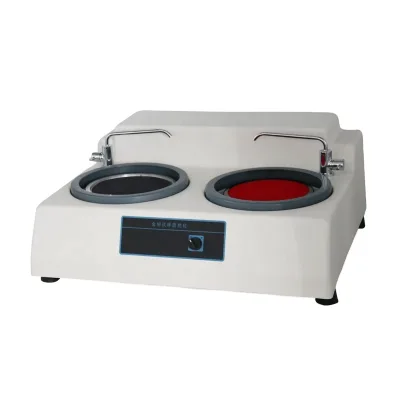


Advanced Grinding Machine for Precision Metallographic Polishing Analysis in China
$15000.00 - $25000.00
MOQ: 1 Pieces

Efficient Grinding & Polishing Machine for Metallographic Precision Analysis Solutions
$15000.00 - $25000.00
MOQ: 1 Pieces


Comprehensive Sourcing Guide
Strategic Sourcing Guide for Water Cooling Metallographic Grinding Machines
Procuring industrial-grade metallographic grinding machines requires a meticulous approach to technical verification and supply chain due diligence. For buyers investigating the Water Cooling Metallographic Grinding Machine category, the primary objective is to secure equipment that ensures sample preparation accuracy while maintaining operational safety and longevity. The market presents a diverse array of specifications, ranging from basic manual units to fully automated systems with digital interfaces. This guide synthesizes observed market data and technical attributes to provide a structured framework for evaluating potential suppliers and selecting the appropriate machinery for laboratory or industrial quality control environments.
Technical Specifications and Operational Capabilities
The core functionality of a Water Cooling Metallographic Grinding Machine lies in its ability to grind and polish metallographic samples without inducing thermal damage. Thermal stress can alter the microstructure of the specimen, leading to inaccurate analysis results. Therefore, the integration of a water cooling system is not merely an optional feature but a critical requirement for high-fidelity sample preparation. Buyers must verify that the cooling mechanism effectively dissipates heat generated during the grinding process, particularly when working with hard alloys or conducting high-speed operations.
Speed regulation is another pivotal technical parameter. Market observations indicate that viable units in this category often feature variable speed capabilities, with operating ranges extending from 0 to 600 rpm. Some models offer stepless speed regulation, allowing for precise adjustments to match the specific material hardness and the desired finish. The rotation direction is typically configurable, supporting both clockwise (Cw) and counter-clockwise (Ccw) operations to accommodate different grinding disc types and sample geometries. The motor power for these units generally falls within the 550W to 750W range, powered by standard electrical supplies of 110V or 220V. It is essential to confirm the rated current, which often sits around 8A, to ensure compatibility with the facility's power infrastructure.
The physical dimensions and weight of the machine are significant for laboratory layout planning. Observed specifications suggest a net weight ranging from 50kg to 100kg, with specific models weighing approximately 57kg or 60kg. The footprint varies, with some units measuring around 700x430x580mm, while others may adhere to standard dimensions like 717x900x660mm. The working disc diameter is a crucial factor in throughput; common sizes include 8 inches (203mm), 10 inches (254mm), and 12 inches (305mm). The maximum removal capacity, which dictates the depth of material that can be ground in a single pass, is observed to be up to 20mm in certain configurations.
Precision, Accuracy, and Sample Preparation Standards
Accuracy in metallographic preparation is paramount for subsequent microscopic analysis. High-performance machines are designed to achieve a quantitative height accuracy of 0.1mm, ensuring consistent sample thickness across batches. The flatness of the grinding surface is a critical quality metric; factory inspection standards for these units often require flatness to be less than 2 micrometers (2um). Furthermore, the perpendicularity of the sample holder to the disk and the parallelism of the holder itself are strictly controlled, with tolerances also maintained below 2um. These geometric constraints ensure that the sample surface remains parallel to the grinding disc, preventing angled cuts that could compromise the integrity of the microstructure.
The processing method employed by these machines is primarily grinding, utilizing grinding discs or wheels. The material of the machine's construction is predominantly steel, providing the necessary rigidity to minimize vibration during high-speed rotation. The system often includes a swing function, where the swing range and speed are adjustable, allowing for uniform wear of the grinding disc and consistent sample finishing. The rotation of the sample holder is also adjustable, offering flexibility in how the sample interacts with the abrasive surface. For advanced applications, the machine may feature a digital display and a touch panel, often made of tempered glass, to facilitate intuitive operation and precise parameter entry.
Compliance, Certification, and Safety Standards
When sourcing industrial machinery, verifying compliance with international safety and quality certifications is a non-negotiable step. The CE certification is a widely recognized standard observed in this product category, indicating that the equipment meets the essential health, safety, and environmental protection requirements for products sold within the European Economic Area. Buyers should request valid certification documentation from suppliers to confirm that the specific model being purchased holds this status.
Beyond the CE mark, buyers must evaluate the electrical safety standards relevant to their local jurisdiction. Since power supplies vary between 110V and 220V, the machine must be certified for the specific voltage environment in which it will operate. The warranty period is another indicator of manufacturer confidence; a standard warranty of 1 year is commonly observed, covering defects in materials and workmanship. However, the scope of this warranty, including coverage for the motor, control panel, and mechanical components, should be explicitly detailed in the procurement contract.
Cost Drivers and Procurement Economics
The price of water cooling metallographic grinding machines exhibits a wide range, observed between $1 and $25,000 USD. This variance is driven by several factors, including the level of automation, the precision of the control systems, and the complexity of the mechanical design. Basic manual units with fixed speeds and simple cooling systems will occupy the lower end of the spectrum, while fully automatic models with digital displays, variable speed control, and advanced sample holders will command higher prices.
The minimum order quantity (MOQ) for these machines is typically low, often ranging from 1 to 2 units, making them accessible for individual laboratories or small workshops. However, buyers should be aware that shipping costs, particularly for heavy units weighing up to 100kg, can significantly impact the total landed cost. Packaging is usually provided in a wooden case to protect the machinery during transit, though customized packing options may be available for specialized shipping requirements. Buyers must also consider the long-term cost of ownership, including the consumption of grinding discs, the cost of replacement parts, and the energy efficiency of the motor.
Typical Applications and Industry Use Cases
These machines are primarily designed for laboratory applications, serving as essential tools in materials science, metallurgy, and quality assurance departments. The ability to prepare samples with high accuracy and flatness makes them suitable for a wide range of industries, including aerospace, automotive, electronics, and general manufacturing. In these sectors, the integrity of the metallographic sample is critical for failure analysis, material characterization, and process optimization.
The specific application dictates the required specifications. For instance, a laboratory focusing on high-strength alloys may require a machine with a higher torque capacity (20-360N) and a more robust cooling system to handle the increased heat generation. Conversely, a facility performing routine quality checks on standard steels may opt for a unit with a simpler configuration. The adjustable swing and rotation features allow the machine to adapt to various sample shapes and sizes, enhancing its versatility across different testing protocols.
Supplier Evaluation and Quality Assurance Protocols
Selecting a reliable supplier involves more than just comparing prices; it requires a thorough evaluation of the supplier's technical support, manufacturing capabilities, and quality control processes. Buyers should verify the origin of the equipment, with China being a common source of production for this category. It is crucial to confirm the specific model number, such as Alpha 660, SemiPOL, or GP-1A, to ensure that the specifications match the buyer's requirements.
Quality assurance should be a continuous process throughout the procurement lifecycle. Buyers must request factory inspection reports that verify critical dimensions, such as the flatness of the grinding surface and the perpendicularity of the sample holder. The presence of a digital display and touch panel should be tested for responsiveness and accuracy. Additionally, the supplier should provide clear documentation regarding the maintenance of the water cooling system to prevent clogging or leakage, which could damage the machine or compromise sample quality.
Long-Term Procurement and Maintenance Considerations
Investing in a Water Cooling Metallographic Grinding Machine is a long-term commitment that requires careful planning for maintenance and operational continuity. The warranty period of 1 year provides a baseline for support, but buyers should inquire about the availability of spare parts and the lead time for replacements. The mechanical components, such as the motor and the grinding disc drive, are subject to wear and tear and may require periodic servicing.
The customization options available, such as customized packing or specific power supply configurations, can enhance the machine's fit within a specific facility. However, buyers must ensure that any customizations do not void the warranty or compromise the safety certifications. Regular calibration and inspection of the machine's accuracy, particularly the quantitative height and flatness, are essential to maintain the reliability of test results. By establishing a proactive maintenance schedule and maintaining a strong relationship with the supplier, buyers can ensure the longevity and performance of their metallographic grinding equipment.
Comparative Overview of Key Specifications
To assist in the decision-making process, the following table summarizes the key technical attributes observed in the market for water cooling metallographic grinding machines. This comparison highlights the variability in specifications and helps buyers identify the features most relevant to their specific needs.
| Feature Category | Observed Range / Options | Critical Verification Point |
|---|---|---|
| Power Supply | 110V / 220V / 220VAC | Confirm compatibility with local grid voltage. |
| Motor Power | 550W - 750W | Ensure sufficient torque for material hardness. |
| Speed Range | 0-50rpm to 0-600rpm | Verify stepless regulation and variable speed capability. |
| Disc Diameter | 8 Inch (203mm) to 12 Inch (305mm) | Match disc size to sample batch volume requirements. |
| Accuracy | 0.1mm (Quantitative Height) | Check for factory inspection reports on flatness (<2um). |
| Weight | 50kg - 100kg (e.g., 57kg, 60kg) | Assess floor load capacity and portability needs. |
| Control Interface | Digital Display, Touch Panel (Tempered Glass) | Test responsiveness and user interface intuitiveness. |
| Cooling System | Water Cooling (Implied by keyword) | Verify flow rate and leak prevention mechanisms. |
| Certification | CE | Request valid certification documentation. |
| Warranty | 1 Year | Clarify coverage scope for motor and mechanical parts. |
By adhering to these guidelines and rigorously verifying the provided specifications, buyers can navigate the complex landscape of metallographic grinding machine procurement with confidence. The focus must remain on technical alignment, compliance verification, and long-term operational reliability to ensure that the selected equipment delivers consistent, high-quality results in demanding laboratory environments.
FAQs
What certification does the Water Cooling Metallographic Grinding Machine have?
The machine holds CE certification, indicating compliance with European safety standards. This ensures the equipment meets essential health and environmental requirements for operation in regulated markets.
How is the speed of the working disc regulated on this unit?
The unit features stepless speed regulation ranging from 0 to 600 rpm. This variable speed capability allows operators to adjust the rotation precisely for different material hardness and grinding requirements.
Which power supply options are available for this grinding machine?
The machine supports both 110V and 220V power supplies to accommodate different electrical infrastructures. A rated current of 8A is typical, ensuring compatibility with standard laboratory power sources.
Can the machine achieve high precision in sample preparation?
Yes, the system achieves a quantitative height accuracy of 0.1mm. Factory inspections also verify that flatness remains below 2 micrometers, ensuring consistent sample thickness for analysis.
What is the warranty period for this Water Cooling Metallographic Grinding Machine?
The standard warranty period is 1 year, covering defects in materials and workmanship. Buyers should verify specific coverage details for the motor and control panel components in the contract.
How heavy is the Water Cooling Metallographic Grinding Machine?
The net weight typically ranges from 50kg to 100kg, with specific models weighing around 57kg or 60kg. This weight provides the necessary rigidity to minimize vibration during high-speed grinding operations.