Source Water Tight Composite Manhole Grate for Road, Garden, Municipal
Find and compare 30 listings for the Water Tight Composite Manhole Grate suitable for road engineering, garden drainage, and municipal construction. Buyers can evaluate options based on material, load capacity, and customization features.
Key considerations
Products List




Comprehensive Sourcing Guide
Strategic Sourcing Guide for Water Tight Composite Manhole Grates
Procuring water tight composite manhole grates requires a disciplined approach that balances material science, regulatory compliance, and supply chain reliability. In the global infrastructure market, these components serve as critical interfaces between underground utilities and surface environments. The selection process must move beyond simple price comparisons to evaluate technical attributes such as load capacity, material composition, and sealing mechanisms. This guide synthesizes available product data to assist procurement professionals in defining precise requirements, verifying supplier capabilities, and ensuring long-term asset performance without relying on unverified market assertions.
Material Composition and Structural Integrity
The foundation of a reliable manhole grate lies in its material selection. The supplied product data indicates a diverse range of composite materials available in the market, specifically BMC (Bulk Molding Compound), SMC (Sheet Molding Compound), and Iron. Each material offers distinct performance characteristics that must align with the specific environmental conditions of the installation site. BMC and SMC are prominent in composite applications, offering inherent resistance to corrosion and chemical degradation, which is essential for municipal drainage systems exposed to varying pH levels and moisture.
In contrast, Iron-based grates provide high structural rigidity but require specific surface treatments to mitigate rust. The data highlights a "Resistance to Corrosion" attribute as a key property, suggesting that whether the base material is composite or metal, the final product must demonstrate durability against environmental stressors. Furthermore, the "Anti-Skid Design" mentioned in the surface processing details is a critical safety feature, particularly for roadways and pedestrian areas where slip resistance is non-negotiable.
Buyers must verify the specific molding technique used, as the data references "Moulding Pressing" as a standard production method. This process influences the density and uniformity of the composite matrix. A high-quality molding process ensures that the grate maintains its shape under heavy loads and prevents delamination over time. The "Heavy/Light Duty" classification found in the product features indicates that grates are engineered for specific load scenarios, necessitating a clear definition of the required duty class before ordering.
Technical Specifications and Customization Options
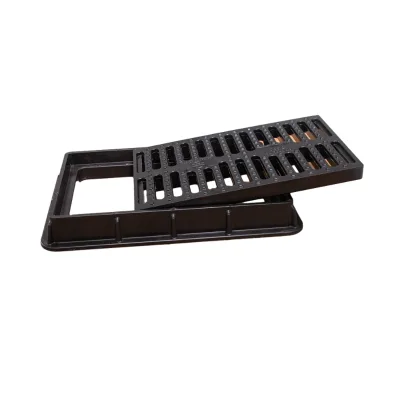
Technical specifications for composite manhole grates are not one-size-fits-all. The observed product data reveals a standard dimension of Φ 700x30, representing a circular grate with a 700mm diameter and 30mm thickness. However, the data also explicitly lists "Square" shapes and "Customizable" load capacities, indicating that suppliers offer flexibility in geometry and performance metrics. The "Water Tightness" attribute is a primary functional requirement for the core keyword, implying that the design must include specific sealing mechanisms or tight tolerances to prevent surface water ingress or underground gas escape.
Customization is a significant driver in this sector. The product attributes confirm that "Customization" is available, extending to color options like "Black/Grey/Customization" and "OEM" color services. This allows municipalities and private developers to match grates with existing infrastructure aesthetics. Additionally, the "Optional Mounting Handle" feature enhances operational convenience, facilitating easier removal for maintenance crews. The "Lightness and Handiness" attribute suggests that composite materials are often chosen to reduce the physical strain on installation teams compared to traditional cast iron.
When evaluating technical data, buyers should look for specific model numbers such as DG08, WG002, SS500, SS400, and MR690. These identifiers often correspond to specific load classes or design iterations. The "Standard" dimension of Φ 700x30 serves as a baseline, but the "Customizable" load capacity suggests that the actual load-bearing rating (e.g., A/B/C/D classes) must be confirmed on a case-by-case basis. The "Easy Disassembly" feature is another technical consideration, ensuring that the grate can be removed and reinstalled without damaging the surrounding frame or the grate itself.
Compliance, Certification, and Regulatory Standards
Navigating the regulatory landscape is essential for B2B procurement in the construction and infrastructure sectors. The supplied facts confirm that products often carry "ISO" and "CE" certifications, with specific mentions of "ISO9001" for quality management systems. These certifications indicate that the supplier adheres to international standards for quality control and manufacturing consistency. The presence of "CE" marking is particularly relevant for products entering the European market, signifying compliance with health, safety, and environmental protection standards.
Regarding performance standards, the data references "BS En124-2: 2015" as a specific standard for load testing and classification. This British Standard is widely recognized for defining the load classes for manhole covers and gratings. However, the background information also notes "EN124-5" and "EN1433" as low-confidence or background standards. Procurement teams must verify if the specific product being sourced meets the exact version of the standard cited in the contract. Relying on general claims without verifying the specific standard version can lead to compliance gaps, especially in jurisdictions with strict building codes.
The "Quality Control" attribute mentions "Party Inspection," which implies that third-party verification is available or standard practice. Buyers should insist on inspection reports that validate the "Heavy/Light Duty" claims and the "Water Tightness" performance. The "Compensation for Quality Problems" and "1 Year Warranty" attributes provide a safety net, but the primary defense against non-compliance is rigorous pre-shipment verification. The "30 Years" or "Above 30years" life time claims are significant longevity indicators, but they should be supported by material data sheets and accelerated aging test results rather than accepted as marketing assertions.
Cost Drivers and Procurement Economics
Understanding the cost structure of composite manhole grates requires analyzing the interplay between material, customization, and logistics. The observed price range in the market spans from 1.6 to 2000 USD, a wide variance that reflects differences in material grade, load capacity, size, and order volume. The Minimum Order Quantity (MOQ) ranges from 1 to 100 units, offering flexibility for both small repair projects and large-scale municipal contracts.
Material costs are a primary driver. SMC and BMC composites generally command different price points based on resin quality and fiber reinforcement. Iron-based grates may have different cost structures due to raw material volatility. Customization options, such as specific colors, custom mounting handles, or non-standard dimensions, will inevitably increase the unit cost. The "OEM ODM" service availability suggests that buyers can engage in collaborative design, which may involve tooling costs but can lead to long-term savings through optimized logistics or branding.
Logistics and packaging also influence the final landed cost. The data specifies "Pallet&Waterproof Stretch Film" and "Pallets" as standard packing methods. This indicates that the products are designed for secure transport, but the weight and volume of the pallets will affect shipping costs. The "Delivery Time" is listed as "20days" in some contexts and simply "Days" in others, highlighting the need for clear lead time agreements. Buyers should factor in the "Load Capacity" variability, as higher load classes may require thicker materials or more complex molding, impacting the price per unit.
Typical Applications and Performance Requirements
The versatility of composite manhole grates allows them to serve in diverse environments. The product data explicitly lists "Road, Garden, Municipal Construction" and "Road Engineering and Drainage" as primary application areas. In road engineering, the "Heavy/Light Duty" classification is critical; heavy-duty grates are required for vehicular traffic, while light-duty versions suffice for pedestrian zones or garden paths. The "Anti-Theft Property" is a specific feature that addresses security concerns in urban environments, preventing unauthorized removal of valuable metal or composite components.
Water tightness is a paramount requirement for drainage systems. The "Water Tightness" attribute ensures that the grate prevents surface runoff from entering the underground network unnecessarily or, conversely, prevents foul gases from escaping. This is particularly important in "Municipal Construction" where environmental regulations are strict. The "Electromagnetic Waves" permeability attribute suggests that some composite grates are designed to be non-conductive or transparent to electromagnetic signals, which is beneficial for installations near sensitive electronic equipment or communication lines.
The "Appearance" and "Color" options allow for aesthetic integration in "Garden" settings, where black, grey, or custom colors can blend with landscaping. The "Convenience" of "Lightness and Handiness" makes these grates ideal for frequent maintenance scenarios in municipal settings. The "Fastening" mechanism, noted for "Noise Reduction," is a subtle but important feature for urban areas, reducing the clatter often associated with metal grates under traffic.
Supplier Evaluation and Quality Assurance
Selecting a reliable supplier is as important as selecting the right product. The data indicates that suppliers offer "OEM ODM" services and "After-Sales Service" including compensation for quality problems. This suggests a mature supply chain capable of handling custom requests and supporting long-term relationships. The "Party Inspection" attribute is a strong indicator of a supplier's commitment to transparency; buyers should verify if they can conduct their own inspections or if a third-party agency is required.
When evaluating suppliers, buyers should check for the presence of "ISO9001" certification and "CE" marking. These are not just badges but indicators of a systematic approach to quality management. The "Life Time" claims of 30 years should be backed by material warranties and technical data. The "Surface" treatment, specifically the "Anti-Skid Design," must be verified through physical samples or test reports to ensure it meets safety standards.
The "prod_origin" is listed as "China" and "Jiangsu, China," which are major manufacturing hubs. Buyers should be aware of the logistics implications of sourcing from these regions, including lead times and potential shipping delays. The "Delivery Time" of 20 days is a specific data point that should be used as a benchmark, but buyers must confirm this against current supply chain conditions. The "Quality Control" process should be clearly defined, with clear protocols for rejecting non-conforming units.
Long-Term Procurement and Lifecycle Management
Long-term procurement considerations extend beyond the initial purchase price to include maintenance, replacement, and lifecycle costs. The "1 Year Warranty" and "Compensation for Quality Problems" provide immediate protection, but the "30 Years" life time claim suggests a long-term investment. Buyers should consider the total cost of ownership, including the frequency of maintenance and the ease of replacement. The "Easy Disassembly" feature is crucial here, as it reduces the labor cost and time required for future interventions.
The "Custom Function" capabilities, such as "Water Tightness" and "Optional Mounting Handle," should be evaluated for their long-term utility. A grate that is easy to open and close without special tools will reduce operational friction over decades. The "Color" stability is another factor; while "Black/Grey/Customization" is available, the long-term resistance to UV degradation and fading should be verified, especially for outdoor applications in "Garden" or "Road" settings.
Finally, the "Load Capacity" must be reviewed periodically. As infrastructure evolves, traffic loads may increase, requiring grates to be upgraded. The "Customizable" nature of the load capacity allows for future-proofing, but the initial specification must be robust enough to handle current and near-future demands. By focusing on these long-term factors, procurement teams can ensure that the investment in water tight composite manhole grates delivers value over the entire lifecycle of the infrastructure project.
| Feature Category | Key Attributes from Data | Procurement Verification Focus |
|---|---|---|
| Material | BMC, SMC, Iron, Stainless Steel | Verify resin quality, fiber density, and corrosion resistance data. |
| Certification | ISO, CE, ISO9001 | Confirm valid certificates and specific standard versions (e.g., BS En124-2: 2015). |
| Performance | Water Tightness, Anti-Skid, Noise Reduction | Request test reports for load capacity, sealing, and slip resistance. |
| Customization | Shape (Round/Square), Color, Handles | Confirm MOQ for custom runs and lead times for non-standard items. |
| Logistics | Pallets, Waterproof Film, 20 Days Delivery | Verify packaging integrity and actual lead time against current supply chain status. |
| Warranty | 1 Year, Compensation for Quality | Review terms of service and claim procedures for quality issues. |
FAQs
What materials are used for water tight composite manhole grates?
These grates are commonly manufactured using BMC, SMC, or Iron. BMC and SMC offer corrosion resistance, while Iron provides structural rigidity. The specific material choice depends on the required load capacity and environmental conditions of the installation site.
Which certifications do water tight composite manhole grates typically hold?
Products often carry ISO, CE, and ISO9001 certifications. These indicate adherence to international quality management and safety standards. Buyers should verify specific standard versions like BS En124-2: 2015 for load classification compliance.
How long is the expected service life of these grates?
The service life is typically above 30 years. This longevity is supported by material durability and resistance to corrosion. However, actual performance depends on proper installation and adherence to the specified load capacity classes.
Can water tight composite manhole grates be customized for color?
Yes, customization is available for colors such as Black, Grey, or OEM specific shades. Suppliers also offer optional mounting handles and custom dimensions. This flexibility allows the grates to blend with municipal or garden infrastructure aesthetics.
What is the standard delivery time for these products?
The standard delivery time is approximately 20 days. Some listings indicate variable lead times depending on order volume. Buyers should confirm specific lead times during the procurement process to ensure project timelines are met.
Are these grates suitable for heavy duty road applications?
Yes, they are available in Heavy and Light Duty classifications. Load capacities are customizable and can meet classes A through D. This makes them suitable for various applications including roadways, gardens, and municipal construction projects.
What packaging is used for shipping water tight composite manhole grates?
Products are typically packed on pallets with waterproof stretch film. This ensures secure transport and protection against moisture damage during shipping. The packaging method supports efficient handling and reduces the risk of surface damage.