Source Water Treatment Cationic and Anionic PAM for Industry, Environmental Protection, Agriculture
Compare 30 listings of Water Treatment Cationic and Anionic PAM available from suppliers in China. Buyers can evaluate specifications like hydrolysis degree, solid content, and packaging options for wastewater treatment, textile, and paper applications.
Key considerations
Products List


China Anionic Cationic and Nonionic PAM Manufacturer for Water Treatment
$1900.00 - $2000.00
MOQ: 1 Tons


Polyacrylamide Gel PAM Water Treatment, Anionic Cationic PAM Factory Price
$1300.00 - $1800.00
MOQ: 1 Tons


CAS 9003-05-8 High Purity Polyacrylamide White Powder Water Treatment Flocculant PAM
$1300.00 - $1800.00
MOQ: 1 Tons

Water Treatment Flocculant High Quality Polyacrylamide PAM for Sale/China Supplier
$1300.00 - $1800.00
MOQ: 1 Tons

China Anionic and Cationic Polyacrylamide PAM Manufacturer for Water Treatment
$500.00 - $1000.00
MOQ: 1 Tons
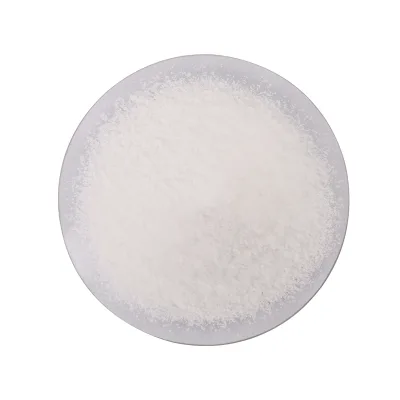


Polyacrylamide Anionic and Cationic PAM Manufacturer for Water Treatment CAS 9003-05-8
$1000.00 - $1280.00
MOQ: 10 Tons


Comprehensive Sourcing Guide
Strategic Sourcing Guide for Water Treatment Cationic and Anionic Polyacrylamide (PAM)
Procuring Polyacrylamide (PAM) for water treatment applications requires a disciplined approach that balances technical performance with supply chain reliability. The market offers a diverse range of products, primarily categorized by their ionic charge—cationic, anionic, and nonionic—which dictates their specific utility in coagulation and flocculation processes. For buyers targeting water treatment chemicals, textile auxiliaries, and paper chemicals, understanding the granular specifications and operational constraints of these polymers is essential. This guide synthesizes available product data to provide a framework for evaluating suppliers, verifying quality, and managing procurement logistics without relying on unverified market claims.
Technical Specifications and Product Variants
The core of any PAM sourcing strategy lies in understanding the specific technical attributes that define the product's efficacy. Polyacrylamide is not a monolithic chemical; it exists in various forms, including granulars and powders, with distinct physical and chemical properties. Observed product data indicates that PAM is frequently supplied as a dry powder or granular material, typically appearing white in color. The solid content is a critical metric, with observed specifications ranging from 88% to 88.5% minimum, while other listings suggest a standard purity of 90% minimum. Buyers must verify the specific solid content required for their application, as this directly impacts the dosage rates and mixing efficiency in water treatment facilities.
The hydrolysis degree is another vital parameter, influencing the polymer's charge density and molecular weight. Available data points to a hydrolysis degree range of 5-35%, a factor that determines the polymer's interaction with suspended particles in wastewater. The pH value of the product itself is generally observed between 4 and 12, indicating a broad operational window, though the specific pH of the application environment must be compatible with the polymer's ionic type. The product is available in multiple model designations, such as Apam, CPAM, and generic PAM, with specific models like KOYE and pam08 also appearing in supplier catalogs. These designations often correlate with the ionic charge: Anionic, Cationic, and Nonionic types are all available, allowing for tailored solutions based on the nature of the contaminants being treated.
| Attribute | Observed Range/Value | Application Relevance |
|---|---|---|
| Appearance | Granulars, Powder | Affects dissolution speed and handling |
| Color | White | Visual indicator of purity |
| Solid Content | 88% - 90% min | Determines active ingredient concentration |
| Hydrolysis Degree | 5-35% | Influences flocculation efficiency |
| pH Value | 4 ~ 12 | Indicates chemical stability range |
| Type | Anionic, Cationic, Nonionic | Dictates specific water treatment use case |
Compliance, Certification, and Environmental Standards
When sourcing water treatment chemicals, compliance with environmental and safety standards is paramount. The supplied product data explicitly confirms that these products are designated for "Environmental Protection" and "Wastewater Treatment," with a specific attribute noting "Environmental Protection: Yes." This suggests that the products are formulated to meet regulatory requirements for effluent treatment. However, buyers must exercise caution regarding specific certification claims. While background information mentions ISO9001, ISO45001, and ISO14001, these are listed as low-confidence background items and should not be assumed as verified facts for any specific supplier without direct documentation.
Instead of relying on assumed certifications, procurement teams should verify that the supplier can provide a Certificate of Analysis (CoA) for every batch, confirming that the solid content, hydrolysis degree, and pH values match the agreed specifications. The product standard is frequently cited as "90%min" or "88.5%min," and the specific usage is often labeled as "Technical Grade." For applications involving biological purposes or specific industrial processes, the "Specific Usage" attribute notes "For Biological Purpose, Technical Grade," which requires careful verification to ensure the chemical does not introduce toxic byproducts. Buyers should request proof of compliance with local environmental regulations regarding the discharge of treated water, as the efficacy of the PAM is directly tied to the final water quality.
Cost Drivers and Procurement Economics
The cost of Polyacrylamide is influenced by several variables, including the ionic charge, molecular weight, and packaging format. The observed market data reveals a significant price variance, with listed prices ranging from $1 to $2,688 USD. This wide range likely reflects differences in order volume, purity levels, and the specific type of PAM (e.g., high-molecular-weight cationic polymers often command a premium over standard anionic grades). The Minimum Order Quantity (MOQ) is another critical cost driver, with observed ranges spanning from 1 unit to 1,000 units. However, specific product attributes indicate a standard MOQ of 1 Ton or 1 metric ton (1mt), suggesting that smaller orders may incur higher per-unit costs or may not be feasible depending on the supplier's logistics.
Packaging also plays a role in the total landed cost. Products are commonly supplied in 25kg Kraft paper bags, but larger options such as 200kg or 1,000kg packages are available. The choice of packaging affects handling efficiency and storage requirements. Bulk packaging (1,000kg) reduces the cost per kilogram but requires significant on-site storage space and material handling equipment. Conversely, 25kg bags offer flexibility for smaller facilities but increase the labor cost associated with unpacking and storage. Buyers should calculate the total cost of ownership, including storage, handling, and potential waste from damaged packaging, rather than focusing solely on the unit price.
Typical Applications and Usage Scenarios
Polyacrylamide is a versatile chemical with a broad spectrum of applications beyond basic wastewater treatment. The product data explicitly lists "Sewage Treatment Chemicals" as a primary use, but the scope extends to "Textile Auxiliary Agents," "Paper Chemicals," "Leather Auxiliary Agents," and "Oil Drilling Auxiliary Agents." This versatility makes PAM a critical component in industries where solid-liquid separation is required. In the context of water treatment, cationic PAM is often used for sludge dewatering and sewage treatment due to its ability to neutralize negatively charged particles, while anionic PAM is frequently employed in mineral processing and industrial wastewater clarification.
The "Use" attribute confirms the product's role in "Industry" and "Environmental Protection," while the "Other Names" field identifies it as a "Flocculant." This classification is central to its function: it aggregates fine particles into larger flocs, allowing them to settle out of the water column. For buyers in the agriculture sector, the data notes an application in "Agriculture," likely for soil conditioning or irrigation water treatment. The "Specific Usage" field further refines this, mentioning "Technical Grade" and "For Biological Purpose," which implies that the chemical must be selected carefully to avoid disrupting biological treatment processes in wastewater plants. Understanding the specific industry application is crucial for selecting the correct ionic type and molecular weight.
Supplier Evaluation and Operational Logistics
Evaluating a supplier for PAM requires a focus on their ability to deliver consistent quality and reliable logistics. The observed data indicates that the product origin is primarily "Weifang, China" or generally "China," which suggests a concentrated supply base. Buyers should verify the supplier's location and their capacity to manage international shipping, as lead times can vary. The average lead time is observed to be "Within 15 Workdays," which is a reasonable benchmark for standard orders, but this should be confirmed for custom orders or large volumes.
Customization is a key differentiator, with the "Customization" attribute marked as "Available." This includes the ability to tailor the hydrolysis degree or molecular weight to specific client needs. Furthermore, "OEM / ODM Service" is available, with "Private Label Supported," allowing buyers to brand the product for their own distribution networks. The availability of a "Free Sample" for quality testing is another positive indicator, enabling buyers to validate the product's performance before committing to a large order. However, buyers must verify the sample's specifications against the bulk order requirements to ensure consistency.
| Supplier Capability | Observed Status | Verification Requirement |
|---|---|---|
| Customization | Available | Confirm technical parameters |
| OEM/ODM | Available (Private Label) | Review branding agreements |
| Free Sample | Available | Test for quality consistency |
| Lead Time | Within 15 Workdays | Confirm for specific order size |
| Origin | Weifang, China / China | Verify logistics and shipping terms |
Quality Control and Long-Term Procurement Considerations
Maintaining product quality over time is essential for the reliability of water treatment operations. The shelf life of Polyacrylamide is a critical factor, with observed data citing two different durations: "24 Months, If Correct Storage" and "12 Months Under Proper Storage." This discrepancy highlights the importance of storage conditions. The recommended storage protocol is to "Keep Sealed, Avoid Direct Sunlight, Store in Cool" or "Cool and Dry Place." Exposure to moisture or sunlight can degrade the polymer, reducing its flocculation efficiency. Buyers must ensure that their storage facilities meet these strict requirements to prevent product spoilage.
For long-term procurement, consistency in the "Standard" is vital. While some listings specify "90%min" and others "88.5%min," the buyer must establish a clear standard in their purchase agreement. The "Content" attribute is listed as "Standard" or "88%," which requires clarification to avoid ambiguity. Regular quality audits and batch testing are necessary to ensure that the supplier maintains these standards over time. Additionally, the "Average Lead Time" of 15 workdays should be factored into inventory planning to prevent stockouts. By establishing a robust quality control framework and maintaining clear communication with suppliers regarding storage and handling, buyers can ensure a steady supply of high-performance Polyacrylamide for their water treatment needs.
FAQs
What are the available forms of Water Treatment Cationic and Anionic PAM?
The product is available as dry powder or granulars, typically appearing white. Solid content ranges from 88% to 90% minimum, and the hydrolysis degree falls between 5% and 35% for effective flocculation in various industrial applications.
Can buyers customize the specifications of Water Treatment Cationic and Anionic PAM?
Yes, customization is available for specific client needs regarding technical parameters. OEM and ODM services with private label support are offered, allowing buyers to tailor the product for their specific wastewater treatment or industrial processes.
How long is the shelf life of Water Treatment Cationic and Anionic PAM?
Shelf life varies between 12 to 24 months depending on storage conditions. Products must be kept sealed in a cool, dry place away from direct sunlight to maintain the solid content and prevent degradation of the polymer.
What is the minimum order quantity for Water Treatment Cationic and Anionic PAM?
The standard minimum order quantity is 1 metric ton, though ranges up to 1000 units exist. Specific listings confirm an MOQ of 1 Ton, which impacts the total cost and logistics planning for bulk procurement of these chemicals.
Which packaging options are available for Water Treatment Cationic and Anionic PAM?
Packaging options include 25kg Kraft paper bags, 200kg bags, and 1000kg bulk packages. The choice of packaging affects handling efficiency and storage requirements, with 25kg bags offering flexibility for smaller facilities and bulk bags reducing unit costs.
Where are Water Treatment Cationic and Anionic PAM products typically sourced from?
Products originate primarily from Weifang, China, or generally within China. The average lead time for these orders is within 15 workdays, allowing for predictable supply chain planning for international buyers seeking these specific water treatment chemicals.