Source Waterjet Cut-to-Size Marble Pattern for Countertop Floor Wall
Compare 30 listings for Waterjet Cut-to-Size Marble Pattern options suitable for countertops, floors, and walls. Buyers can review specifications like thickness, finish, and dimensions to find the right stone for their projects.
Key considerations
Products List


Popular Waterjet Marble Medallions Flooring Tile Marble Tiles Design Floor Pattern
$200.00 - $600.00
MOQ: 100 Square Meters

Natural Stone Flower Pattern Round Flooring Inlay Marble Tiles Waterjet Medallion Pattern
$200.00 - $600.00
MOQ: 100 Square Meters

Interior Design Flower Pattern Rectangular Flooring Inlay Marble Tiles Waterjet Medallion Pattern
$200.00 - $600.00
MOQ: 100 Square Meters

Waterjet Marble Medallions Flooring Tile Sale Marble Marmol Tiles Design Floor Pattern
$200.00 - $600.00
MOQ: 100 Square Meters

Popular Flower Pattern Round Flooring Inlay Marble Tiles Waterjet Medallion Pattern
$200.00 - $600.00
MOQ: 100 Square Meters

Interior Decorator Flower Pattern Round Flooring Inlay Marble Tiles Waterjet Medallion Design
$200.00 - $600.00
MOQ: 100 Square Meters


3D Colors Water-Jet Cutting Marble Pattern Tile for Hotel and Villa Lobby
$33.00 - $150.00
MOQ: 10 Square Meters


Modern Marble Waterjet Medallion Pattern for Floor Tile Designs
$200.00 - $600.00
MOQ: 5 Square Meters

Factory Price High Quality Hall Waterjet Marble Pattern with Floor Tile
$200.00 - $600.00
MOQ: 5 Square Meters


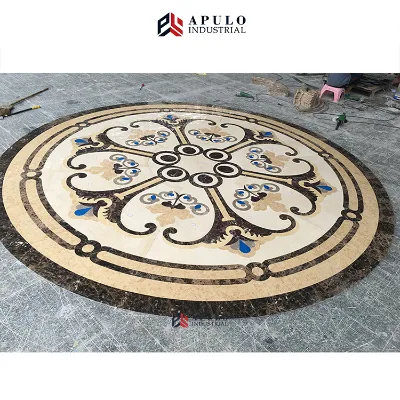


Marble Tile of Water Jet Pattern for Interior Flooring Design
$200.00 - $500.00
MOQ: 300 Square Meters

Comprehensive Sourcing Guide
Strategic Sourcing Guide for Waterjet Cut-to-Size Marble Patterns
Procuring waterjet cut-to-size marble patterns requires a nuanced understanding of the intersection between natural stone properties and high-precision machining capabilities. For buyers navigating the global market, the core keyword "Waterjet Cut-to-Size Marble Pattern" signifies a specialized product category where custom geometry meets the inherent variability of natural materials. This guide provides a structured approach to evaluating suppliers, verifying technical specifications, and ensuring procurement success without relying on unverified claims or generic assumptions. The following sections detail the critical factors that define a successful sourcing strategy for this specific product type.
Technical Specifications and Dimensional Precision
The foundation of any successful procurement for waterjet marble patterns lies in the precise alignment of technical specifications with project requirements. The observed market data indicates a diverse range of product attributes, particularly regarding size and thickness. Buyers must distinguish between standard slab dimensions and the specific cut-to-size requirements of waterjet applications. For instance, while some listings reference standard sizes such as 600x600mm or 150x150cm, the defining characteristic of waterjet patterns is the ability to produce custom geometries, including irregular shapes and intricate medallions.
Thickness is a critical variable that dictates both the structural integrity and the aesthetic finish of the final installation. The available data highlights a significant variance in thickness options, with specific references to 4mm and 18mm variants. A 4mm thickness is typically associated with decorative inlays or lighter wall applications, whereas 18mm is standard for heavy-duty flooring and countertop applications. When sourcing, buyers must explicitly verify the thickness tolerance, as waterjet cutting on thinner stone requires specialized handling to prevent breakage.
The cutting accuracy of the machinery is another paramount specification. High-end waterjet systems capable of producing these patterns often boast cutting accuracies around 0.1mm, with repeatability figures as tight as ±0.005mm. These figures are essential for ensuring that complex geometric patterns, such as waterjet medallions, fit together seamlessly without visible gaps. The table travel dimensions, often ranging from 1500mm to 2500mm in the X and Y axes, determine the maximum size of a single-piece pattern that can be produced without splicing. Buyers should request detailed machine specifications to confirm that the supplier's equipment can accommodate the maximum dimensions of their design.
Surface Finishing and Material Integrity
The aesthetic quality of waterjet marble patterns is heavily dependent on the surface finishing processes applied after cutting. The observed product attributes indicate that "Polished" is a primary finish, often paired with "Honed" as an available alternative. The choice between these finishes impacts the visual depth and tactile feel of the marble. A polished finish enhances the natural veining and color saturation, which is crucial for "Beige" or "Mixed Color" marble varieties used in luxury interiors. Conversely, a honed finish provides a matte appearance that is often preferred for flooring to reduce slip hazards.
The material itself, identified as Marble, introduces natural variations that must be managed during the sourcing process. The density of the stone, observed at approximately 2.6 g/cm³, is a standard metric for marble but can vary slightly between quarries. This density influences the stone's weight, which is a critical factor for shipping and structural support calculations. For example, a large waterjet medallion with a weight of 3500 kg requires specific logistical planning and reinforced flooring.
Color consistency is another vital aspect. While some products are listed as "Beige" or "Mixed," others offer "All Colors." Buyers should be aware that "Mixed Color" or "Irregular" shapes may result in significant color variation between batches. The "European Style" aesthetic often associated with these patterns relies on the harmonious blending of these natural variations. Therefore, the procurement process must include a rigorous review of physical samples to ensure the color profile matches the design intent before mass production begins.
Compliance, Certification, and Safety Standards
In the B2B procurement of stone products, compliance with international standards is non-negotiable. The presence of CE certification in the market data serves as a baseline indicator of conformity with European health, safety, and environmental protection standards. However, buyers should not assume that all listed products automatically possess this certification. The verification process must involve requesting valid, up-to-date certification documents from the supplier, specifically for the specific batch of marble being ordered.
Beyond general certifications, buyers must verify adherence to specific product standards. The data references standards such as "Grade A" and specific size standards like "600x600x18 polished." These designations imply a quality tier and dimensional accuracy that must be contractually defined. "Grade A" typically denotes high-quality stone with minimal natural defects, but the definition can vary by region. It is essential to establish a clear quality acceptance criteria in the purchase agreement, detailing what constitutes a defect and the allowable tolerance levels for color and texture variations.
Safety standards related to the manufacturing process are also relevant. Waterjet cutting involves high-pressure water systems, with maximum pressures observed up to 420 MPa and continuous operating pressures between 300-380 MPa. Suppliers must demonstrate that their facilities adhere to strict safety protocols regarding high-pressure equipment operation. Additionally, the power requirements, often listed as 37kw at 380V/50Hz, indicate the industrial nature of the production, necessitating that the supplier has the necessary electrical infrastructure to maintain consistent cutting quality.
Cost Drivers and Pricing Dynamics
Understanding the cost structure of waterjet cut-to-size marble patterns is essential for budget management. The observed price range in the market is exceptionally wide, spanning from $10 to $40,990. This vast disparity is driven by several factors, including the complexity of the design, the size of the pattern, the thickness of the stone, and the quantity ordered. A simple 15x15mm tile will naturally cost significantly less than a large, intricate 150x150cm medallion with custom waterjet detailing.
The Minimum Order Quantity (MOQ) is another significant cost driver. The observed MOQ range of 1 to 530 units suggests that suppliers offer flexible options for small-scale projects as well as large commercial contracts. However, higher MOQs often correlate with lower unit costs due to economies of scale in material procurement and machine setup. Buyers should negotiate based on their specific volume needs, keeping in mind that custom waterjet cutting involves setup time that is amortized over the order quantity.
Packaging and logistics also contribute to the final cost. The standard packaging method observed is "Fumigated Wooden Crates," which is necessary for international shipping to prevent pest infestation and protect the fragile stone during transit. The weight of the product, which can reach 3500 kg for large orders, significantly impacts freight costs. Buyers must factor in these logistics expenses when comparing supplier quotes, as a lower unit price may be offset by higher shipping costs if the packaging is inefficient or the supplier is located far from the port of entry.
Supplier Evaluation and Quality Control
Evaluating a supplier for waterjet marble patterns requires a multi-faceted approach that goes beyond price comparison. The technical capability of the supplier is paramount. Buyers should assess the machinery specifications, looking for features such as 3-axis systems, high-pressure pumps capable of 420 MPa, and cutting accuracies of 0.1mm. The ability to handle large table travels (e.g., 2500mm in X-axis) indicates the capacity to produce large-format patterns without segmentation.
Quality control processes must be transparent and documented. The availability of "Free Samples" is a positive indicator, allowing buyers to physically inspect the cut quality, edge finishing, and color consistency. However, buyers should also request a quality control report that details the inspection criteria used for the specific order. This should include checks for edge chipping, surface defects, and dimensional accuracy. The "A Grade" designation should be verified against a physical sample to ensure it meets the buyer's expectations.
Supplier reliability is another critical factor. The observed delivery time of "within 25 days" suggests a standard lead time, but this can vary based on order complexity and raw material availability. Buyers should confirm the production schedule and ensure there are buffer periods for potential delays. The origin of the product, noted as "China" in the data, is a common source for marble patterns, but buyers should verify the specific quarry source to ensure the stone quality matches the desired aesthetic.
Long-Term Procurement and Application Considerations
The long-term success of a waterjet marble pattern project depends on selecting the right application for the material. The observed applications include countertops, floors, walls, bathrooms, living rooms, and outdoor spaces. However, the suitability of marble for these applications varies. While "Beige" and "Mixed Color" marble are popular for interior walls and floors, outdoor use requires careful consideration of the stone's resistance to weathering and staining.
Maintenance is a key consideration for long-term ownership. Polished marble surfaces are prone to etching from acidic substances, which is a critical factor for kitchen countertops. Buyers should discuss maintenance protocols with the supplier, including recommended sealants and cleaning agents. The "European Style" aesthetic often implies a high-maintenance, high-luxury finish that requires regular care to preserve its appearance.
Future scalability is also important. If a project involves multiple phases or requires replacement parts, the supplier must be able to reproduce the pattern with consistent quality. The "Customization" attribute suggests that suppliers can accommodate design changes, but buyers should establish a protocol for design updates and ensure that the supplier has the capacity to handle re-orders with the same level of precision.
Comparative Analysis of Product Attributes
To facilitate decision-making, the following table summarizes key attributes observed in the market for waterjet cut-to-size marble patterns. This comparison highlights the variability in specifications that buyers must navigate.
| Attribute Category | Specific Observation | Procurement Implication |
|---|---|---|
| Thickness | 4mm, 18mm | 4mm for inlays/walls; 18mm for floors/countertops. Verify structural needs. |
| Surface Finish | Polished, Honed | Polished for luxury interiors; Honed for slip-resistant flooring. |
| Cutting Accuracy | 0.1mm | Essential for complex geometric patterns and seamless fitting. |
| Material Density | 2.6 g/cm³ | Critical for weight calculations and structural support planning. |
| Packaging | Fumigated Wooden Crates | Required for international shipping; impacts freight costs. |
| Certification | CE (Variable) | Must verify specific batch certification; do not assume universal compliance. |
| Lead Time | Within 25 days | Standard timeframe; confirm schedule for large or complex orders. |
| MOQ | 1 - 530 units | Flexible for small projects; negotiate unit cost for larger volumes. |
| Color Options | Beige, Mixed, All Colors | "Mixed" implies natural variation; require physical samples for approval. |
By adhering to these guidelines and maintaining a rigorous focus on verified data, buyers can effectively navigate the complexities of sourcing waterjet cut-to-size marble patterns. The combination of technical precision, material integrity, and strategic supplier evaluation ensures that the final product meets both aesthetic and functional requirements for high-end architectural applications.
FAQs
What thickness options are available for waterjet marble patterns?
Available thickness options include 4mm and 18mm variants. The 4mm thickness is typically used for decorative inlays or lighter wall applications, while 18mm is standard for heavy-duty flooring and countertops.
Can I request custom sizes for waterjet cut marble patterns?
Yes, customization is available for cut-to-size requirements. Buyers can specify dimensions such as 600x600mm or other custom geometries, with standard sizes also including 100x100cm and 120x120cm options.
Which surface finishes are offered for marble waterjet patterns?
Polished and honed finishes are available for these products. A polished finish enhances natural veining for luxury interiors, whereas a honed finish provides a matte appearance suitable for flooring to reduce slip hazards.
How long does delivery take for custom marble medallions?
The standard delivery time is within 25 days. This lead time applies to the production and shipping of custom waterjet patterns, though actual duration may vary based on order complexity and raw material availability.
What certifications are required for imported marble patterns?
CE certification is a documented standard for these products. Buyers should verify valid, up-to-date certification documents from the supplier to ensure conformity with European health, safety, and environmental protection standards.
How are waterjet marble patterns packaged for international shipping?
Products are packed in fumigated wooden crates. This packaging method is necessary for international shipping to prevent pest infestation and protect the fragile stone during transit, especially for heavy items weighing up to 3500 kg.