Source Waterproof 3D Wall Sticker for Household, Commerce, and Entertainment
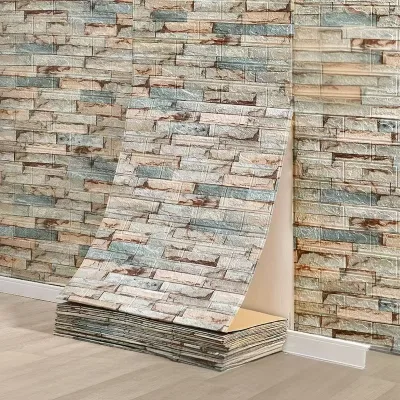
Explore 30 listings for Waterproof 3D Wall Sticker options featuring moisture-proof, fire-proof, and anti-static properties. Buyers can compare thickness, customization, and packaging details from manufacturers in China to find suitable wall decoration solutions.
Key considerations
Products List


Factory Supply PE Foam Material Self Adhesive Wallpaper 3D Wall Sticker
$0.90 - $2.60
MOQ: 500 Square Meters


PE Foam Wall Sticker Waterproof Self-Adhesive 3D Mural Wallpaper for Home
$0.90 - $2.60
MOQ: 500 Square Meters


3D Wall Sticker Waterproof Peel and Stick Self Adhesive Wallpaper Wall Tile
$0.20 - $0.30
MOQ: 100 Pieces


Decorative Material Design Wall Sticker 3D Self-Adhesive Wall Panel
$0.30 - $0.80
MOQ: 2000 Square Meters

Comprehensive Sourcing Guide
Strategic Sourcing Guide for Waterproof 3D Wall Stickers
The global demand for interior finishing materials has surged, with waterproof 3D wall stickers emerging as a versatile solution for both residential and commercial spaces. These products combine aesthetic depth with functional resilience, offering a cost-effective alternative to traditional tiling or plasterwork. For procurement professionals, navigating the market requires a disciplined approach to verifying technical specifications, understanding cost drivers, and ensuring supplier reliability. This guide synthesizes available market data to provide a framework for sourcing high-quality 3D wall stickers that meet rigorous performance standards.
Technical Specifications and Material Attributes
When evaluating waterproof 3D wall stickers, the primary focus must be on the physical properties that define durability and application suitability. The market data indicates a significant variance in thickness specifications, which directly impacts the product's structural integrity and visual impact. Buyers should expect to encounter products with thicknesses ranging from 5mm to 8.5mm. Specific listings highlight a 5mm variant, while others specify an 8mm thickness, suggesting that the "3D" effect is achieved through varying embossing depths rather than a single uniform standard.
Surface treatment is another critical technical differentiator. The available data points to opaque surface treatments and embossing technologies, which are essential for creating the textured, three-dimensional appearance. Some products utilize a folding process, while others rely on embossing to achieve the desired relief. The self-adhesive nature of these products is a consistent feature across the board, simplifying installation but requiring careful surface preparation to ensure long-term adhesion.
Dimensional consistency is paramount for large-scale projects. Standard dimensions observed in the market include 70x70cm and 70x77cm. However, carton packaging sizes vary significantly, with some units measuring 72x79x67cm and others 72x72x65cm. This discrepancy between product size and carton size suggests that packaging includes protective layers or that the product rolls are wound in a way that increases the overall volume. Procurement teams must verify the exact net dimensions against the gross carton dimensions to calculate accurate shipping costs and warehouse space requirements.
Compliance, Certification, and Safety Standards
In the B2B sector, compliance is not merely a formality but a prerequisite for market access and liability protection. The presence of ISO certification is a notable observation in the current market data, indicating that some suppliers adhere to international management system standards. However, buyers must not assume that all listed products carry this certification. It is essential to request valid, up-to-date ISO certificates for specific batches or product lines before finalizing a contract.
Safety features are a core component of the product value proposition. The observed feature set includes moisture-proof, waterproof, fire-proofing, and anti-static properties. These attributes are critical for applications in high-traffic areas, commercial spaces, and environments with strict fire safety codes. The data also mentions smoke-proof and germ-proofing capabilities, which are increasingly relevant in post-pandemic procurement strategies. Buyers should verify these claims through independent third-party test reports rather than relying solely on supplier marketing materials.
Furthermore, the material composition must align with local building codes. While the data mentions "Special Effect Wallpaper" as a product type, the functional claims of explosion-proof and heat insulation suggest a composite material structure. Procurement officers should ensure that the materials used do not emit volatile organic compounds (VOCs) at levels exceeding local regulatory limits, even if the product is marketed as eco-friendly or safe for household use.
Cost Drivers and Pricing Dynamics
The pricing landscape for waterproof 3D wall stickers is influenced by a complex interplay of material costs, customization levels, and order volume. The observed price range in the market spans from $0.12 to $150 USD per unit. This wide disparity is not indicative of a single product category but rather reflects differences in material quality, design complexity, and order quantity. The lower end of the spectrum likely corresponds to standard, non-customized rolls with minimal packaging, while the higher end may reflect premium designs, custom printing, or specialized fire-resistant formulations.
Minimum Order Quantity (MOQ) is a significant cost driver. The data shows an MOQ range from 10 to 10,000 units, with specific listings citing 80 pieces or 150 pieces per carton. Smaller MOQs allow for lower upfront capital expenditure but often result in a higher unit cost due to the inefficiencies of small-batch production and shipping. Conversely, larger orders leverage economies of scale but tie up working capital and require significant storage capacity.
Customization is a key factor in cost escalation. The market data confirms that customization is available, allowing buyers to tailor colors, patterns, and dimensions. However, custom orders typically incur setup fees and longer lead times. Buyers must balance the desire for unique aesthetics against the budgetary constraints of the project. Additionally, packaging requirements, such as the use of woven bags versus standard cartons, can influence the final landed cost.
Typical Applications and Usage Scenarios
The versatility of waterproof 3D wall stickers allows them to be deployed across a diverse range of sectors. The observed usage categories include administration, commerce, entertainment, and household environments. This broad applicability suggests that the product is suitable for office partitions, retail store facades, hotel lobbies, and residential living rooms.
Specific functional attributes dictate the optimal application. The waterproof and moisture-proof features make these stickers ideal for bathrooms, kitchens, and basements where humidity levels are high. The fire-proofing and smoke-proofing capabilities are essential for commercial spaces, such as restaurants and theaters, where fire safety regulations are stringent. The anti-static property is particularly valuable in electronics manufacturing facilities or server rooms where dust accumulation can damage sensitive equipment.
The application method is generally straightforward, with most products being self-adhesive. However, the surface technology, whether embossed or folded, requires a smooth, clean substrate for optimal performance. In commercial settings, the decorative and noise-deadening features can enhance the acoustic environment, making these stickers a dual-purpose solution for both aesthetics and sound control.
Supplier Evaluation and Sourcing Strategy
Selecting the right supplier is critical to mitigating risk and ensuring product consistency. The market data indicates that suppliers are located in various regions of China, including Guangzhou and Shandong. While these are established manufacturing hubs, buyers should not assume uniform quality across all locations. A robust supplier evaluation process should include a review of the supplier's production capacity, quality control protocols, and track record in international trade.
Buyers should verify the supplier's ability to meet specific customization requirements. The data shows that customization is available, but the extent of this capability varies. Some suppliers may offer limited color options, while others provide a wide range of 17 colors or fully bespoke designs. It is essential to request samples that match the exact specifications of the intended order before committing to a large volume.
Logistics and lead times are also critical factors. The observed delivery time is listed as 7-10 days, but this should be treated as a baseline rather than a guarantee. Buyers must confirm the lead time in the context of their specific order volume and customization needs. Additionally, the packing specifications, such as 150 pieces per carton or 80 pieces per carton, must be aligned with the shipping container capacity to maximize freight efficiency.
Quality Control and Long-Term Procurement Considerations
Maintaining quality consistency over time is a challenge in the procurement of decorative wall coverings. The data highlights variations in product standards, with some listings specifying 0.33 CBM per carton and others 0.49 CBM. These inconsistencies can lead to confusion regarding the actual volume and weight of the product. To mitigate this, buyers should establish a clear quality control protocol that includes pre-shipment inspections and the verification of carton dimensions and weight.
Long-term procurement considerations extend beyond the initial purchase. Buyers should assess the durability of the product in real-world conditions. Claims of heat insulation, explosion-proofing, and germ-proofing require validation through long-term performance data. It is advisable to request references from previous clients who have used the product in similar environments to gauge its longevity.
Furthermore, the supply chain resilience should be evaluated. Given the potential for raw material price fluctuations and geopolitical disruptions, buyers should consider diversifying their supplier base. Establishing a relationship with a supplier that offers flexible MOQs and reliable lead times can provide a competitive advantage in responding to market changes.
Comparative Analysis of Product Variants
To facilitate informed decision-making, the following table summarizes the key differences observed in the market data for waterproof 3D wall stickers. This comparison highlights the variance in specifications that buyers must navigate.
| Feature | Variant A | Variant B | Variant C |
|---|---|---|---|
| Thickness | 5mm | 5-8.5mm | 8mm |
| Dimensions | 70x77cm | 70x70cm, 70x77cm | 70x77cm |
| Carton Size | 72x79x67cm | 72x72x65cm | 72x79x67cm |
| MOQ | 80 PCS | 150 PCS/CTN | 10-10000 (Range) |
| Certification | ISO | ISO | Not Specified |
| Surface Tech | Embossing | Fold | Opaque |
| Packing | 150 PCS/Carton | 80 PCS/Carton | Carton or Woven Bag |
| Origin | Guangzhou | Shandong | China |
This table illustrates that while the core product category remains consistent, the specific attributes vary significantly. Buyers must carefully match these specifications to their project requirements. For instance, a project requiring a specific thickness of 8mm cannot be fulfilled by a supplier offering only 5mm variants. Similarly, the packaging density affects the number of units that can be shipped per container, directly impacting the logistics cost.
In conclusion, sourcing waterproof 3D wall stickers requires a meticulous approach to verifying technical details, ensuring compliance, and evaluating supplier capabilities. By adhering to the guidelines outlined in this guide, procurement professionals can secure high-quality products that meet their functional and aesthetic needs while managing costs and risks effectively. The market offers a wide array of options, but success lies in the ability to discern the specific attributes that align with the unique demands of each project.
FAQs
What thickness options are available for Waterproof 3D Wall Sticker?
Available thickness options range from 5mm to 8.5mm, with specific variants at 5mm or 8mm. Buyers should verify the exact thickness required for their project as specifications vary between suppliers and product models.
Can I find Waterproof 3D Wall Sticker with ISO certification?
Yes, some listings indicate ISO certification is available for these products. However, buyers must request valid certificates for specific batches before contracting, as not all suppliers or product lines may carry this certification.
Which customization features are offered for Waterproof 3D Wall Sticker?
Customization is available for colors, patterns, and dimensions, with some options offering up to 17 colors. Custom orders typically involve setup fees and may require longer lead times compared to standard stock items.
How does the MOQ vary for Waterproof 3D Wall Sticker orders?
Minimum Order Quantities range from 10 to 10,000 units, with specific listings citing 80 or 150 pieces per carton. Lower MOQs allow smaller capital expenditure but often result in higher unit costs due to production inefficiencies.
What are the standard dimensions for Waterproof 3D Wall Sticker rolls?
Standard product dimensions observed are 70x70cm and 70x77cm. Carton packaging sizes vary, often measuring 72x79x67cm or 72x72x65cm, so buyers must verify net dimensions against gross carton sizes for accurate shipping calculations.
Which surface treatments are used for Waterproof 3D Wall Sticker?
Surface treatments include opaque finishes, embossing, and folding processes to create the three-dimensional effect. These technologies ensure the desired textured appearance while maintaining the self-adhesive nature required for easy installation.
Can I source Waterproof 3D Wall Sticker from specific Chinese regions?
Suppliers are located in regions such as Guangzhou and Shandong, China. Buyers should evaluate suppliers in these established manufacturing hubs individually, as quality and capabilities may vary between different locations and companies.