Source Waterproof Artificial Leaf Hedge for balconies, walls, and gardens
Explore 30 listings of Waterproof Artificial Leaf Hedge options suitable for indoor and outdoor applications. Buyers can compare models like Selena-hp-44 and ZT-1021, noting variations in materials such as silk and plastic, along with packaging and customization features.
Key considerations
Products List


Garden Fence Artificial Hedge Green Plant Artificial Leaf Nylon Fencing Net
$3.68 - $19.98
MOQ: 50 piece


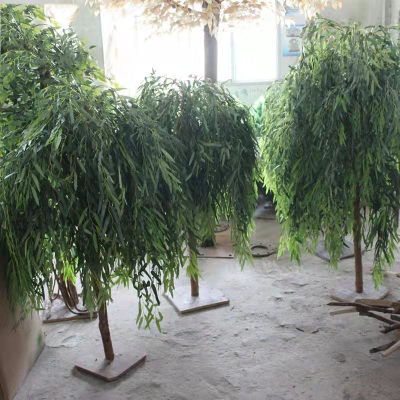


Factory Supply Artificial Fence Artificial Hedge for Indoor Decoration
$16.93 - $17.78
MOQ: 160 Pieces


High-Quality and Highly Durable Artificial Lawn for Outdoor Gardens
$1.18 - $6.48
MOQ: 300 Square Meters


Comprehensive Sourcing Guide
Strategic Sourcing Guide for Waterproof Artificial Leaf Hedges
Understanding Technical Specifications and Material Composition
When sourcing waterproof artificial leaf hedges, the primary objective is to identify products that balance aesthetic realism with durability in varying environmental conditions. The market offers a diverse array of configurations, often distinguished by their material composition and structural backing. Based on current market observations, the most prevalent materials for these products include Polyethylene (PE) and Silk. PE is frequently cited for its ability to mimic the texture of natural foliage while offering superior resistance to UV degradation and moisture, making it a preferred choice for outdoor applications. Conversely, Silk-based variants are often observed in indoor or semi-protected environments where the primary requirement is visual softness rather than extreme weather resistance.
The structural integrity of the hedge is equally critical. Buyers must examine the backing material, which serves as the foundation for the leaves. Common specifications include PE backing, which provides a flexible yet sturdy base that allows the hedge to be shaped and mounted easily. The dimensions of the product are another vital technical parameter. Standardized sizes observed in the market include configurations such as 180x90cm, 1x3m, and 90x1.8cm, though custom dimensions are often available through customization services. The "1x3m" and "180x90cm" standards suggest that buyers should verify the exact footprint required for their specific installation area, as these dimensions directly impact the coverage area and the number of units needed.
Furthermore, the surface treatment plays a significant role in the final appearance and longevity of the product. Printing processes are commonly applied to the leaves to create multicolor effects, ranging from deep greens to variegated patterns that simulate natural growth. This printing technique is essential for achieving a realistic look, but it must be durable enough to withstand exposure to the elements if the hedge is intended for outdoor use. The distinction between "Waterproof" and "Non-fire Retardant" or "Fire Retardant Material" is also a key technical differentiator. While some products are explicitly marketed with waterproof advantages, others may lack fire retardancy, which is a critical safety consideration for commercial or high-traffic indoor installations.
Compliance, Certification, and Safety Standards
Navigating the compliance landscape for artificial greenery requires a careful review of safety standards, particularly regarding fire resistance and environmental impact. In the B2B sector, the fire safety of materials is non-negotiable for many commercial projects. Buyers must verify whether the artificial leaf hedge meets specific fire retardancy standards. The market data indicates a split in product attributes, with some items listed as "Fire Retardant Material" and others as "Non-fire Retardant." This distinction necessitates a rigorous verification process where the buyer must request specific test reports or certification documents from the supplier to confirm the fire rating of the specific model they intend to purchase.
Environmental compliance is another area of focus. Many modern artificial hedges are marketed with attributes such as "Environmentally Friendly," suggesting the use of recyclable materials or manufacturing processes that minimize ecological impact. However, without explicit certification data, this claim should be treated as an observation rather than a guaranteed standard. Buyers should inquire about the specific environmental certifications held by the manufacturer, such as ISO 14001, to validate these claims. Additionally, the "Anti-Age" attribute observed in some product listings points to the material's resistance to UV fading and degradation over time. While some products claim a "Life Guarantee" ranging from 1 to 5 years, this is a variable metric that depends heavily on the installation environment and exposure levels.
Standardization is also a critical compliance factor. The observed product standards, such as "2020" or specific dimensional standards like "1x3m," serve as benchmarks for quality and consistency. However, these standards may vary by region or application. For instance, a product labeled with a "2020" standard might refer to a specific mesh density or leaf arrangement, which is not a universal metric. Therefore, buyers must ensure that the supplier's stated standards align with the local building codes and safety regulations of the destination market. The absence of a universal "waterproof" certification standard means that buyers must rely on the supplier's internal quality control data and third-party testing results to validate the product's water resistance capabilities.
Cost Drivers and Pricing Dynamics
The pricing of waterproof artificial leaf hedges is influenced by a complex interplay of factors, including material quality, customization options, and order volume. The observed price range in the market spans from $0.35 to $850 per unit, reflecting the vast diversity in product specifications and scale. At the lower end of the spectrum, products are likely basic models with standard dimensions, minimal customization, and lower-grade materials. These items often feature bulk packaging and may lack advanced features like fire retardancy or extended life guarantees. Conversely, the higher price points are associated with premium materials, such as high-density PE, custom printing, and specialized treatments for enhanced durability and aesthetics.
Customization is a significant cost driver. The availability of customization services allows buyers to tailor the hedge to specific design requirements, such as unique dimensions, colors, or logo printing. However, these bespoke solutions often incur additional costs and may require higher Minimum Order Quantities (MOQ). The observed MOQ range of 1 to 600 units indicates that while small orders are possible, larger volumes can significantly reduce the per-unit cost. Buyers should note that the "OEM & ODM" availability suggests that suppliers are willing to engage in custom manufacturing, but this often comes with a premium price tag and potentially longer lead times.
Packaging and logistics also play a role in the final cost. Products are available in various packaging formats, including woven bags, boxes, and bulk shipments. The choice of packaging affects the shipping weight and volume, which in turn influences freight costs. For example, a product packed in a "Carton" or "Box" with a specific count (e.g., 30 pieces/box) may be more expensive to ship than a bulk-wrapped item, but it offers better protection during transit. Additionally, the "Delivery Time" is noted as "Based on Your Order," implying that lead times can fluctuate based on production schedules and order complexity. Buyers should factor in these variables when budgeting for their procurement, as rush orders or custom specifications can extend the timeline and increase overall expenses.
Typical Applications and Installation Requirements
Waterproof artificial leaf hedges are versatile solutions suitable for a wide range of applications, from residential landscaping to commercial interior design. The primary applications observed include "Home Decoration," "Balcony Garden," "Wall Decoration," and "Landscaping." In residential settings, these hedges are often used to create privacy screens on balconies or to add greenery to indoor walls where natural plants cannot thrive. The "Indoor Outdoor Wall" installation location confirms their adaptability to both environments, provided the specific product is rated for the intended exposure.
The installation method is a critical consideration for successful deployment. Most products utilize a "Hooks" installation method, which allows for easy attachment to walls, fences, or trellises. This method is generally user-friendly and requires minimal specialized equipment, making it accessible for DIY projects as well as professional installations. However, the stability of the installation depends on the quality of the backing and the mounting hardware used. For larger installations, such as "Landscaping" projects, the weight and flexibility of the hedge must be considered to ensure it can be securely mounted without sagging or detaching.
Maintenance requirements are another factor influencing application suitability. The "Dust with Cloth" maintenance instruction suggests that these products are relatively low-maintenance, requiring only occasional cleaning to remove dust and debris. This makes them ideal for high-traffic areas or locations where regular plant care is impractical. However, the "Life Guarantee" of 1 to 5 years indicates that while they are durable, they are not permanent fixtures. Buyers should plan for periodic replacement or refurbishment, especially in harsh outdoor environments where UV exposure and weather conditions can accelerate wear. The "Advantage" of being "Waterproof/Good Quality" further supports their use in wet environments, such as poolside areas or rain-prone regions, where moisture resistance is essential.
Supplier Evaluation and Quality Control Protocols
Evaluating suppliers for waterproof artificial leaf hedges requires a multi-faceted approach that goes beyond price comparisons. The origin of the products, primarily from "China, Hebei, Anping," suggests a concentration of manufacturing capabilities in this region. Buyers should verify the supplier's production capacity and quality control processes to ensure consistency. The presence of "OEM & ODM" capabilities indicates that the supplier has the infrastructure to handle custom orders, but this also necessitates a thorough review of their design and manufacturing protocols.
Quality control should be a central focus during the supplier evaluation process. Buyers must request samples to physically inspect the material quality, checking for attributes such as the "PE Backing," "Printing" surface treatment, and overall color consistency. The "Multicolor" attribute suggests that suppliers should be able to produce a variety of color options, but the buyer must verify that the colorfastness meets their requirements. Additionally, the "Anti-Age" feature should be validated through independent testing or supplier-provided data to ensure the product will retain its appearance over time.
Communication and responsiveness are also key indicators of a reliable supplier. The "Delivery Time" being "Based on Your Order" implies that lead times can vary, and buyers should establish clear expectations regarding production schedules and shipping timelines. A supplier that provides transparent information about their production process, material sourcing, and quality assurance measures is more likely to deliver a product that meets the buyer's standards. Buyers should also consider the supplier's track record in handling similar projects and their ability to provide after-sales support, such as warranty claims or replacement services.
Long-Term Procurement Considerations and Sustainability
Long-term procurement of artificial leaf hedges involves considerations beyond the initial purchase, including lifecycle management, sustainability, and total cost of ownership. While the "Environmentally Friendly" attribute is a positive indicator, buyers should investigate the end-of-life disposal options for these products. The use of PE and other synthetic materials raises questions about recyclability and environmental impact. Buyers should inquire about the supplier's sustainability initiatives, such as the use of recycled materials or eco-friendly manufacturing processes, to align with corporate social responsibility goals.
The "Life Guarantee" of 1 to 5 years highlights the need for a replacement strategy. Over time, even high-quality artificial hedges will degrade due to UV exposure, weathering, and physical wear. Buyers should plan for periodic inspections and potential replacements to maintain the aesthetic and functional integrity of their installations. This long-term perspective also extends to maintenance costs, which, while generally low, should be factored into the overall budget.
Finally, the scalability of the procurement process is crucial for large projects. The ability to source consistent products across multiple batches is essential for maintaining uniformity in large-scale installations. Buyers should establish long-term relationships with suppliers who can guarantee consistent quality and availability, ensuring that future replacements or expansions can be executed seamlessly. By focusing on these long-term considerations, buyers can make informed decisions that maximize the value and longevity of their artificial leaf hedge investments.
FAQs
What materials are used for waterproof artificial leaf hedges?
Products typically use Polyethylene (PE) or Silk materials. PE offers superior moisture resistance for outdoor use, while Silk is often chosen for indoor environments requiring visual softness.
Which fire resistance standards apply to these hedges?
Some models are Fire Retardant Material, while others are Non-fire Retardant. Buyers must verify specific test reports to confirm the fire rating for their intended commercial or residential installation.
How are these hedges installed on walls?
Most units utilize a Hooks installation method for easy attachment. This allows flexible mounting on indoor or outdoor walls, balconies, and fences without requiring specialized equipment.
Can buyers request custom dimensions for these products?
Customization is available for specific dimensions like 1x3m or 180x90cm. Buyers can also request custom colors and logo printing, though this may affect the minimum order quantity.
What is the typical lifespan guarantee for artificial hedges?
Many products offer a Life Guarantee ranging from 1 to 5 years. This duration depends on the installation environment and exposure to UV light or harsh weather conditions.
Where are these artificial leaf hedges manufactured?
The primary origin is China, specifically Hebei and Anping regions. Suppliers in this area provide various packaging options including boxes, cartons, and woven bags for shipping.