Source Waterproof Bathroom Storage Cabinet with Mirror Lamp for Homes, Hotels, and Spas
Explore 30 listings for a Waterproof Bathroom Storage Cabinet with Mirror Lamp, featuring wall-mounted and floor-mounted options. Buyers can compare materials like ceramics and MDF, installation types, and customization availability to find suitable units for residential or commercial projects.
Key considerations
Products List


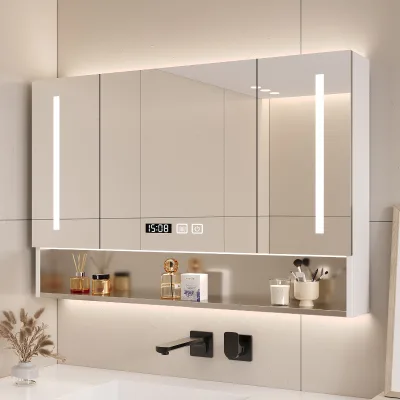

Wall Mount Bathroom Storage Cabinet with Adjustable Shelf Mirror Cabinet
$41.00 - $69.00
MOQ: 30 Pieces


Wall Mount Storage High Qaulity Bathroom Cabinet with Mirror Bathroom Vanity
$70.00 - $75.00
MOQ: 50 Pieces


New Design Bathroom Mirror Cabinet with LED Lights and Big Storage Space
$55.00 - $80.00
MOQ: 50 Pieces

Home Decorative Bathroom LED Mirror Cabinet with Storage Shelf and Bluetooth
$60.00 - $70.00
MOQ: 50 Pieces


Modern Composite Bathroom Mirror Cabinets for Efficient Waterproof Storage
$30.00 - $100.00
MOQ: 100 Pieces



Comprehensive Sourcing Guide
Waterproof Bathroom Storage Cabinet with Mirror Lamp Sourcing Guide
Selecting the right waterproof bathroom storage cabinet with a mirror lamp requires balancing aesthetic integration with rigorous functional durability. Buyers must navigate a market where "waterproof" is often a marketing term rather than a certified specification, necessitating a deep dive into material composition and construction methods. The presence of an integrated mirror lamp adds electrical complexity, requiring strict adherence to safety standards for wet environments. This guide provides a structured approach to evaluating suppliers, verifying technical claims, and securing commercial terms that protect your investment in high-volume or custom procurement projects.
The procurement landscape for these units is diverse, ranging from wall-mounted ceramic basins to floor-standing MDF vanities with composite acrylic countertops. Observed listings indicate a wide variance in customization options, installation types, and material choices. Buyers should not assume that all products labeled as "waterproof" share the same construction quality. Instead, they must categorize potential suppliers based on their specific manufacturing capabilities, such as those specializing in stainless steel, ceramics, or engineered wood composites, to ensure alignment with the project’s design and durability requirements.
Product Scope and Observed Listing Signals
The current market offers a broad spectrum of bathroom storage solutions, with observed product counts indicating a robust supply base. Listings frequently highlight customization availability, allowing buyers to tailor dimensions, colors, and hardware to specific project needs. For instance, some suppliers offer models with standard widths of 60cm, 80cm, 100cm, or 120cm, while others provide custom sizing. The presence of a mirror lamp is a common feature, but its integration varies; some units include the lamp as a standard component, while others may require separate installation or offer it as an optional upgrade. Buyers must carefully review product descriptions to distinguish between units with integrated lighting and those that are purely mechanical.
Material selection is a critical differentiator in this category. Observed data reveals the use of diverse materials, including ceramics for basins, MDF for carcases, composite acrylic for countertops, and stainless steel for entire units. Each material presents distinct advantages and vulnerabilities regarding moisture resistance. For example, MDF carcases often require specific sealing treatments to prevent swelling, while stainless steel offers inherent corrosion resistance. Additionally, some listings specify the absence of water blocking plates, which may impact long-term durability in high-humidity environments. Buyers should prioritize suppliers who clearly disclose material grades and treatment processes rather than relying on generic "waterproof" claims.
Technical Specifications to Verify
Verifying technical specifications is essential to ensure that the selected cabinets meet the functional demands of bathroom environments. Key attributes to confirm include the installation type, whether wall-mounted or floor-standing, and the presence of specific features like water blocking plates. For wall-mounted units, the structural integrity of the mounting hardware and the wall’s load-bearing capacity must be assessed. For floor-standing units, the stability of the base and the quality of the feet or plinth are crucial. Additionally, the thickness of panels, observed in some listings as 15mm-18mm, directly impacts durability and resistance to warping under humid conditions.
The integration of electrical components, such as mirror lamps, requires careful verification of safety standards. Buyers must confirm the IP rating of the lighting fixtures to ensure they are suitable for wet areas. The type of mirror, such as copper-free mirrors, should also be specified to prevent degradation over time. Furthermore, the faucet configuration, whether included or excluded, affects the overall cost and installation complexity. Hardware quality, including hinges and drawer slides, should be evaluated for smooth operation and corrosion resistance. Suppliers should provide detailed technical drawings and material certificates to substantiate these specifications.
Compliance and Safety Documentation
Compliance with international safety and environmental standards is non-negotiable for bathroom fixtures, particularly those with electrical components. Buyers must request documentation verifying that the mirror lamps meet relevant electrical safety standards for wet locations, such as IP44 or higher ratings. This ensures that the lighting fixtures are protected against water splashes and reduce the risk of electrical shock. Additionally, materials used in the construction, such as MDF or composite acrylic, should comply with formaldehyde emission standards to ensure indoor air quality. Suppliers should provide test reports from accredited laboratories to confirm compliance with these regulations.
Environmental certifications may also be relevant, depending on the buyer’s sustainability goals. Some listings mention "environmentally friendly" features, but buyers should seek specific certifications, such as FSC for wood products or low-VOC emissions for finishes. These certifications provide tangible proof of the supplier’s commitment to sustainable practices. Furthermore, packaging materials should be evaluated for recyclability and protection during transit. Proper packaging, such as foam, carton, and pallet combinations, is essential to prevent damage during shipping, which can compromise the product’s integrity and safety.
Cost Drivers and Commercial Terms
Understanding the cost drivers for waterproof bathroom storage cabinets with mirror lamps is crucial for accurate budgeting. Key factors include material costs, customization levels, and the complexity of electrical integration. Stainless steel units typically command higher prices due to material and manufacturing costs, while MDF-based units may be more cost-effective but require careful sealing. Customization, such as specific dimensions or logo printing, can also increase costs. Buyers should request detailed quotations that break down these components to identify potential savings or areas of concern.
Commercial terms, including MOQ, lead times, and payment conditions, vary significantly among suppliers. Observed MOQs range from 1 to 100 pieces, with some suppliers requiring minimum orders of 10 sets or 50 pieces. Lead times can extend up to 40 days, depending on the order size and customization requirements. Payment terms often involve a deposit via TT or LC at sight, with the balance due before shipment. Buyers should negotiate favorable terms based on order volume and establish clear penalties for delays. Understanding these commercial dynamics helps in planning inventory and cash flow effectively.
Supplier Qualification and Quality Control
Supplier qualification is a critical step in mitigating procurement risks. Buyers should conduct thorough due diligence, including verifying the supplier’s business license, manufacturing capabilities, and export experience. Site visits or virtual tours can provide insights into the production process and quality control measures. Suppliers with a proven track record in exporting to your target market are preferable, as they are likely familiar with local regulations and customer expectations. Additionally, checking for relevant certifications, such as ISO 9001 for quality management, can indicate a supplier’s commitment to consistent product quality.
Quality control processes should be clearly defined and enforced throughout the production cycle. Buyers should request a detailed QC plan that includes in-process inspections, final random inspections, and pre-shipment checks. Key quality indicators include the accuracy of dimensions, the finish quality of surfaces, and the functionality of electrical components. Suppliers should provide a sample for approval before mass production to ensure that the final product meets your specifications. Establishing a clear communication channel for addressing quality issues is also essential to resolve any discrepancies promptly.
Long-Term Procurement Checks
Long-term procurement success depends on establishing a sustainable relationship with reliable suppliers. Regular performance reviews should be conducted to assess product quality, delivery reliability, and customer service. Feedback from end-users can provide valuable insights into the product’s durability and functionality in real-world conditions. Suppliers who actively seek feedback and implement improvements are more likely to deliver consistent quality over time. Additionally, staying informed about industry trends and technological advancements can help buyers identify opportunities for innovation and cost savings.
Building a diversified supplier base can mitigate risks associated with single-source dependency. Engaging with multiple suppliers allows for comparative analysis and negotiation leverage. However, it is essential to maintain consistent quality standards across all suppliers. Regular audits and training sessions can help align suppliers with your quality expectations. Furthermore, establishing a clear contract with defined SLAs for quality, delivery, and after-sales support provides a legal framework for addressing any issues. By focusing on long-term partnerships and continuous improvement, buyers can secure a stable supply of high-quality waterproof bathroom storage cabinets with mirror lamps.
FAQs
Can I customize the logo on the bathroom vanity?
Yes, customized logos are accepted for these units. Buyers can request specific branding to align with their market identity. This customization is available across various models, allowing for distinct product differentiation. Ensure your design files meet the supplier's requirements for clear imprinting on the chosen material.
What is the standard delivery time for orders?
Delivery typically takes 30 to 40 days after receiving the deposit. The exact timeframe depends on the specific model and order volume. Suppliers in Guangdong and Foshan generally adhere to these schedules. Confirm the lead time with your chosen vendor before finalizing payment to ensure timely project completion.
Which materials are used for the cabinet carcase?
Cabinet carcases are commonly made from MDF or ceramics, depending on the model. Some units feature stainless steel construction for enhanced durability. Countertops may use composite acrylic or ceramic materials. Select the material that best suits your environmental and durability requirements for the specific bathroom setting.
What is the minimum order quantity for these vanities?
The minimum order quantity varies by supplier, ranging from 1 to 100 pieces. Some manufacturers require a minimum of 10 sets, while others accept orders as low as 50 pieces. Check the specific MOQ for your selected model to ensure it aligns with your procurement volume and budget constraints.
Are mirror lamps included with the bathroom cabinets?
Mirror lamps are available as an option but not standard on all models. Some units come with integrated mirror lamps, while others do not. Buyers can choose between models with or without lighting features. Verify the inclusion of mirror lamps when selecting a specific product model to meet your lighting needs.
How are the bathroom vanities packaged for shipping?
Products are typically packed in cartons, sometimes with foam and pallets for extra protection. Customized packing options are also available for specific buyer requirements. Standard packaging includes carton boxes, while larger orders may use CAD packing or foam-reinforced cartons. This ensures safe transit and minimizes damage during international shipping.