Source two-in-one fast charging data cable for Phone, Laptop, Tablet
Explore 30 listings for the two-in-one fast charging data cable designed for phones, laptops, and tablets. Buyers can compare specifications including USB versions, connectivity types, and cable lengths from various manufacturers.
Key considerations
Products List
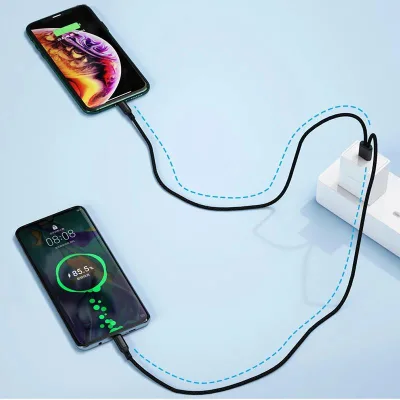
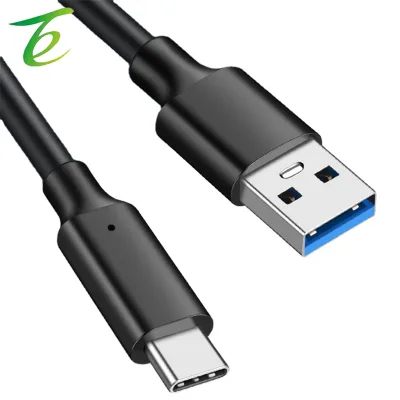


Comprehensive Sourcing Guide
Strategic Sourcing Guide for Two-in-One Fast Charging Data Cables
Understanding the Technical Architecture of Multi-Interface Cables
The core keyword "two-in-one fast charging data cable" refers to a specific class of peripheral hardware designed to consolidate connectivity for multiple device standards into a single physical unit. In the context of B2B procurement, these cables are engineered to serve as a universal solution, reducing the need for buyers to stock multiple distinct SKUs for different device types. The observed market data indicates a high degree of variability in the interface configurations available. Buyers must distinguish between cables that offer a simple dual-connector tip and those that integrate distinct internal wiring for different protocols.
The technical specifications observed in the current supply pool reveal that "two-in-one" implementations vary significantly. Some units are described with connectivity options such as "Type C to Lightning" and "Type C to Type C," while others list broader compatibility including "Micro USB," "Mini USB," and "Standard" interfaces. This diversity suggests that the internal architecture must support multiple data and power lines simultaneously or utilize a switching mechanism to route signals correctly. The USB version compatibility is another critical technical parameter, with observed listings ranging from USB 1.1 to USB 4. This wide spectrum implies that a single cable model may not support the highest speed standards across all its connectors. For instance, a cable listing USB 3.0 compatibility for one end may only support USB 2.0 for the other, or the "two-in-one" designation may apply strictly to the charging function while data transmission speeds vary by interface.
Cable length is a fundamental physical specification that directly impacts usability and shipping logistics. The available data points to a specific observed length of 1.2 meters, which is a standard for desktop and bedside charging scenarios. However, other listings indicate a broader range of 1-3 meters and 1-5 meters. When sourcing for a specific application, such as automotive charging or industrial kiosks, the buyer must verify the exact length per unit rather than assuming a standard 1.2-meter configuration. The physical construction also includes features like "Retractable" mechanisms, though some products are explicitly noted as "Not Scalable" or non-retractable. This distinction is vital for inventory planning, as retractable cables often command a different price point and have different durability profiles compared to fixed-length counterparts.
Compliance Verification and Certification Protocols
In the global electronics supply chain, compliance is not merely a regulatory checkbox but a critical risk management factor. For data cables, the primary concerns involve electrical safety, electromagnetic compatibility, and material safety. While the provided context mentions "Ce" as a low-confidence background item, buyers should not assume that any listed product automatically holds this certification. The presence of "Anti-fire" and "Anti-dust" features in product attributes suggests that manufacturers are addressing specific safety standards, but these claims must be validated against recognized international norms.
Buyers must verify the specific certification status of the supplier's production line. Common standards for electronic accessories include UL (Underwriters Laboratories) for North American markets, CE (Conformité Européenne) for the European Union, and RoHS (Restriction of Hazardous Substances) for material restrictions. The observed product attributes mention "Anti-fire" and "Anti-dirt," which align with safety testing requirements, but these are product features, not certifications. A robust procurement strategy requires requesting valid test reports from the supplier that correspond to the target market's regulations. For example, if the destination market is the EU, the supplier must provide evidence of CE marking that covers the specific electrical parameters of the cable, including voltage and current ratings.
Furthermore, the "IC Chip" attribute observed in the supply data is a significant compliance indicator. The inclusion of an Integrated Circuit chip often implies that the cable has built-in protection against over-voltage, over-current, and short circuits. This is particularly relevant for "fast charging" capabilities, where unregulated power delivery can damage connected devices. However, the mere presence of an IC chip does not guarantee compliance with fast charging protocols like Power Delivery (PD) or Quick Charge (QC). Buyers should request documentation confirming that the IC chip is certified by relevant industry bodies and that the cable meets the specific fast charging standards required by their end customers. Without this verification, the "fast charging" claim remains an unverified observation rather than a guaranteed performance metric.
Cost Drivers and Pricing Structure Analysis
The pricing landscape for two-in-one fast charging data cables is influenced by a complex interplay of technical specifications, material costs, and order volume. The observed price range in the market spans from 0.1 to 7.55 USD, a variance that reflects the significant differences in product quality and feature sets. At the lower end of this spectrum, products likely utilize basic copper conductors, standard PVC insulation, and generic IC chips, with minimal branding or packaging. Conversely, the upper end of the price range typically corresponds to cables featuring high-speed data transmission (USB 3.0/3.1/3.2/4), durable braided nylon exteriors, advanced IC chips for fast charging negotiation, and premium packaging such as color boxes or blister packs.
Order volume is a primary driver of unit cost. The observed Minimum Order Quantity (MOQ) ranges from 10 to 3000 units. Suppliers offering an MOQ of 10 are likely catering to small businesses or drop-shippers, where the unit price is higher due to the lack of economies of scale in production setup. In contrast, suppliers with an MOQ of 3000 are targeting large-scale distributors or OEM partners, where the unit price can be significantly reduced through mass production efficiencies. Buyers must calculate the total cost of ownership, which includes not only the unit price but also the cost of capital tied up in inventory. Ordering a large quantity to secure a lower unit price may result in higher holding costs if the product turnover is slow.
Material composition is another critical cost factor. The "Retractable" feature, for instance, adds mechanical complexity and cost compared to fixed-length cables. Similarly, the inclusion of "Anti-fire" and "Anti-dust" materials often requires higher-grade polymers or additional manufacturing steps, which increases the base cost. The "USB Version" is also a major cost determinant; cables supporting USB 3.0 and above require more conductors and shielding, increasing material and assembly costs. Buyers should request a detailed breakdown of the cost structure, including the cost of the IC chip, the type of connector plating (e.g., gold-plated vs. nickel-plated), and the jacket material. This transparency allows for informed decisions on where to invest for quality and where to optimize for cost.
Typical Applications and Market Segmentation
The versatility of two-in-one fast charging data cables makes them suitable for a wide array of applications across different market segments. The observed "Applicable" attributes list "Ebook," "Laptop," "Phone," "Tablet," and "Universal," indicating that these cables are designed to bridge the gap between legacy devices and modern ecosystems. This universality is particularly valuable for B2B buyers operating in the hospitality, education, and corporate sectors, where a diverse range of devices is in use.
In the hospitality industry, hotels often provide charging stations in lobbies or guest rooms. A two-in-one cable that supports both Type C and Lightning connectors can serve guests with the latest smartphones and older models without the need for multiple cable types. This reduces the logistical burden of inventory management and enhances the guest experience by providing a single, convenient solution. Similarly, in the education sector, schools and universities often have mixed device environments. A universal cable can be distributed to students or used in computer labs to ensure compatibility with various operating systems and hardware generations.
The corporate sector also benefits from these cables, particularly in BYOD (Bring Your Own Device) environments. Employees may use a mix of Android, iOS, and Windows devices, and a single cable type simplifies the IT procurement process. The "Fast charging" feature is a key selling point in this segment, as it reduces downtime for employees who need to quickly charge their devices during meetings or travel. Additionally, the "Data Transmission Function" makes these cables suitable for transferring files between devices, which is essential for professionals who need to move data quickly and securely.
Supplier Evaluation and Vendor Selection Criteria
Selecting the right supplier is a critical step in the procurement process, especially for products with high variability in quality and specifications. The observed data shows a mix of branded and generic products, with brands like "AaSaMa," "WH," "blue power," and "EBY," alongside "ODM/OEM" listings. This diversity suggests that buyers can choose between established brands with known quality standards or generic suppliers offering custom manufacturing options.
When evaluating suppliers, buyers should prioritize those who demonstrate transparency in their product attributes. The presence of specific model numbers, such as "ASM-UTM001-3," "ASM-CTC003," and "CU-2201A," indicates a level of product standardization and traceability. Suppliers who provide detailed model numbers are more likely to have robust quality control processes and can provide consistent product specifications across orders. Conversely, generic listings with vague model numbers may indicate a lack of standardization, which can lead to quality inconsistencies.
The "Small Orders: Accepted" attribute is a positive indicator for suppliers who are flexible and willing to work with smaller buyers. This flexibility can be crucial for startups or businesses testing the market with limited initial inventory. However, buyers should also assess the supplier's capacity to scale. The observed MOQ range of 10 to 3000 suggests that some suppliers can accommodate both small and large orders, but buyers must verify the lead times and production capacity for larger volumes.
Customization is another key factor in supplier selection. The "Customization: Available" and "Customized" attributes indicate that suppliers are willing to tailor products to specific buyer requirements. This could include custom branding, specific cable lengths, or unique connector configurations. Buyers should evaluate the supplier's ability to handle customization requests efficiently, including the impact on lead times and costs. A supplier with a strong track record in customization can provide a competitive advantage by offering unique products that differentiate the buyer in the market.
Quality Control and Long-Term Procurement Considerations
Ensuring consistent quality is paramount in the procurement of electronic accessories, as failures in these products can lead to device damage and customer dissatisfaction. The observed product attributes include features like "IC Chip," "Anti-fire," and "Anti-dust," which are indicators of quality-focused design. However, buyers must implement a rigorous quality control (QC) process to verify that these features are consistently present in every unit produced.
One effective QC strategy is to request pre-shipment samples and conduct independent testing. This testing should verify the electrical performance of the cable, including voltage and current ratings, data transmission speeds, and the functionality of the fast charging protocols. Buyers should also test the mechanical durability of the cable, including the flexibility of the jacket, the strength of the connectors, and the reliability of the retractable mechanism (if applicable). The "prod_packing" attribute, which lists "Bag/Color Box/Blister," suggests that packaging quality is also a factor. Proper packaging protects the cable during transit and ensures that the product arrives in good condition.
Long-term procurement considerations involve building a sustainable relationship with suppliers who can maintain quality over time. Buyers should look for suppliers who have a history of consistent performance and who are committed to continuous improvement. The "ODM/OEM" attribute suggests that some suppliers offer manufacturing services, which can be beneficial for buyers looking to develop their own branded products. In such cases, the supplier's ability to maintain quality standards while scaling production is critical.
Buyers should also consider the lifecycle of the product. As technology evolves, the demand for specific connector types and charging speeds may change. A supplier who is agile and responsive to market trends can help buyers stay ahead of the curve. Additionally, buyers should establish clear communication channels with suppliers to address any quality issues promptly. A proactive approach to quality control and supplier management can mitigate risks and ensure a steady supply of high-quality two-in-one fast charging data cables.
Comparative Analysis of Key Product Attributes
To facilitate informed decision-making, the following table summarizes the key product attributes observed in the supply market, highlighting the variations that buyers should consider during the sourcing process.
| Attribute Category | Observed Variations | Procurement Implication |
|---|---|---|
| Connectivity | Type C, Lightning, Micro USB, Mini USB, Standard, 2-in-1 combos | Verify specific connector compatibility with target devices; ensure data lines support intended speeds. |
| USB Version | USB 1.1, 2.0, 3.0, 3.1, 3.2, 4 | Higher versions (3.0+) require more conductors and shielding; verify speed claims for data transmission. |
| Cable Length | 1.2 m, 1-3 m, 1-5 m | Select length based on application (e.g., 1.2m for desktop, 3m+ for automotive); confirm exact length per SKU. |
| Features | Retractable, Anti-fire, Anti-dust, IC Chip, Fast Charging | "Retractable" adds cost and mechanical complexity; "IC Chip" is essential for safe fast charging. |
| MOQ | 10 to 3000 units | Lower MOQs suit startups; higher MOQs reduce unit cost but increase inventory risk. |
| Packaging | Bag, Color Box, Blister | Premium packaging (Color Box) increases cost but enhances retail appeal; standard bags suit bulk distribution. |
| Customization | Available, Customized | Essential for branding; verify lead times and minimums for custom orders. |
This comparative analysis underscores the importance of aligning product specifications with specific business needs. By carefully evaluating these attributes, buyers can select the most appropriate two-in-one fast charging data cables for their market, ensuring a balance of quality, functionality, and cost-effectiveness.
FAQs
What connectivity options are available for two-in-one fast charging data cables?
Available connectivity options include Type C, Lightning, Micro USB, Mini USB, and Standard interfaces. Some models support multiple standards simultaneously, such as Type C to Lightning or Type C to Type C configurations.
Can I find retractable two-in-one fast charging data cables?
Yes, retractable models are available in the supply pool, though some products are explicitly noted as not scalable. Buyers must verify the specific feature per unit since non-retractable options also exist.
What is the typical cable length for these products?
A specific observed length is 1.2 meters, which is standard for desktop use. Other listings indicate broader ranges from 1 to 3 meters and 1 to 5 meters depending on the specific model.
Which USB versions are supported by these cables?
Supported USB versions range from USB 1.1 to USB 4, including USB 2.0 and USB 3.0 variants. Buyers should verify the specific version per connector as speeds may vary across different interfaces.
How does the minimum order quantity vary for these cables?
The minimum order quantity ranges from 10 to 3000 units depending on the supplier. Lower MOQs cater to small businesses, while higher volumes target large distributors seeking reduced unit costs.
Are customization options available for these data cables?
Customization is available for many suppliers, allowing for tailored branding and specifications. Buyers can request custom packaging, colors, or specific interface configurations to meet unique procurement needs.